
For musicians at every level—from students practicing at home to professionals performing on stage—a reliable music stand is essential. It’s not just about holding sheet music; it’s about posture, visibility, stability, and convenience. Yet many settle for flimsy, poorly designed stands simply because they assume quality comes with a high price tag. The truth is, today’s market offers an impressive range of affordable options with smart, adjustable designs that rival premium models. This guide highlights top-performing music stands that balance cost, functionality, and durability—so you can make an informed decision without overspending.
Why Adjustable Design Matters
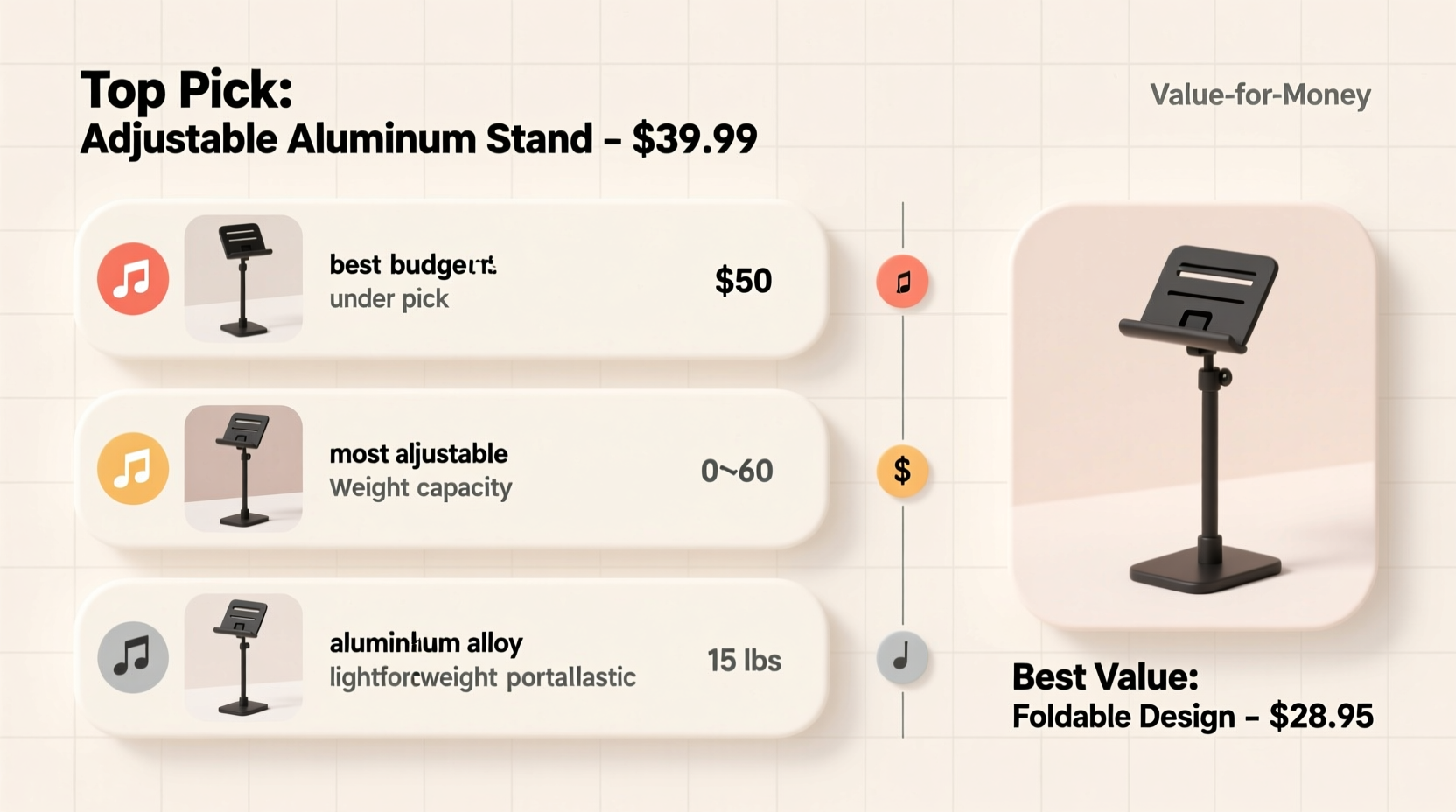
An adjustable music stand isn’t a luxury—it’s a necessity. Musicians vary in height, playing position, and setup environment. A fixed-height stand forces compromise: slouching over low pages or straining your neck when reading elevated sheets. Adjustable stands eliminate this issue by allowing precise height, tilt, and angle control. Whether seated at a piano or standing with a violin, the ability to customize viewing angles reduces physical strain and improves focus during long rehearsals or performances.
Moreover, adjustability extends beyond personal comfort. Portable stands must collapse for transport, while studio models may need quick reconfiguration between instruments. The best designs offer smooth telescoping poles, secure locking mechanisms, and wide tilt ranges—features once reserved for high-end models but now accessible at budget-friendly prices.
Top 5 Affordable & Adjustable Music Stands
The following stands have been evaluated based on build quality, adjustability range, portability, user feedback, and value for money. Each delivers professional-grade function under $50, making them ideal for students, educators, gigging musicians, and hobbyists alike.
| Model | Price Range | Height Adjustment | Tilt Range | Folded Size | Weight |
|---|---|---|---|---|---|
| JRIVER JR-MS01 | $25–$30 | 28\"–47\" | 0°–90° | 27\" | 1.8 lbs |
| ONSTAGE MS7400 | $35–$40 | 27\"–48\" | Multiple pivot points | 28\" | 2.2 lbs |
| Yamaha MSH-7B | $40–$45 | 30\"–48\" | 0°–90° | 26.5\" | 2.0 lbs |
| Musician's Gear Deluxe | $20–$25 | 26\"–45\" | Fixed hinge (limited) | 25\" | 1.6 lbs |
| K&M 125 B | $45–$50 | 31\"–50\" | Continuous tilt | 29\" | 2.4 lbs |
The JRIVER JR-MS01 stands out for its ultra-lightweight design and surprising sturdiness. The ONSTAGE MS7400 features dual-joint arms for unparalleled angle control—ideal for angled seating positions. Yamaha’s MSH-7B combines sleek engineering with corrosion-resistant coating, perfect for humid environments. While the Musician's Gear model is the most budget-conscious, its limited tilt mechanism may frustrate advanced users. K&M, a German brand known for orchestral equipment, offers the highest build quality in this group, often lasting over a decade with regular use.
Key Features to Look For
When shopping for an affordable yet functional music stand, prioritize these features to ensure long-term satisfaction:
- Sturdy Base: Triangular tripod bases with wide leg spans resist tipping better than compact X-frames. <
- Smooth Height Mechanism: Telescoping tubes with twist-lock collars are more durable than push-button systems.
- Large Reading Surface: At least 12” x 9” accommodates standard sheet music without crowding.
- Non-Slip Rim: A raised edge prevents papers from sliding off during page turns.
- Weight Capacity: Should securely hold multiple pages or a tablet without sagging.
- Portability: Folds flat and includes a carrying bag for easy transport.
“An adjustable stand pays for itself in reduced fatigue and improved concentration. I recommend musicians invest in one early—it supports both technique and longevity.” — Dr. Lena Torres, Performing Arts Physiotherapist
Real-World Example: A High School Band Director’s Solution
Mark Reynolds, band director at Lincoln Heights High, faced a recurring problem: his students’ cheap music stands kept collapsing during rehearsals. “We had a mix of broken hinges and bent legs,” he recalls. “Kids were distracted, and posture suffered.” With limited funding, Mark couldn’t replace all 60 stands at once. He tested five budget models and settled on the JRIVER JR-MS01 for new purchases and replacements. “They’re light enough for freshmen to carry, adjust quickly between classes, and haven’t failed us in two years,” he says. By pairing these with wall-mounted storage racks, he reduced damage and saved over $600 compared to mid-tier brands.
Step-by-Step: Choosing & Setting Up Your Stand
Selecting the right music stand involves more than price and appearance. Follow this sequence to ensure optimal fit and function:
- Assess Your Primary Use: Will you use it at home, school, gigs, or outdoor events? Portability matters more for mobile musicians.
- Determine Height Needs: Measure from floor to eye level while seated or standing with your instrument. Choose a stand that adjusts within that range.
- Check Stability: Expand the legs fully and place a book on the tray. Gently shake the stand—if it wobbles, consider a wider base.
- Test Adjustments: Extend the pole and lock it at various heights. Ensure the knob or lever operates smoothly and holds firm.
- Load Test: Place several sheets of paper or a tablet on the tray. Verify the tray doesn’t tilt forward or flex.
- Practice Folding: Collapse and reopen the stand three times. If it sticks or feels fragile, durability may be compromised.
- Store Properly: Keep indoors, away from moisture. Store disassembled if possible to extend joint life.
FAQ
Can I use a music stand outdoors?
Yes, but choose a model with powder-coated or aluminum construction to resist rust. Avoid leaving it in direct sunlight or rain. Use sandbags or weights on the legs to prevent wind tipping.
Are foldable stands less stable than fixed ones?
Not necessarily. Well-designed folding stands use reinforced joints and balanced geometry to match the stability of fixed models. However, cheaper versions may sacrifice rigidity for portability—always check reviews for comments on wobbling.
Do adjustable stands wear out faster?
Only if poorly made. High-quality adjustment mechanisms are engineered for thousands of cycles. Regular maintenance—like tightening screws and cleaning debris from tubes—can extend lifespan significantly.
Essential Checklist Before Buying
Use this checklist to avoid common pitfalls and select a stand that meets both immediate and long-term needs:
- ✅ Adjustable height covers my seated and standing positions
- ✅ Tray tilts smoothly and locks securely
- ✅ Base remains stable when bumped lightly
- ✅ Folds down to fit in my case or car trunk
- ✅ Includes a carrying bag or storage sleeve
- ✅ Made from lightweight yet rigid materials (aluminum preferred)
- ✅ Non-slip surface or lip to hold pages
- ✅ Under $50 (or within school/district budget)
Final Thoughts
Finding the best music stand doesn’t require breaking the bank. Today’s affordable models offer intelligent adjustable designs that support healthy playing habits, withstand frequent use, and adapt to diverse settings. Whether you're a student starting out, a teacher managing a classroom, or a performer on the move, there’s a well-built, cost-effective option tailored to your needs. Prioritize adjustability, stability, and material quality—and remember, a small investment in a good stand enhances every practice session and performance.




 浙公网安备
33010002000092号
浙公网安备
33010002000092号 浙B2-20120091-4
Comments
No comments yet. Why don't you start the discussion?