
Saving for a house down payment often feels like an uphill battle, especially with rising home prices and everyday expenses. But building that fund doesn’t require a six-figure salary or drastic lifestyle changes. With smart planning, consistent habits, and a few strategic adjustments, you can make meaningful progress—even on a tight budget. The key is to focus on sustainable, realistic actions that compound over time. This guide outlines proven, affordable methods that real people use to reach their homeownership goals.
Set a Clear, Realistic Savings Target
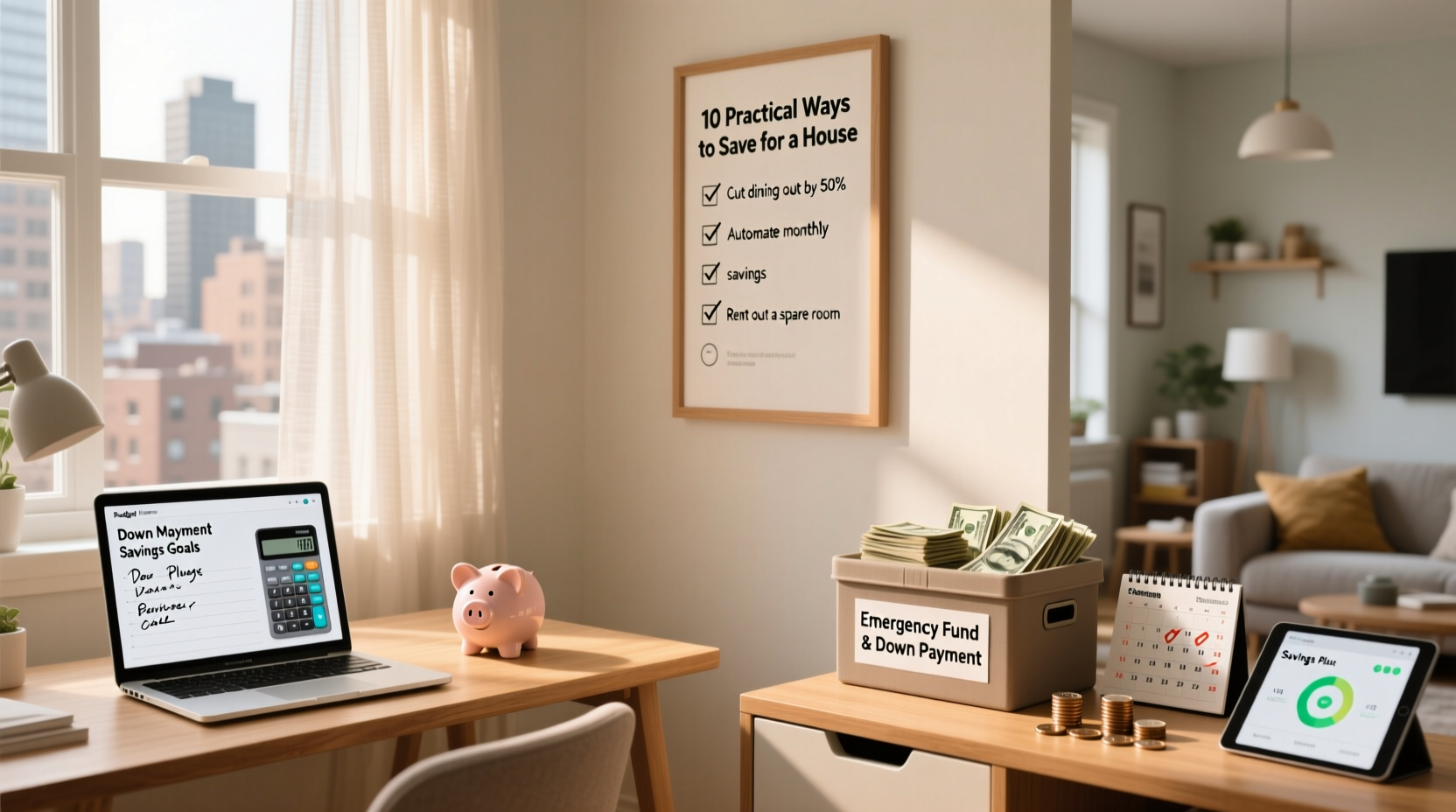
Before you start saving, know exactly how much you need. While 20% is the traditional benchmark for a down payment to avoid private mortgage insurance (PMI), many loan programs allow as little as 3–5%. First-time buyer programs through FHA, VA, or USDA may require even less—or nothing at all in specific cases.
Calculate your target based on the price range of homes in your desired area. For example, if you're looking at a $300,000 home:
| Down Payment % | Amount Needed | Monthly Savings (3 Years) |
|---|---|---|
| 3% | $9,000 | $250 |
| 5% | $15,000 | $417 |
| 10% | $30,000 | $833 |
| 20% | $60,000 | $1,667 |
Setting a precise goal makes it easier to reverse-engineer your savings plan. Break it into monthly or weekly targets so it feels manageable.
Automate Your Savings from Day One
Willpower fades. Systems last. Automating your savings ensures consistency without relying on motivation. Set up a direct deposit split from your paycheck—sending a fixed amount straight to your down payment account before you see it.
If your employer allows, allocate a percentage of each paycheck automatically. Even $100 per month adds up to $3,600 in three years. Pair this with a high-yield savings account (currently averaging 4–5% APY) to earn interest while you save.
“Paying yourself first isn’t just for retirement. When saving for a home, automation removes decision fatigue and builds discipline.” — Lisa Chen, Certified Financial Planner
Mini Case Study: How Sarah Saved $18K in 2.5 Years
Sarah, a 32-year-old graphic designer earning $58,000 annually, wanted to buy her first home near Austin. She started by analyzing her spending and found she was spending $220 monthly on dining out and coffee. By cutting back to $80, she redirected $140 into savings. She also set up automatic transfers of $300 per paycheck ($600/month). Using a high-yield account with 4.2% interest, she earned an extra $900 in interest over two and a half years. Combined with a $3,000 gift from family, she reached $18,200—enough for a 6% down payment on a $300K home with a conventional loan.
Reduce Housing Costs Strategically
Your largest monthly expense is likely rent. Lowering it—even temporarily—can free up hundreds per month for your down payment. Consider these affordable options:
- Move in with family or roommates: Living at home or sharing space cuts rent and utilities significantly.
- Negotiate rent: Ask your landlord for a reduction, especially if you’ve been a reliable tenant.
- Downsize: Switch to a smaller apartment or one in a lower-cost neighborhood.
- Offer services: Trade skills (like cleaning, web design, or pet sitting) for reduced rent.
Create a Homeownership Budget Roadmap
It’s not enough to save—you must live below your means intentionally. Start by tracking all income and expenses for one month. Then categorize spending and identify non-essentials.
Use the 50/30/20 rule as a baseline: 50% needs, 30% wants, 20% savings. Adjust it to a 60/20/20 split, where 20% goes directly to your down payment fund. Every dollar saved from reducing discretionary spending should go here.
Common areas to cut back affordably:
- Subscription services (streaming, apps, boxes)
- Eating out and takeout
- Impulse purchases and fast fashion
- Unnecessary memberships (gyms, clubs)
Redirect those funds into your house savings. For example, skipping two $15 takeout meals per week saves $1,560 annually.
Step-by-Step Guide: Build Your Down Payment Plan in 6 Months
- Month 1: Determine your target home price and required down payment. Open a dedicated high-yield savings account.
- Month 2: Track all expenses and create a detailed budget. Identify $200–$500 in monthly savings potential.
- Month 3: Set up automatic transfers. Negotiate bills or downgrade subscriptions.
- Month 4: Explore side income opportunities (freelance work, selling unused items).
- Month 5: Reassess progress. Adjust spending if behind target. Celebrate small milestones.
- Month 6: Research first-time buyer programs and pre-approval requirements. Stay motivated with visual reminders (e.g., photos of dream homes).
Leverage Side Income and Windfalls
Boosting your income is often faster than cutting expenses. You don’t need a second full-time job—small gigs add up.
Practical side hustle ideas:
- Freelance writing, design, or virtual assistance (Upwork, Fiverr)
- Driving for rideshare or delivery apps (Uber, DoorDash)
- Selling unused clothes, electronics, or furniture (Facebook Marketplace, Poshmark)
- Tutoring or teaching online (Chegg, Wyzant)
Also, commit windfalls directly to your goal:
- Tax refunds
- Bonus payments
- Gift money (birthdays, holidays)
- Insurance payouts or rebates
One tax refund of $3,000 equals 5% down on a $60,000 home. Treat these as forced savings installments.
Checklist: 10 Actions to Start Saving Today
- ✅ Calculate your exact down payment goal
- ✅ Open a separate high-yield savings account
- ✅ Set up automatic monthly transfers
- ✅ Cancel at least two unused subscriptions
- ✅ Track every expense for 30 days
- ✅ Reduce grocery spending by meal planning
- ✅ Sell five unused items online
- ✅ Pick one side hustle to start this month
- ✅ Talk to your landlord about lowering rent
- ✅ Schedule a mid-year review of your progress
Frequently Asked Questions
How much do I really need for a down payment?
Most conventional loans require 5–20%, but FHA loans start at 3.5%, and VA/USDA loans may require $0 down for eligible buyers. Aim for at least 5% to improve approval odds and reduce monthly payments.
Is it better to save aggressively or slowly over time?
A balanced approach works best. Aggressive saving can lead to burnout. Focus on consistency—automated contributions, modest cuts, and steady side income are more sustainable than extreme frugality.
Can I use my 401(k) to pay for a down payment?
You can borrow from your 401(k), but it comes with risks. If you leave your job, the loan may be due immediately. Withdrawals incur penalties and taxes. It’s generally safer to save separately.
Final Steps Toward Homeownership
Saving for a down payment is less about luck and more about intention. Small, daily decisions—cooking at home, skipping impulse buys, automating transfers—compound into real results. The most successful savers aren’t those with the highest incomes, but those who stay focused and consistent.
Homeownership is within reach, even on a modest budget. Start now, stay disciplined, and keep your goal visible. Every dollar saved brings you closer to holding the keys to your own front door.




 浙公网安备
33010002000092号
浙公网安备
33010002000092号 浙B2-20120091-4
Comments
No comments yet. Why don't you start the discussion?