
Robotic vacuums have evolved from utilitarian gadgets into stylish, intelligent home companions. While iRobot’s Roomba line remains a benchmark for performance and brand recognition, a new wave of budget-friendly models has emerged—offering comparable cleaning power, modern aesthetics, and even playful features at a fraction of the cost. These affordable robots deliver not just function, but personality and charm, proving you don’t need to spend $700+ to enjoy a smart, reliable cleaner that fits seamlessly into your lifestyle.
The key is knowing where to look. Several brands—particularly from Asia and emerging tech startups—are engineering compact, efficient, and visually appealing robots that challenge the dominance of premium models. They incorporate smart navigation, app control, voice integration, and even whimsical designs that make them feel like part of the family rather than just another appliance.
Why Affordable Robots Are Worth Considering
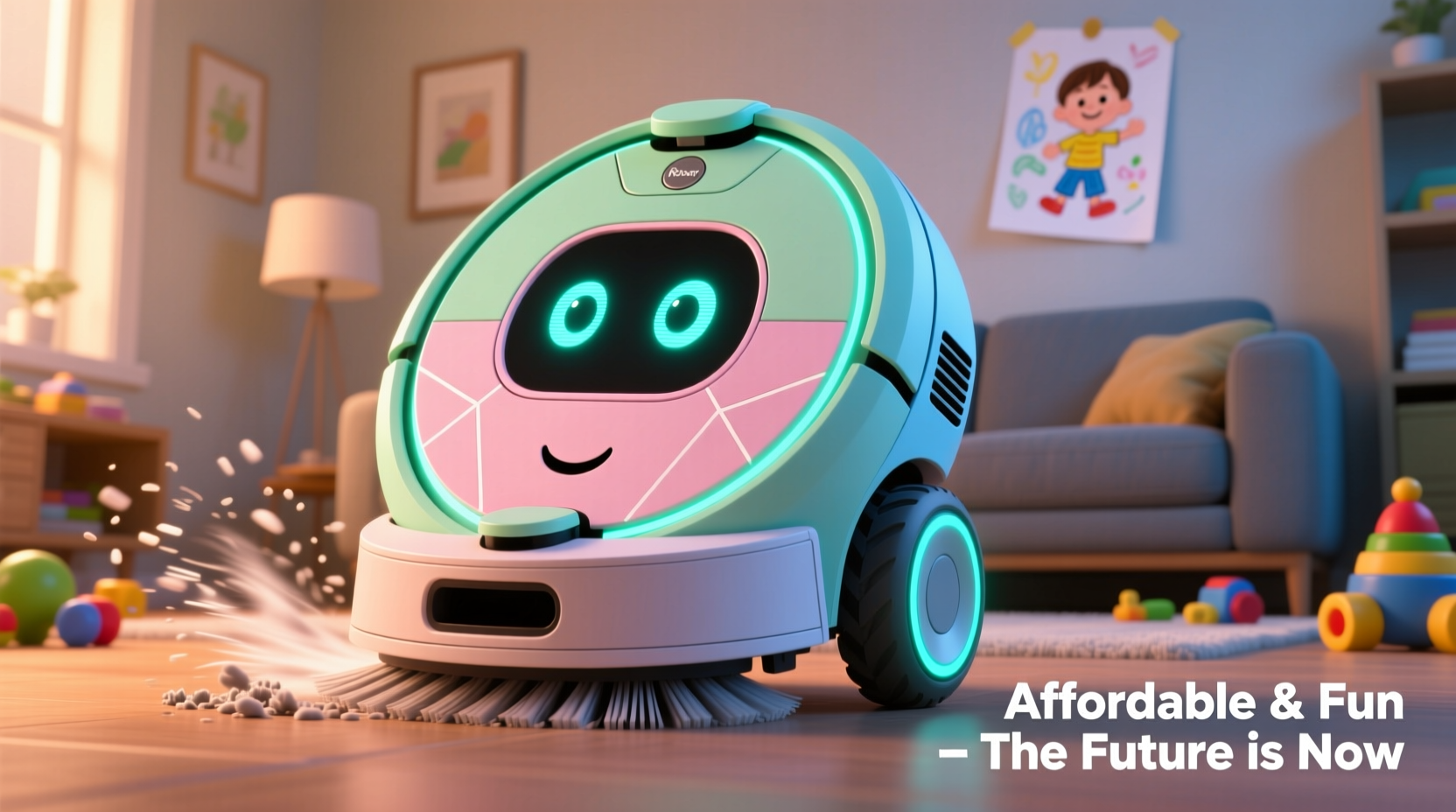
For years, consumers assumed higher price meant better performance. But advancements in sensor technology, motor efficiency, and AI-driven mapping have democratized quality. Today, many mid-tier robots use LiDAR or advanced vSLAM navigation systems similar to those in high-end Roombas. They clean pet hair effectively, handle multiple floor types, and return to their docks autonomously—all while costing less than half the price of a Roomba j9+.
Moreover, affordability doesn’t mean dull design. Some budget models feature sleek finishes, customizable LED lights, or retro-futuristic shapes that stand out in a living room. Others include fun extras like dance modes after cleaning or voice responses that add a touch of humor to daily routines.
“Consumers are realizing they can get 90% of Roomba’s performance for 40% of the cost—with added flair.” — David Lin, Home Robotics Analyst at TechLiving Insights
Top 5 Affordable Robot Models That Outshine Expectations
These models combine strong suction, smart navigation, and standout design—all under $400. Each offers unique advantages that go beyond basic cleaning.
| Model | Price Range | Suction Power (Pa) | Navigation Type | Special Features |
|---|---|---|---|---|
| Eufy RoboVac G30 Edge | $250–$300 | 2000 Pa | vSLAM | Anti-drop sensors, slim profile, app scheduling |
| Roborock C7 | $350–$400 | 2500 Pa | LDS LiDAR | Mop & vacuum combo, real-time tracking, voice alerts |
| Nanobot X1 Slim | $180–$220 | 2200 Pa | Gyro + Optical | Ultra-slim (2.8”), RGB lighting, party mode |
| Yeedi Vacuum Pro | $280–$320 | 2100 Pa | Smart Move 2.0 | No-go zones, self-charging, minimalist white finish |
| Ilife V3s Pro | $130–$160 | 1200 Pa | Bump & Go | Compact size, quiet operation, ideal for small spaces |
While the Ilife V3s Pro lacks advanced mapping, its simplicity makes it perfect for studio apartments or as a secondary unit. Meanwhile, the Roborock C7 competes directly with Roomba s9 in navigation accuracy and mopping precision—but at nearly half the price.
Design and Personality: Where Budget Robots Shine
One area where cheaper robots often surpass Roomba is in visual appeal and interactive features. Roomba models tend to stick to a utilitarian gray disc design. In contrast, newer entrants experiment with color, lighting, and sound.
The Nanobot X1 Slim, for example, includes programmable RGB edge lighting. You can set it to pulse blue during cleaning or flash green when docking. It even has a “party mode” where it spins in place with strobe-like lights—a hit with kids and guests. While not essential, these touches transform the robot from a chore machine into a conversation piece.
Similarly, the Yeedi Vacuum Pro comes in matte white with soft-touch buttons and a minimalist interface. Its rounded edges and silent operation make it feel more like Scandinavian home tech than industrial hardware. This attention to aesthetic detail shows how budget brands are targeting design-conscious buyers who value harmony in their interiors.
Real-World Example: A Brooklyn Apartment Transformed
Sophie Chen, a graphic designer in Brooklyn, replaced her aging Roomba 675 with a Roborock C7 after researching alternatives. Her one-bedroom apartment has mixed flooring—hardwood, rugs, and a small kitchen tile area—and she was frustrated by missed spots and tangled cords.
After switching, she noticed immediate improvements. The C7 mapped her space in two runs, learned room names, and allowed her to set virtual barriers around her cat’s feeding station. She scheduled cleanings via the app while commuting and appreciated the real-time progress updates. Best of all, the sleek black-and-white design blended with her decor, unlike the bulky Roomba that always looked out of place under the console table.
“I didn’t expect such a big upgrade at this price,” she said. “It’s quieter, smarter, and actually looks good sitting out. Plus, the mop function keeps my kitchen sparkly without me lifting a finger.”
How to Choose the Right Model for Your Lifestyle
Selecting an affordable robot isn’t just about price—it’s about matching features to your daily habits. Follow this step-by-step guide to find your ideal fit.
- Assess your space: Measure square footage and note flooring types. For homes over 1,000 sq ft, prioritize models with LiDAR or vSLAM navigation.
- Identify pain points: Do you battle pet hair? Need mopping? Have cluttered furniture? Choose accordingly—e.g., 2000+ Pa suction for pets, dual-function units for hard floors.
- Check smart compatibility: Ensure the model works with Alexa or Google Assistant if you use voice commands.
- Evaluate noise levels: If you work from home or have light sleepers, pick a model under 65 dB.
- Review maintenance needs: Look for washable filters, tangle-free brushes, and easy bin access.
- Test the app: Download the companion app before buying (if possible) to check usability and reliability.
Frequently Asked Questions
Can a cheap robot really compete with a Roomba?
Yes—especially in cleaning performance and navigation. Many sub-$300 models now use the same core technologies as Roombas. The main trade-offs are usually in build durability and customer support, not functionality.
Do these robots handle carpets well?
Most modern budget robots automatically increase suction on carpets. Models like the Eufy G30 Edge and Roborock C7 detect surface changes and adjust height clearance or power output accordingly.
Are fun features like lights and sounds gimmicky?
They can be, but they also enhance user engagement. Families with children often appreciate the interactive elements, and customizable lighting can help locate the robot in dim rooms. Just ensure core performance isn’t sacrificed for flair.
Final Checklist Before Buying
- ✅ Confirmed compatibility with your floor types
- ✅ At least 2000 Pa suction for homes with pets or heavy debris
- ✅ App control and scheduling options
- ✅ Voice assistant integration (Alexa/Google)
- ✅ Positive reviews on navigation accuracy
- ✅ Washable filter and bin for easy upkeep
- ✅ Aesthetic that matches your home decor
Conclusion: Style, Smarts, and Savings Don’t Have to Be Mutually Exclusive
The era of overpaying for robotic vacuums is fading. Today’s affordable models offer sophisticated navigation, strong cleaning power, and even personality—proving you don’t need a Roomba badge to enjoy a clean, modern home. Whether you’re drawn to the elegant minimalism of the Yeedi Pro or the playful energy of the Nanobot X1 Slim, there’s a capable, stylish robot within reach.




 浙公网安备
33010002000092号
浙公网安备
33010002000092号 浙B2-20120091-4
Comments
No comments yet. Why don't you start the discussion?