
Fear of failure is one of the most common yet debilitating emotional barriers people face—whether in careers, relationships, or personal growth. It doesn’t just show up as nervousness before a big presentation; it can manifest as chronic procrastination, self-sabotage, or avoiding challenges altogether. The irony is that this fear often prevents the very success it’s trying to protect us from. To move forward, we must first understand where this fear comes from and then apply deliberate strategies to dismantle its power.
The Psychology Behind Fear of Failure
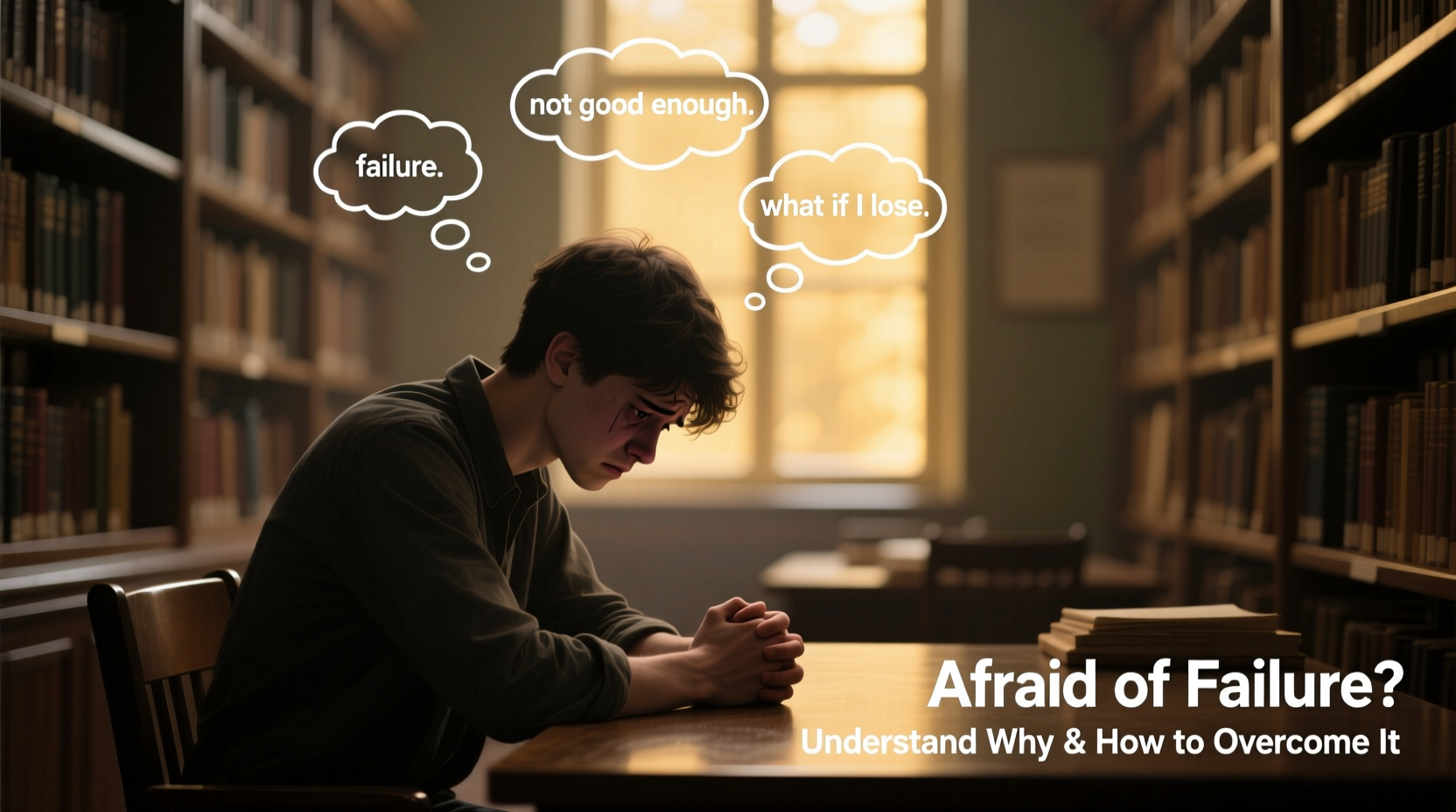
Fear of failure isn’t simply about not wanting to lose. It’s deeply tied to our sense of identity, self-worth, and social perception. Psychologists refer to this as \"fear of negative evaluation\"—the worry that failing will make us appear incompetent, weak, or unworthy in the eyes of others. This fear often originates in early life experiences, such as harsh criticism from parents or teachers, public embarrassment, or growing up in environments where only achievement was rewarded.
Neurologically, failure activates the same regions of the brain associated with physical pain. This biological response reinforces avoidance behavior. When we anticipate failure, the amygdala—the brain’s threat detector—triggers stress hormones like cortisol, leading to anxiety and mental paralysis. Over time, repeated exposure to these patterns conditions us to equate failure with danger, even when no real threat exists.
“Failure is not the opposite of success; it’s part of success.” — Arianna Huffington
Common Root Causes of Failure Anxiety
- Perfectionism: Believing that anything less than flawless performance equals failure.
- Low self-efficacy: Doubting your ability to succeed, regardless of preparation.
- Social comparison: Measuring yourself against others who seem more accomplished.
- Past trauma: Previous failures that led to shame, punishment, or rejection.
- Fixed mindset: Viewing abilities as static rather than something that can grow with effort.
How to Overcome the Fear of Failure: A Step-by-Step Guide
Overcoming fear of failure isn’t about eliminating fear entirely—it’s about changing your relationship with it. Here’s a proven, step-by-step approach to reclaim control and act despite discomfort.
- Identify the specific fear: Ask yourself: What exactly am I afraid of? Is it embarrassment? Financial loss? Proving I’m not good enough? Naming the fear reduces its ambiguity and power.
- Challenge catastrophic thinking: Most fears are based on worst-case scenarios that rarely happen. Ask: What’s the actual likelihood of this outcome? What would I do if it did occur?
- Reframe failure as data: Instead of seeing failure as a verdict on your worth, treat it as information. Each misstep reveals what doesn’t work, bringing you closer to what does.
- Start small: Build confidence through low-stakes risks. Submit an article, pitch an idea in a meeting, or try a new skill. Small wins condition your brain to tolerate uncertainty.
- Practice self-compassion: Speak to yourself as you would a friend. Replace “I’m such a failure” with “This didn’t work, but I’m learning.”
- Visualize process, not just outcome: Focus on the steps you’ll take, not just the end result. This shifts attention from uncontrollable outcomes to controllable actions.
- Review past successes: Keep a “win journal” listing times you overcame obstacles. Revisiting these moments strengthens self-trust.
Do’s and Don’ts When Facing Failure Anxiety
| Do | Don’t |
|---|---|
| Set process-oriented goals (e.g., “I’ll write for 30 minutes daily”) | Set outcome-only goals (e.g., “I must get published”) |
| Seek constructive feedback | Avoid feedback out of fear of criticism |
| Normalize struggle as part of growth | Believe that struggling means you’re not talented |
| Celebrate effort and progress | Only acknowledge perfect results |
| Use setbacks to adjust strategy | Give up after one attempt |
Real Example: From Paralysis to Progress
Sarah, a mid-level marketing professional, avoided applying for leadership roles for years. She told herself she “wasn’t ready,” but deep down, she feared being exposed as a fraud if promoted. After a candid conversation with a mentor, she realized her fear wasn’t about competence—it was about judgment. She began reframing her mindset by setting a goal to apply for one internal position every quarter, regardless of perceived fit. Her first application failed, but instead of retreating, she requested feedback and improved her presentation skills. By the third attempt, she was promoted. “I finally understood,” she said, “that not trying was the only true failure.”
Expert Insight: Building Resilience Through Mindset Shifts
Dr. Carol Dweck’s research on growth mindset highlights a crucial distinction: people who believe abilities can be developed through effort and learning are far more resilient in the face of setbacks. In contrast, those with a fixed mindset—believing talent is innate—tend to avoid challenges to protect their self-image.
“When you enter a mindset where effort is valued and setbacks are seen as opportunities, failure loses its sting.” — Dr. Carol Dweck, Stanford Psychologist
This shift doesn’t happen overnight. It requires consistent reinforcement through language, behavior, and environment. For example, praising effort (“You worked hard on that”) rather than innate ability (“You’re so smart”) fosters resilience in both children and adults.
Checklist: Daily Habits to Reduce Fear of Failure
- ✅ Write down one small risk you can take today
- ✅ Practice positive self-talk when facing uncertainty
- ✅ Review your win journal weekly
- ✅ Replace “What if I fail?” with “What if I learn?”
- ✅ Limit rumination—set a 5-minute reflection window after setbacks
- ✅ Share a challenge with a trusted person to reduce isolation
FAQ: Common Questions About Fear of Failure
Is fear of failure normal?
Yes. Nearly everyone experiences fear of failure at some point. It becomes problematic only when it consistently prevents action or undermines well-being. Recognizing it as a natural human response—not a personal flaw—is the first step toward managing it.
Can fear of failure ever be beneficial?
In moderation, yes. A healthy level of concern can motivate preparation and focus. The key is balance: fear should sharpen performance, not shut it down. When anxiety leads to avoidance or burnout, it’s crossed into unhelpful territory.
How do I support someone struggling with failure anxiety?
Listen without judgment, validate their feelings, and encourage small, manageable steps. Avoid minimizing their fear with phrases like “Just don’t worry about it.” Instead, ask empowering questions: “What’s the smallest thing you could try?” or “What would you do if you weren’t afraid?”
Take Action: Embrace the Discomfort
Fear of failure will never fully disappear—and it shouldn’t. It’s a signal that you care about something meaningful. The goal isn’t fearlessness; it’s courage. Courage to act even when doubt whispers you’re not enough. Every breakthrough in history came from someone who tried, failed, adjusted, and tried again.
Start today. Identify one area where fear has held you back. Apply one strategy from this guide. Track your progress. Over time, you’ll notice a shift—not because the fear vanished, but because your confidence grew louder than it.




 浙公网安备
33010002000092号
浙公网安备
33010002000092号 浙B2-20120091-4
Comments
No comments yet. Why don't you start the discussion?