
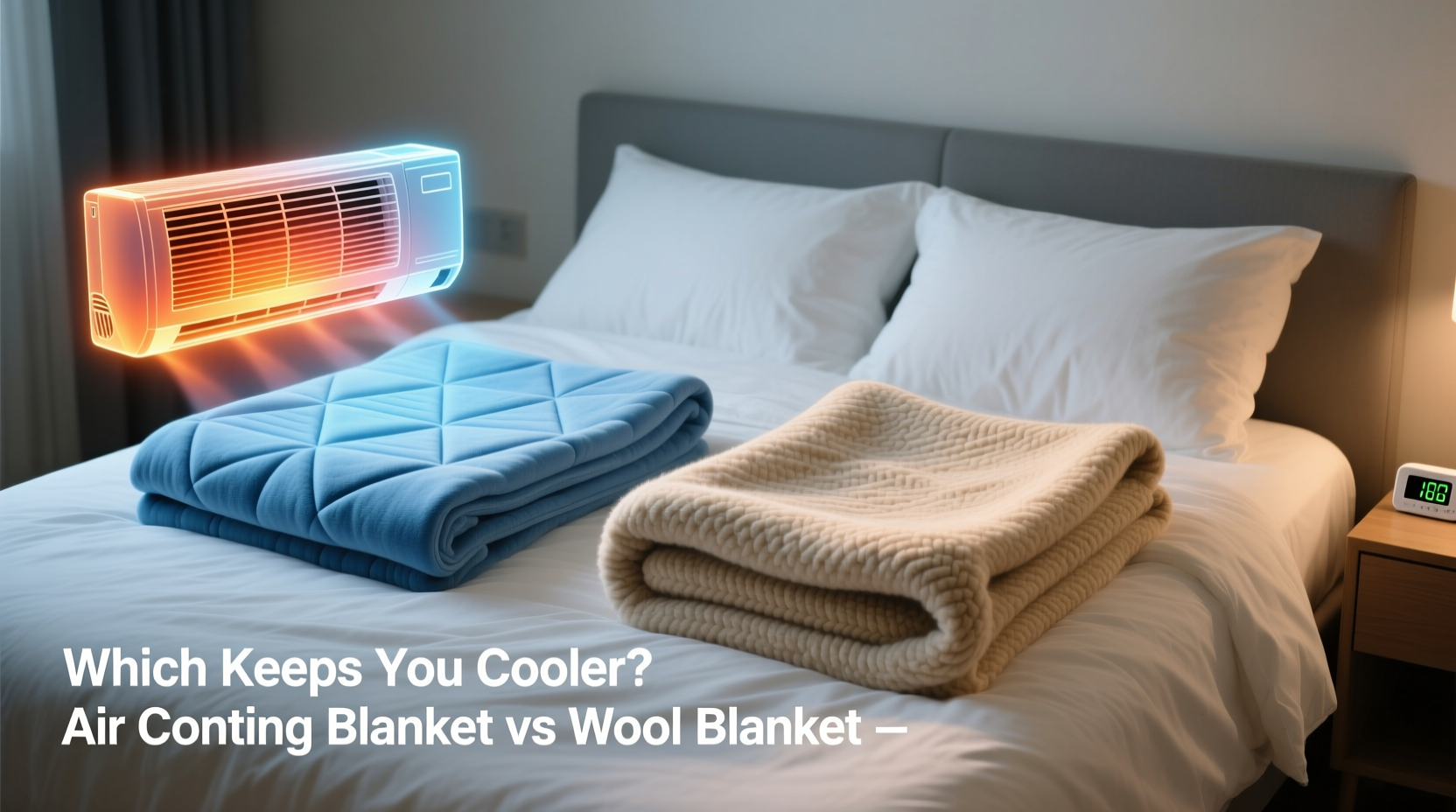
When the temperature rises and bedtime rolls around, many people face a familiar dilemma: should they reach for a lightweight air conditioning blanket or stick with a natural fiber like wool? Conventional wisdom suggests that lighter is always cooler—but recent research in sleep science and textile technology reveals a more nuanced reality. The answer isn’t just about weight or thickness; it’s about how your body manages heat and moisture while you sleep. Understanding the real differences between an air conditioning blanket and a wool blanket can transform your sleep quality, especially during warmer months.
The Science of Sleep Temperature Regulation
Your body undergoes significant physiological changes during sleep, including a drop in core temperature—typically by 1–2°C. This natural cooling process is essential for falling asleep quickly and maintaining deep, restorative sleep cycles. Disruptions in thermal comfort—either from overheating or excessive cooling—can fragment sleep, reduce REM duration, and lead to morning fatigue.
According to Dr. Matthew Walker, neuroscientist and author of *Why We Sleep*, “The optimal bedroom temperature for most adults is between 60°F and 67°F (15.5–19.5°C). However, the right bedding can make a dramatic difference even when room conditions aren’t ideal.”
The key factors influencing nighttime comfort are:
- Thermal conductivity: How quickly heat moves through the fabric.
- Moisture wicking: The ability to pull sweat away from the skin.
- Breathability: Airflow through the material to prevent heat buildup.
- Phase-change behavior: Some modern fabrics absorb excess heat before releasing it slowly.
These properties determine whether a blanket contributes to discomfort—or quietly supports your body’s natural rhythms.
Air Conditioning Blankets: What Are They?
Air conditioning blankets, also known as cooling or climate-control blankets, are engineered using synthetic or blended fibers designed to regulate temperature. Many incorporate advanced technologies such as:
- Gel-infused fibers: Microcapsules embedded in the yarn absorb excess body heat.
- Phase-change materials (PCMs): These shift from solid to liquid at specific temperatures, absorbing energy without changing surface feel.
- Polyester microfiber weaves: Lightweight, tightly woven structures that promote airflow and resist moisture retention.
Marketed heavily toward hot sleepers and those living in humid climates, these blankets often claim to “keep you 3–5 degrees cooler” than traditional options. While some deliver on this promise, others rely more on marketing than measurable performance.
Wool Blankets: The Counterintuitive Cooler Option
At first glance, wrapping yourself in wool during summer seems counterproductive. Yet, high-quality merino or lambswool blankets have been used for centuries across diverse climates—not because they're thick, but because they’re exceptionally effective at thermoregulation.
Wool fibers are naturally hygroscopic, meaning they can absorb up to 30% of their weight in moisture vapor without feeling damp. As your body releases sweat during the night, wool pulls moisture into its core, where it evaporates gradually. This evaporation process has a slight cooling effect—similar to how perspiration cools your skin.
“Natural fibers like wool don’t just insulate—they actively respond to microclimate changes near the body. That’s why wool bedding performs well year-round.” — Dr. Rebecca Gibson, Textile Physiologist, University of Leeds
In addition to moisture management, wool offers other advantages:
- Resists dust mites and mold due to lanolin content.
- Naturally flame-resistant without chemical treatments.
- Maintains consistent temperature by buffering sudden shifts in ambient heat.
Crucially, wool doesn’t trap heat the way cotton or synthetic fleece does. Instead, it creates a dynamic buffer zone between you and the environment, adjusting subtly as your body heats up or cools down.
Direct Comparison: Cooling Performance Showdown
| Feature | Air Conditioning Blanket | Wool Blanket |
|---|---|---|
| Initial Feel | Cool-to-the-touch surface | Neutral or slightly warm initially |
| Middle-of-Night Comfort | May lose cooling effect after several hours | Steady regulation throughout the night |
| Humidity Response | Varies—some synthetics retain moisture | Excels in high humidity |
| Durability | 3–5 years average lifespan | 10+ years with proper care |
| Eco-Impact | Often petroleum-based, non-biodegradable | Biodegradable, renewable source |
| Price Range | $60–$150 | $100–$250 |
The data shows a trade-off: air conditioning blankets offer immediate sensory relief, while wool provides sustained, adaptive comfort. For individuals who wake up sweaty around 2–4 a.m., the long-term stability of wool often proves superior.
Real-World Example: A Summer Sleep Test
Sarah, a 38-year-old nurse from Phoenix, struggled with night sweats during her rotating shifts. Her bedroom AC was set to 72°F, but she frequently woke up drenched. She tested two setups over consecutive weeks:
- Week 1: Memory foam mattress + cotton sheets + gel-cooled air conditioning blanket.
- Week 2: Same bed, but swapped in a lightweight merino wool blanket (400gsm).
Using a wearable sleep tracker, Sarah found that while she fell asleep slightly faster under the cooling blanket, her core temperature spiked twice during the night. Under wool, her temperature remained within a narrow, optimal range. She reported waking up only once in Week 2 versus three times in Week 1—and felt significantly more refreshed.
Her conclusion? “The wool didn’t feel cool at first, but I stayed dry and comfortable all night. It’s like it knew when to let heat escape.”
How to Choose the Right Blanket for Cooler Sleep
Selecting the best option depends on your personal physiology, climate, and sleep habits. Follow this step-by-step guide to make an informed decision:
- Assess your sleeping pattern: Do you tend to overheat early in the night or in the early morning hours? Early overheating favors air conditioning blankets; late-night spikes favor wool.
- Check your bedding layers: A cooling blanket won't compensate for a heat-retaining mattress or non-breathable pajamas. Optimize sheets (e.g., TENCEL™, linen) first.
- Consider humidity levels: In damp environments, wool outperforms synthetics in moisture control.
- Test seasonally: Use a cooling blanket in peak summer and switch to wool in transitional seasons—it may keep you cooler than expected.
- Invest in quality: Cheap cooling blankets often use ineffective gel coatings that degrade after a few washes. True PCMs and breathable knits last longer.
Frequently Asked Questions
Can wool really keep me cool in summer?
Yes. Wool regulates temperature by absorbing moisture and allowing evaporation, which produces a natural cooling effect. Lightweight wool throws (under 500gsm) are specifically designed for warm weather and are commonly used in Mediterranean countries.
Do air conditioning blankets work for everyone?
Not necessarily. People who are very sensitive to initial touch may enjoy them, but those needing stable overnight conditions often find their effects diminish. Results vary based on room ventilation, body mass, and metabolic rate.
How do I care for a wool blanket to maintain its cooling properties?
Wool requires gentle maintenance: spot clean when possible, hand wash or machine wash on “wool” cycle with pH-neutral detergent, and lay flat to dry. Avoid direct sunlight and high heat, which can cause shrinkage.
Final Recommendation: It’s Not About Weight—It’s About Balance
The idea that lighter automatically means cooler is outdated. Modern sleep science emphasizes balance—between heat retention and release, moisture absorption and evaporation, tactile sensation and long-term comfort. While air conditioning blankets offer a quick fix, wool blankets provide intelligent, responsive insulation that adapts to your body’s needs.
If you're a hot sleeper living in a consistently warm climate, a high-performance air conditioning blanket might serve you well—especially if paired with a ventilated mattress. But if you experience fluctuating temperatures at night or live in a humid area, consider giving wool a chance. You might be surprised by how effectively nature’s original smart fabric keeps you cool.




 浙公网安备
33010002000092号
浙公网安备
33010002000092号 浙B2-20120091-4
Comments
No comments yet. Why don't you start the discussion?