
Indoor air quality has become a growing concern for households worldwide. With rising pollution levels, allergens, and airborne pathogens, many people are turning to air purifiers as a solution. Among the most common types are HEPA and ionic air purifiers. While both aim to clean the air, they operate on fundamentally different principles—and come with distinct risks and benefits. One major concern that frequently arises is whether ionic air purifiers produce harmful ozone. The answer isn't simple, but it's critical for anyone considering indoor air quality solutions.
This article breaks down the technology behind HEPA and ionic purifiers, examines how ionic models generate ozone, evaluates scientific evidence on health risks, and provides actionable guidance for choosing a safe and effective device.
How HEPA Air Purifiers Work
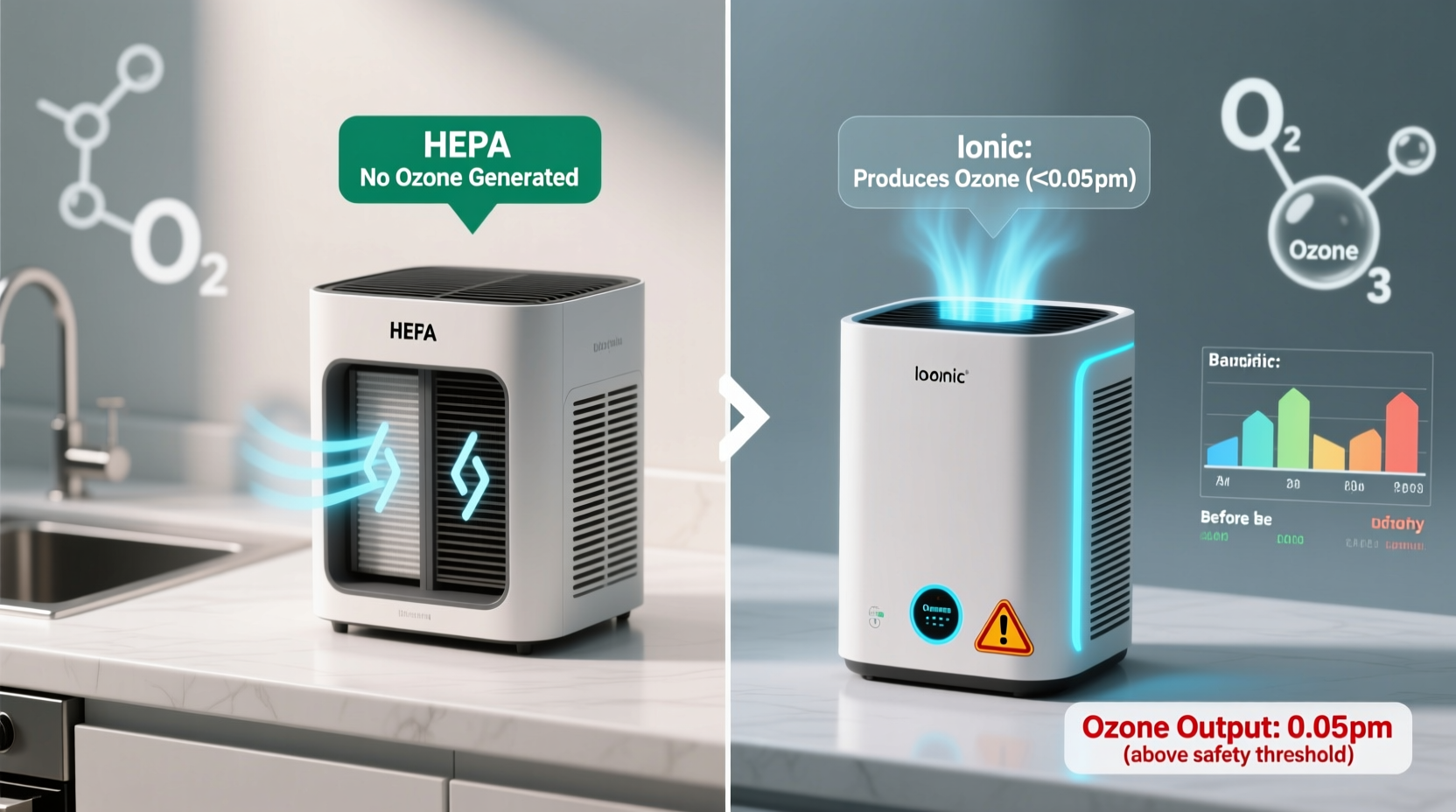
High-Efficiency Particulate Air (HEPA) filters are widely regarded as the gold standard in mechanical air filtration. A true HEPA filter is designed to capture at least 99.97% of particles as small as 0.3 microns. These include dust, pollen, mold spores, pet dander, and even some bacteria and viruses.
The mechanism is straightforward: a fan draws air into the unit, forcing it through a dense fibrous mesh. As particles pass through, they become trapped due to mechanisms like interception, impaction, and diffusion. The cleaned air is then released back into the room.
Because HEPA purifiers rely solely on physical filtration, they do not emit any byproducts such as ozone or ions. They are generally considered safe for continuous use, even in homes with children, pets, or individuals with respiratory conditions like asthma or COPD.
How Ionic Air Purifiers Work—and Why Ozone Is a Concern
Unlike HEPA systems, ionic air purifiers (also known as ionizers) use electrical charges to remove pollutants from the air. There are two primary types: negative ion generators and electrostatic precipitators.
- Negative Ion Generators: Emit negatively charged ions that attach to airborne particles, making them heavier so they fall out of the air onto surfaces like floors or walls.
- Electrostatic Precipitators: Use charged plates to attract and collect these ionized particles within the unit itself.
The problem arises with certain designs—particularly those using corona discharge technology—that produce ozone (O₃) as a byproduct. Ozone is a molecule composed of three oxygen atoms. While it plays a protective role in the upper atmosphere, at ground level it is a known lung irritant and component of smog.
Some manufacturers claim that low levels of ozone help neutralize odors and kill microbes. However, health agencies warn that even small amounts can be harmful over time, especially in poorly ventilated spaces.
“Ozone generators sold as air purifiers can pose serious health risks, particularly for vulnerable populations. There is no safe level of intentional ozone exposure indoors.” — Dr. John R. Balmes, Professor of Medicine, University of California, San Francisco and former member of the California Air Resources Board
Do All Ionic Air Purifiers Produce Ozone?
No—not all ionic purifiers generate significant ozone. The key factor is the method used to create ions.
| Type of Ionic Technology | Ozone Production | Safety Status |
|---|---|---|
| Corona Discharge Ionizers | Yes – often exceeds safety limits | Potentially hazardous; regulated in some regions |
| Needlepoint Bipolar Ionization | Minimal to none (when properly engineered) | Generally safe if certified |
| Photocatalytic Oxidation (PCO) with UV | May produce ozone depending on design | Risk varies; often overmarketed |
| Electret Filters (passive ionization) | No | Safe |
The U.S. Food and Drug Administration (FDA) limits ozone output from medical devices to 0.05 parts per million (ppm). The Environmental Protection Agency (EPA) recommends avoiding any indoor device that produces more than 0.05 ppm, citing potential harm to lung tissue and increased asthma symptoms.
Independent testing by Consumer Reports and the Association of Home Appliance Manufacturers (AHAM) has found that some popular ionic purifiers exceed this threshold, especially when operated in small rooms or over extended periods.
Health Risks of Ozone Exposure from Ionic Purifiers
Inhaling ozone—even at low concentrations—can lead to several adverse health effects:
- Shortness of breath, coughing, and throat irritation
- Aggravation of asthma, bronchitis, and emphysema
- Reduced lung function over time
- Increased susceptibility to respiratory infections
Children, older adults, and people with preexisting respiratory conditions are especially vulnerable. Long-term exposure to elevated ozone levels has been linked in epidemiological studies to chronic respiratory disease and reduced lung development in adolescents.
A 2020 study published in Environmental Science & Technology tested 25 consumer-grade ionic air purifiers and found that nearly 40% produced ozone levels above 0.05 ppm in a standard-sized bedroom. In one case, ozone concentration reached 0.12 ppm after just 30 minutes of operation—more than double the recommended limit.
Real-World Example: A Family’s Experience with an Ionic Purifier
The Thompson family in Denver purchased a popular ionic air purifier online after reading glowing reviews about its “chemical-free cleaning” and “fresh mountain air” effect. Within a week, their 8-year-old son, who had mild seasonal allergies, began waking up with chest tightness and frequent coughing. Their dog also became unusually lethargic.
After consulting their pediatrician, they learned that ozone exposure could be triggering these symptoms. Upon checking the device’s specifications, they discovered it used corona discharge technology and was not CARB-certified (California Air Resources Board). Once they replaced it with a true HEPA model, the symptoms disappeared within days.
This case highlights how misleading marketing claims can lead consumers to unknowingly introduce health hazards into their homes.
HEPA vs Ionic: A Practical Comparison
To help you make an informed decision, here’s a side-by-side comparison of key factors:
| Feature | HEPA Purifiers | Ionic Purifiers |
|---|---|---|
| Filtration Efficiency | 99.97% of particles ≥0.3 microns | Variable; particles settle but aren’t removed |
| Ozone Production | None | Common in many models |
| Maintenance | Filter replacements every 6–12 months | Plate cleaning required; no filter costs |
| Noise Level | Low to moderate (fan-dependent) | Typically silent (no fan) |
| Effect on Surfaces | None | Particles settle on walls, furniture—may stain |
| Energy Use | Moderate (fan motor) | Very low |
| Best For | Allergy sufferers, asthmatics, general use | Dust reduction in low-risk environments (if ozone-free) |
While ionic purifiers consume less energy and operate quietly, their inability to fully remove contaminants—and the risk of ozone—makes them a less reliable choice for improving indoor air quality.
Step-by-Step Guide: Choosing a Safe and Effective Air Purifier
Follow this checklist to ensure you select a device that improves air quality without introducing new risks:
- Look for True HEPA Certification: Confirm the product uses a genuine HEPA filter meeting DOE-STD-3020-2015 standards.
- Avoid Ozone-Generating Technologies: Steer clear of terms like “ozone,” “activated oxygen,” “superoxide,” or “plasmacluster” unless independently verified as ozone-free.
- Check for CARB Certification: In the U.S., California’s Air Resources Board certifies air purifiers that meet strict ozone emission limits. Look for the CARB logo.
- Verify AHAM Verifide® Seal: This indicates third-party testing for Clean Air Delivery Rate (CADR), ensuring performance matches room size.
- Read Independent Reviews: Consult sources like Consumer Reports, Wirecutter, or EPA guidelines before purchasing.
- Consider Room Size: Match the purifier’s CADR rating to your room’s square footage for optimal performance.
- Inspect Return Policy: Test the unit at home—if you notice odors, irritation, or poor results, return it promptly.
FAQ: Common Questions About HEPA and Ionic Purifiers
Can ionic air purifiers cause headaches or fatigue?
Yes, especially if they produce ozone. Headaches, dizziness, and fatigue are reported symptoms of low-level ozone exposure. Poorly ventilated rooms increase the risk. Switching to a HEPA-based system often resolves these issues.
Are there any safe ionic purifiers?
Some modern bipolar ionization systems, when properly designed and independently tested, produce little to no ozone. However, transparency in labeling is inconsistent. Only consider models with verifiable certifications (e.g., UL 2998 or CARB compliance) and third-party test data.
Do HEPA filters remove odors and VOCs?
Standard HEPA filters do not capture gases or volatile organic compounds (VOCs). For odor and chemical removal, choose a unit with an additional activated carbon filter. Some high-end models combine HEPA, carbon, and safe UV-C light (without ozone production).
Final Recommendation: Prioritize Safety and Proven Performance
When it comes to protecting your indoor air, proven technology should outweigh marketing hype. HEPA air purifiers offer consistent, safe, and effective filtration without harmful byproducts. While ionic purifiers may seem appealing due to their quiet operation and low maintenance, the risk of ozone exposure makes them a questionable choice—especially in homes with vulnerable individuals.
The bottom line: if an ionic purifier doesn’t explicitly state zero ozone emissions and carry reputable certifications, assume it poses a health risk. Opt instead for a HEPA-based system with a carbon layer for comprehensive protection against particles, allergens, and odors.




 浙公网安备
33010002000092号
浙公网安备
33010002000092号 浙B2-20120091-4
Comments
No comments yet. Why don't you start the discussion?