
Air conditioning is essential for comfort, especially during hot months. When your unit runs but fails to cool the room, it’s more than inconvenient—it can disrupt sleep, work, and daily life. While some issues require professional help, many cooling problems stem from simple, fixable causes. Understanding these can save time, money, and unnecessary service calls.
This guide outlines seven of the most common reasons an air conditioner stops cooling effectively and provides practical, step-by-step troubleshooting advice you can apply immediately. Most fixes take less than 30 minutes and only basic tools or no tools at all.
1. Dirty Air Filters Restricting Airflow
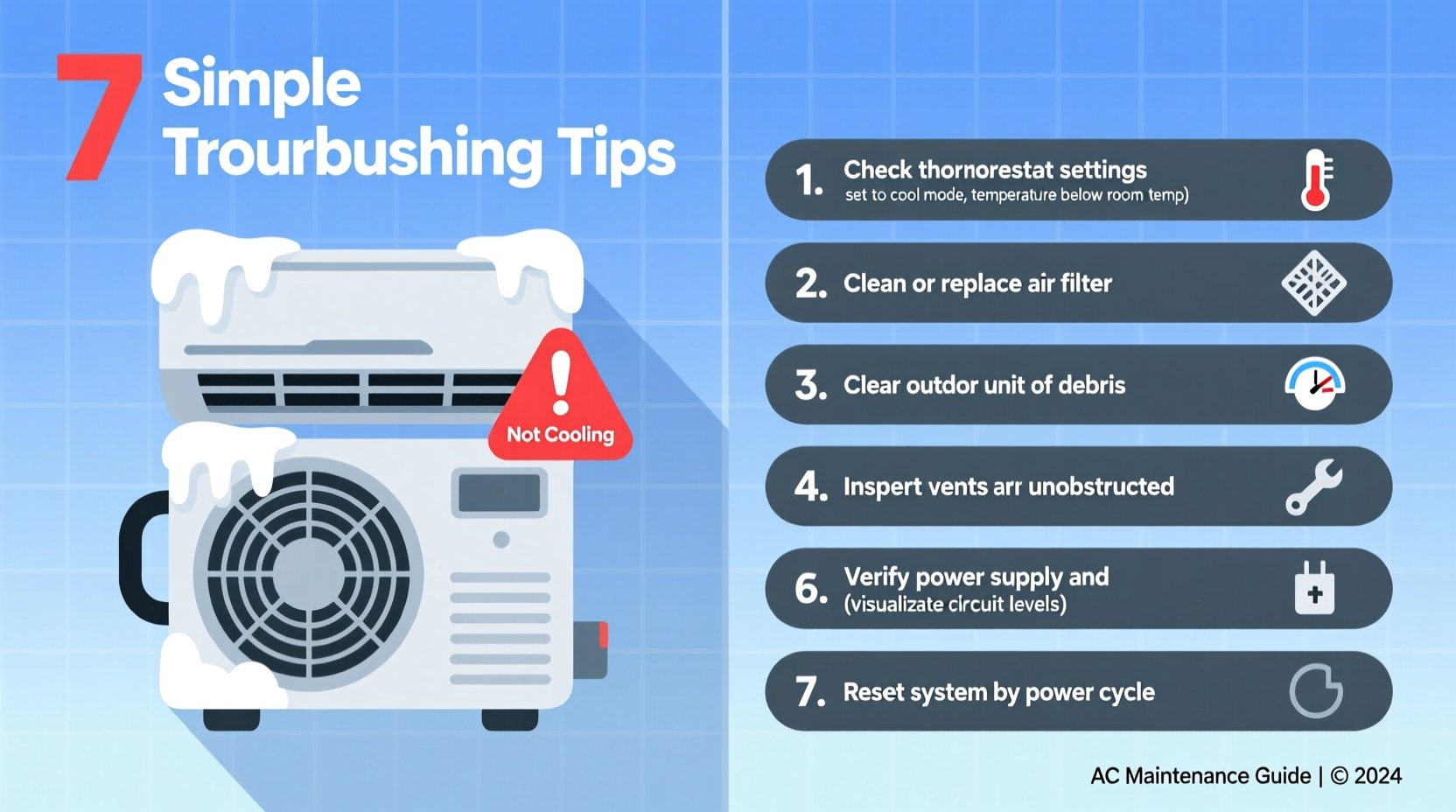
One of the top reasons for poor cooling performance is a clogged air filter. Over time, dust, pet hair, and debris accumulate, restricting airflow across the evaporator coil. This forces the system to work harder, reduces efficiency, and prevents cold air from circulating properly.
Filters should be inspected every 30 days in high-use environments and replaced every 60–90 days under normal conditions. In homes with pets or allergy sufferers, monthly replacement is recommended.
How to Clean or Replace Your Filter
- Turn off the air conditioner at the thermostat or power switch.
- Locate the air filter—usually behind the front panel or in a return air grille on the wall.
- Remove the filter and hold it up to the light. If you can’t see through it, it needs replacing.
- For reusable filters, gently vacuum or rinse with water and let dry completely before reinstalling.
- Insert the new or cleaned filter, ensuring the airflow arrow points toward the unit.
- Restore power and test the system.
2. Frozen Evaporator Coil
If your AC is blowing warm air, the evaporator coil might be frozen. This occurs when moisture in the air freezes on the coil due to restricted airflow (often from a dirty filter) or low refrigerant levels. A frozen coil cannot absorb heat, rendering the system ineffective.
Symptoms include visible ice on copper lines, reduced airflow, or water pooling near the indoor unit.
“Many service calls we receive for ‘no cooling’ turn out to be a simple case of a frozen coil caused by neglected maintenance.” — Carlos Mendez, HVAC Technician with 15 years of field experience
What to Do if Your Coil Is Frozen
- Turn off the cooling function but leave the fan running to help melt the ice.
- Alternatively, switch the thermostat to “fan only” mode for several hours.
- Never use sharp objects to chip away ice—it can damage the fins.
- Once thawed, check and replace the air filter.
- Inspect the air vents and ensure they’re unobstructed.
- Restart the system and monitor for proper cooling.
3. Thermostat Issues Giving False Readings
The thermostat is the brain of your cooling system. If it's malfunctioning, placed poorly, or set incorrectly, your AC may not operate as expected—even if the unit itself is fine.
Common problems include dead batteries, incorrect mode settings (e.g., set to \"heat\" instead of \"cool\"), or placement near heat sources like lamps or electronics that skew temperature readings.
| Thermostat Issue | Symptom | Solution |
|---|---|---|
| Battery failure | Blank screen or unresponsive controls | Replace batteries annually |
| Wrong mode selected | Fan runs but no cooling | Verify “Cool” mode is active |
| Poor placement | Room feels hot but thermostat reads cool | Relocate or shield from heat sources |
4. Blocked or Closed Vents and Registers
Furniture, rugs, or closed dampers can block supply vents, disrupting airflow and preventing even cooling. Even one or two blocked vents can increase system pressure and reduce overall efficiency.
Additionally, some homes have zone dampers that may accidentally be shut off during cleaning or renovations.
Vent Inspection Checklist
- Are supply vents fully open?
- Is furniture, drapes, or carpet covering any registers?
- Are return air grilles dusty or blocked?
- Do vents blow strong, consistent air when the system runs?
- Is there a noticeable difference in airflow between rooms?
5. Outdoor Unit Obstruction or Dirt Buildup
The condenser unit outside releases heat absorbed from indoors. If it’s surrounded by leaves, grass, dirt, or debris, it can’t expel heat efficiently. This forces the compressor to overwork and eventually fail to cool.
Overgrown shrubs or poor clearance also restrict airflow. The unit needs at least 2 feet of space on all sides for proper ventilation.
Cleaning the Outdoor Unit – Step-by-Step
- Turn off power at the circuit breaker.
- Remove leaves, twigs, and yard waste from around the unit.
- Trim back plants and bushes to maintain 24-inch clearance.
- Use a garden hose to gently spray the coils from the outside in. Avoid high pressure.
- Let it dry completely before restoring power.
- Listen for unusual noises after restart—grinding or rattling may indicate deeper issues.
6. Low Refrigerant Levels Due to Leaks
Refrigerant is the chemical that absorbs and releases heat during the cooling cycle. If levels are low, your AC cannot cool effectively. Unlike oil, refrigerant doesn’t get “used up”—a drop indicates a leak, which requires professional repair.
Symptoms include:
- Hissing or bubbling sounds near refrigerant lines
- Ice forming on copper tubing
- Room temperature stays above set point despite continuous operation
Only licensed technicians should handle refrigerant due to environmental regulations and safety risks. However, recognizing the signs early can prevent compressor damage.
7. Age and Wear of the System
Air conditioners typically last 10–15 years with regular maintenance. As units age, components like capacitors, compressors, and fans degrade. Cooling capacity diminishes gradually, often unnoticed until summer heat peaks.
If your system is over 10 years old and frequently needs repairs, replacement may be more cost-effective than continued servicing.
“When an AC is nearing the end of its lifespan, small issues compound quickly. Upgrading to a modern, energy-efficient model can cut cooling costs by up to 40%.” — National Comfort Institute
Mini Case Study: Maria’s Bedroom Wasn’t Cooling
Maria noticed her bedroom remained hot while other rooms cooled normally. She checked the thermostat—set correctly. The outdoor unit was clean and running. Then she realized the vent in her room was partially covered by a bookshelf pushed too close to the wall.
After pulling the shelf back, airflow improved immediately. Within 20 minutes, the room temperature dropped by 5°F. A simple fix saved her a $150 service call.
Troubleshooting Checklist: What to Check First
When your aircon isn’t cooling, follow this quick checklist before calling a technician:
- ✅ Is the thermostat set to “Cool” and the temperature lower than the room?
- ✅ Are air filters clean or recently replaced?
- ✅ Are supply and return vents open and unobstructed?
- ✅ Is the outdoor unit clear of debris and has proper clearance?
- ✅ Is the circuit breaker on and power reaching the unit?
- ✅ Can you hear the indoor fan and outdoor condenser running?
- ✅ Is there ice on the refrigerant lines or indoor unit?
Frequently Asked Questions
Why is my aircon running but not cooling?
This usually indicates a problem with airflow (like a dirty filter), a frozen coil, or low refrigerant. Start by checking the filter and thermostat settings. If those are fine, inspect the outdoor unit and look for ice buildup.
Can I recharge the refrigerant myself?
No. Refrigerant handling requires certification and specialized equipment. DIY kits sold online are ineffective and potentially dangerous. Always hire a licensed HVAC technician for leaks or recharging.
How often should I service my aircon?
At minimum, schedule professional maintenance once a year—ideally before peak cooling season. Biannual servicing (spring and fall) is best for optimal performance and longevity.
Take Action Before It Gets Hotter
Most cooling issues aren’t emergencies—they’re preventable with routine care. By staying proactive with filter changes, vent checks, and outdoor unit cleaning, you can avoid discomfort and extend your system’s life. Don’t wait for a breakdown in 95°F heat to act.




 浙公网安备
33010002000092号
浙公网安备
33010002000092号 浙B2-20120091-4
Comments
No comments yet. Why don't you start the discussion?