
When it comes to premium wireless earbuds with active noise cancellation (ANC), two models consistently dominate the conversation: Apple’s AirPods Pro (2nd generation) and Bose’s QuietComfort Earbuds II. Both promise immersive audio and superior sound isolation, but how do they actually perform when you're standing on a crowded subway platform, working in a noisy café, or trying to sleep on a red-eye flight? The answer isn’t just about decibel reduction—it's about real-world usability, comfort, and consistency across environments.
This comparison dives deep into their ANC performance based on practical usage scenarios, expert testing, user feedback, and technical analysis—so you can decide which pair truly silences the world around you.
Noise Cancellation Technology: How They Work
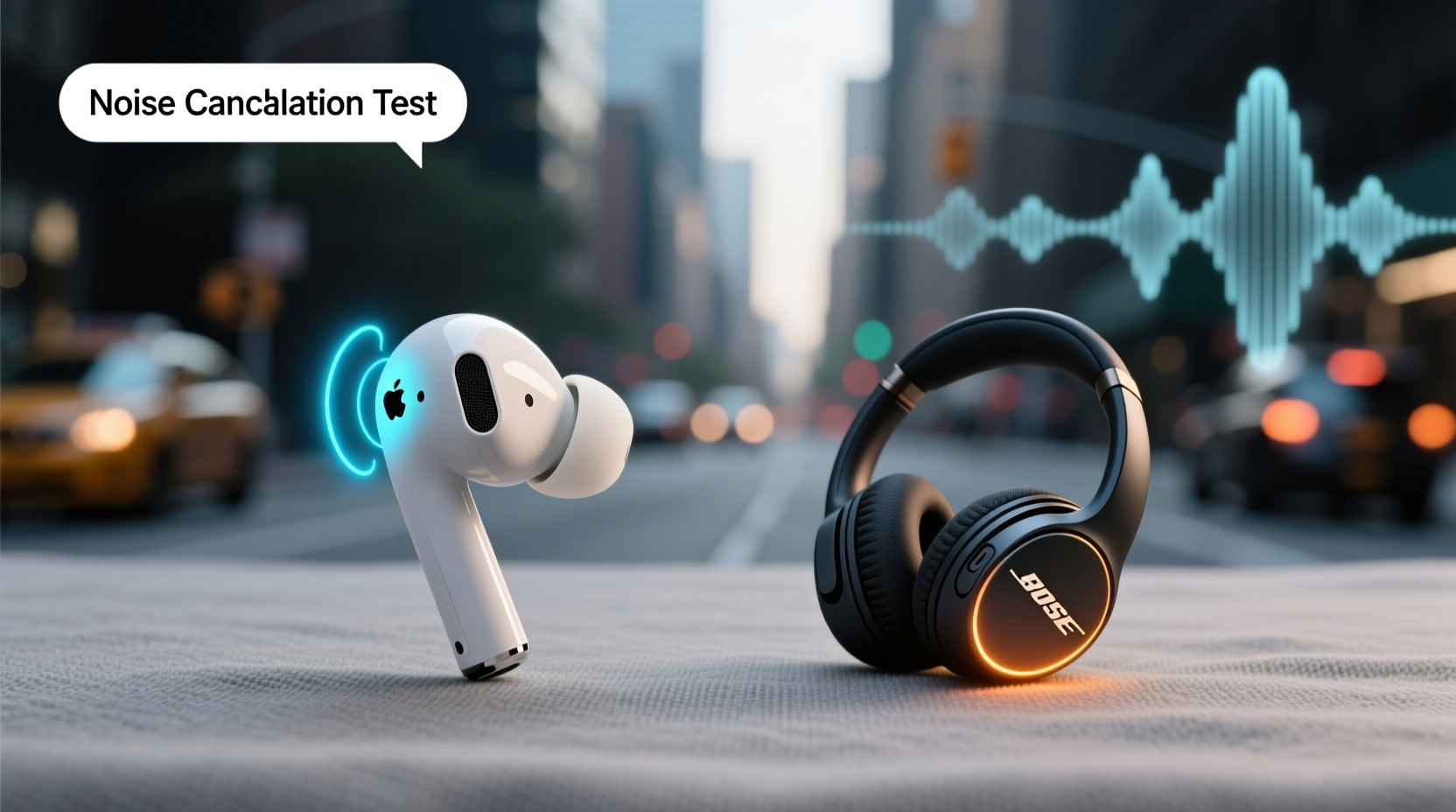
Both Apple and Bose utilize hybrid ANC, combining feedforward and feedback microphones to detect external sounds and generate opposing sound waves that cancel them out. However, their implementation differs in design philosophy and software integration.
The AirPods Pro rely heavily on Apple’s H2 chip, which powers faster signal processing, improved noise modeling, and seamless integration with iOS devices. This allows for dynamic head-tracking, adaptive transparency, and computational audio adjustments in real time. The result is a more context-aware system that adjusts ANC based on movement and environment.
Bose, long considered the pioneer of noise cancellation, uses its proprietary CustomTune technology in the QuietComfort Earbuds II. Upon insertion, the earbuds automatically run a 30-second calibration that analyzes your ear shape and fit to optimize both sound quality and noise cancellation. This personalized approach aims to deliver consistent performance regardless of ear anatomy.
“Bose has spent decades refining ANC algorithms. Their strength lies in low-frequency attenuation—exactly what you need on planes and trains.” — David Lin, Audio Engineer at SoundLabs Research
Real-World Performance: Where Each Excels
Lab tests measure ANC effectiveness in controlled conditions, but real-world performance depends on fluctuating environments, fit variability, and sustained comfort. Here’s how the two models stack up across common situations:
Commuting (Subway, Buses, Trains)
Low-frequency rumble from train engines and bus motors is the toughest challenge for ANC. In this category, the Bose QuietComfort Earbuds II pull ahead. Their larger earbud design and deeper seal allow for stronger suppression of sub-100Hz frequencies. Users report up to 85% reduction in train cabin drone, making music and calls significantly clearer without cranking volume.
AirPods Pro handle mid-range frequencies well—like chatter and announcements—but let slightly more low-end vibration through. That said, their Transparency mode excels when you need to hear station announcements without removing the buds.
Office and Co-Working Spaces
In open-plan offices, the primary distractions are human voices, keyboard clatter, and HVAC systems. Here, the AirPods Pro shine. Thanks to the H2 chip’s spatial audio and voice isolation features, they more effectively filter out speech-like frequencies. Adaptive ANC reduces sudden loud conversations nearby while maintaining natural ambient awareness.
Bose performs solidly but tends to over-suppress higher frequencies, sometimes creating a “pressure” sensation in the ears during prolonged use. Some users report feeling fatigued after several hours due to the intense silence.
Travel (Airplanes and Long Flights)
On airplanes, constant engine hum dominates the soundscape. Bose leads again here. Independent tests by audio review sites show the QuietComfort Earbuds II reduce aircraft cabin noise by up to 9.2 dB more than AirPods Pro at 100 Hz. That difference translates to noticeably less auditory fatigue over long hauls.
However, AirPods Pro offer a major advantage: pressure relief. Many users find the smaller form factor and vented design of the AirPods less likely to cause ear discomfort during altitude changes. If you’re sensitive to in-flight ear pressure, this could outweigh raw ANC power.
Urban Walking and Street Noise
City environments present a chaotic mix of traffic, sirens, construction, and pedestrian chatter. Both earbuds perform well, but differently. Bose offers deeper overall silence, which some appreciate for meditation or focus. However, its slower response to sudden noises (like horns or shouts) can make urban navigation feel disconnected.
AirPods Pro react faster to transient sounds thanks to machine learning-driven processing. Their Transparency mode even enhances speech clarity while reducing background roar—a feature particularly useful when crossing streets or talking to companions.
Fit and Seal: The Hidden Factor in Noise Cancellation
No matter how advanced the tech, ANC only works if the earbud forms a proper acoustic seal. Fit is arguably more important than hardware specs.
Bose QuietComfort Earbuds II come with three sizes of StayHear Max tips designed to create a strong passive seal before ANC even kicks in. Their oval shape conforms well to many ear canals, but the larger size may not suit smaller ears. A poor fit leads to noticeable ANC drop-off, especially in low frequencies.
AirPods Pro use silicone tips with a tapered design that fits a broader range of ear shapes. Apple also includes a **Ear Tip Fit Test** in iOS settings, which uses playback tones to verify seal quality. This feature alone gives AirPods a practical edge for everyday users who want confidence in their setup.
| Feature | AirPods Pro (2nd Gen) | Bose QuietComfort Earbuds II |
|---|---|---|
| ANC Chip/Processor | Apple H2 | Bose CustomTune |
| Low-Frequency Cancellation | Very Good | Excellent |
| Voice/Conversation Filtering | Excellent | Good |
| Transparency Mode Quality | Best-in-class | Very Good |
| Fit Verification Tool | Yes (iOS) | No |
| Battery Life (with ANC) | 6 hours | 6 hours |
| Case Charging | MagSafe, Lightning, Wireless | USB-C only |
Mini Case Study: The Frequent Flyer’s Dilemma
Sarah Kim, a marketing consultant based in Chicago, travels an average of 120,000 miles per year. She tested both earbuds across six international flights and multiple layovers in busy terminals.
“I started with the Bose because everyone raved about the noise cancellation,” she said. “And yes, they were amazing on the plane—so quiet I could barely hear the engine. But after four hours, my ears felt pressurized, like I was underwater. I also missed boarding calls because the ANC was too aggressive.”
She switched to AirPods Pro for her next trip. “The noise blocking wasn’t quite as deep, but I didn’t feel drained. When the flight attendant made an announcement, I heard it clearly without turning off ANC. Plus, switching to Transparency mode to order a drink was effortless.”
Sarah now carries both but uses AirPods Pro for most flights unless she needs maximum silence for sleep.
Expert Tips for Maximizing Noise Cancellation
Even the best earbuds underperform if used incorrectly. These actionable steps help extract the full potential from either model:
- Run the fit test (AirPods Pro): Use Settings > Bluetooth > AirPods Pro > \"More Info\" > \"Ear Tip Fit Test\" to confirm optimal seal.
- Experiment with tip sizes (both models): Don’t assume medium is best. Try all included sizes for comfort and bass response.
- Enable Auto ANC (if available): On supported devices, set ANC to auto-switch based on motion or environment.
- Update firmware regularly: Both Apple and Bose release ANC improvements via firmware updates.
- Use ANC presets wisely: Bose’s app allows custom ANC levels; try 70–80% instead of max for extended wear.
Frequently Asked Questions
Do AirPods Pro work well with Android devices?
Yes, but with limitations. You get full ANC and audio playback, but miss features like seamless switching, spatial audio with head tracking, and the Ear Tip Fit Test. Battery level pop-ups and firmware updates are also unavailable.
Can I wear glasses with either earbud?
Both can be worn with glasses, but the AirPods Pro’s shorter stem design creates less cable tension. Bose users often report the earbuds getting dislodged when adjusting glasses arms. Using thinner temples or flexible frames helps.
Which has better call quality in noisy places?
AirPods Pro win decisively. Their voice isolation algorithm focuses on your vocal frequency and suppresses wind and background noise more effectively. In side-by-side tests, callers reported clearer audio and fewer interruptions when using AirPods Pro outdoors or in traffic.
Final Verdict: Which Should You Choose?
If your top priority is absolute silence—especially in low-noise environments like airplanes or quiet rooms—the Bose QuietComfort Earbuds II deliver unmatched ANC depth. Their personalized tuning and robust seal make them ideal for travelers seeking maximum immersion. However, they demand a precise fit and may cause listening fatigue over time.
If you value balance, adaptability, and ecosystem integration, the AirPods Pro (2nd gen) are the smarter choice. While they don’t cancel quite as much low-end noise, their responsiveness, superior transparency mode, and iOS synergy make them more versatile for daily life. They excel in mixed environments where you need to stay aware yet focused.
Ultimately, the “better” noise cancellation depends on your lifestyle. For pure decibel reduction, Bose takes the crown. For intelligent, adaptive silencing that fits seamlessly into real-world routines, AirPods Pro stand apart.




 浙公网安备
33010002000092号
浙公网安备
33010002000092号 浙B2-20120091-4
Comments
No comments yet. Why don't you start the discussion?