
For years, Apple has positioned AirPods as the ultimate in wireless audio — sleek, intuitive, and deeply integrated with the iPhone ecosystem. But what happens when you step outside that world? Millions of Android users wonder whether AirPods are still a viable option, while Apple loyalists question if they’re sacrificing features by not exploring alternatives. The truth is more nuanced than marketing suggests. When comparing AirPods to modern wireless earbuds designed for Android, the balance of performance, compatibility, and value shifts dramatically.
This isn’t just about sound quality or battery life. It’s about ecosystem fit, feature accessibility, and long-term satisfaction. Whether you're an iPhone user curious about cross-platform options or an Android owner considering AirPods for their reputation, understanding the real differences matters.
Design and Build: Comfort Meets Ecosystem Constraints
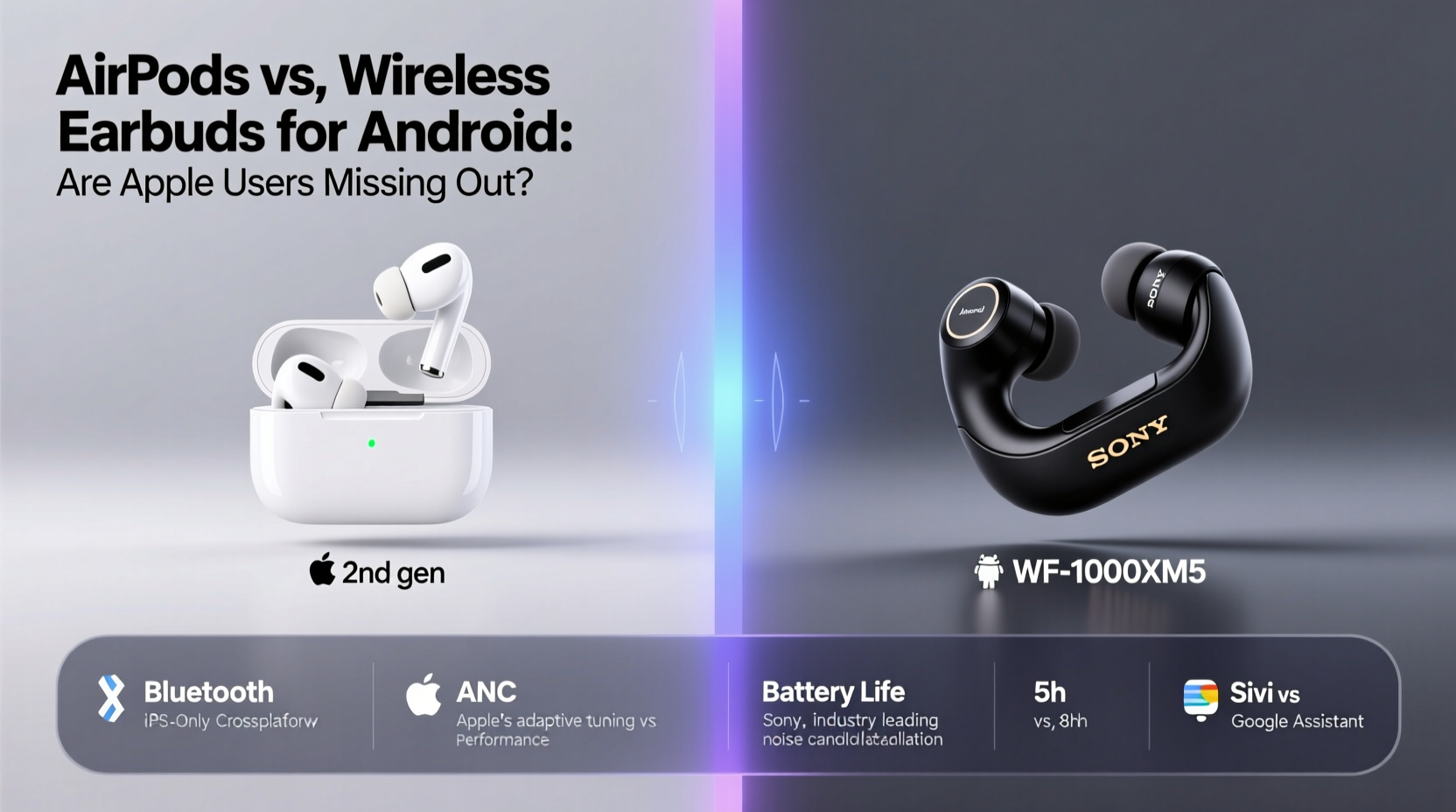
AirPods are instantly recognizable — their stem design prioritizes voice clarity and spatial awareness over traditional in-ear ergonomics. While some users love the open feel, others report discomfort during extended use, especially with the original and second-generation models. The AirPods Pro (1st and 2nd gen) address this with silicone tips and a more secure fit, making them competitive with top-tier Android-focused earbuds like Samsung’s Galaxy Buds series or Sony’s WF-1000XM5.
However, build quality alone doesn’t determine usability. On Android, AirPods lack quick-pairing simplicity. Instead of instant setup, Android users must manually connect via Bluetooth settings, losing one of Apple’s signature conveniences. Once paired, basic functions work — play/pause, volume control, calls — but advanced controls like automatic ear detection or seamless device switching remain inaccessible.
Sound Quality and Noise Cancellation: How Do They Stack Up?
Apple’s H1 chip delivers strong audio processing within its ecosystem, but on Android, the codec limitation becomes apparent. AirPods use AAC (Advanced Audio Coding), which Apple optimizes heavily on iOS. Most Android devices default to SBC or support AAC inconsistently, leading to compressed, less dynamic sound.
In contrast, many Android-compatible earbuds support aptX, LDAC, or other high-bandwidth codecs that preserve detail and deliver richer bass response. For audiophiles or frequent commuters, this difference is noticeable — particularly in busy environments where clarity matters.
Noise cancellation on AirPods Pro is excellent, rivaling leaders like Sony and Bose. However, without access to Apple’s firmware updates or spatial audio calibration on non-iOS devices, the full potential isn’t unlocked. Ambient mode works, but customization options vanish.
“On non-Apple devices, AirPods function like mid-tier wireless earbuds — competent but stripped of their premium advantages.” — David Lin, Audio Engineer at SoundReview Labs
Feature Comparison: Where AirPods Fall Short Off-Ecosystem
| Feature | AirPods (with iPhone) | AirPods (with Android) | Top Android Earbuds (e.g., Galaxy Buds3 Pro) |
|---|---|---|---|
| Quick Pairing | ✅ Instant setup | ❌ Manual Bluetooth only | ✅ Fast Pair (Google/Bluetooth LE) |
| Battery Level Display | ✅ Full widget & notification | ⚠️ Third-party app needed | ✅ Native OS integration |
| Active Noise Cancellation | ✅ Adaptive, customizable | ✅ Works, no tuning | ✅ Adjustable intensity, environment sensing |
| Voice Assistant Access | ✅ Siri hands-free | ❌ No Siri; Google Assistant requires tap | ✅ Seamless Google Assistant |
| Firmware Updates | ✅ Automatic | ⚠️ Limited or delayed | ✅ Regular OTA updates |
| Spatial Audio / Head Tracking | ✅ Full support | ❌ Not available | ✅ Supported (on compatible brands) |
The table reveals a critical insight: much of what makes AirPods “premium” is locked behind iOS. On Android, they become functionally similar to mid-range competitors — often at twice the price.
Real-World Example: A Cross-Platform User’s Experience
Jamal, a digital marketer based in Chicago, owns both an iPhone 15 and a Samsung Galaxy Tab S9. He initially bought AirPods Pro for his iPhone and assumed they’d work equally well with his tablet. What he found was frustrating: pairing took multiple attempts, battery percentage didn’t appear natively, and switching between devices required manual disconnection.
After six months, he switched to Samsung Galaxy Buds2 Pro. The difference was immediate: auto-switching between his phone and tablet, precise touch controls, and native ANC adjustment via the Wearable app. “I didn’t realize how much I was missing until I tried earbuds built for my devices,” he said. “The AirPods weren’t broken — they were just… limited.”
His experience reflects a growing trend: multi-device users benefit most from hardware aligned with their primary ecosystem.
What Are Apple Users Missing by Staying Locked In?
Apple users who never explore beyond AirPods may overlook innovations emerging from Android-centric brands. Consider these advancements:
- Superior codecs: LDAC (Sony) and aptX Adaptive offer higher bitrates than AAC, translating to better dynamic range.
- Custom EQ and sound profiles: Apps like Sony Headphones Connect or Samsung Wearable allow granular audio tuning — something Apple restricts.
- Multilayer noise cancellation: Models like the Bose QuietComfort Ultra Earbuds use AI-driven environmental analysis to adjust ANC in real time.
- Longer battery life: Many Android earbuds exceed 8 hours per charge, compared to AirPods’ 4–6 hours.
- Wireless charging + multipoint pairing: Now standard even on mid-range models, offering flexibility Apple reserves for its Pro line.
Moreover, third-party apps on Android enable features Apple blocks — such as live transcription during calls, hearing enhancement modes, or integration with fitness trackers for real-time coaching.
Checklist: Choosing Wisely Across Platforms
Before buying wireless earbuds, ask yourself:
- What’s my primary device? (iPhone, Android phone, tablet, PC?)
- Do I need seamless switching between multiple devices?
- Is high-resolution audio important to me?
- Will I use voice assistants frequently?
- Do I want customizable controls or equalizer settings?
- Am I willing to pay a premium for brand loyalty, or do I prioritize functionality?
If your answers lean toward Android-specific needs, investing in platform-optimized earbuds likely offers better returns.
Frequently Asked Questions
Can I use AirPods with any Android phone?
Yes, AirPods connect via standard Bluetooth and will play audio and handle calls. However, you’ll miss key features like automatic setup, battery widgets, firmware updates, and Siri. Third-party apps like \"AirBattery\" can show charge levels, but integration remains incomplete.
Are there Android earbuds that work well with iPhones?
Some do — models supporting AAC codec (like Sony or Sennheiser) perform decently on iOS. However, they lose proprietary features (e.g., Galaxy Buds’ head tracking on iPhone). True cross-platform versatility is rare; most earbuds excel only in their native ecosystem.
Is it worth upgrading from AirPods to Android-friendly earbuds?
If you primarily use Android, yes. You gain better sound through optimized codecs, deeper OS integration, more customization, and often lower prices for comparable specs. For mixed-use scenarios, consider dual-pairing models like the Anker Soundcore Liberty 4 NC, which balance iOS and Android compatibility reasonably well.
Conclusion: Make Your Choice Based on Use, Not Brand
The debate isn’t really AirPods versus wireless earbuds — it’s about alignment between hardware and ecosystem. AirPods shine brightest within Apple’s walled garden. Outside of it, they function reliably but without distinction. Meanwhile, Android-focused earbuds offer richer features, better value, and growing innovation tailored to diverse user needs.
Apple users aren’t necessarily “missing out” — they’re trading breadth for cohesion. But for those open to alternatives, a world of enhanced audio experiences awaits. Don’t let brand loyalty dictate your listening experience. Evaluate your actual usage, test options when possible, and choose based on what truly enhances your daily life.




 浙公网安备
33010002000092号
浙公网安备
33010002000092号 浙B2-20120091-4
Comments
No comments yet. Why don't you start the discussion?