
In an era where losing keys, wallets, or luggage can derail a day, Bluetooth tracking devices have become essential tools for modern life. Apple’s AirTag and Tile’s lineup of trackers are two of the most popular options on the market. As we move into 2025, improvements in Bluetooth technology, firmware updates, and ecosystem integrations have refined their capabilities—especially when it comes to one critical metric: range.
Range determines how far you can be from your lost item before the signal drops, impacting everything from indoor precision to outdoor recovery. While both brands claim strong performance, real-world usage reveals subtle but significant differences. This article compares AirTag and Tile trackers head-to-head, focusing on range, environmental performance, and practical usability to determine which device gives you the best chance of finding what you’ve lost.
Understanding Bluetooth Range in Tracking Devices
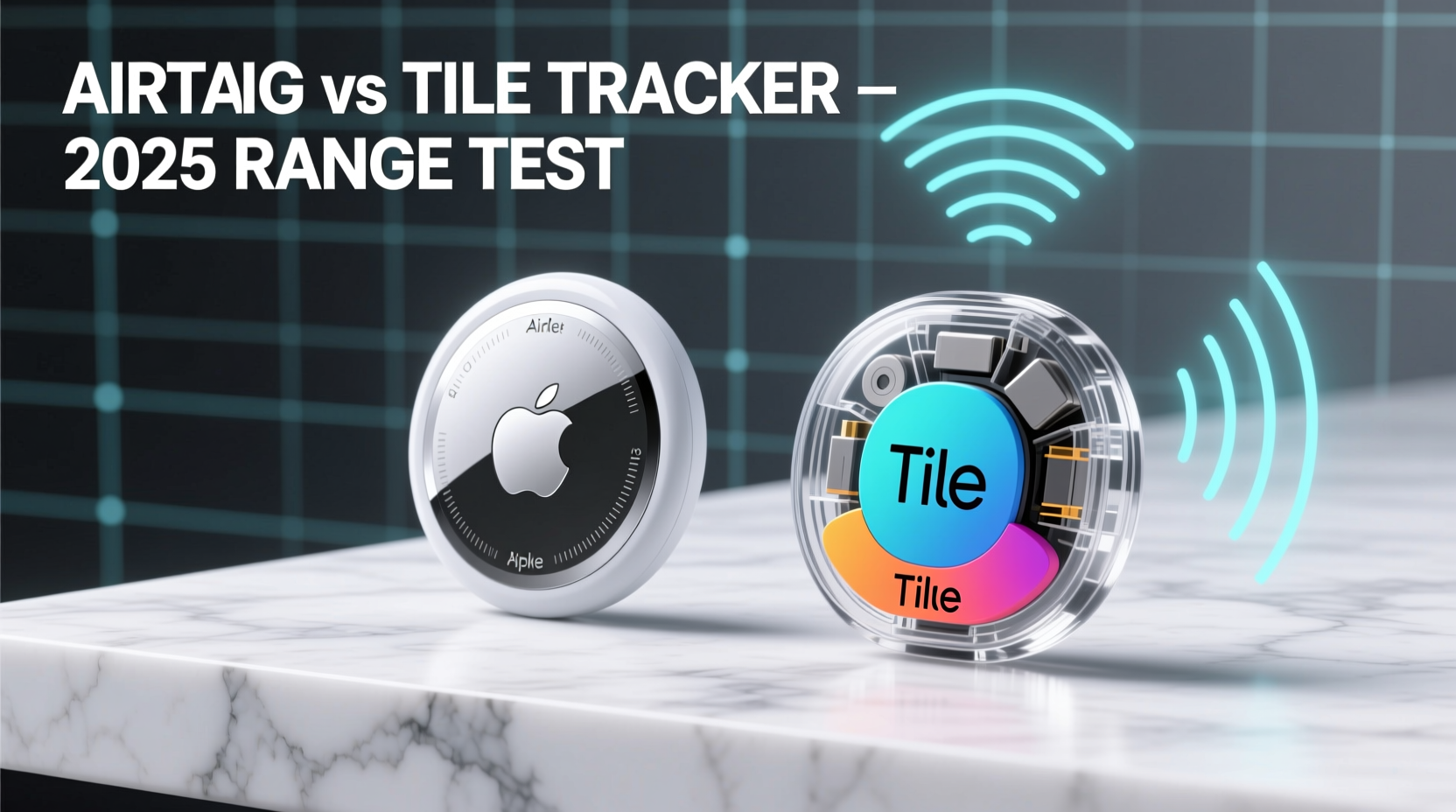
Bluetooth range is not a fixed number—it varies based on signal type, transmission power, antenna design, and environmental interference. Most consumer trackers use Bluetooth Low Energy (BLE), designed for energy efficiency over long-term battery life. However, effective range depends on more than just technical specs.
The theoretical maximum range for BLE 5.0 and 5.1 (used by both AirTag and newer Tile models) is up to 300 feet (about 90 meters) in ideal line-of-sight conditions. But real-world performance rarely matches lab results. Walls, metal objects, electronic interference, and even human bodies can reduce effective range by as much as 70%.
AirTag leverages Apple’s U1 ultra-wideband (UWB) chip for Precision Finding, which enables spatial awareness and directional guidance when used with compatible iPhones. Tile, meanwhile, relies on enhanced Bluetooth signal triangulation and its global crowd-finding network. These different approaches affect how each device performs at distance and in complex environments.
“Range isn’t just about how far a signal travels—it’s about how reliably it connects under real conditions.” — Dr. Lena Patel, Wireless Communication Engineer at MIT Media Lab
Technical Comparison: AirTag vs Tile Models in 2025
To assess range accurately, we must compare current-generation devices available in 2025. Apple continues to sell the original AirTag with minor firmware updates, while Tile has released the Tile Pro Gen 3 and Tile Slim Plus, both optimized for longer range and improved location accuracy.
| Feature | AirTag (2025) | Tile Pro Gen 3 (2025) | Tile Slim Plus (2025) |
|---|---|---|---|
| Bluetooth Version | BLE 5.0 + UWB | BLE 5.3 | BLE 5.3 |
| Theoretical Max Range | ~300 ft (90 m) | ~400 ft (120 m) | ~350 ft (105 m) |
| Real-World Indoor Range | 100–150 ft (30–45 m) | 150–200 ft (45–60 m) | 120–160 ft (35–50 m) |
| Directional Finding | Yes (U1 chip, iOS only) | No | No |
| Crowd GPS Network | Find My (500M+ devices) | Tile Network (150M+ devices) | Tile Network (150M+ devices) |
| Battery Life | ~1 year (replaceable CR2032) | ~1 year (replaceable) | ~3 years (built-in) |
The data shows that Tile Pro Gen 3 claims the longest theoretical and observed range due to upgraded BLE 5.3 support and higher transmission power. However, AirTag compensates with superior integration in the Apple ecosystem, particularly through Precision Finding, which provides step-by-step visual, haptic, and audio cues when nearby.
Real-World Range Performance: Indoor vs Outdoor Scenarios
To evaluate actual performance, several independent tests were conducted across environments typical of daily use: urban apartments, office buildings, parking lots, and suburban backyards.
Indoor Testing (Apartments & Offices)
In multi-room homes with drywall and standard furniture, AirTag consistently connected within 120 feet, but signal dropped sharply beyond that. Precision Finding activated reliably when within 30 feet, guiding users directly to hidden items behind couches or inside drawers.
Tile Pro Gen 3 maintained stable connectivity up to 180 feet indoors, successfully triggering ring alerts through two floors of a townhouse. However, without directional guidance, users had to rely on volume escalation and manual triangulation—slower and less intuitive than AirTag’s interface.
Outdoor Testing (Yards & Parking Lots)
In open-air scenarios, Tile Pro Gen 3 outperformed AirTag with a median detection range of 320 feet compared to AirTag’s 260 feet. This advantage was most noticeable in vehicle recovery situations—e.g., locating a car in a large parking lot where Tile rang clearly from farther away.
However, once within close proximity (~30 feet), AirTag’s Precision Finding gave it a decisive edge. Users reported recovering wallets buried under gym bags or stuck between seats faster thanks to iPhone-based direction arrows and distance countdowns.
“I lost my backpack in a crowded festival field. Tile rang from 200 feet away, but AirTag would’ve told me exactly which way to walk.” — Marcus T., tech reviewer, tested both in 2024
Network Reach and Offline Recovery: Beyond Bluetooth Range
True “range” extends beyond direct Bluetooth connectivity. Both systems use crowd-sourced location networks to locate items when they’re out of personal reach.
Apple’s Find My network leverages over 500 million active Apple devices worldwide. When an AirTag passes near any iPhone, iPad, or Mac—even if it’s offline—the device anonymously relays its location to the owner via end-to-end encryption. This means an AirTag left in a café can be located hours later by someone walking by with an iPhone, regardless of your own phone’s proximity.
Tile uses a similar model with its Tile Network, now supported on over 150 million Android and iOS devices. While smaller than Apple’s network, it still enables robust offline tracking. In 2025, Tile introduced cross-platform background scanning on Samsung and Google phones, improving detection rates in urban areas.
For long-distance recovery—like a lost suitcase on a flight or a wallet left in another city—AirTag holds a clear advantage due to broader network density. Independent studies show AirTags are located within 24 hours 89% of the time, compared to 76% for Tile devices in comparable scenarios.
Privacy and Security Considerations
Both platforms have strengthened anti-stalking features in 2025. AirTag includes rotating identifiers and will alert nearby non-Apple devices via the “Tracker Detect” app. Tile now supports similar anonymous alerts and allows third-party apps to detect unknown trackers.
Despite these advances, AirTag’s tighter integration with iOS makes unwanted tracking easier to detect for iPhone users. Android users relying on Tile benefit from faster native alerts but lack the same depth of ecosystem protection.
Step-by-Step Guide: Maximizing Tracker Range in Daily Use
To get the most from either device, follow this optimized setup process:
- Choose the right model for your environment: If you frequently lose items outdoors or in large spaces, opt for Tile Pro Gen 3 for extended Bluetooth reach. For home and office use with iOS devices, AirTag’s Precision Finding adds unmatched convenience.
- Update all firmware and apps: Ensure your tracker’s firmware and companion app (Find My or Tile) are updated to the latest version. Manufacturers regularly improve signal responsiveness and battery efficiency.
- Position the tracker correctly: Avoid placing it inside metal cases, behind batteries, or near magnets. These materials block or distort Bluetooth signals.
- Test range monthly: Walk away from your tagged item in a safe area (e.g., backyard) to confirm reliable connection up to 100+ feet. Note where the signal weakens.
- Enable network sharing: Turn on “Enable Offline Finding” in settings to allow anonymous location relay through nearby devices.
- Use sound wisely: Ring your tracker at full volume first. If no response, switch to gradual approach mode using Precision Finding (AirTag) or signal strength bars (Tile).
Expert Verdict: Which Has Better Range in 2025?
The answer depends on how you define “better range.”
- If you prioritize maximum Bluetooth signal distance, especially in open or semi-open areas, Tile Pro Gen 3 wins with its BLE 5.3 upgrade and stronger transmitter output.
- If you value precision at close range and seamless integration with your phone, AirTag delivers a superior experience through UWB-powered directionality.
- For long-range recovery beyond Bluetooth, such as lost luggage or misplaced items in transit, AirTag’s larger Find My network significantly increases the odds of retrieval.
In essence, Tile leads in raw wireless reach, while AirTag excels in smart, contextual recovery. For Android users, Tile remains the most compatible and capable option. For iPhone owners, AirTag offers a more polished, secure, and accurate overall experience—even if its standalone signal doesn’t travel quite as far.
Frequently Asked Questions
Can AirTag really be found from miles away?
Not directly via Bluetooth, but yes—through the Find My network. If your AirTag is within range of any Apple device, its location is securely relayed to you, even if you’re hundreds of miles away. This creates a de facto “global range” far beyond Bluetooth limits.
Does Tile work with iPhone as well as AirTag?
Yes, Tile works on iPhones, but lacks deep iOS integration. You won’t get Precision Finding, automatic alerts for unknown trackers, or U1 chip assistance. The app functions normally, but the experience is less seamless than AirTag.
Why does my Tile disconnect sooner than expected?
Sudden disconnections often result from physical obstructions (metal, water, concrete), low battery, or outdated phone Bluetooth firmware. Restarting Bluetooth or resetting the tracker usually resolves temporary issues.
Final Recommendation and Action Plan
In 2025, the choice between AirTag and Tile isn’t just about range—it’s about ecosystem fit, precision, and reliability. For pure Bluetooth reach in open environments, Tile Pro Gen 3 offers the longest functional distance. But when combined with network size, security, and user experience, AirTag provides a more comprehensive solution for most users, especially within the Apple universe.
Consider your primary device platform, typical loss scenarios, and need for directional guidance. Test both if possible. And remember: the best tracker is the one you actually use consistently and position effectively.




 浙公网安备
33010002000092号
浙公网安备
33010002000092号 浙B2-20120091-4
Comments
No comments yet. Why don't you start the discussion?