
In the mid-2010s, smartphone users faced a pivotal decision: stick with budget-friendly devices offering solid features or invest in more premium models promising better longevity and performance. One such choice emerged between the Alcatel Idol 3 and the Samsung Galaxy A5 (2016). Both phones occupied a similar price range at launch, yet they represented different philosophies in design, software, and long-term usability. For many users considering an upgrade from the Idol 3 to the A5, the question remains relevant even years later: was it truly worth it?
This article dives deep into real-world usage, comparing hardware, software, camera capabilities, and overall user satisfaction to determine whether moving from the Alcatel Idol 3 to the Samsung Galaxy A5 delivered meaningful improvements — or if the upgrade fell short of expectations.
Design and Build Quality: A Clear Step Up
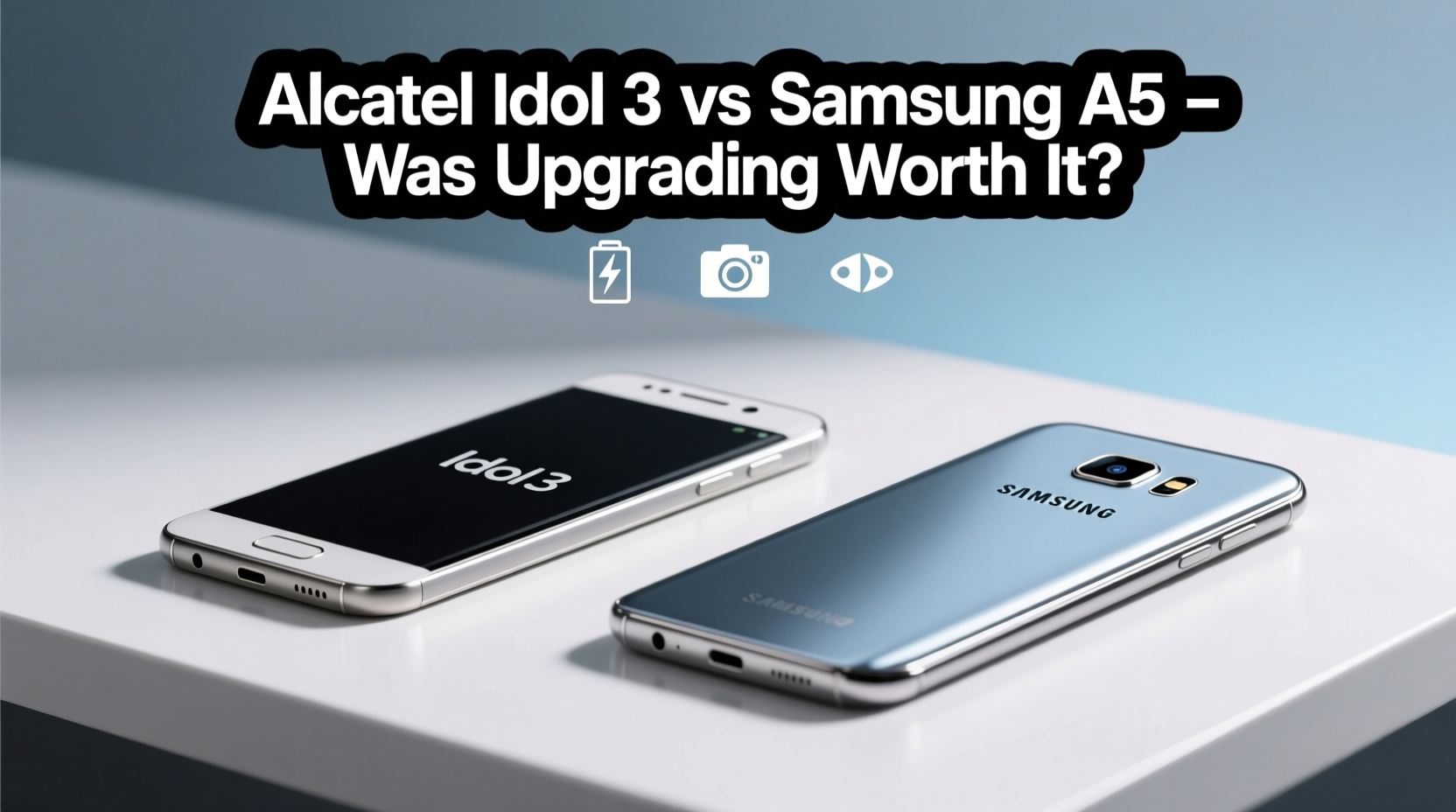
The most immediate difference between the two phones lies in their physical construction. The Alcatel Idol 3, while sleek for its time, used a polycarbonate frame with a matte plastic back. It felt lightweight and comfortable, but lacked the premium touch that many users began to expect by 2015–2016.
In contrast, the Samsung Galaxy A5 (2016) introduced a metal frame and glass front/back panel, giving it a much more refined and durable feel. Its IP67 dust and water resistance rating was a significant advantage — a feature absent on the Idol 3. This meant the A5 could survive accidental spills or brief submersion, making it far more resilient in daily use.
Display and Audio Experience
The Alcatel Idol 3 stood out with one unique feature: dual front-facing speakers. Whether held upright or upside-down, the top speaker always remained at the top, delivering consistent stereo sound. For media lovers, this was a rare treat in the mid-range segment.
The Samsung A5, however, used a standard bottom-firing speaker. While adequate, it couldn’t match the immersive audio presence of the Idol 3. That said, the A5 compensated with a superior display. Its 5.2-inch Super AMOLED panel offered deeper blacks, richer colors, and better outdoor visibility compared to the Idol 3’s 5.5-inch IPS LCD. AMOLED screens also consume less power when displaying dark content, contributing to better battery efficiency.
| Feature | Alcatel Idol 3 (2015) | Samsung Galaxy A5 (2016) |
|---|---|---|
| Display | 5.5\" IPS LCD, 1080p | 5.2\" Super AMOLED, 1080p |
| Build Material | Plastic body | Metal frame + glass front/back |
| Water Resistance | No | IP67 rated |
| Audio | Dual front-facing speakers | Single bottom speaker |
| Battery | 2900 mAh | 2900 mAh |
Performance and Software Longevity
Under the hood, both phones launched with similar mid-tier processors. The Idol 3 used Qualcomm’s Snapdragon 615, an octa-core chip known for thermal throttling under heavy load. The Galaxy A5 (2016) featured Samsung’s Exynos 7580, an octa-core processor built on a more efficient 14nm process. While not significantly faster in benchmarks, the Exynos chip ran cooler and delivered smoother multitasking over extended periods.
Where the A5 pulled ahead decisively was in software support. Samsung provided two major Android OS updates (from Lollipop to Marshmallow and Nougat), along with regular security patches for over two years. Alcatel, on the other hand, offered only one update (from KitKat to Lollipop), leaving the Idol 3 stranded on outdated software with limited app compatibility over time.
“Software support is often more important than hardware specs when judging long-term value.” — David Lin, Mobile Analyst at TechPulse Weekly
For users who kept their phones beyond 18 months, this gap became critical. Apps like banking services, messaging platforms, and streaming services began dropping support for older Android versions, making the Idol 3 increasingly difficult to use securely.
Camera Capabilities: Practical Improvements
The Idol 3 came with a 13MP rear camera and 5MP front shooter. In good lighting, it produced decent photos, but struggled with dynamic range and low-light noise. The lack of optical image stabilization (OIS) made indoor shots blurry without steady hands.
The Galaxy A5 improved on nearly every front. Its 13MP rear sensor included better low-light processing and faster autofocus. The front camera also saw a bump to 5MP with enhanced face detection and beauty modes — a selling point for selfie enthusiasts. More importantly, Samsung’s camera software offered manual controls, HDR, and panorama modes, giving users greater creative flexibility.
A mini case study illustrates this difference: Sarah, a college student using the Idol 3 in 2015, found herself frustrated during night events and group photos. After upgrading to the A5 in early 2016, she noted immediate improvements in photo clarity and flash consistency. “I didn’t realize how much I was missing until I saw side-by-side shots,” she said. “The A5 made my memories look real, not grainy.”
Battery Life and Charging
Both phones packed a 2900 mAh battery, but real-world endurance differed due to software optimization and screen technology. The Idol 3’s larger LCD screen and inefficient Snapdragon 615 drained power faster, especially with prolonged video playback or gaming.
The A5, benefiting from AMOLED efficiency and better background task management, typically lasted a full day with moderate use and often stretched into a second morning with conservative settings. Neither supported fast charging, but Samsung’s Ultra Power Saving mode — which converted the interface to grayscale and limited apps — could squeeze several extra hours during emergencies.
Was the Upgrade Worth It? A Balanced Verdict
For users prioritizing durability, software updates, and display quality, upgrading from the Alcatel Idol 3 to the Samsung Galaxy A5 was absolutely worth it. The A5 offered a more future-proof experience, with longer support, better materials, and improved reliability.
However, audiophiles and those who valued loud, balanced stereo sound may have felt a step back. The loss of dual front-facing speakers was noticeable, especially when watching videos or using the phone as a media device.
Ultimately, the decision hinged on usage patterns:
- Students and professionals benefited from the A5’s sturdier build and longer software life.
- Casual users appreciated the intuitive Samsung interface and reliable camera.
- Media-focused users might have preferred sticking with the Idol 3 or seeking alternatives with better audio.
Frequently Asked Questions
Did the Samsung A5 receive Android 8.0 Oreo?
No, the Galaxy A5 (2016) topped out at Android 7.0 Nougat. Samsung did not extend further updates, though some custom ROMs like LineageOS later provided unofficial Oreo support.
Can the Alcatel Idol 3 handle modern apps in 2024?
Not reliably. With only 2GB of RAM and Android 5.0 (Lollipop), most current apps either won’t install or will run extremely slowly. Security vulnerabilities also make it risky for online banking or shopping.
Is the Galaxy A5 still usable today?
As a secondary device or emergency phone, yes — but with limitations. Basic calling, texting, and offline apps work, but app compatibility and web browsing are severely restricted due to outdated OS and lack of security patches.
Step-by-Step: How to Decide If an Upgrade Is Worth It
- Evaluate your current phone’s pain points — Is it slow? Cracked? Unsupported?
- List must-have features — Do you need water resistance, better camera, or longer software support?
- Compare real-world performance — Look beyond specs; read user reviews focused on daily use.
- Check update history — Brands like Samsung, Google, and OnePlus typically offer longer software lifespans.
- Assess total cost of ownership — A slightly higher upfront cost may save money over time if the device lasts 3+ years.
Final Thoughts: Value Beyond Specs
The shift from the Alcatel Idol 3 to the Samsung Galaxy A5 wasn’t just about better numbers — it was a transition from a functional device to a more thoughtful, durable, and supported smartphone experience. While the Idol 3 had charm and innovation (especially in audio), the A5 delivered where it mattered most: longevity, reliability, and everyday usability.
Upgrades should enhance your life, not just your spec sheet. In this case, for most users, the answer is clear: yes, it was worth it.




 浙公网安备
33010002000092号
浙公网安备
33010002000092号 浙B2-20120091-4
Comments
No comments yet. Why don't you start the discussion?