
When building depth in spice-driven dishes, choosing the right chili can make or break a recipe. Two commonly confused red pepper flakes—Aleppo pepper and cayenne—often appear in Mediterranean, Middle Eastern, and global cuisines, yet they differ significantly in heat, aroma, and culinary function. Understanding these distinctions allows home cooks and professionals alike to use them more intentionally. While both add warmth and color, their flavor philosophies diverge: one emphasizes fruitiness and complexity, the other pure fire. This guide dissects their origins, sensory profiles, and practical applications to help you select the right spice for your dish.
Definition & Overview
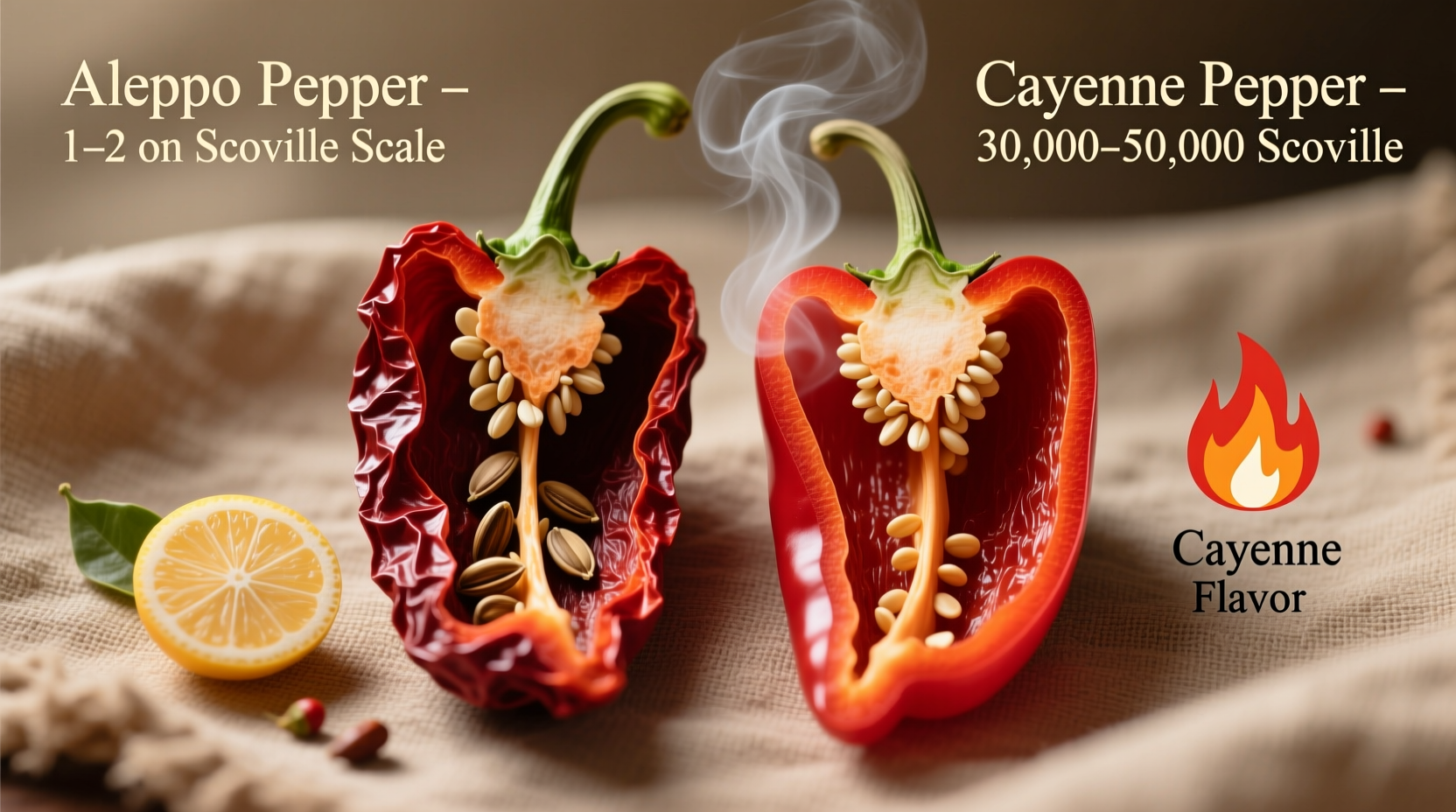
Aleppo pepper, also known as pul biber or Halaby pepper, is a sun-dried, moderately spicy chili originating from Syria—particularly the region around Aleppo. Traditionally cured in olive oil and salt, it has a deep maroon hue, flaky texture, and a nuanced profile marked by mild heat, tangy brightness, and a hint of raisin-like sweetness. It’s a staple in Levantine cooking, used to season grilled meats, lentils, hummus, and roasted vegetables.
Cayenne pepper, by contrast, is made from finely ground dried cayenne chilies, a cultivar of *Capsicum annuum* with roots in Central and South America but now cultivated globally. It delivers a sharp, immediate heat and a clean, slightly earthy flavor. Cayenne is widely used in Creole, Cajun, Indian, and Chinese cuisines, often as a quick way to spike a dish with capsaicin-driven intensity.
Despite both being labeled “red pepper flakes” in some markets, Aleppo pepper and cayenne are not interchangeable without altering a dish’s balance. Their divergence lies not just in Scoville ratings, but in aromatic complexity, mouthfeel, and cultural context.
Key Characteristics
| Characteristic | Aleppo Pepper | Cayenne Pepper |
|---|---|---|
| Heat Level (Scoville) | 10,000–30,000 SHU (mild to moderate) | 30,000–50,000 SHU (moderate to hot) |
| Flavor Profile | Fruity, tangy, slightly salty, with notes of sun-dried tomato and berry | Sharp, pungent, earthy, with minimal nuance beyond heat |
| Texture & Form | Coarse, flaky, often oil-cured | Fine, uniform powder |
| Color | Rust-red to maroon | Bright red |
| Culinary Role | Seasoning agent with layered flavor; used as a finishing spice | Heat booster; often added during cooking |
| Shelf Life | 12–18 months (longer if stored in oil or cool, dark place) | 24 months (deteriorates slowly in flavor and potency) |
| Salt Content | Often contains added salt (check labels) | Salt-free unless blended |
Practical Usage: How to Use Each Spice
Aleppo Pepper in Cooking
Aleppo pepper shines when used as a **finishing spice**, sprinkled over dishes just before serving to preserve its delicate aroma and subtle heat. Its coarse texture adds visual appeal and a slight chew, making it ideal for garnishing:
- Hummus and dips: A light dusting enhances creaminess with warmth and color.
- Grilled meats and kebabs: Sprinkle over lamb, chicken, or beef after grilling for a smoky-fruity accent.
- Roasted vegetables: Toss with olive oil, garlic, and Aleppo pepper before roasting carrots, eggplant, or cauliflower.
- Olive oil infusions: Stir into warm oil with garlic and herbs for dipping bread.
- Pickling and brining: Add to pickled onions or turnips for a gentle kick and complexity.
Because of its moderate heat, Aleppo pepper can be used more liberally than cayenne without overwhelming a dish. A typical dose is ¼ to ½ teaspoon per serving, adjusted to taste.
Pro Tip: If your Aleppo pepper lacks aroma, toast it lightly in a dry pan for 30 seconds to awaken its oils. Cool before using to avoid bitterness.
Cayenne Pepper in Cooking
Cayenne is best employed when a recipe demands **consistent, penetrating heat**. Its fine grind disperses evenly, making it suitable for blending into sauces, rubs, and batters. Common applications include:
- Spice rubs: Combine with paprika, garlic powder, and black pepper for ribs or chicken wings.
- Hot sauces and salsas: Add ⅛ to ¼ teaspoon to boost heat without altering texture.
- Curries and stews: Stir in during sautéing to bloom in oil and integrate fully.
- Baking (savory): Used in cornbread, cheese straws, or spiced crackers for a subtle burn.
- Marinades: Enhances penetration of flavor into proteins due to its solubility.
Use cayenne sparingly—a pinch goes a long way. Start with ⅛ teaspoon and adjust upward. Overuse can dominate other flavors and create an unpleasant burning sensation.
Variants & Types
Aleppo Pepper Variants
Aleppo pepper is available in several forms, each suited to different uses:
- Traditional (oil-cured): Flakes preserved in olive oil, often with salt and citric acid. Most aromatic but perishable; refrigerate after opening.
- Dry-packed: Salt-free, shelf-stable version. Less intense but longer-lasting. Ideal for controlled seasoning.
- Smoked Aleppo: A modern variation cold-smoked for added depth. Works well in barbecue or charcuterie applications.
- Blends (e.g., with sumac or sesame): Regional mixes used in Turkish or Armenian cuisine. Check ingredients to avoid unintended flavor clashes.
Cayenne Pepper Variants
Cayenne is most commonly sold as a single-ground powder, but variations exist:
- Pure cayenne powder: 100% ground cayenne chili. Most versatile and predictable.
- Cayenne blends: Often mixed with salt, garlic, or turmeric (e.g., \"cayenne seasoning\"). Read labels carefully.
- Whole dried cayenne peppers: Can be toasted, rehydrated, or ground at home for maximum freshness.
- Liquid cayenne extract: Highly concentrated; used in tinctures or precise dosing for extreme heat.
For authenticity and control, opt for pure, additive-free versions of both spices.
Comparison with Similar Ingredients
Aleppo pepper and cayenne are frequently mistaken for each other or substituted without consideration. Here’s how they compare directly—and how they stack up against similar chilies.
Aleppo vs. Cayenne: Core Differences
- Heat onset: Cayenne delivers immediate, frontal heat; Aleppo builds gradually with a lingering warmth.
- Flavor dimension: Aleppo offers fruit, salt, and tang; cayenne is primarily heat with faint earthiness.
- Texture impact: Aleppo’s flakes provide tactile interest; cayenne dissolves completely.
- Salt content: Traditional Aleppo includes salt; cayenne does not, allowing better sodium control.
- Cooking stage: Cayenne is typically added during cooking; Aleppo is often a finishing touch.
How They Compare to Other Chilies
| Chili | Similarity to Aleppo | Similarity to Cayenne |
|---|---|---|
| Maras pepper (Turkish) | Very close: similar heat, flaky texture, fruity profile | Dissimilar: milder and more aromatic |
| Paprika (Hungarian) | Moderate: same base species, but sweeter and no heat | Low: lacks cayenne’s intensity |
| Crushed red pepper (Italian) | Low: usually made from cayenne or similar, too hot and plain | High: often is cayenne or a blend including it |
| Chipotle powder | Low: smoky and hotter, less fruity | Moderate: comparable heat level, but dominant smoke flavor |
“Aleppo pepper isn’t just a spice—it’s a flavor event. You taste the sun, the soil, and the care in curing. Cayenne is a tool. Both have their place, but never confuse utility with artistry.”
— Chef Lina Ayoubi, Culinary Instructor, Middle Eastern Cuisine Specialist
Practical Tips & FAQs
Can I substitute Aleppo pepper for cayenne?
Yes, but with caution. Replace ½ teaspoon of cayenne with 1 teaspoon of Aleppo pepper to match heat, but expect a significant shift in flavor. The dish will gain fruitiness and lose sharpness. Best for recipes where complexity is welcome—like stews or grain bowls—but avoid in applications requiring pure heat, such as hot sauce or fiery marinades.
Can I substitute cayenne for Aleppo pepper?
Only if you prioritize heat over flavor. Use ¼ to ½ the amount of cayenne to avoid overpowering the dish. Compensate for lost fruitiness by adding a splash of lemon juice or a pinch of smoked paprika. Not recommended for finishing dishes like hummus or flatbreads.
Is Aleppo pepper just “mild cayenne”?
No. While both come from *Capsicum annuum*, they are distinct cultivars grown, cured, and processed differently. Aleppo is selectively bred for balanced heat and aroma; cayenne is bred for capsaicin concentration. Treating them as strength variants oversimplifies their culinary roles.
How should I store these spices?
Keep both in airtight containers away from light and heat. Aleppo pepper, especially oil-cured varieties, benefits from refrigeration and should be used within 6–12 months. Dry cayenne retains potency for up to two years but fades gradually. Avoid storing near the stove or in clear jars on windowsills.
Which is healthier?
Both contain capsaicin, which may support metabolism and reduce inflammation. However, traditional Aleppo pepper often includes salt, which may be a concern for sodium-sensitive individuals. Cayenne is more commonly used in supplements for its higher capsaicin concentration. From a culinary health perspective, Aleppo encourages mindful seasoning; cayenne risks overuse due to its aggressive heat.
Where can I buy authentic Aleppo pepper?
Due to ongoing conflict in Syria, true Syrian Aleppo pepper is rare. Look for products from Turkey or Lebanon labeled “genuine pul biber” or “Halaby pepper.” Reputable spice vendors like Zatarman, Burlap & Barrel, or Rumi Spice source ethically and specify origin. Avoid cheap supermarket versions labeled “crushed red pepper”—they’re likely generic chili flakes.
Does Aleppo pepper expire?
Yes. While it won’t spoil, it loses volatile oils and flavor over time. Oil-cured versions may develop off-notes or mold if improperly stored. Check for musty smell or clumping—signs to discard. Dry-packed lasts longer but still diminishes after 18 months.
Storage Checklist:
☐ Store in dark glass or metal containers
☐ Keep in a cool, dry cupboard (not above the stove)
☐ Label with purchase date
☐ For oil-cured Aleppo: refrigerate after opening
☐ Replace cayenne every 18–24 months for peak potency
Summary & Key Takeaways
Aleppo pepper and cayenne pepper serve fundamentally different purposes in the kitchen. Recognizing their distinctions elevates your seasoning strategy from reactive to intentional.
- Aleppo pepper is a complex, moderately hot chili with fruity, tangy notes and a flaky texture. It excels as a finishing spice in Mediterranean and Middle Eastern dishes.
- Cayenne pepper is a fine, potent powder delivering sharp, direct heat. It functions best as an internal heat source in cooked dishes.
- Their heat difference is significant: cayenne is up to five times hotter than Aleppo by volume.
- Substitutions require adjustment in quantity and complementary flavors to maintain balance.
- Storage matters: Aleppo degrades faster, especially oil-cured types; cayenne fades slowly but predictably.
- Origin and processing define authenticity—seek reputable sources for true Aleppo pepper.
Mastering these two spices means understanding not just how hot they are, but what story they tell on the plate. One whispers of sun-baked orchards and slow curing; the other commands attention with unrelenting fire. Choose wisely, and let your food speak with clarity and character.




 浙公网安备
33010002000092号
浙公网安备
33010002000092号 浙B2-20120091-4
Comments
No comments yet. Why don't you start the discussion?