
At first glance, both alien monster building blocks and model kits promise hours of creative engagement—building fantastical creatures from another world, piece by piece. But for many enthusiasts, especially beginners, the experience can quickly shift from excitement to exasperation. Which of these two popular hobby formats is more likely to result in a half-finished project, scattered parts, and mounting frustration? The answer isn’t always obvious, but it lies in understanding their core differences in design, assembly logic, and user expectations.
The Nature of the Challenge
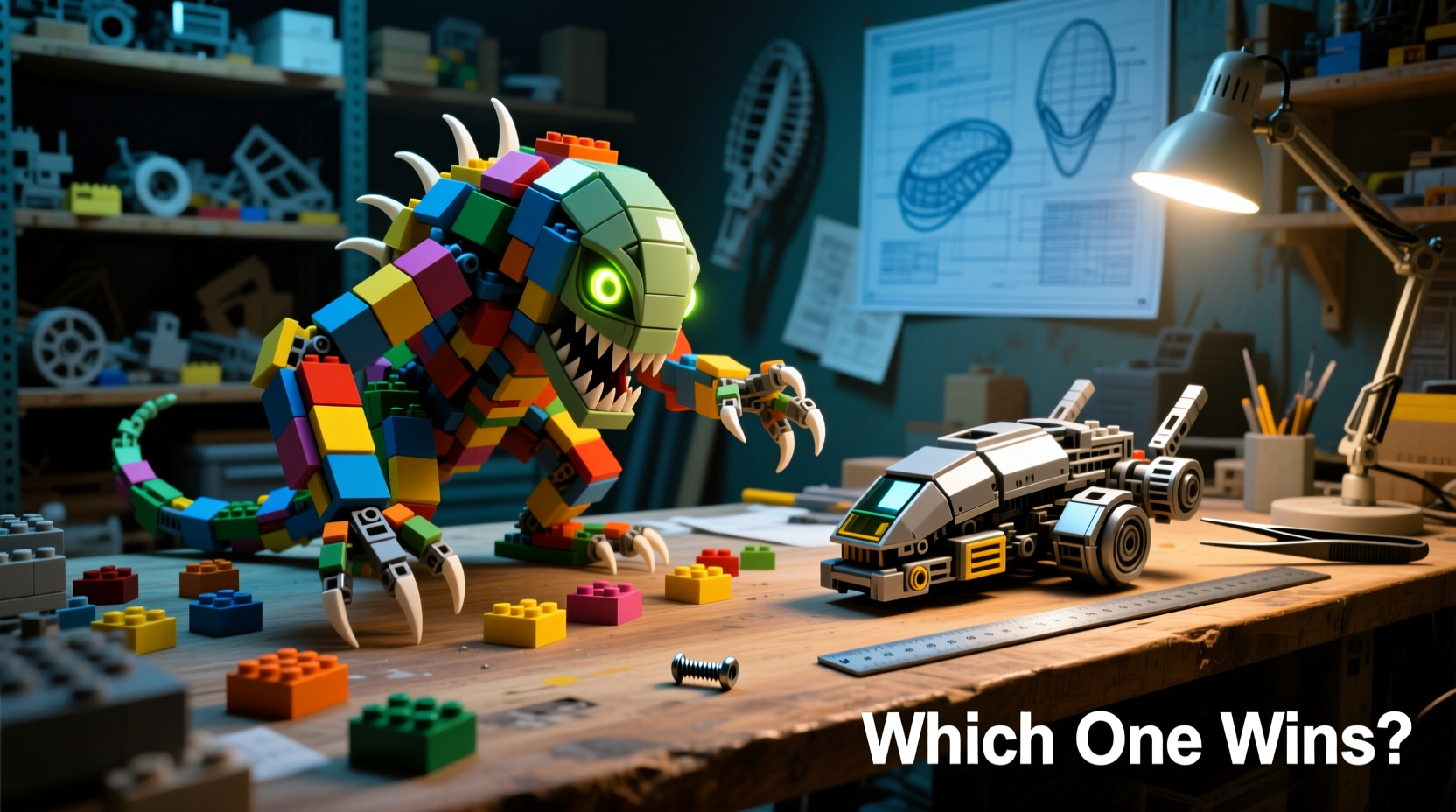
Building blocks—especially themed around alien monsters—typically follow a modular system. Think of them as interlocking bricks with pre-designed shapes that snap together. They’re engineered for accessibility, often marketed toward younger audiences or casual builders. Model kits, on the other hand, are usually composed of plastic sprues, requiring cutting, gluing, sanding, and sometimes painting. These are aimed at older hobbyists who value precision and realism over simplicity.
The fundamental divergence lies in approach: building blocks prioritize intuitive construction; model kits demand craftsmanship. This distinction plays a major role in determining where frustration sets in.
Assembly Complexity Compared
Alien monster building blocks use color-coded instructions and standardized connectors. Mistakes are easy to spot and correct—you simply pop pieces apart and reassemble. Most sets include extra connectors or common parts, reducing the risk of being halted by a missing piece.
Model kits operate under stricter tolerances. Misaligned joints, excess glue, or poorly cut parts can ruin the final look. There’s no “undo” button once cement sets. Additionally, many kits assume prior knowledge: how to use clippers, apply putty, or paint gradients. Without this background, even experienced builders can find themselves stuck.
“With model kits, the margin for error is razor-thin. One misaligned panel can throw off the entire symmetry.” — Daniel Reeves, Scale Modeling Instructor at HobbyCraft Guild
Comparative Breakdown: Key Factors
| Factor | Building Blocks | Model Kits |
|---|---|---|
| Learning Curve | Low – intuitive snapping mechanism | High – requires tool familiarity |
| Error Recovery | Easy – disassemble and retry | Difficult – may need filler or replacement |
| Tool Dependency | None (hands only) | Clippers, glue, sandpaper, paint |
| Time Investment | 1–3 hours (average) | 5–20+ hours (including drying/painting) |
| Risk of Abandonment | Moderate – boredom or distraction | High – technical setbacks cause burnout |
While building blocks aren’t immune to abandonment, their forgiving nature makes completion far more likely. Model kits, despite their visual payoff, carry a higher psychological barrier. A single failed joint or paint drip can demotivate even determined hobbyists.
A Realistic Scenario: Two Builders, Two Outcomes
Consider Alex and Jordan, both purchasing alien-themed builds on the same day. Alex chooses a 400-piece building block kit of a tentacled extraterrestrial warlord. Jordan opts for a polystyrene model kit of a biomechanical hive queen, complete with articulated limbs and translucent resin organs.
Alex spends two evenings assembling the figure. Instructions are clear, pieces fit snugly, and the final product stands proudly on a shelf. There’s minor misalignment on one arm, but it’s barely noticeable—and easily fixed next time.
Jordan struggles from the start. Cutting parts from the sprue causes nicks. Glue smears across the chest plate. After three sessions, the left mandible cracks during attachment. Attempts to fix it with modeling putty lead to an uneven texture. By week four, the unfinished model gathers dust in a drawer.
This scenario reflects a common pattern: enthusiasm meets execution gap. Building blocks adapt to the builder. Model kits require the builder to adapt to them.
Skill Development and Frustration Triggers
Frustration doesn’t stem solely from difficulty—it arises when effort doesn’t yield visible progress. Building blocks provide continuous feedback: every snapped piece adds structure. Model kits often involve invisible labor—sanding seams, waiting for glue to cure, masking for paint—that delays gratification.
Moreover, model kits frequently lack comprehensive beginner guidance. An instruction sheet might say “glue part B to C,” without specifying glue type, clamping technique, or alignment tips. This omission assumes competence, leaving novices to learn through trial and costly error.
- Building blocks reduce cognitive load with consistent interfaces.
- Model kits increase mental strain due to multi-step processes.
- Unexpected challenges (e.g., warped parts, fragile details) are more disruptive in model kits.
Step-by-Step: Choosing the Right Path
- Assess your experience level: Have you built anything similar before? If not, lean toward building blocks.
- Check the required tools: Do you own clippers, tweezers, or plastic cement? If not, factor in cost and learning time.
- Review the instruction quality: Look for online reviews showing clarity of diagrams and part labeling.
- Estimate available time: Can you dedicate uninterrupted blocks of time? Model kits suffer from inconsistent pacing.
- Test tolerance for imperfection: Are you okay with visible seams or minor flaws? If not, consider whether you’re ready for the medium.
When Building Blocks Also Fail
It’s not all smooth sailing with building blocks. Some themed alien monster sets push complexity with non-standard connectors, micro-pieces, or ambiguous instructions. Third-party or budget brands may use inconsistent molding, leading to tight or loose fits. And while rare, missing pieces do happen—though replacements are usually easier to obtain than custom model parts.
The key difference is recoverability. With blocks, frustration tends to be temporary. With model kits, setbacks feel permanent unless you have repair skills.
Expert Advice: Bridging the Gap
“The best way to avoid frustration is to match the project to your current skill, not your aspirations. Build confidence with simpler tasks first.” — Lena Park, Editor at *Hobby Assembly Review*
Park emphasizes that many hobbyists fail because they skip foundational experiences. She recommends using building blocks as a training ground—not just for children, but for adults entering the modeling world. Understanding spatial relationships, following multi-step guides, and managing small parts are transferable skills.
Checklist: Before You Buy Either Type
- ✅ Read recent user reviews focusing on build difficulty
- ✅ Confirm included components (instructions, tools, extras)
- ✅ Check recommended age or skill level honestly
- ✅ Ensure adequate workspace and lighting
- ✅ Set a realistic completion timeline
- ✅ Have a plan for storage during and after assembly
Frequently Asked Questions
Can I convert a building block design into a painted model?
Yes, but with limitations. Some builders use acrylic sealants and paint over block surfaces, though textures may absorb unevenly. Avoid high-heat paints, as plastic can warp.
Are there hybrid kits that combine both systems?
Increasingly, yes. Some premium lines integrate snap-fit bases with optional resin add-ons or paintable armor sections. These cater to intermediate users seeking both ease and customization.
Which has better long-term satisfaction?
Subjective, but studies in hobby psychology suggest model kits offer deeper satisfaction upon completion—provided they are finished. Building blocks score higher in enjoyment-to-effort ratio, making them more consistently rewarding.
Final Verdict: Which Is More Likely to Become a Mess?
Model kits are significantly more likely to end up as incomplete, dust-collecting projects. Their reliance on specialized tools, irreversible steps, and unforgiving materials creates multiple failure points. Building blocks, while not immune to neglect, are inherently more resilient to mistakes and lapses in momentum.
That said, the \"mess\" isn't always physical. Emotional frustration, wasted money, and broken motivation affect both formats. The crucial factor is alignment between the builder’s capabilities and the kit’s demands.
Conclusion
Alien monster building blocks win on accessibility, recovery, and completion rates. Model kits offer superior detail and artistic potential—but at the cost of higher attrition. The most frustrating mess isn’t scattered pieces; it’s the disappointment of an unmet goal. Choose wisely, start small, and let each completed project build the confidence to tackle the next.




 浙公网安备
33010002000092号
浙公网安备
33010002000092号 浙B2-20120091-4
Comments
No comments yet. Why don't you start the discussion?