
Winter weather doesn’t play by the rules. One day it’s mild with a light dusting of snow; the next, roads are glazed in ice and visibility drops to near zero. For drivers in regions with unpredictable winters, the question arises: If your all-season tires have handled light snow before, is it really necessary to switch to dedicated winter tires just because it snowed once?
The answer isn't a simple yes or no—it depends on temperature, road conditions, driving habits, and safety priorities. Understanding the real differences between all-season and winter tires can help you make an informed decision that protects both your vehicle and your family.
How Tires Perform in Cold Weather: The Science Behind the Rubber
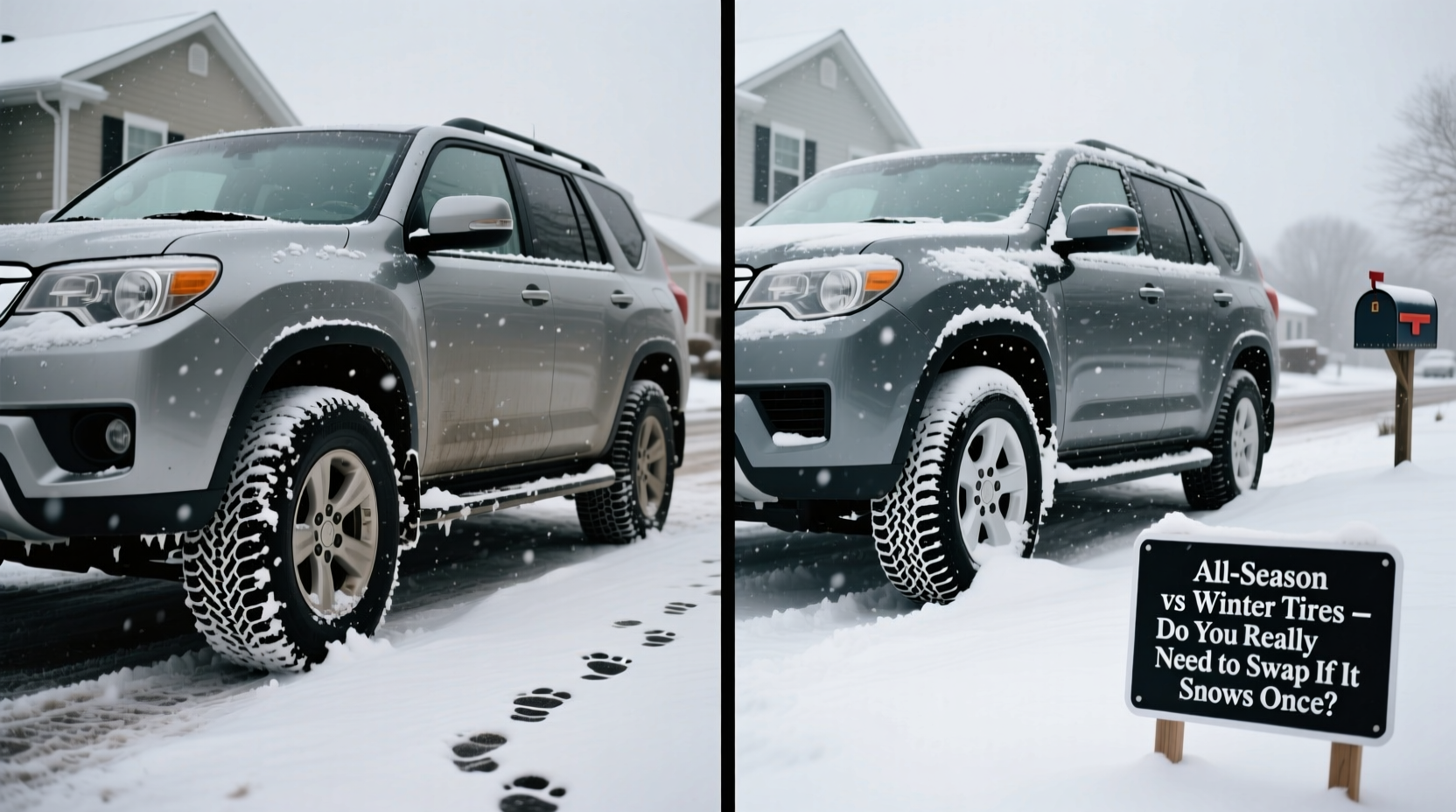
Tire performance hinges on rubber compound and tread design. All-season tires are engineered as a compromise—suitable for dry roads, light rain, and occasional snow. However, their rubber begins to harden when temperatures drop below 45°F (7°C). Once hardened, the tire loses flexibility, reducing grip and increasing stopping distances.
Winter tires, by contrast, use a softer rubber compound enriched with silica and other polymers that remain pliable in freezing temperatures. This allows the tread blocks to conform to micro-irregularities in icy or snow-covered pavement, delivering superior traction. Additionally, winter tires feature deeper grooves, more sipes (tiny slits in the tread), and aggressive tread patterns designed to bite into snow and expel slush.
“Below 45 degrees, all-season tires lose about 30% of their grip compared to winter tires. That difference can mean the difference between stopping in time and a collision.” — Dr. Lena Peterson, Tire Materials Researcher at the University of Michigan Transportation Institute
This loss of grip isn’t just theoretical. In real-world braking tests conducted by the Tire and Rubber Association of Canada, vehicles equipped with winter tires stopped up to 30 feet shorter than those with all-seasons on packed snow at 20 mph.
Performance Comparison: All-Season vs Winter Tires
| Feature | All-Season Tires | Winter Tires |
|---|---|---|
| Operating Temperature Range | 45°F (7°C) and above | -40°F (-40°C) to 45°F (7°C) |
| Rubber Compound | Firm, balanced for longevity and noise reduction | Soft, high-silica blend for cold flexibility |
| Tread Depth & Siping | Moderate depth, limited sipes | Deep grooves, dense siping for snow channeling |
| Snow Traction | Fair in light powder, poor in packed snow/ice | Excellent in deep snow, slush, and ice |
| Braking Distance (on snow, 20 mph) | ~75 feet | ~45 feet |
| Lifespan (average miles) | 50,000–70,000 | 30,000–40,000 (when used only in winter) |
| Noise Level | Low to moderate | Moderate to high (especially on dry pavement) |
The data shows that while all-season tires may appear sufficient during a single snow event, their limitations become critical under sustained cold or adverse conditions. Winter tires aren’t just about handling deep snow—they’re engineered for consistent performance when temperatures stay low.
When One Snowfall Is Enough to Warrant a Change
A single snowstorm might not seem like a reason to invest in a second set of tires. But consider these scenarios:
- Icy mornings after snowmelt: Even if snow clears by noon, overnight refreezing creates black ice. All-season tires struggle to maintain grip on such surfaces.
- Commuting on unplowed side streets: Municipal plows prioritize main roads. If your route includes untreated roads, winter tires provide essential control.
- Emergency maneuvers: Avoiding a sudden obstacle requires responsive steering and reliable traction. Hardened all-season rubber increases the risk of skidding.
Real-World Example: A Single Storm Changes Everything
Take Sarah Thompson, a teacher in Madison, Wisconsin. She’d driven nine years on all-season tires, dismissing winter tires as unnecessary for “a few snow days.” Then came a December morning when 3 inches of snow fell overnight. Her school opened early due to a midday forecast warm-up, so she left at 6:30 a.m. on untreated roads.
Halfway there, a deer darted across the road. She swerved and braked—but her SUV slid 40 feet before stopping, narrowly missing a utility pole. No damage, no injuries, but the scare was enough. “I realized I wasn’t in control,” she said. “My tires weren’t gripping at all.”
That week, she invested in a set of winter tires mounted on affordable steel rims. The following winter, during a similar storm, she navigated the same stretch confidently. “It felt like switching from roller skates to hiking boots,” she recalled.
Sarah’s experience isn’t unique. Many drivers underestimate how quickly marginal traction becomes dangerous in dynamic situations.
Practical Guide: Should You Swap for One Snow Event?
Use this step-by-step checklist to determine whether a one-time snowfall warrants switching to winter tires:
- Evaluate local climate trends: Does your area see prolonged cold spells below 45°F, even if snow is infrequent? If yes, winter tires offer extended benefits.
- Assess your vehicle type: Front-wheel-drive and electric vehicles benefit significantly from enhanced winter traction due to weight distribution and torque delivery.
- Review road maintenance: Are your daily routes promptly plowed and salted? If not, winter tires compensate for poor surface conditions.
- Consider personal risk tolerance: How comfortable are you driving in slippery conditions? If you feel anxious, better tires reduce stress and improve reaction capability.
- Calculate long-term value: A second set of tires doubles upfront cost, but they last longer when used seasonally and enhance resale value through improved safety reputation.
“Winter tires pay for themselves in confidence. Knowing your car will stop and turn reliably in cold weather changes how you drive—and how safely you arrive.” — Mark Delgado, Certified ASE Master Technician
Cost vs. Safety: Breaking Down the Investment
Purchasing a second set of tires and wheels typically costs $800–$1,200. Some view this as excessive for occasional snow. But compare that to:
- Towing fees ($100–$300)
- Collision repairs ($1,500+ average)
- Insurance premium hikes post-accident
- Lost wages from injury-related downtime
From a risk-management perspective, winter tires are less an expense and more a form of insurance. They don’t prevent all accidents, but they dramatically reduce the likelihood of losing control in winter conditions.
Common Misconceptions About Winter Tires
Several myths persist that deter drivers from making the switch:
- Myth: “All-season means all weather.” Truth: The term is marketing-friendly but misleading. All-season tires are not optimized for severe winter conditions.
- Myth: “I only drive short distances.” Short trips often begin on the coldest, iciest roads—exactly when traction matters most.
- Myth: “Four-wheel drive replaces good tires.” AWD helps with acceleration but does nothing for braking or cornering grip. Without proper tires, AWD vehicles can skid just as easily.
- Myth: “Snow tires are outdated.” Modern winter tires are precision-engineered, quiet, and effective. They’re not the noisy studded tires of decades past.
Frequently Asked Questions
Can I leave winter tires on all year?
No. Winter tire compounds wear out rapidly in warm weather—up to three times faster than all-seasons. Summer heat also increases rolling resistance and reduces fuel efficiency. Rotate them seasonally for optimal performance and lifespan.
What if I only get one or two snowfalls per year?
If temperatures stay above freezing and snow melts quickly, all-season tires may suffice. But if those snowfalls occur during commute hours or involve icy transitions, winter tires still provide meaningful safety advantages.
Are all-season tires with the Three-Peak Mountain Snowflake symbol good enough?
Tires marked with the 3PMSF symbol meet minimum snow traction standards and perform better than standard all-seasons. However, they still use firmer rubber than true winter tires and fall short in extreme cold or heavy snow. Think of them as a middle ground—not a full replacement.
Final Recommendation: Plan Ahead, Stay Safe
If your region experiences even brief periods of winter weather, particularly when temperatures linger below 45°F, investing in winter tires is a smart, safety-conscious decision. A single snowfall might not justify the change on its own—but the cumulative risk of driving on compromised tires during cold months adds up quickly.
You don’t need blizzards every week to benefit from winter tires. What you need is predictable performance when the roads turn slick and the margin for error shrinks. Whether it's a surprise ice storm or a routine snowy morning, knowing your vehicle can stop, steer, and accelerate with confidence makes all the difference.
Swapping tires twice a year takes effort, but modern tire services make it easier than ever. Many shops store your off-season set and rotate them in for a modest fee. View it not as inconvenience, but as seasonal maintenance—like changing furnace filters or servicing your HVAC system.
Checklist: When to Make the Switch to Winter Tires
- 🌡️ Average daily temperatures consistently below 45°F
- 🌨️ Forecast predicts accumulating snow, even if minimal
- 🛣️ Your commute includes rural, elevated, or poorly maintained roads
- 🚗 You drive frequently during dawn/dusk hours (higher ice risk)
- 🛡️ You prioritize maximum control over minor cost savings
Conclusion: Safety Isn’t Seasonal
Driving conditions change with the calendar, but your responsibility to arrive safely doesn’t. While all-season tires offer convenience, they compromise performance when winter arrives. One snowfall might seem minor, but it can expose the limits of your vehicle’s grip and your ability to respond.
If you live where winter touches the ground—even briefly—winter tires are more than just equipment. They’re a commitment to preparedness. Don’t wait for a close call to decide. Equip your vehicle properly, drive with greater confidence, and protect what matters most.




 浙公网安备
33010002000092号
浙公网安备
33010002000092号 浙B2-20120091-4
Comments
No comments yet. Why don't you start the discussion?