
For a generation raised on early 2000s children’s television and alphabet-shaped breakfast cereals, the recent return of Alpha-Bits is more than just a product revival—it’s a cultural echo. Once a staple in American pantries and a favorite among preschoolers learning their ABCs, Alpha-Bits disappeared from shelves for years, only to reemerge amid growing nostalgia and renewed interest in educational media. Its reconnection with the beloved PBS Kids show Super Why! has sparked curiosity: What makes this pairing so enduring? And why does it matter now?
The comeback isn’t accidental. It reflects a broader trend where brands leverage emotional memory, educational value, and cross-media storytelling to rebuild consumer loyalty. This article explores the full story behind Alpha-Bits’ resurgence, its synergy with Super Why!, and what this means for parents, educators, and fans of retro cereal culture.
The Rise and Fall of Alpha-Bits Cereal
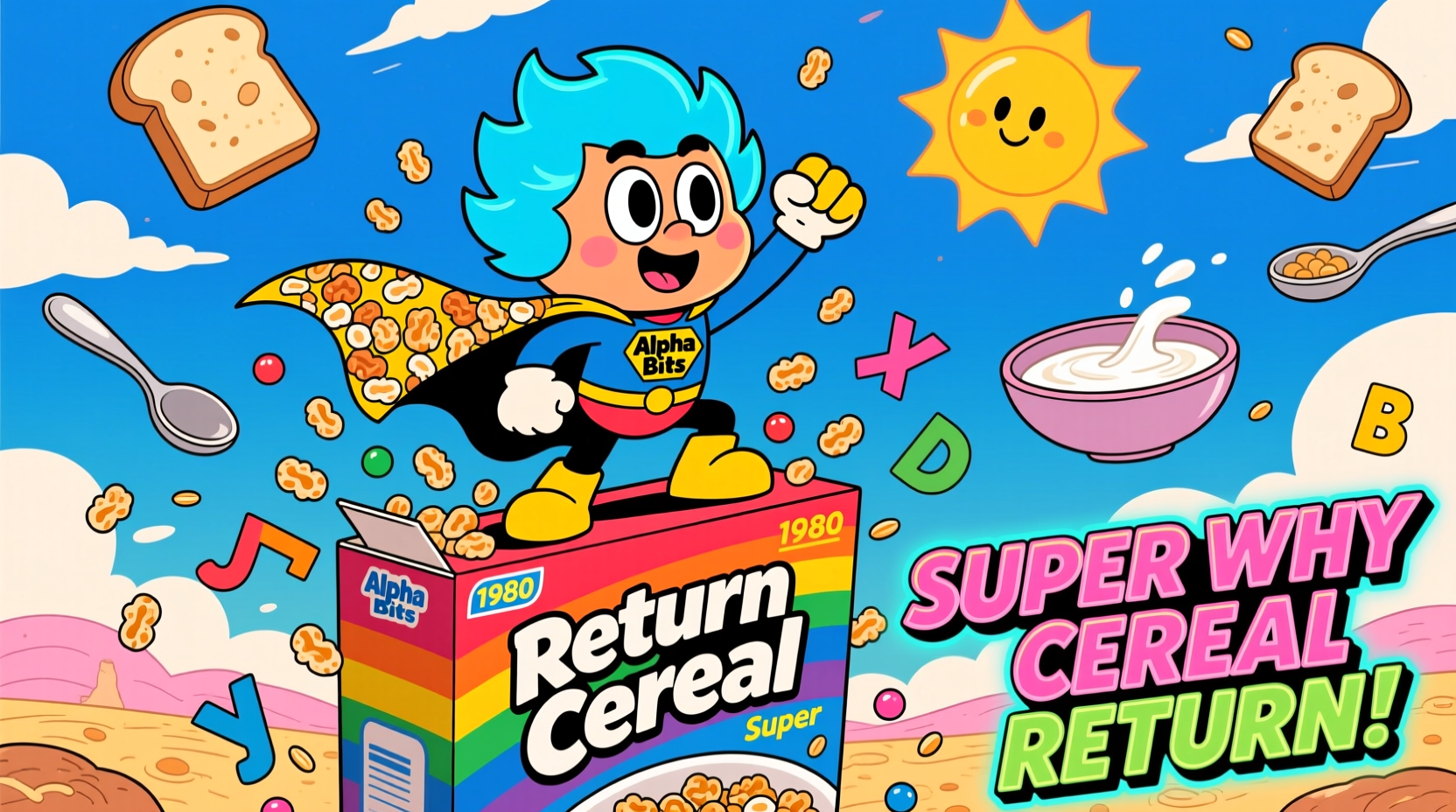
Introduced by Post Consumer Brands in the 1970s, Alpha-Bits stood out with its colorful, letter-shaped pieces that floated in milk—each one infused with fruit flavors like cherry, orange, and lemon. Unlike plain alphabet cereals, Alpha-Bits offered both taste and function, turning breakfast into an interactive experience. For decades, it was marketed as a fun, literacy-friendly option for young learners.
Despite its popularity, Alpha-Bits faced declining sales in the 2010s. Changing consumer preferences toward low-sugar, whole-grain options, combined with shifting marketing strategies, led Post to quietly discontinue the cereal around 2014. Fans mourned its absence, launching online petitions and social media campaigns pleading for its return.
The turning point came in 2021 when Post announced a limited-time relaunch, responding directly to consumer demand. The new version retained the iconic shape and rainbow hues but featured a reformulated recipe with reduced sugar and no artificial colors—a nod to modern health standards while preserving the nostalgic appeal.
Why Super Why! Became the Perfect Partner
Super Why!, which premiered on PBS Kids in 2007, follows a team of storybook characters—Whyatt, Red Riding Hood, Princess Pea, and Pig—on literacy-based adventures. Each episode uses interactive reading skills such as letter identification, rhyming, and word building to solve problems. The show’s core mission aligns perfectly with Alpha-Bits’ original branding: making reading fun through play.
In 2023, Post partnered with PBS Kids to reintroduce Alpha-Bits with special Super Why!-themed packaging. Boxes featured characters from the show encouraging kids to “crack the code” of reading, while QR codes linked to free digital episodes and printable activities. This wasn’t just co-branding—it was a strategic alignment of values: education, engagement, and empowerment.
“Children learn best when learning feels like play. When a cereal box turns into a reading adventure, you’ve bridged nutrition and cognitive development.” — Dr. Lena Torres, Early Childhood Education Specialist
How the Cartoon Connection Boosts Learning Outcomes
The fusion of food and media isn’t new, but its impact on early literacy is increasingly measurable. Studies show that when children engage with educational content across multiple platforms—TV, print, and real-world objects—they retain information more effectively. This concept, known as transmedia learning, is central to Super Why!’s design.
Alpha-Bits amplifies this effect. A child eating Alpha-Bits while watching Super Why! doesn’t just see letters—they interact with them. They might spell their name, find vowels in their bowl, or match a cereal piece to a character’s catchphrase (“It’s time to *alphabetize*!”). These micro-moments reinforce phonemic awareness outside formal instruction.
| Learning Skill | How Alpha-Bits Supports It | Linked to Super Why! Episode Example |
|---|---|---|
| Letter Recognition | Color-coded, distinct letter shapes in every bite | “The Three Little Pigs: Blow Your House Down” |
| Rhyming | Parents can create rhyme games using cereal words | “Rhyme Rodeo” |
| Vocabulary Building | Packaging includes themed word lists (e.g., “hero,” “solve,” “read”) | “Whyatt’s Star Launch” |
| Story Sequencing | Kids arrange letters to retell a plot from the show | “Cinderella: An Unfair Tale” |
Mini Case Study: The Martinez Family’s Literacy Breakfast Routine
The Martinez family in Austin, Texas, began incorporating Alpha-Bits into their morning routine after their 5-year-old daughter, Sofia, struggled with recognizing vowel sounds. Her kindergarten teacher recommended multi-sensory tools to support reading development.
They started with a simple ritual: every Thursday, they’d serve Alpha-Bits while streaming a Super Why! episode on their tablet. Sofia would pick out letters from her bowl that matched ones on screen. Over six weeks, her ability to identify short and long vowels improved significantly. Her teacher noted she began volunteering answers during phonics lessons—something she rarely did before.
“It didn’t feel like homework,” says Maria Martinez, a first-grade teacher herself. “She thought she was playing a game. But she was actually building decoding skills—one spoonful at a time.”
Step-by-Step Guide: Creating a Super Why! Learning Breakfast
You don’t need a special occasion to turn breakfast into a literacy event. Here’s how to replicate the Alpha-Bits/Super Why! experience at home:
- Acquire the cereal: Look for Alpha-Bits with Super Why! branding at major retailers or order online via Post’s partner stores.
- Choose an episode: Select a Super Why! episode based on your child’s current reading level (available free on PBS Kids or YouTube).
- Set up the environment: Place a small bowl of Alpha-Bits in front of your child. Use a napkin or placemat labeled with target letters or words.
- Engage during viewing: Pause the show at key moments and ask questions like, “Can you find the letter ‘S’ in your bowl?” or “What word starts with ‘P’?”
- Extend the activity: After eating, use leftover dry cereal to spell names, colors, or simple sight words on a tray.
- Reinforce with print: Download free activity sheets from pbskids.org/superwhy to continue the learning offline.
FAQ
Is Alpha-Bits still made with fruit punch flavoring?
Yes, the relaunched version retains the signature fruit punch blend, though the flavor profile has been slightly adjusted to reduce artificial ingredients. Natural flavors and fruit juice extracts are now used instead of synthetic dyes.
Can children with dietary restrictions eat this cereal?
Alpha-Bits is gluten-free and vegan, making it suitable for many diets. However, always check the latest packaging for allergen updates. It contains soy and is produced in a facility that handles tree nuts.
Where can I watch Super Why! episodes for free?
All episodes are available at no cost on the PBS Kids website (pbskids.org) and app, as well as on YouTube via the official PBS Kids channel. No subscription is required.
Checklist: Maximizing the Alpha-Bits & Super Why! Experience
- ☐ Buy Alpha-Bits with Super Why! packaging for bonus content access
- ☐ Schedule a weekly “Literacy Breakfast” morning
- ☐ Pre-select episodes that match your child’s current reading goals
- ☐ Use cereal pieces for tactile spelling exercises
- ☐ Download companion printables from PBS Kids
- ☐ Rotate themes (e.g., vowels week, rhyming week) to maintain engagement
- ☐ Share progress with teachers or caregivers to reinforce learning continuity
Conclusion: More Than a Cereal—A Gateway to Literacy
The return of Alpha-Bits and its partnership with Super Why! is not merely a nostalgia play. It’s a thoughtful reimagining of how everyday routines can become opportunities for growth. In an era where screen time often replaces interaction, this collaboration reminds us that learning doesn’t have to be isolated from fun—or even from breakfast.
By merging sensory experience with narrative-driven education, Alpha-Bits and Super Why! offer a model other brands could follow: one where entertainment serves development, and where a simple bowl of cereal becomes a catalyst for confidence, curiosity, and connection.




 浙公网安备
33010002000092号
浙公网安备
33010002000092号 浙B2-20120091-4
Comments
No comments yet. Why don't you start the discussion?