
Celery is a foundational ingredient in many soups, especially those built on mirepoix—the classic French trio of onions, carrots, and celery. Its subtle bitterness, mild vegetal sweetness, and crisp texture contribute depth and aromatic complexity to broths, stews, and chowders. But what happens when you’re out of celery, allergic to it, or simply dislike its flavor? The good news is that several ingredients can step in effectively, preserving both the structural integrity and flavor balance of your soup. Choosing the right substitute depends on whether you're replacing celery for its texture, aroma, saltiness, or role in building savory depth. This guide explores practical, tested alternatives that maintain the soul of your dish without compromising quality.
Definition & Overview
Celery (Apium graveolens) is a marshland plant species in the Apiaceae family, cultivated widely for its edible stalks, leaves, and seeds. In Western cooking, particularly in European and North American cuisines, celery stalks are a cornerstone of aromatic vegetable bases. When sautéed at the beginning of soup preparation, celery releases volatile compounds that enhance umami and round out flavors. It has a high water content, contributing moisture and a slight crunch before softening during cooking. While not intensely flavorful on its own, celery plays a crucial background role—like a supporting actor who makes the entire performance more cohesive.
When substituting for celery, the goal isn't always to replicate its exact taste, but rather to fulfill its culinary function: adding aromatic complexity, balancing sweetness (from carrots) and pungency (from onions), and contributing to the overall mouthfeel of the soup base. Some substitutes mimic its fibrous texture; others replicate its herbal, slightly bitter edge. Understanding this functional role allows home cooks to make intelligent swaps without derailing a recipe.
Key Characteristics of Celery
| Characteristic | Description |
|---|---|
| Flavor Profile | Mildly bitter, subtly sweet, with herbal and earthy notes. Contains phthalides, which give it a distinctive fresh, green aroma. |
| Aroma | Clean, green, slightly peppery when raw; mellows into a warm, savory scent when cooked. | tr>
| Texture (Raw) | Crisp, fibrous, juicy. |
| Texture (Cooked) | Softens significantly, integrates into the soup base without dominating mouthfeel. |
| Culinary Function | Aromatic base component (part of mirepoix), flavor enhancer, textural contributor. |
| Shelf Life | 2–3 weeks refrigerated in crisper drawer; degrades faster if cut or exposed to air. |
Best Alternative Ingredients to Use Instead of Celery in Soup
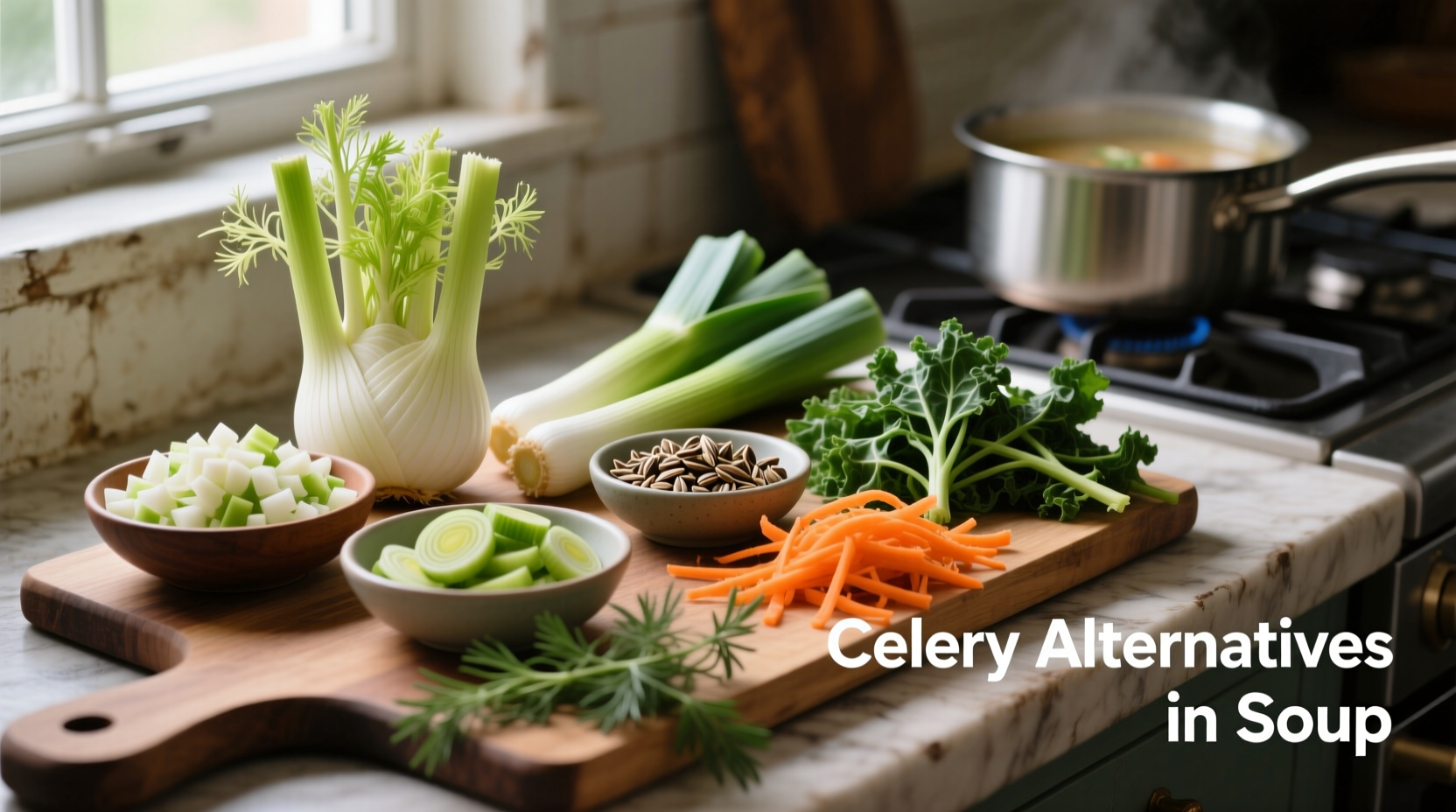
No single substitute perfectly replicates all aspects of celery, but several ingredients come close depending on the desired outcome. Below are the most effective replacements, categorized by their primary contribution to the dish.
1. Fennel Bulb – For Aromatic Complexity and Texture
Fennel bulb is one of the most elegant substitutes for celery, especially in creamy soups, seafood chowders, or vegetable-based broths. It shares a similar crunchy texture when raw and breaks down gently during simmering. More importantly, fennel contains anethole, the same compound found in anise and tarragon, giving it a faint licorice-like aroma that adds sophistication rather than overpowering the dish.
How to Use: Replace celery stalks measure-for-measure with chopped fennel bulb. Sauté it with onions and carrots as you would traditional mirepoix. The result is a slightly sweeter, more nuanced base. If you're concerned about the anise note being too strong, use half fennel, half onion to dilute the flavor.
Pro Tip: Save the feathery fronds—they can be used like parsley or dill as a garnish, adding freshness and visual appeal.
2. Leeks – For Mild Onion-Green Depth
Leeks are underutilized members of the allium family, offering a milder, sweeter alternative to onions with a gentle vegetal backbone reminiscent of scallion greens. They lack the bitterness of celery but contribute volume, moisture, and aromatic richness. Best suited for creamy potato leek soup, chicken noodle variations, or any soup where subtlety is key.
How to Use: Use only the white and light green parts. Slice thinly and rinse thoroughly to remove trapped soil. Substitute ¾ cup of sliced leeks for every cup of diced celery. Because they cook down more than celery, you may want to increase the quantity slightly to maintain bulk.
\"Leeks bring a silkier, more integrated flavor to soups. They don’t scream for attention—they whisper support.\" — Chef Elena Ruiz, Culinary Instructor, San Francisco Cooking School
3. Bok Choy or Napa Cabbage – For Crunch and Moisture
In Asian-inspired soups, bok choy and Napa cabbage serve as excellent stand-ins. Their stems offer a crisp texture similar to celery, while the leaves wilt into the broth, enriching it with mild brassica flavor. These vegetables absorb surrounding seasonings well, making them ideal in miso, ramen, or coconut curry soups.
How to Use: Chop the white stem portion into ¼-inch pieces and add it early in the sauté phase. Add the leafy parts later. Use a 1:1 ratio by volume. Be aware that these greens release more water than celery, so reduce added liquid slightly to avoid dilution.
4. Green Bell Pepper – For Textural Mimicry
Green bell pepper lacks the herbal nuance of celery but matches its firmness and low sugar content. Unlike red or yellow peppers, green bell peppers have a slightly bitter, grassy profile that aligns more closely with celery’s character. Common in Cajun and Creole cooking (the \"holy trinity\" replaces celery with green pepper), this substitution works exceptionally well in gumbo, jambalaya soup, or bean stews.
How to Use: Dice and sauté alongside onions and carrots. Use a 1:1 volume replacement. Note: green pepper can dominate if overused, so consider blending it with extra onion or carrot to balance intensity.
5. Parsnips – For Earthy Sweetness and Body
Parsnips are pale, tapered roots with a sweet, nutty, and slightly peppery flavor. While higher in sugar than celery, they caramelize beautifully and add body to soups. They work best in heartier dishes like beef stew, roasted vegetable soup, or lentil-based preparations.
How to Use: Peel and dice parsnips into small cubes. Use about ¾ the amount of celery called for, since their flavor is more pronounced. Sauté slowly to draw out sweetness without browning excessively.
Kitchen Hack: Combine parsnip with a small amount of fennel or leek to create a complex aromatic base that mimics the layered effect of mirepoix—even without celery.
6. Celery Seed – For Flavor Without Texture
When you need the flavor of celery but not the physical presence—such as in blended soups or when avoiding fibrous textures—celery seed is a potent solution. Made from the dried seeds of wild celery, it delivers a concentrated, slightly peppery version of celery’s essence.
How to Use: Use ½ teaspoon of crushed celery seed per cup of diced celery. Toast lightly in a dry pan before adding to enhance aroma. Ideal for rubs, spice blends, or soups thickened with cream or pureed vegetables. Avoid using in large quantities—it can become bitter.
7. Carrots (Extra) – For Bulk and Color
While carrots are already part of mirepoix, increasing their proportion compensates for missing celery by maintaining vegetable mass and contributing natural sweetness. Though it won’t replicate celery’s bitterness, this method preserves the visual and textural expectations of a well-balanced soup base.
How to Use: Add an additional ½ to 1 cup of diced carrots per recipe. Pair with a splash of lemon juice or vinegar at the end to reintroduce brightness lost without celery’s slight acidity.
Variants & Types of Substitutes
Each substitute comes in different forms that affect usability and shelf life. Knowing these variants helps optimize pantry efficiency and meal planning.
| Substitute | Available Forms | Best Use Case |
|---|---|---|
| Fennel | Fresh bulb, dried pollen (rare), fronds | Fresh bulb for sautéing; pollen as finishing spice |
| Leeks | Whole fresh, frozen pre-sliced | Fresh preferred; frozen acceptable in long-simmered soups |
| Bok Choy | Stem and leaf whole, baby bok choy, canned (less ideal) | Use fresh stems early, leaves late; avoid canned for aromatic base |
| Green Bell Pepper | Fresh, frozen dices, jarred (in brine or oil) | Fresh or frozen for cooking; avoid jarred due to salt and off-flavors |
| Parsnips | Whole root, pre-peeled, canned (rare) | Always use fresh; canned alters texture and flavor |
| Celery Seed | Whole seeds, ground powder | Crush whole seeds just before use for maximum potency |
| Carrots | Whole, baby-cut, shredded, frozen | All forms usable except pre-shredded (often dried out) |
Comparison with Similar Ingredients
Some ingredients are often confused or misused as celery substitutes. Clarifying differences ensures better results.
- Celeriac vs. Celery: Celeriac (celery root) is a variety grown for its bulbous root. It has a stronger celery flavor than stalks and is excellent in soups. Peel and dice like a potato. Can be used 1:1 as a substitute.
- Chinese Celery vs. Western Celery: Thinner stalks, more intense flavor, and greater fragrance. Use sparingly—about half the amount—to avoid overwhelming the dish.
- Fennel vs. Anise: Both contain anethole, but fennel bulb is a vegetable; anise seed is a spice. Do not substitute anise seed for celery unless intentionally seeking a licorice-forward profile.
Practical Tips & FAQs
Can I omit celery entirely?
Yes, but expect a flatter flavor profile. To compensate, boost aromatics with extra onion, garlic, herbs (like thyme or parsley), or a splash of dry sherry or white wine during the sauté phase.
Is there a low-FODMAP celery substitute?
Yes. Bok choy stems and green bell peppers are lower in FODMAPs compared to onion and garlic-heavy bases. Use them with caution if following a strict elimination diet.
What should I avoid when replacing celery?
Avoid strongly flavored vegetables like broccoli stems or Brussels sprouts—they introduce sulfurous notes. Also avoid zucchini, which turns mushy and bland when overcooked.
How do I adjust seasoning when skipping celery?
Celery contributes subtle saltiness and bitterness. If omitting it, consider adding:
- A pinch of celery salt (if not allergic)
- ½ teaspoon lemon juice or apple cider vinegar at the end
- A small strip of kombu (seaweed) during simmering for mineral depth
Can I use celery powder?
Yes. Celery powder is dehydrated and ground celery stalks. It dissolves easily and works well in dry rubs or soups. Use ½ teaspoon per cup of diced celery. Check labels—some brands mix in salt.
Are there allergy-friendly options?
For those with celery allergy (common in Europe), avoid celeriac and celery seed, which can trigger reactions. Safe alternatives include leeks, bok choy, green pepper, or carrots—all botanically unrelated.
Storage Tip: Most celery substitutes keep well in the refrigerator crisper drawer. Wrap leeks and fennel in damp paper towels; store peppers and carrots in sealed containers. Use within 5–7 days for optimal freshness.
Case Study: Rebuilding Chicken Noodle Soup Without Celery
Consider a classic chicken noodle soup recipe calling for 1 cup each of diced onions, carrots, and celery. A cook discovers mid-prep that celery is unavailable. Here's how to adapt:
- Option 1 (Balanced): Replace celery with ¾ cup diced fennel bulb + ¼ cup leeks. Sauté together with onions and carrots. Add fresh thyme to enhance herbal notes. Garnish with fennel fronds.
- Option 2 (Bold): Use 1 cup diced green bell pepper. Add ½ teaspoon smoked paprika to deepen flavor. Include a bay leaf during simmering.
- Option 3 (Simple): Increase carrots to 1½ cups. Add ½ teaspoon celery seed (crushed) and finish with 1 tablespoon chopped parsley and a squeeze of lemon.
All three versions maintain structural integrity and deliver satisfying complexity, proving that flexibility in the kitchen leads to creativity, not compromise.
Summary & Key Takeaways
Celery plays a quiet but essential role in soup-making, contributing texture, moisture, and aromatic balance. When unavailable, suitable substitutes exist—each bringing unique advantages:
- Fennel bulb offers the closest match in texture and aromatic sophistication.
- Leeks provide mild allium depth without sharpness.
- Green bell pepper is ideal in Creole and spicy soups.
- Bok choy stems work well in Asian-style broths.
- Celery seed or powder delivers flavor without bulk.
- Parsnips or extra carrots add body and sweetness, especially in hearty soups.
The key to successful substitution lies in understanding function over form. Whether you're adapting due to availability, dietary needs, or curiosity, these alternatives empower confident, creative cooking. Experiment with combinations—sometimes the best flavor base is the one you invent yourself.
Final Thought: Great soups aren't defined by rigid recipes, but by thoughtful ingredient choices. Mastering substitutions transforms limitations into opportunities for culinary growth.




 浙公网安备
33010002000092号
浙公网安备
33010002000092号 浙B2-20120091-4
Comments
No comments yet. Why don't you start the discussion?