
Waking up groggy is a common experience—eyes heavy, mind foggy, body resisting movement. While poor sleep duration or irregular schedules often contribute, the device that pulls you from slumber may be playing a bigger role than you think. The debate between analog alarm clocks and smartphone alarms isn’t just nostalgic; it’s rooted in how light, sound, and behavior influence your brain’s transition from sleep to wakefulness. Understanding the physiological and psychological differences between these two alarm methods can help you choose the one that supports a smoother, more energized start to your day.
The Science of Waking Up Groggy
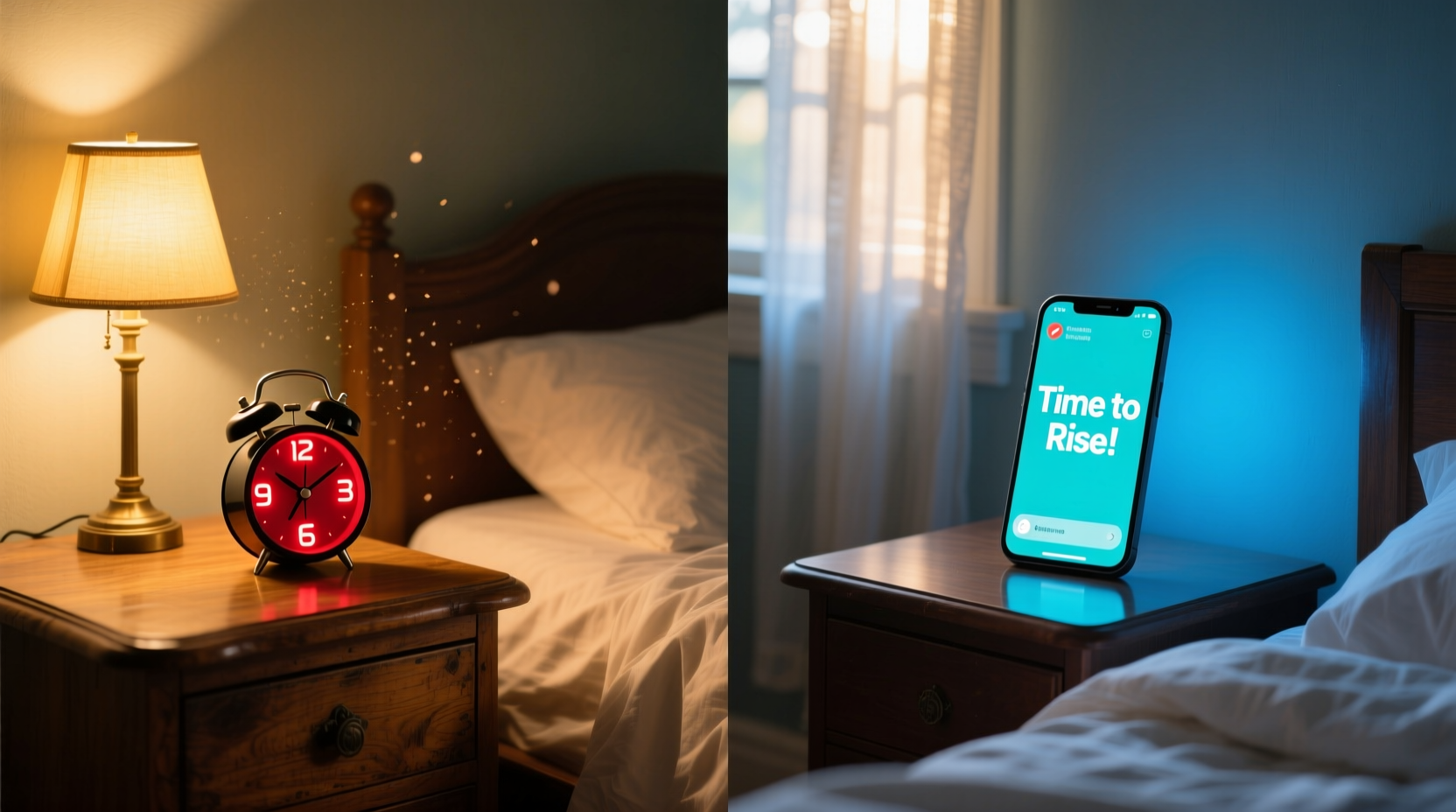
Grogginess upon waking, known as sleep inertia, is the period when your brain transitions from sleep to full alertness. This state can last anywhere from 5 to 30 minutes—or longer if disrupted by abrupt awakenings or poor sleep hygiene. During deep sleep stages, especially slow-wave sleep (SWS), your brain operates at low frequency. A sudden jolt from loud noise or bright light can interrupt this process, leaving you disoriented and mentally sluggish.
According to Dr. Rebecca Robbins, a sleep scientist at Harvard Medical School, “The way we wake up matters as much as how long we sleep. Abrupt awakenings, particularly with high-intensity stimuli like smartphone alarms, can exacerbate sleep inertia.”
Your choice of alarm doesn’t just signal the end of sleep—it influences the quality of your awakening and sets the tone for your cognitive performance throughout the morning.
“The way we wake up matters as much as how long we sleep.” — Dr. Rebecca Robbins, Sleep Scientist, Harvard Medical School
Analog Alarm Clocks: Simplicity with Biological Benefits
Analog alarm clocks use mechanical or quartz mechanisms to produce sound at a set time. They typically emit a gradual or repetitive beep, buzz, or ringtone without digital screens or connectivity. Their simplicity offers several advantages:
- No blue light emission: Unlike smartphones, analog clocks don’t emit blue light, which suppresses melatonin and disrupts circadian rhythms.
- Reduced temptation to check notifications: No messages, emails, or social media await you across the room.
- Consistent sound patterns: Many analog alarms use predictable, steady tones that allow for a gentler arousal from sleep.
- Forced physical engagement: To turn off the alarm, you must get out of bed, promoting immediate movement and alertness.
Some models even feature sunrise simulation, where a soft light gradually brightens over 15–30 minutes before the alarm sounds. These mimic natural dawn conditions, helping regulate cortisol release and ease the body into wakefulness.
Smartphone Alarms: Convenience at a Cognitive Cost
Smartphones dominate modern life—and bedtime routines are no exception. Over 70% of adults keep their phones within arm’s reach while sleeping, relying on built-in alarm apps. While convenient, this habit comes with significant drawbacks:
- Blue light exposure: Turning off the alarm means unlocking your phone, exposing your eyes to blue light that delays full alertness and may interfere with next-night sleep.
- Dopamine-driven distractions: One swipe leads to checking texts, news, or social media, pulling your brain into reactive mode instead of allowing a calm, intentional start.
- Inconsistent sound profiles: Phone alarms vary widely—from gentle chimes to blaring ringtones—many of which trigger a stress response by spiking adrenaline.
- Over-reliance on snooze: Easy access encourages repeated snoozing, fragmenting sleep and worsening grogginess.
A study published in *Sleep Health* found that participants who used phone alarms were more likely to report higher levels of morning fatigue and lower mood stability compared to those using standalone alarm devices.
Moreover, keeping your phone nearby reinforces a cycle of nighttime anxiety. The anticipation of incoming messages or work-related alerts can reduce sleep quality even before the alarm sounds.
Comparative Analysis: Analog vs. Phone Alarm
| Feature | Analog Alarm Clock | Smartphone Alarm |
|---|---|---|
| Light Exposure Upon Wake | None or warm/gradual (if sunrise model) | High blue light from screen |
| Sleep Inertia Impact | Lower – gentler transition | Higher – abrupt arousal + mental stimulation |
| Temptation to Check Notifications | Negligible | Very high |
| Sound Control & Customization | Limited options | Extensive customization |
| Mobility Required to Turn Off | Often requires getting out of bed | Can be silenced lying down |
| Impact on Circadian Rhythm | Neutral or positive | Potentially disruptive |
| Reliability (Battery/Power) | May require frequent battery changes | Dependent on charging habits |
While smartphones offer flexibility in alarm tones and scheduling, their integration into our emotional and cognitive landscape often undermines restful waking. The convenience they provide is offset by behavioral traps that deepen grogginess and delay mental clarity.
Real-World Example: Sarah’s Morning Transformation
Sarah, a 34-year-old project manager, relied on her phone alarm for years. She’d wake up stressed, immediately scrolling through emails before even sitting up. Her mornings felt chaotic, and she often needed two cups of coffee just to focus.
After reading about sleep inertia, she switched to an analog sunrise alarm clock placed six feet from her bed. She programmed it to begin glowing softly 20 minutes before the alarm sounded. Within a week, she noticed she was waking up slightly before the alarm, feeling more naturally alert. Without her phone nearby, she avoided digital distractions and started doing light stretching instead.
“I didn’t realize how much my phone was sabotaging my mornings,” Sarah said. “Now I feel calmer, more in control. Even my team has commented on my improved focus during morning meetings.”
Her experience reflects a growing trend: people rediscovering the power of disconnection at wake-up time to reclaim mental energy.
Action Plan: How to Optimize Your Wake-Up Routine
Whether you prefer analog or digital, the goal is to minimize grogginess and support a smooth transition into wakefulness. Follow this step-by-step guide to improve your mornings:
- Remove your phone from the bedroom – Charge it in another room to eliminate temptation and reduce EMF/light exposure.
- Invest in a dedicated alarm device – Choose an analog clock or a smart alarm with sunrise simulation and non-digital display.
- Set consistent wake-up times – Even on weekends, aim to rise within 30 minutes of your weekday time to stabilize circadian rhythm.
- Position your alarm across the room – Force yourself to stand up, signaling your nervous system that it’s time to activate.
- Pair waking with light exposure – Open curtains or use a light therapy lamp to suppress melatonin and boost alertness.
- Avoid snoozing – Each snooze cycle resets your sleep stage, leading to fragmented micro-sleeps that increase grogginess.
- Hydrate immediately – Drink a glass of water upon rising to rehydrate your brain and stimulate metabolism.
Checklist: Building a Groggy-Free Morning Routine
Use this checklist each night to prepare for a better wake-up experience:
- ☑ Charge phone outside the bedroom
- ☑ Set alarm (analog or distraction-free app) for consistent wake time
- ☑ Close blinds or wear a sleep mask if light pollution is an issue
- ☑ Prepare clothes or breakfast items the night before
- ☑ Practice a 5-minute wind-down routine (e.g., journaling, breathing)
- ☑ Avoid caffeine after 2 PM and heavy meals before bed
- ☑ Use sunrise alarm or schedule lights to turn on automatically
Expert Insight: Why Environment Shapes Awakening
Dr. Matthew Walker, neuroscientist and author of *Why We Sleep*, emphasizes that our surroundings during sleep and wakefulness directly affect brain function. “Your bedroom should be a sanctuary for sleep—not a command center for digital life. Every element, including how you wake up, either supports or sabotages recovery.”
“Your bedroom should be a sanctuary for sleep—not a command center for digital life.” — Dr. Matthew Walker, Neuroscientist and Author of *Why We Sleep*
He notes that environments free of electronic stimulation allow the brain to enter deeper sleep stages and exit them more gracefully. The absence of decision-making triggers (like unread messages) upon waking preserves mental bandwidth for higher-priority tasks later in the day.
Frequently Asked Questions
Can I use my phone as an alarm without the downsides?
Yes, but only with strict boundaries. Use airplane mode or Do Not Disturb, disable all notifications, and place the phone face-down across the room. Consider using a minimalist alarm app with no extra features. However, even then, the temptation to check the screen remains high for most users.
Are sunrise alarm clocks worth the investment?
For individuals struggling with seasonal affective disorder (SAD), chronic fatigue, or difficulty waking in dark winter months, sunrise alarms are highly effective. Studies show they can reduce sleep inertia by up to 50% compared to traditional alarms. Look for models with adjustable brightness and natural-spectrum light.
Does the type of alarm sound matter?
Significantly. Harsh, jarring sounds (e.g., beeping, sirens) trigger a fight-or-flight response, increasing heart rate and cortisol. Softer, rising melodies or nature sounds promote gradual arousal. Some advanced alarms analyze sleep cycles and wake you during lighter sleep phases using gentle audio cues.
Conclusion: Reclaim Your Mornings with Intentional Design
The difference between waking up groggy and rising with clarity often comes down to one simple choice: how you end your sleep. While smartphones offer unmatched convenience, their presence at bedtime and wake time introduces hidden costs to your cognitive well-being. Analog alarm clocks—especially those designed with circadian biology in mind—provide a cleaner, more intentional path to alertness.
You don’t need to abandon technology entirely. But reintroducing physical separation between your sleep space and digital world can transform your mornings. By choosing an alarm method that respects your brain’s natural rhythms, you invest not just in better wake-ups, but in sustained energy, focus, and emotional balance throughout the day.




 浙公网安备
33010002000092号
浙公网安备
33010002000092号 浙B2-20120091-4
Comments
No comments yet. Why don't you start the discussion?