
Waking up feeling refreshed and alert is more than just a matter of willpower—it’s deeply tied to how we interact with time, light, and sound each morning. One overlooked factor in this equation is the type of clock or alarm system we use. While both analog clocks and digital alarms serve the same basic function—telling time and signaling when to rise—they influence our sleep-wake cycles in fundamentally different ways. The question isn't just about preference; it's about physiology, psychology, and long-term well-being. Understanding the differences between analog clocks and digital alarms can help you make a smarter choice for a smoother, less stressful start to your day.
The Role of Visual Stimuli in Morning Wakefulness
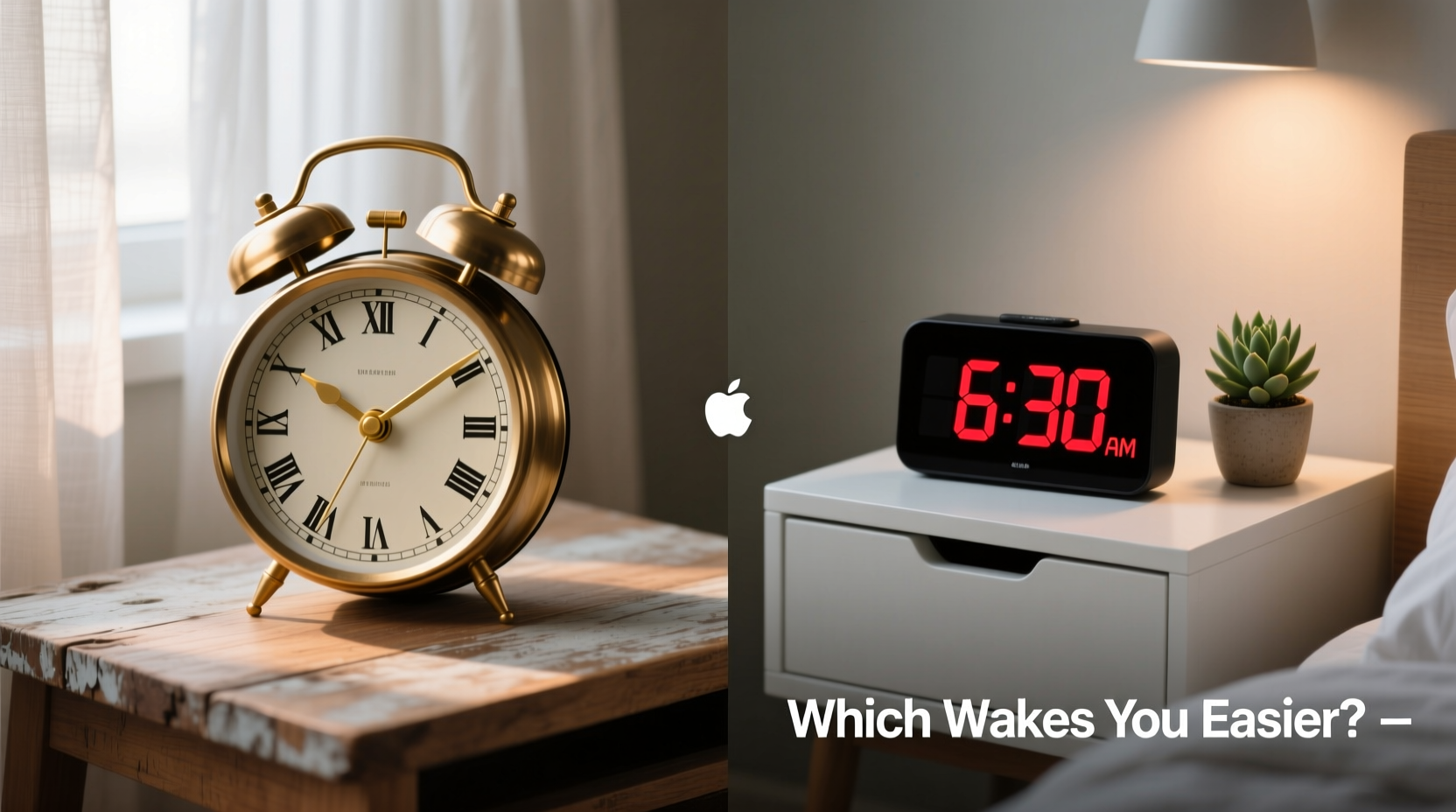
What you see first upon waking plays a crucial role in how quickly your brain transitions from sleep to wakefulness. Digital alarms typically feature bright LED displays that emit blue-tinted light—a spectrum known to suppress melatonin, the hormone responsible for regulating sleep. This can be beneficial if timed correctly, but exposure too early or too intensely may disrupt natural circadian rhythms.
In contrast, analog clocks offer a passive display. Most use reflective surfaces or dim illumination, avoiding the harsh glow common in digital models. This subtlety reduces visual shock upon waking, allowing for a gentler transition out of deep sleep. A 2020 study published in *Sleep Health* found that participants exposed to low-light environments upon waking reported lower cortisol spikes and improved mood compared to those greeted by bright screens.
How Sound Design Impacts Alertness
The way an alarm sounds—and how abruptly it begins—can determine whether you jolt awake in panic or rise gradually with clarity. Many digital alarms default to sharp, high-frequency beeps or buzzes designed to pierce through sleep. While effective at rousing even heavy sleepers, these tones trigger a stress response, increasing heart rate and adrenaline levels within seconds.
Analog alarm clocks, particularly older wind-up or mechanical models, often use gentler chimes or bells. These auditory cues tend to build in volume or repeat rhythmically, giving the brain time to process the signal before full arousal. Some modern hybrid clocks combine analog faces with customizable digital sounds, offering users the best of both worlds: a soft visual interface paired with progressive audio alerts like nature sounds or radio fade-ins.
“Sudden, loud noises at awakening activate the amygdala—the brain’s fear center—which can set a negative tone for the entire day.” — Dr. Lena Patel, Sleep Neurologist, Stanford Center for Sleep Sciences
Comparative Analysis: Analog vs Digital Alarm Features
| Feature | Analog Clock | Digital Alarm |
|---|---|---|
| Light Emission | Low (usually ambient or none) | High (LED/LCD, often blue-rich) |
| Sound Options | Limited (bell, chime, tick) | Extensive (beep, music, radio, voice) |
| Time Visibility | Requires focus to read | Instantly legible |
| Sleep-Friendly Design | Generally higher (no screen flicker) | Varies (some have night modes) |
| Power Dependency | Often battery or mechanical | Usually requires electricity/battery |
| Impact on Melatonin | Minimal disruption | Potentially significant suppression |
This comparison shows that while digital alarms offer convenience and precision, they come with sensory trade-offs that may hinder restful awakening. Analog clocks, though less feature-rich, support a more natural wake-up experience by minimizing environmental disturbances.
A Real-World Example: Sarah’s Transition to an Analog Clock
Sarah, a 34-year-old graphic designer from Portland, struggled with chronic grogginess despite sleeping eight hours nightly. She used a smartphone as her alarm, placing it face-up on her nightstand. Every morning began with a blaring notification and the sudden glare of a white screen. Over time, she noticed increased anxiety in the mornings and difficulty focusing during her first work session.
After consulting a sleep coach, Sarah replaced her phone with a classic wooden-cased analog clock featuring a silent sweep second hand and soft dial lighting. She also adopted a rule: no checking devices until after breakfast. Within two weeks, she reported waking more naturally, experiencing fewer headaches, and feeling calmer in the early hours. Her reliance on caffeine dropped by half.
Sarah’s case illustrates how small changes in alarm technology can yield measurable improvements in daily functioning—not because analog clocks magically “cure” sleep issues, but because they align better with human biology.
Choosing the Right Tool: A Step-by-Step Decision Guide
Selecting between an analog clock and a digital alarm shouldn’t be arbitrary. Follow this sequence to identify what works best for your lifestyle and sleep needs:
- Assess your current wake-up experience. Do you feel startled, anxious, or disoriented each morning? Or do you awaken gradually and peacefully?
- Evaluate your bedroom environment. Is there excessive artificial light at night? Are electronic screens present near your bed?
- Determine your sensitivity to sound. Do loud beeps cause a spike in heart rate? Would you prefer a gradual sound increase?
- Consider your need for information. Do you rely on extra features like date, temperature, or snooze statistics?
- Test one option for two weeks. Replace your current device with either an analog clock or a low-emission digital model (preferably with warm lighting).
- Track your energy levels and mood. Use a simple journal to note how you feel within 30 minutes of waking.
- Adjust accordingly. If grogginess persists, consider combining tools—such as pairing an analog clock with a sunrise simulator lamp.
Expert-Backed Strategies for Easier Mornings
Regardless of which type of clock you choose, integrating evidence-based habits enhances their effectiveness. Experts recommend the following approaches to improve wake-up ease:
- Align with circadian rhythm: Set your alarm at the same time every day—even on weekends—to stabilize your internal clock.
- Use light strategically: Open curtains slightly before bedtime or invest in a dawn-simulating alarm that mimics sunrise.
- Minimize time-checking: The habit of glancing at the clock during nighttime awakenings increases sleep-related anxiety.
- Position your alarm away from the bed: Forcing yourself to stand up to turn it off promotes immediate physical engagement.
- Limit pre-sleep screen exposure: Reduce blue light at least 60 minutes before bedtime to enhance melatonin production.
“The single most important factor in waking up easily isn’t the alarm itself—it’s consistency in sleep timing and environment.” — Dr. Marcus Tran, Behavioral Sleep Medicine Specialist
Frequently Asked Questions
Can an analog clock really help me wake up more easily than a digital one?
Yes, for many people. Analog clocks reduce visual stimulation and avoid the melatonin-disrupting blue light emitted by most digital displays. When combined with a quiet, consistent bedroom environment, they contribute to a calmer, more natural awakening process—especially for light sleepers or those sensitive to light and sound.
Are there digital alarms that mimic the benefits of analog clocks?
Absolutely. Some advanced digital models now include features like warm-colored displays, gradual sound ramps, and “sleep mode” settings that dim or turn off the screen after a set period. Look for alarms labeled as “circadian-friendly” or those compatible with smart home systems that adjust brightness based on time of day.
Is it better to hear the alarm or see the time first thing in the morning?
Seeing the time immediately can backfire. Checking the clock upon waking often leads to mental calculations (“I only got five hours”), which activates stress pathways. It’s generally healthier to respond to sound first, then check the time once fully awake. This prevents early-morning rumination and supports emotional regulation.
Final Recommendations and Action Plan
The debate between analog clocks and digital alarms ultimately comes down to personal biology and behavioral patterns. There is no universal winner—but there is a clear trend in sleep science favoring low-stimulation environments for optimal rest and wakefulness. If your goal is to wake up feeling calm, alert, and ready to engage with the day, reducing sensory overload at the moment of awakening should be a priority.
For individuals seeking simplicity and reduced eye strain, an analog clock remains a powerful tool. For those who value data, connectivity, and customization, a thoughtfully chosen digital alarm—with warm lighting and gentle audio—can deliver similar results. The key lies not in the technology itself, but in how it integrates into a holistic sleep hygiene routine.




 浙公网安备
33010002000092号
浙公网安备
33010002000092号 浙B2-20120091-4
Comments
No comments yet. Why don't you start the discussion?