
Choosing the right timepiece to wear with formal attire is more than a matter of function—it’s a statement of taste, professionalism, and attention to detail. In an age where digital smartwatches dominate daily life with notifications, fitness tracking, and seamless connectivity, the classic analog watch remains a symbol of elegance and tradition. But when standing in front of a mirror, suit pressed and tie knotted, which watch should you reach for? The answer depends on context, audience, and the message you want to project.
This article examines the aesthetic, functional, and social implications of wearing analog watches versus digital smartwatches with formal wear. From boardrooms to black-tie events, we’ll explore how each type of timepiece aligns with different standards of dress and decorum—helping you make a choice that enhances both your appearance and confidence.
The Role of a Watch in Formal Attire
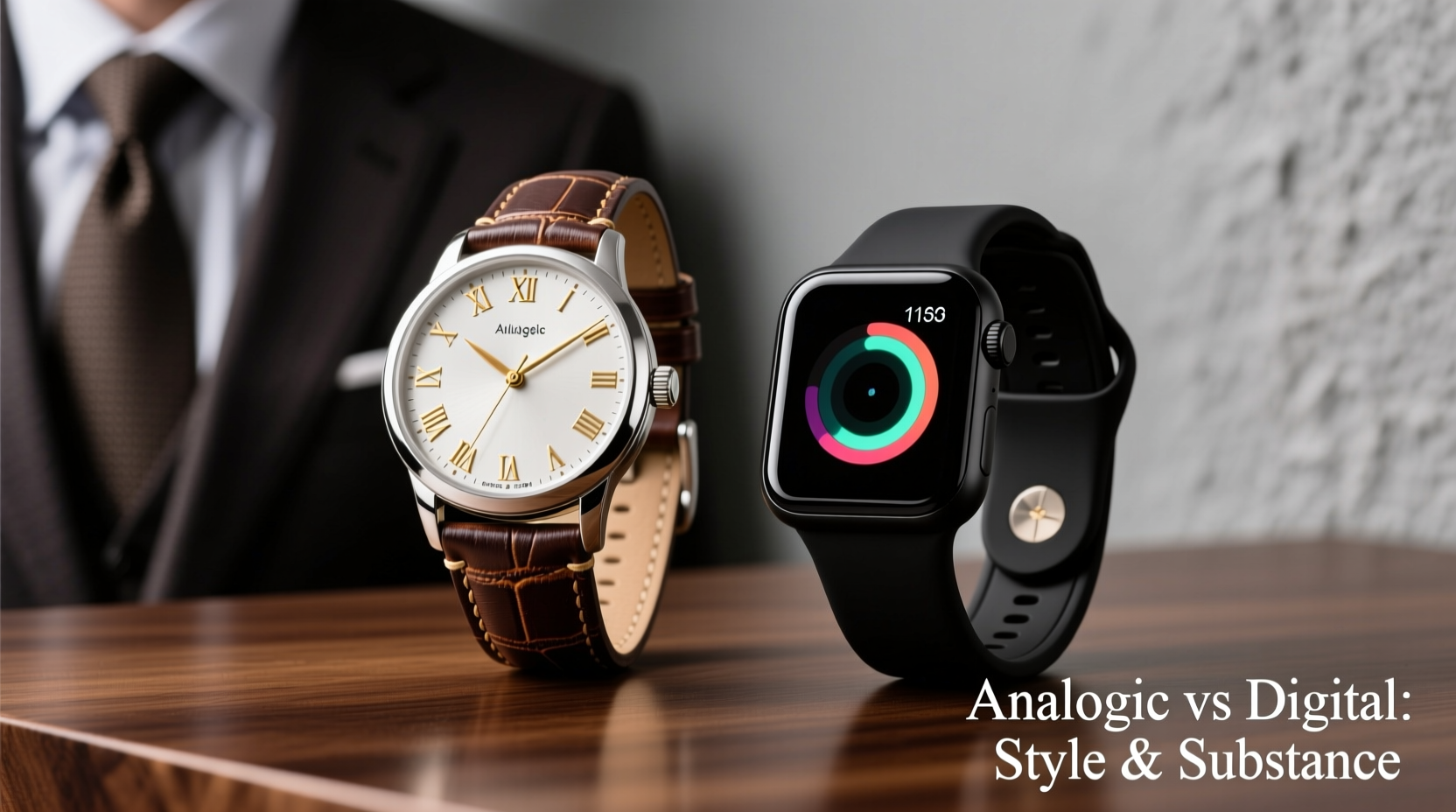
A watch worn with formal clothing does more than tell time—it completes the look. Much like cufflinks, pocket squares, or polished shoes, a well-chosen timepiece contributes to the overall impression of refinement. In professional environments, subtle accessories often speak volumes about punctuality, discipline, and personal standards.
Formal wear—whether a tailored business suit, tuxedo, or morning coat—is designed to minimize distraction and emphasize structure and symmetry. Every element should appear intentional. A mismatched or overly technical watch can disrupt this harmony, drawing unwanted attention or signaling poor judgment.
The core question isn’t just about aesthetics; it’s about appropriateness. While smartwatches offer undeniable utility, their design language is rooted in technology and informality. Analog watches, by contrast, were born from craftsmanship and luxury, making them natural companions to formal dressing.
Analog Watches: Timeless Elegance Meets Tradition
Analog watches have long been associated with sophistication. Their design—featuring hour and minute hands over a dial marked with numerals or indices—evokes heritage, precision engineering, and artistry. Brands like Patek Philippe, Jaeger LeCoultre, and Cartier have built reputations not only on accuracy but on their ability to elevate an outfit through understated beauty.
When paired with formal wear, an analog watch enhances continuity. Its round case, leather or metal bracelet, and minimalist face blend seamlessly with the clean lines of a suit. Even sporty chronographs can work in business-casual settings if they maintain a subdued color palette and moderate size.
Key advantages of analog watches in formal contexts include:
- Visual Harmony: The circular shape complements shirt cuffs and suit sleeves.
- Discreet Presence: No backlight, no vibrations, no screen glare—just quiet functionality.
- Symbolic Value: Often seen as heirlooms or status symbols, reinforcing professionalism.
- Design Variety: Available in thin profiles, precious metals, and refined dials suitable for evening events.
Real Example: The Boardroom Interview
Consider Daniel, a financial analyst preparing for a senior role interview at a traditional investment bank. He selects a navy wool suit, crisp white shirt, and burgundy silk tie. On his wrist, he wears a vintage-inspired Hamilton Khaki Field Auto with a black leather strap. The watch is legible, unobtrusive, and clearly mechanical in appearance. His interviewers later comment on his “polished presence”—a perception undoubtedly influenced by his cohesive accessory choices. Had he worn a bright-faced Apple Watch with a sport band, the effect would likely have been less favorable, regardless of its features.
“Wearing an analog watch with a suit signals respect—for the occasion, for others, and for oneself.” — Marcus Lang, Menswear Stylist & Former Editor, *Gentleman's Gazette*
Digital Smartwatches: Function Over Form?
Digital smartwatches excel in utility. They track health metrics, deliver messages, monitor sleep, and integrate with smartphones. Models like the Apple Watch, Samsung Galaxy Watch, and Garmin Epix offer advanced capabilities that many professionals rely on throughout the day.
However, these benefits come at a cost in formal settings. Most smartwatches feature square or rectangular faces, bulky designs, rubber or silicone bands, and brightly lit screens. These characteristics clash with the muted elegance expected in formal attire. A glowing screen during a dinner toast or a vibrating alert mid-presentation can be disruptive—even disrespectful.
That said, modern smartwatches are evolving. Some models now offer “elegant” modes with minimalist watch faces, titanium cases, and leather bands. The Apple Watch Hermès line, for example, blends tech with high-end design, using premium materials and sophisticated dials. Still, even these hybrid versions carry the underlying identity of a device—not a piece of jewelry or heirloom.
In certain industries—especially tech, startups, or creative fields—wearing a smartwatch with formal wear may be acceptable or even encouraged. It communicates innovation, efficiency, and a forward-thinking mindset. But in law, finance, diplomacy, or traditional corporate cultures, it risks appearing incongruent.
Case Study: The Tech CEO at a Gala Dinner
Sarah Chen, CEO of a Silicon Valley AI startup, attends a charity gala in a floor-length gown and tailored tuxedo jacket. She wears a stainless steel Apple Watch with a black Milanese loop and a monochrome watch face mimicking a classic Seiko. While some guests notice the device, most assume it’s a fashion-forward analog due to its restrained interface. Sarah uses it discreetly to check her schedule between speeches. Her choice reflects balance: leveraging technology without compromising elegance. In her world, being seen as tech-savvy is an asset, not a liability.
Comparative Analysis: Analog vs Smartwatch for Formal Wear
| Feature | Analog Watch | Digital Smartwatch |
|---|---|---|
| Aesthetic Appeal | Elegant, timeless, harmonious with suits | Technical, utilitarian, often bulky |
| Material Quality | Premium metals, sapphire crystal, leather straps | Mixed: aluminum, plastic, silicone (even in high-end models) |
| Distraction Level | Low—no lights or sounds unless chiming | High—notifications, vibrations, screen glow |
| Symbolism | Tradition, craftsmanship, status | Innovation, connectivity, productivity |
| Versatility with Formalwear | Excellent across all formal occasions | Limited; best in casual-formal or tech-centric environments |
| Long-Term Value | Many retain or increase value (e.g., Rolex, Omega) | Rapid obsolescence; depreciates quickly |
How to Choose Based on Occasion
The decision between an analog watch and a smartwatch shouldn’t be absolute. Context matters. Below is a step-by-step guide to help you decide based on the event.
- Assess the Dress Code: Is it black-tie, business formal, or business casual? The stricter the code, the stronger the case for analog.
- Consider the Industry: Law firms and banks favor tradition; tech companies embrace innovation. Match your accessory to cultural norms.
- Evaluate Your Role: Are you leading a meeting, giving a speech, or attending as a guest? Higher visibility demands greater discretion.
- Check Smartwatch Customization: If using a smartwatch, switch to a minimalist face, disable notifications, and use a leather band to reduce informality.
- Have a Backup Option: Keep a slim analog watch ready for events where a smartwatch would be inappropriate.
Checklist: Is Your Watch Appropriate for Formal Wear?
- ✅ Is the watch face round and proportionally sized (38–42mm ideal)?
- ✅ Is the strap made of leather, metal, or fabric—not rubber or silicone?
- ✅ Does it lack visible branding, bright colors, or digital elements?
- ✅ Can it be read at a glance without backlight or interaction?
- ✅ Would it look out of place in a wedding photo or courtroom?
Frequently Asked Questions
Can I wear a smartwatch with a tuxedo?
Generally, no. A tuxedo represents the highest level of formal dress, and a smartwatch breaks the expected aesthetic. If you must wear one for medical or professional reasons, opt for a model with a completely blacked-out screen and a formal band. However, carrying a phone or using a discreet analog alternative is preferable.
Are there smartwatches that look formal enough?
Yes—some models come close. The Montblanc Summit series, TAG Heuer Connected, and select Fossil Gen 6 watches feature premium finishes and classic designs. Paired with a leather strap and a conservative watch face, they can pass in semi-formal or modern business settings. But even then, they remain function-first devices rather than fashion statements.
Does wearing an analog watch seem outdated?
Not at all. In fact, in formal settings, it’s seen as deliberate and refined. Just as fountain pens haven’t disappeared despite digital alternatives, analog watches endure because they represent intentionality. Choosing one shows you value tradition and presentation.
Final Verdict: When in Doubt, Go Analog
While digital smartwatches offer unmatched functionality, they are fundamentally tools of convenience, not elegance. When it comes to formal wear, where every detail contributes to an impression of polish and professionalism, the analog watch remains superior in appearance and symbolism.
It’s not about rejecting technology—it’s about knowing when to prioritize presence over practicality. You can own both types of watches and use each where it shines. But for job interviews, weddings, board meetings, or diplomatic functions, the analog option consistently projects maturity, respect, and style.
As designer Tom Ford once said: “Dressing well is a form of good manners.” The same applies to accessorizing. A thoughtfully chosen watch doesn’t just tell time—it tells people who you are.




 浙公网安备
33010002000092号
浙公网安备
33010002000092号 浙B2-20120091-4
Comments
No comments yet. Why don't you start the discussion?