
In an age where time is just a glance at a smartphone away, the wristwatch has evolved from a functional necessity into a statement of identity. Yet, within that evolution, two distinct philosophies have emerged: the enduring elegance of the analog watch and the sleek utility of the digital smartwatch. While both tell time, they do so in fundamentally different ways—not just mechanically, but aesthetically, emotionally, and socially. When it comes to style, the question isn't about accuracy or features alone. It's about presence, craftsmanship, and how a timepiece complements not just your wrist, but your entire persona.
Style transcends function. A well-chosen watch doesn’t merely display hours and minutes—it communicates taste, discipline, and sometimes even heritage. Whether you’re dressing for a boardroom, a weekend hike, or a black-tie event, your wristwear speaks before you do. So, which category—analogue or digital—holds greater stylistic weight?
The Timeless Language of Analog Watches
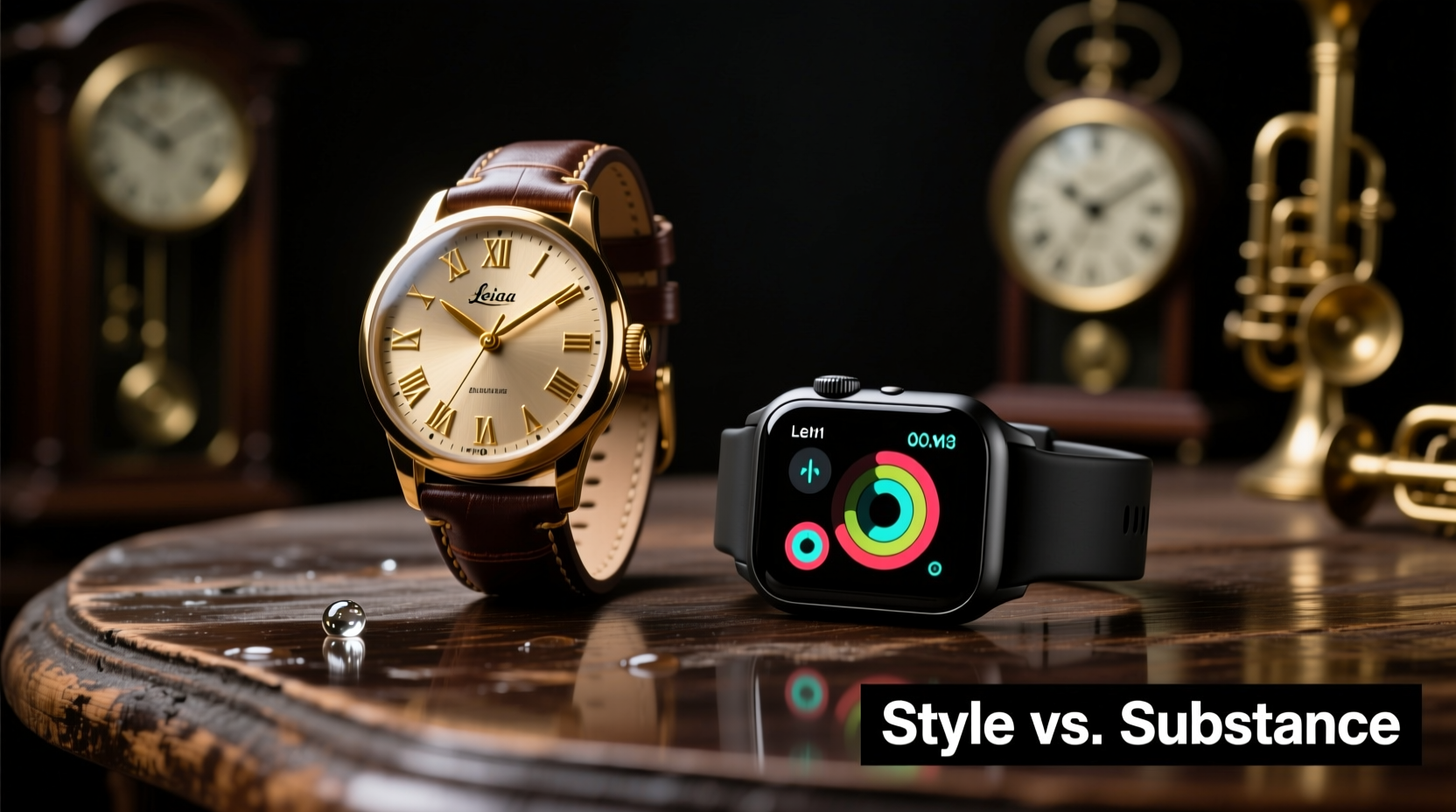
Analog watches are more than instruments; they are miniature works of art. Their dials, hands, and cases reflect centuries of horological tradition, refined through generations of craftsmanship. The sweeping motion of the second hand, the subtle ticking, the symmetry of hour markers—all contribute to a visual rhythm that feels almost human. There’s poetry in their mechanics, especially in mechanical and automatic movements, where gears and springs work in harmony without a single circuit.
From a design perspective, analog watches offer unmatched versatility. A simple field watch with a leather strap evokes rugged minimalism. A polished dress watch in white gold whispers sophistication. Even sport-oriented chronographs balance functionality with formality when paired correctly. The absence of digital clutter allows the eye to focus on proportion, finish, and detail—the brushed steel case, the sunburst dial, the domed sapphire crystal.
“Wearing an analog watch is like wearing a piece of history. It’s not just about telling time—it’s about respecting the craft.” — Julian Hartmann, Horology Curator at the Zurich Watch Museum
Many luxury brands—Patek Philippe, Jaeger LeCoultre, Grand Seiko—have built empires not on innovation for its own sake, but on perfection of form and movement. These pieces often appreciate in value, becoming heirlooms passed down through families. In contrast, few expect a smartwatch to survive beyond five years, let alone gain cultural significance.
The Functional Minimalism of Digital Smartwatches
Digital smartwatches represent a different aesthetic philosophy—one rooted in efficiency, connectivity, and modernity. Their strength lies not in ornamental detail but in seamless integration with daily life. With crisp OLED or AMOLED displays, they deliver information at a glance: messages, heart rate, calendar alerts, GPS navigation. For many professionals and fitness enthusiasts, the smartwatch is less accessory and more essential tool.
Stylistically, digital watches favor clean lines and futuristic materials. Titanium cases, ceramic bezels, and interchangeable silicone or fluoroelastomer bands give them a tech-forward appearance. Brands like Apple, Samsung, and Garmin have mastered industrial design, producing devices that feel premium despite their utilitarian core.
Yet, their visual language is inherently transient. The screen changes constantly. Notifications flash. Battery icons appear. Unlike an analog dial, which remains static and composed, a smartwatch face is dynamic—and often busy. Even customizable watch faces struggle to match the permanence and coherence of traditional design. While some models offer “classic” analog-style displays, these are simulations, not true expressions of mechanical beauty.
Moreover, the rapid pace of tech obsolescence undermines long-term style. A three-year-old smartwatch may still function, but its design often looks dated next to newer models with slimmer bezels or brighter screens. Fashion thrives on longevity; technology thrives on replacement.
Comparative Style Analysis: Key Differences
To understand which type of watch conveys more style, consider the following dimensions:
| Aspect | Analog Watch | Digital Smartwatch |
|---|---|---|
| Craftsmanship | High—often hand-assembled, with intricate movements visible through exhibition backs | Moderate—focused on engineering efficiency rather than artisanal detail |
| Design Longevity | Decades—many vintage models remain stylish today | 2–5 years—designs quickly become outdated |
| Emotional Resonance | Strong—associated with legacy, milestones, and personal meaning | Limited—primarily transactional, tied to utility |
| Versatility in Formal Settings | Excellent—appropriate for business, weddings, galas | Poor—rarely accepted in formal environments |
| Personalization Through Wear | Yes—patina develops on straps and cases over time | No—devices are designed to look new until replaced |
This table underscores a central truth: analog watches are built to endure, both physically and stylistically. Their appeal grows with age. Smartwatches, while impressive in capability, lack the emotional depth and timeless design that define true style.
When Context Defines Style: Real-Life Scenarios
Style is not absolute—it depends on context. Consider the case of Marcus, a 38-year-old investment banker based in London. During the week, he wears a vintage-inspired Hamilton Khaki Field Auto with a brown leather strap. Clients notice it during meetings. One even commented, “That’s the kind of watch my father used to wear.” The watch didn’t just tell time; it built rapport.
On weekends, Marcus switches to his Garmin Fenix 7X. He uses it for trail running, tracking elevation, and monitoring recovery metrics. It’s indispensable—but he wouldn’t wear it to a client dinner. “It just doesn’t fit,” he says. “It screams ‘fitness tracker,’ not ‘executive.’”
Then there’s Lena, a UX designer in San Francisco. She owns a slim Citizen Eco-Drive analog piece for office days and a rose-gold Apple Watch for casual outings. She appreciates the convenience of notifications but admits, “When I want to feel put together, I reach for the analog one. It feels more intentional.”
These examples reveal a pattern: even among tech-savvy users, analog watches are chosen when impression matters. They signal thoughtfulness, restraint, and attention to detail—qualities closely aligned with personal style.
Building a Stylish Watch Wardrobe: A Step-by-Step Guide
You don’t have to choose one type over the other. Many discerning individuals maintain both analog and digital watches, using each appropriately. Here’s how to build a balanced, stylish collection:
- Assess Your Lifestyle Needs: Identify the settings where you spend most of your time—office, gym, travel, social events. Note which environments demand professionalism versus functionality.
- Start with One Versatile Analog Watch: Choose a mid-sized (38–42mm) time-only or date model in stainless steel with a dark dial. Pair it with a leather or bracelet strap for adaptability.
- Add a Smartwatch for Active Use: Select a model with a premium build (e.g., titanium casing) and understated default face. Avoid overly sporty designs if you plan to wear it casually.
- Rotate Based on Occasion: Wear the analog watch for meetings, dinners, and formal events. Reserve the smartwatch for workouts, travel, or days requiring constant connectivity.
- Invest in Quality Over Quantity: One well-made analog watch is more impactful than three cheap ones. Similarly, a high-end smartwatch ages better than budget alternatives.
Expert Insight: What Designers Say About Wrist Presence
Fashion designers and accessory experts consistently emphasize subtlety and permanence in personal style. According to Isabella Moretti, a Milan-based accessories consultant:
“The wrist is one of the most visible yet underrated fashion zones. A digital screen flickering with alerts disrupts the line of an outfit. An analog dial, however, integrates seamlessly—like jewelry that serves a purpose.”
She notes that in high-fashion circles, smartwatches are rarely seen on runways or in editorial shoots. “They belong to a different category—tech, not fashion. You’ll see Cartier, Jaeger, even affordable classics like Seiko—but not smartwatches.” This separation highlights a deeper cultural divide: one between tools and treasures.
FAQ: Common Questions About Watch Style
Can a smartwatch ever be considered stylish?
Yes—but conditionally. A smartwatch with a premium build (titanium, sapphire glass), minimalist interface, and discreet notifications can blend into casual or contemporary outfits. However, it will never achieve the gravitas of a fine analog piece in formal settings.
Are analog watches outdated for younger generations?
Not at all. There’s been a resurgence among millennials and Gen Z for vintage and micro-brand analog watches. Platforms like TikTok and Reddit have thriving communities dedicated to mechanical timepieces, proving that appreciation for craftsmanship transcends age.
Does having both types diminish authenticity?
No. In fact, it demonstrates awareness. Using a smartwatch for fitness and an analog for professional settings shows intentionality—a hallmark of true style.
Final Thoughts: Style as a Statement of Values
In the end, the debate isn’t really about watches. It’s about what we value. The analog watch represents patience, tradition, and quiet confidence. It doesn’t buzz, flash, or demand attention. It simply exists—accurate, elegant, and self-assured. The smartwatch, by contrast, reflects immediacy, data, and responsiveness. It’s reactive, always connected, always alert.
Both have merit. But when it comes to style—defined as enduring, intentional, and expressive aesthetics—the analog watch holds a decisive edge. It doesn’t just tell time; it honors it. It treats each passing moment not as data point, but as part of a larger narrative.
If you want to make a silent statement about who you are—someone who values precision, beauty, and continuity—an analog watch is not just appropriate. It’s essential.




 浙公网安备
33010002000092号
浙公网安备
33010002000092号 浙B2-20120091-4
Comments
No comments yet. Why don't you start the discussion?