
In an era defined by rapid technological advancement, the wrist remains a battleground between two distinct philosophies of timekeeping. On one side: the analog watch, a symbol of craftsmanship, elegance, and enduring design. On the other: the smartwatch, packed with sensors, notifications, fitness tracking, and connectivity. The question isn’t just about telling time—it’s about identity, utility, and what we value in the objects we wear every day. Can a classic timepiece truly hold its ground against the relentless innovation of wearable tech?
The answer is not a simple yes or no. Instead, it lies in understanding what each category offers—and where they excel. While smartwatches dominate in functionality, analog watches continue to thrive on emotional resonance, longevity, and aesthetic integrity. This article explores the strengths and weaknesses of both, offering insights into how consumers are choosing, adapting, and sometimes embracing both worlds.
The Rise of the Smartwatch: Functionality First
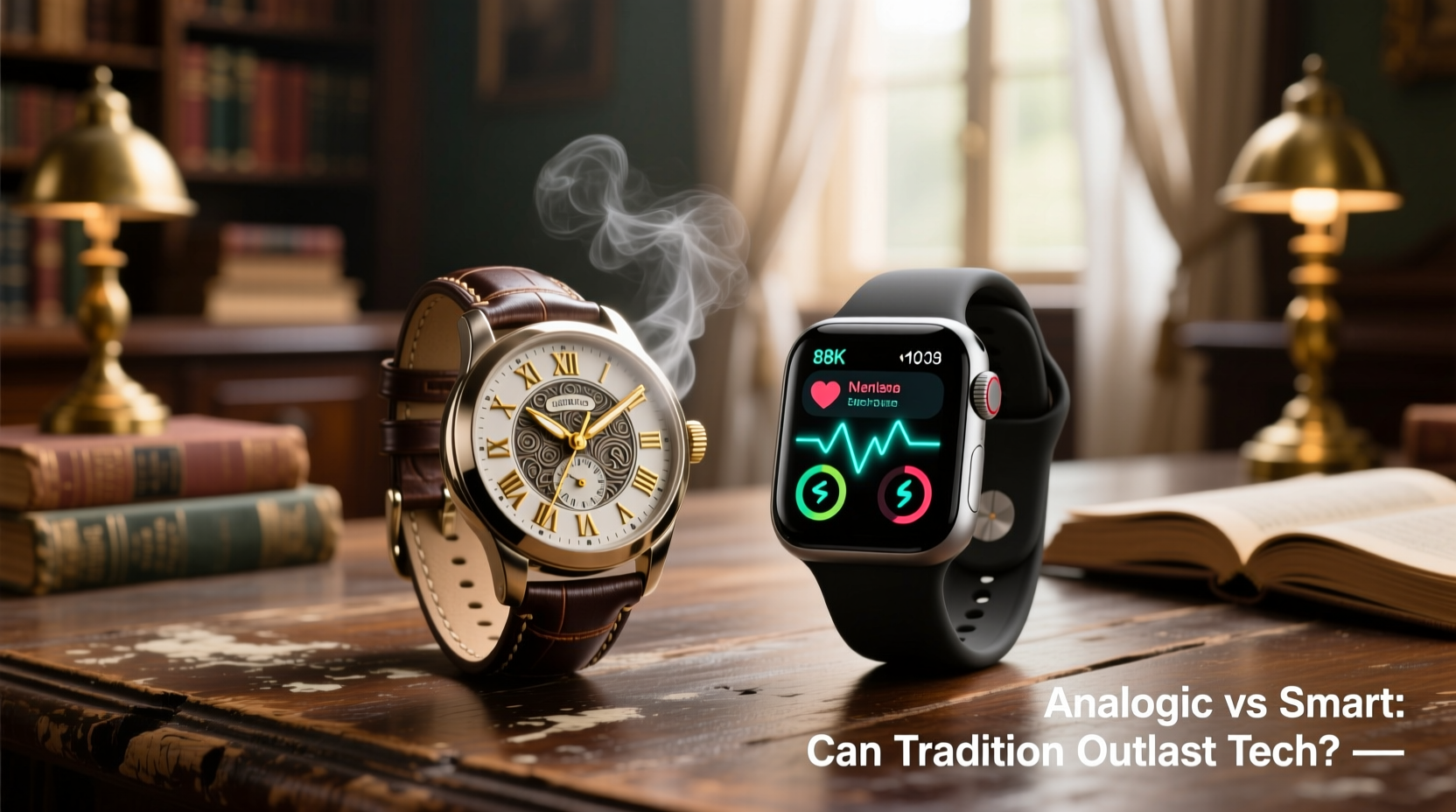
Since the launch of the Apple Watch in 2015, smartwatches have evolved from niche gadgets to mainstream accessories. They now serve as health monitors, communication hubs, and personal assistants—all wrapped around the wrist. Their appeal lies in real-time data: heart rate, sleep quality, step count, GPS tracking, and instant alerts from smartphones.
Manufacturers like Samsung, Garmin, Fitbit, and Huawei have pushed boundaries in battery efficiency, app integration, and sport-specific analytics. For athletes, busy professionals, or those managing chronic conditions, a smartwatch isn’t just convenient—it’s transformative.
Yet, despite their capabilities, smartwatches face inherent limitations. Most require daily charging. Their screens are prone to scratches. Software updates can render older models obsolete within a few years. And while designs have improved, many still carry a utilitarian, tech-forward aesthetic that doesn’t transition seamlessly into formal settings.
Analog Watches: Timeless Design Meets Mechanical Mastery
Unlike digital devices built for obsolescence, analog watches—especially mechanical ones—are engineered to last generations. A well-maintained Rolex, Omega, or Patek Philippe can appreciate in value over time. These timepieces are not merely tools; they’re heirlooms, expressions of taste, and testaments to precision engineering.
Mechanical movements, whether automatic or hand-wound, operate without batteries. They use springs, gears, and oscillating weights to keep time—a marvel of micro-engineering refined over centuries. Enthusiasts appreciate the tactile experience: winding the crown, hearing the subtle tick, observing the smooth sweep of the second hand.
Fashion also plays a critical role. Analog watches come in countless styles: minimalist dress watches, rugged dive models, aviation chronographs, and vintage reissues. Materials range from stainless steel and gold to ceramic and titanium. Unlike most smartwatches, which follow a standardized rectangular or circular screen format, analog designs offer unparalleled variety in dial layout, case shape, and strap options.
“Wearing a mechanical watch connects you to history. It’s not about checking the time—it’s about appreciating the craft behind it.” — Daniel Laurent, Horology Curator at Geneva Watch Museum
Comparative Breakdown: Key Features Side-by-Side
| Feature | Analog Watch | Smartwatch |
|---|---|---|
| Battery Life | 2–10 years (quartz); indefinite with winding (mechanical) | 1–7 days, depending on usage |
| Lifespan | Decades with proper maintenance | 3–5 years before obsolescence |
| Time Accuracy | ±10–30 seconds/month (mechanical); ±15 seconds/year (quartz) | Synchronized with atomic clocks via internet |
| Health Tracking | None | Heart rate, ECG, SpO2, sleep analysis, fall detection |
| Connectivity | None | Bluetooth, Wi-Fi, LTE, app integration |
| Durability | High (sapphire crystal, robust cases) | Moderate (prone to screen damage, water resistance varies) |
| Fashion Flexibility | Extremely high across occasions | Limited; mostly casual or athletic |
| Maintenance | Service every 5–7 years | Firmware updates, battery replacement, eventual replacement |
Real-World Example: Two Professionals, Two Choices
Consider Mark, a corporate lawyer in London. He wears a vintage Jaeger LeCoultre Reverso to court and client meetings. The thin, Art Deco-inspired case complements his tailored suits. Clients notice it—not because it vibrates with notifications, but because it signals attention to detail and tradition. At home, he uses an Apple Watch to track workouts and receive calendar alerts. He switches based on context: prestige during work hours, practicality during personal time.
Then there’s Lena, a software developer in Berlin. She rarely wears anything but her Garmin Fenix. Her job demands constant focus, and she relies on silent haptic alerts for deadlines. During hikes and triathlons, her watch logs elevation, pace, and recovery metrics. She finds traditional watches “beautiful but irrelevant” to her lifestyle. Yet, when attending her sister’s wedding, she borrowed a friend’s minimalist Nomos Tangente. “It felt right,” she admitted. “Like I was honoring the moment.”
Their stories reflect a growing trend: situational wear. Consumers aren’t choosing one over the other—they’re curating a wristwear wardrobe.
Why Analog Still Matters in a Digital Age
The persistence of analog watches in the face of smart technology speaks to deeper human needs. In a world saturated with screens and distractions, a mechanical watch offers a rare moment of disconnection. It doesn’t buzz, ping, or demand attention. It simply tells time—quietly, reliably, elegantly.
Moreover, analog watches represent permanence in a disposable culture. A $3,000 smartwatch will likely be outdated in four years. A $3,000 Rolex may increase in value and can be passed down to children. This long-term perspective appeals to those investing in legacy, not just convenience.
Brands recognize this duality. Some, like TAG Heuer and Frederique Constant, have introduced hybrid models—mechanical watches with discreet smart features such as activity tracking or phone-finding functions. Others, like Fossil, produce fashion-forward smartwatches that mimic classic analog aesthetics. These innovations blur the line, suggesting that competition may give way to coexistence.
Step-by-Step Guide: Choosing the Right Watch for Your Lifestyle
Selecting between an analog watch and a smartwatch shouldn’t be arbitrary. Follow this decision-making process to align your choice with your daily reality.
- Assess Your Daily Routine: Do you spend most of your day in meetings, outdoors, or at a desk? Formal environments favor analog; active or tech-heavy roles lean toward smartwatches.
- Identify Primary Needs: Is accurate timekeeping enough, or do you need health monitoring, messaging, or GPS?
- Consider Longevity: Are you looking for a short-term tool or a lifelong companion? Analog wins for lasting value.
- Evaluate Charging Habits: If you forget to charge devices regularly, a self-winding mechanical or long-lasting quartz watch may suit you better.
- Test Wearability: Try both types. Notice weight, comfort, and how often you check them. A bulky smartwatch may feel intrusive; a delicate dress watch might seem fragile for outdoor use.
- Budget for Ownership, Not Just Purchase: Factor in smartwatch replacement every few years versus occasional servicing for analog models.
- Decide on Emotional Value: Which makes you feel more confident, accomplished, or connected to yourself?
Checklist: What to Ask Before Buying Any Watch
- Does it match my most common attire (business, casual, sport)?
- How often does it need charging or servicing?
- Is water resistance sufficient for my activities?
- Can I easily replace the strap or band?
- Are software updates guaranteed for at least three years (for smartwatches)?
- Does the brand offer reliable customer support and repair services?
- Will it still look relevant in five years?
- Does it bring me joy just to wear it?
FAQ: Common Questions About Analog vs Smartwatches
Can a smartwatch replace an analog watch completely?
Functionally, yes—for timekeeping and added features. Emotionally and aesthetically, rarely. Many users find smartwatches lack the gravitas of fine timepieces in formal or ceremonial contexts. Additionally, frequent replacements undermine the idea of ownership.
Do analog watches have any hidden tech benefits?
Some high-end analog watches feature anti-magnetic shielding, shock resistance, and COSC-certified chronometer accuracy. While they don’t connect to apps, their engineering often surpasses that of mass-market electronics in terms of precision under stress.
Are hybrid watches worth considering?
Hybrids offer a middle path: analog hands with basic smart features like step counting or来电 vibration alerts. They’re ideal for professionals who want subtle tech without sacrificing style. However, they typically lack advanced health sensors or full smartphone integration.
Conclusion: Coexistence Over Competition
The debate between analog watches and smartwatches reflects a broader cultural tension: tradition versus innovation, permanence versus progress. But framing it as a zero-sum game misses the point. Just as people own both sneakers and dress shoes, they can—and increasingly do—own both types of watches.
Analog timepieces endure not because they outperform technology, but because they fulfill a different purpose. They are symbols of patience, craftsmanship, and personal narrative. Smartwatches, meanwhile, empower us with insight, connectivity, and control. Neither renders the other obsolete.
Rather than asking whether classic watches can compete, perhaps the better question is: how can we integrate both into a more intentional, balanced life? Choose an analog watch to honor moments that matter. Use a smartwatch to optimize the ones that demand efficiency. Together, they don’t just tell time—they help shape how we experience it.




 浙公网安备
33010002000092号
浙公网安备
33010002000092号 浙B2-20120091-4
Comments
No comments yet. Why don't you start the discussion?