
In an age where time is just a glance at a smartphone away, the wristwatch has evolved from a necessity into a statement. Whether it’s a handcrafted Swiss chronometer or a sleek smartwatch glowing with notifications, how we choose to tell time reflects personal taste, values, and lifestyle. The debate between analog watches and digital displays isn’t just about accuracy or functionality—it’s about aesthetics, symbolism, and emotional resonance. When it comes to style, one question stands out: which truly tells time with more elegance?
Style transcends mere appearance. It encompasses heritage, intention, and presence. Analog watches carry centuries of horological tradition, while digital faces represent innovation and connectivity. This article explores both sides not to declare a winner, but to help you understand what each offers—and what kind of statement you make when you wear one.
The Timeless Appeal of Analog Watches
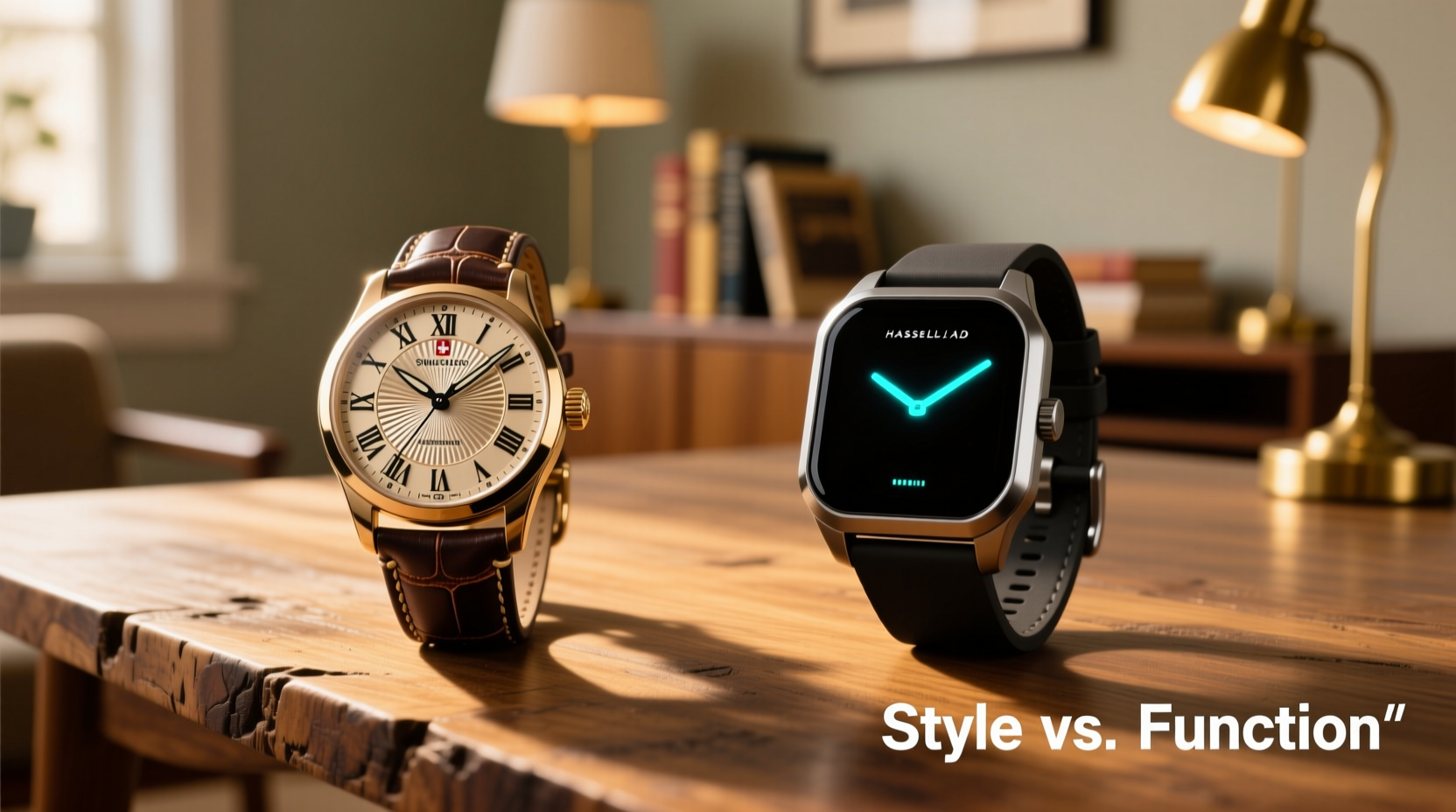
Analog watches are more than instruments; they are artifacts of human ingenuity and artistry. With sweeping hands, intricate dials, and mechanical movements visible through sapphire casebacks, they embody craftsmanship in motion. Each tick is a physical event—gears turning, springs unwinding—a testament to engineering refined over generations.
From Patek Philippe’s grand complications to minimalist designs like those from Nomos Glashütte, analog timepieces serve as wearable heirlooms. Their appeal lies in subtlety: the balance of indices, the curve of the lugs, the texture of the strap. A well-chosen analog watch doesn’t shout for attention—it earns admiration through quiet confidence.
Fashion historians often note that analog watches align closely with formal attire. The symmetry of a round dial echoes the proportions of a tailored suit cuff. In professional settings, boardrooms, or evening events, an analog watch signals respect for tradition and attention to detail.
“Wearing an analog watch is like carrying a small sculpture on your wrist—one that happens to keep perfect time.” — Daniel Reardon, Horology Curator at the British Museum of Timekeeping
Digital Faces: Functionality Meets Futurism
Digital watches emerged in the 1970s as symbols of progress. The LED display of the Hamilton Pulsar or the pixelated face of the Casio F-91W represented a break from tradition—a new way of seeing time as data rather than ritual. Today, digital faces live on in smartwatches like the Apple Watch, Samsung Galaxy Watch, and Fitbit devices, blending timekeeping with health tracking, messaging, and app integration.
Stylistically, digital watches favor minimalism and utility. Their square or rectangular screens prioritize legibility and interactivity. While some models mimic analog dials digitally, others embrace their electronic nature with animated interfaces, customizable widgets, and vibrant colors. For many, especially younger consumers, this flexibility is part of the allure.
However, digital faces often struggle to project gravitas. A glowing screen may be practical, but it rarely evokes the same reverence as a polished rose-gold dial. That said, brands like Garmin and TAG Heuer have bridged the gap with hybrid models that combine digital functionality with premium materials, proving that technology and sophistication aren’t mutually exclusive.
When Digital Excels in Style
Digital watches shine in casual, active, or tech-forward environments. At a startup meeting, a fitness retreat, or a music festival, a smartwatch can enhance personal branding as forward-thinking and efficient. Custom watch faces allow users to express moods, interests, or even commemorate milestones—something no traditional watch can replicate dynamically.
Yet, even among enthusiasts, there’s recognition that digital style leans toward the ephemeral. Trends shift quickly; today’s sleek interface may feel dated in two years. Analog watches, by contrast, often gain character with age.
A Comparative Look: Design, Craftsmanship, and Perception
| Aspect | Analog Watches | Digital Faces |
|---|---|---|
| Design Heritage | Centuries of evolution, rooted in mechanics and luxury | Post-1970s innovation, driven by electronics and software |
| Craftsmanship | Hand-assembled movements, fine finishing, artisanal details | Mass-produced components, focus on circuitry and UX design |
| Perceived Elegance | High—associated with formality, legacy, and refinement | Moderate—seen as functional, sometimes utilitarian |
| Longevity | Decades, with proper care; some appreciate in value | Limited by battery life, obsolescence, and software updates |
| Customization | Physical changes (straps, bezels); limited dynamic options | Unlimited digital faces, animations, and data overlays |
This comparison reveals a fundamental truth: analog watches are designed to endure, while digital faces are built to adapt. Neither is inherently superior in style—but each communicates different values.
Real-World Example: Two Professionals, Two Choices
Consider Marcus and Lena, both corporate consultants in their early 30s. Marcus wears a vintage-inspired Jaeger LeCoultre with a deep blue dial and crocodile strap. Clients notice it during presentations. One executive remarked, “You seem like someone who respects precision and history.” That perception opened doors—literally and figuratively.
Lena, meanwhile, uses an Apple Watch Ultra with a custom hiking-themed face. Her colleagues see her checking heart rate during breaks or navigating routes on client site visits. She’s viewed as agile, health-conscious, and tech-savvy. Her device reinforces her brand as a modern problem-solver.
Both are stylish. Both are effective. But their watches send distinct messages. Marcus speaks of continuity; Lena of change. In different contexts, each gains social and professional capital.
Building a Stylish Time-Telling Wardrobe
Why choose one when you can own both? Many discerning individuals maintain a rotation of timepieces based on occasion, outfit, or mood. This approach mirrors how we treat shoes or accessories—different tools for different moments.
Here’s a practical checklist for cultivating a versatile collection:
- Own at least one dress analog watch – Preferably with a slim profile and neutral dial (white, black, or blue).
- Add a rugged field or dive watch – Mechanical or quartz, ideal for weekends or travel.
- Include a smartwatch or digital model – For workouts, commuting, or days packed with back-to-back meetings.
- Invest in quality straps – Interchangeable bands let you refresh a watch’s look without buying new ones.
- Rotate regularly – Prevents wear buildup and keeps your style feeling intentional.
This isn’t excess—it’s curation. Just as a chef owns multiple knives, a well-dressed person understands that tools should match their purpose.
Expert Insight: What Watchmakers Say About Style
“The soul of a watch is in its movement. When you see the seconds hand glide smoothly, you’re witnessing energy transformed into beauty. No pixel can replicate that poetry.” — Clara Moreau, Master Watchmaker at Manufacture Royère
Yet even traditionalists acknowledge digital advances. Some high-end brands now incorporate hybrid technologies—like Seiko’s Astron GPS Solar, which blends analog hands with satellite synchronization. These watches suggest a future where style and smarts coexist.
Still, purists argue that true style requires permanence. “A digital face disappears when the battery dies,” says Moreau. “But a wound spring will keep beating long after the lights go out.”
FAQ: Common Questions About Watch Style
Can a digital watch be considered elegant?
Yes, but elegance depends on context. A titanium smartwatch with a monochrome interface and leather band can be sophisticated in casual or creative environments. However, it rarely achieves the gravitas of a fine mechanical piece in formal settings.
Do analog watches still matter in the digital age?
Absolutely. Their relevance isn’t tied to utility but to meaning. People don’t buy a Rolex for better timekeeping—they buy it for what it represents: achievement, discipline, legacy. As long as these values endure, so will analog watches.
Is it unprofessional to wear a digital watch to work?
It depends on the workplace. In finance, law, or diplomacy, analog remains the standard. In tech, healthcare, or education, digital is widely accepted. When in doubt, observe leadership—if executives wear analog, follow suit.
Conclusion: Style Is a Statement, Not a Specification
In the end, the question isn’t whether analog watches or digital faces are objectively more stylish—it’s what kind of story you want your wrist to tell. An analog watch whispers of patience, precision, and permanence. A digital face announces connectivity, efficiency, and evolution.
True style emerges not from the tool itself, but from the intention behind it. Wearing a $5 Casio because it reminds you of childhood summers holds more authenticity than wearing a $20,000 tourbillon to impress strangers. Authenticity is the ultimate fashion currency.
So consider your lifestyle, your values, and the image you wish to project. Build a collection that reflects your journey. And remember: the most stylish way to tell time is the one that feels unmistakably like you.




 浙公网安备
33010002000092号
浙公网安备
33010002000092号 浙B2-20120091-4
Comments
No comments yet. Why don't you start the discussion?