
When it comes to formal attire, every detail counts. From the cut of a suit to the shine of dress shoes, accessories play a crucial role in shaping first impressions. Among them, the wristwatch stands out—not just as a timekeeping tool but as a statement of taste, discipline, and personal style. Yet, a persistent debate remains: analog or digital—what truly looks classier when paired with formal wear?
The answer isn’t merely about preference; it’s rooted in tradition, design language, social perception, and context. While digital watches offer precision and functionality, analog timepieces have long been associated with sophistication and craftsmanship. Understanding this distinction helps refine your sartorial choices and ensures your watch complements rather than contradicts your ensemble.
The Language of Formal Wear
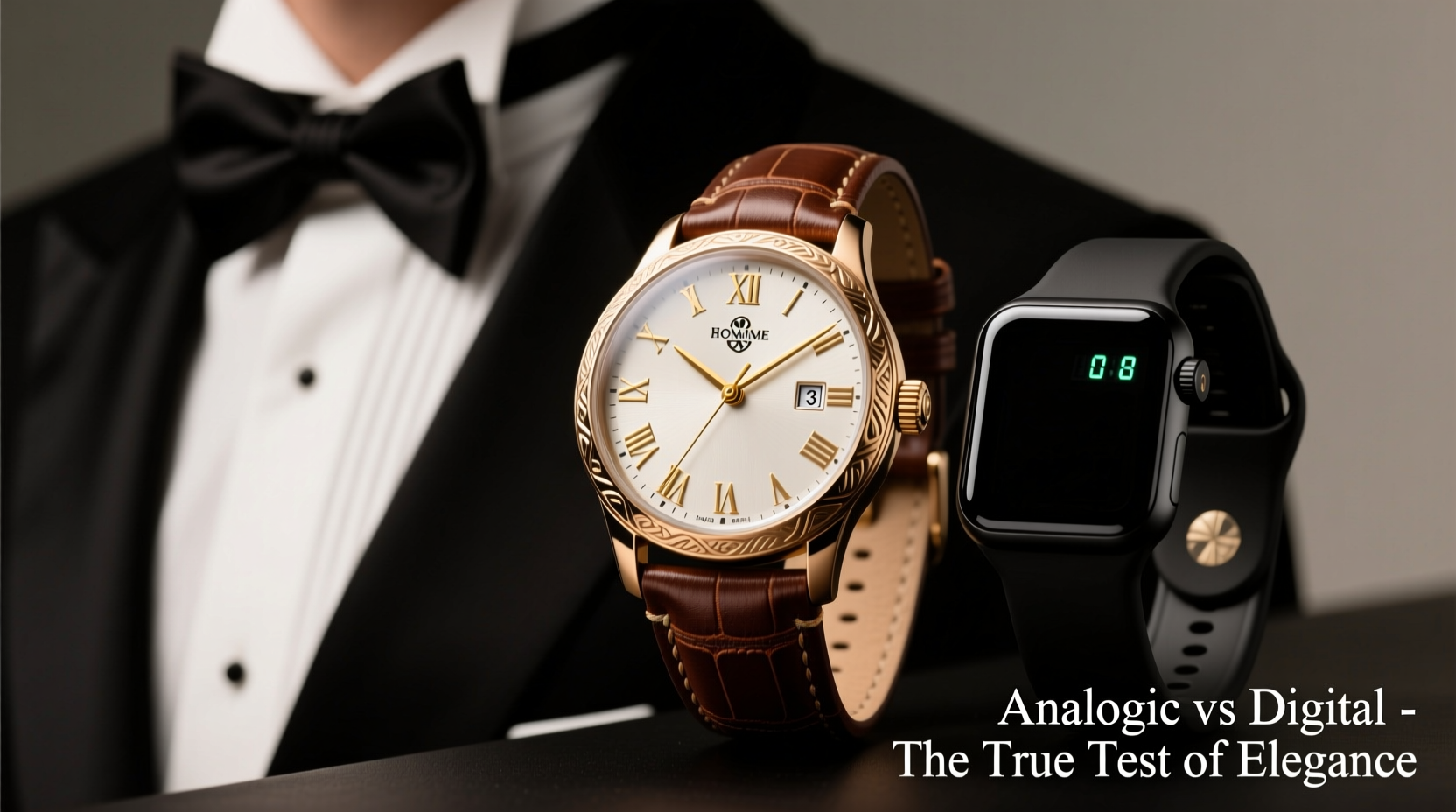
Formal wear follows an unspoken code—one built on restraint, symmetry, and timeless aesthetics. Whether it's a black-tie event, a boardroom meeting, or a wedding, the goal is to project confidence and refinement without drawing attention to excess. In such settings, accessories are expected to enhance, not dominate.
A watch worn with formal attire should align with these principles. It must be understated yet deliberate, elegant without being flashy. The dial should be legible at a glance, the case refined, and the strap or bracelet harmonious with the rest of the outfit. This is where the analog watch has historically held dominance.
Analog watches mirror the balance found in classical architecture or fine tailoring—the hands moving in harmony, the dial often symmetrical, the materials chosen for longevity and luster. They echo traditions that date back centuries, from pocket watches carried by gentlemen to the minimalist dress watches favored by diplomats and executives.
Analog Watches: Elegance Rooted in Tradition
Analog timepieces are more than instruments—they’re heirlooms, status symbols, and expressions of mechanical artistry. Their appeal in formal contexts stems from several key factors:
- Visual Harmony: The circular face, central hands, and balanced indices create a sense of order and proportion that resonates with classic design principles.
- Tactile Craftsmanship: Mechanical and automatic movements are celebrated for their complexity. Even quartz analogs benefit from the aesthetic legacy of mechanical watchmaking.
- Timeless Design: Brands like Patek Philippe, Jaeger LeCoultre, and Cartier have spent generations refining dress watches that pair seamlessly with tuxedos and tailored suits.
In high-stakes environments—diplomatic functions, luxury weddings, executive meetings—an analog watch signals respect for decorum. It suggests you value tradition, precision, and subtlety.
Digital Watches: Function Over Form?
Digital watches emerged in the late 20th century as icons of innovation. Models like the Casio F-91W or G-Shock series offered unmatched durability, multifunctionality, and accuracy. But their design philosophy prioritizes utility over elegance.
Backlit LCD displays, plastic cases, and bold numerals serve well in outdoor, military, or athletic contexts—but they clash with the subdued tone of formal dressing. A digital display lacks the visual rhythm of sweeping hands and often feels clinical or utilitarian.
There are exceptions. Some hybrid models, such as the Withings ScanWatch or certain Citizen Eco-Drive variants, blend digital functionality with analog styling cues. However, pure digital faces remain outliers in formal fashion circles.
“Wearing a watch is one of the last remaining ways men can express quiet luxury. An analog dial speaks volumes without saying a word.” — Henry Langston, Menswear Historian & Curator
Comparative Analysis: Analog vs Digital in Formal Contexts
| Feature | Analog Watch | Digital Watch |
|---|---|---|
| Design Aesthetic | Classic, symmetrical, elegant | Functional, modern, utilitarian |
| Material Quality | Often stainless steel, gold, sapphire crystal | Frequently resin, plastic, mineral glass |
| Visibility in Low Light | Lume-coated hands/markers (subtle) | Bright backlight (attention-grabbing) |
| Social Perception | Associated with professionalism and taste | Linked to casual or technical use |
| Pairing with Suits/Tuxedos | Natural fit; enhances formality | Rarely appropriate; may seem incongruous |
| Maintenance & Longevity | Can last decades with care | Batteries, screens degrade faster |
This comparison underscores why analog watches continue to dominate formal wardrobes. Their design language aligns with the values of discretion, permanence, and craftsmanship—qualities prized in traditional menswear.
Real-World Example: The Boardroom Dilemma
Consider James, a mid-level manager preparing for a promotion interview at a prestigious financial firm. He invests in a custom navy suit, silk tie, and polished Oxfords. On his wrist, he wears a sleek titanium digital sports watch—accurate, lightweight, and familiar from weekend hikes.
During the interview, two senior partners note the mismatch. One later comments: “He looked sharp, but that watch screamed ‘casual Friday.’ I couldn’t picture him leading client dinners.”
James didn’t lack competence, but his accessory undermined his perceived alignment with corporate culture. Had he worn a simple silver-faced analog watch on a black leather strap, the impression would have shifted dramatically—toward authority, polish, and intentionality.
This scenario illustrates how small details influence judgment. In formal environments, people subconsciously assess consistency between appearance and role. A digital watch, no matter how advanced, rarely conveys the gravitas expected in such settings.
When Digital Might Work (And How to Pull It Off)
While rare, there are niche scenarios where a digital watch doesn’t break formal codes—provided it’s executed with extreme care.
For instance, some ultra-thin LED watches with minimalist designs, like the Frederique Constant Hybrid Manufacture, incorporate digital elements within a traditional case. These are engineered for discreet functionality while maintaining elegance.
Alternatively, individuals in tech-forward industries—such as AI entrepreneurs or aerospace engineers—might justify a high-end digital piece as part of a signature look. Even then, pairing it with a three-piece suit requires confidence and contextual awareness.
If you choose to wear digital with formalwear:
- Select a model with a dark, monochrome face and minimal text.
- Ensure the case is metal, not plastic.
- Match the strap to your belt or shoes (e.g., black leather).
- Avoid backlight use during events—it draws unnecessary attention.
Step-by-Step Guide: Choosing the Right Watch for Formal Events
- Assess the Occasion: Is it black-tie, business formal, or semi-formal? The stricter the dress code, the more essential an analog watch becomes.
- Choose Case Material: Opt for stainless steel, white gold, or rose gold. Avoid rubber or silicone bands.
- Select Dial Simplicity: Stick to clean dials—white, black, or silver—with Roman or Arabic numerals. Avoid chronographs or day/date clutter unless subtle.
- Pick the Right Strap: Leather (black or dark brown) or a matching metal bracelet works best. Ensure edges are smooth and polished.
- Check Proportions: The watch should sit flush under a shirt cuff, with the case diameter between 36–40mm for most wrists.
- Test Compatibility: Wear the full outfit and observe how the watch integrates. Does it feel cohesive or distracting?
Expert Insight: What Watchmakers Say
Watch designers emphasize intentionality. At a recent Geneva Salon, master watchmaker Claudio Riva remarked:
“The finest dress watches take longer to make than a sports car. We spend months perfecting the curve of a hand, the depth of a dial. When someone wears one with a suit, they honor that effort.” — Claudio Riva, Horologist at Parmigiani Fleurier
This reverence for detail explains why analog watches endure. Each component serves both function and beauty—a philosophy absent in mass-produced digital alternatives.
Frequently Asked Questions
Can I wear a smartwatch with formal attire?
Generally, no. Devices like the Apple Watch, even in luxury editions, retain a digital interface and interchangeable bands that lean toward casual wear. While some users pair them with suits in creative industries, they still carry an air of informality. For true formality, remove the smartwatch and opt for a dedicated analog piece.
Are quartz analog watches acceptable for formal wear?
Absolutely. Many high-end dress watches—from brands like Tissot, Hamilton, and Nomos—use quartz movements for reliability. As long as the design is refined and the build quality excellent, the movement type is invisible to observers. Precision and elegance matter more than mechanics.
What if I prefer digital for readability?
Some individuals struggle with reading analog dials. In such cases, consider a large-print analog watch with high-contrast markers or luminescent hands. Alternatively, train yourself to read analog time—it’s a skill that enhances overall presence and mindfulness.
Final Verdict: Why Analog Reigns Supreme
In the contest between analog and digital watches for formal wear, analog wins decisively—not because it’s inherently superior in all ways, but because it aligns with the values formal dressing represents: continuity, elegance, and human touch.
Digital watches excel in timing laps, tracking steps, or surviving underwater expeditions. But formal events aren’t about data—they’re about presence, poise, and presentation. An analog watch, with its sweeping second hand and quiet precision, mirrors the grace of a well-tailored suit. It says you understand nuance.
That said, style evolves. As younger generations redefine professionalism—blending tech fluency with sartorial flair—there may come a time when minimalist digital designs earn broader acceptance. For now, however, the consensus among stylists, historians, and executives remains clear.
Conclusion: Elevate Your Ensemble with Intention
Your watch is more than a tool—it’s a silent ambassador of your identity. In formal settings, choosing an analog timepiece reflects awareness, respect, and a commitment to enduring style. It bridges past and present, honoring craftsmanship while serving daily needs.
Whether you're attending a gala, sealing a deal, or walking down the aisle, let your wrist reflect the same care you give to your suit and shoes. Choose simplicity. Choose symmetry. Choose analog.




 浙公网安备
33010002000092号
浙公网安备
33010002000092号 浙B2-20120091-4
Comments
No comments yet. Why don't you start the discussion?