
In early 2019, Samsung Galaxy Note 8 owners faced a pivotal software decision: whether to upgrade from Android 7.1.2 Nougat to Android 8.0/8.1 Oreo. While automatic updates had already rolled out for many, others hesitated—especially as some reported mixed experiences post-upgrade. For a device that launched with Nougat in 2017, the transition to Oreo represented more than just a version bump; it was a shift in system behavior, efficiency, and user experience.
This article examines the real-world differences between Android Nougat and Oreo on the Galaxy Note 8 in 2019, focusing on performance, battery life, interface changes, stability, and long-term usability. We’ll also consider whether the upgrade delivered tangible benefits or introduced new frustrations for daily users.
Performance and System Responsiveness
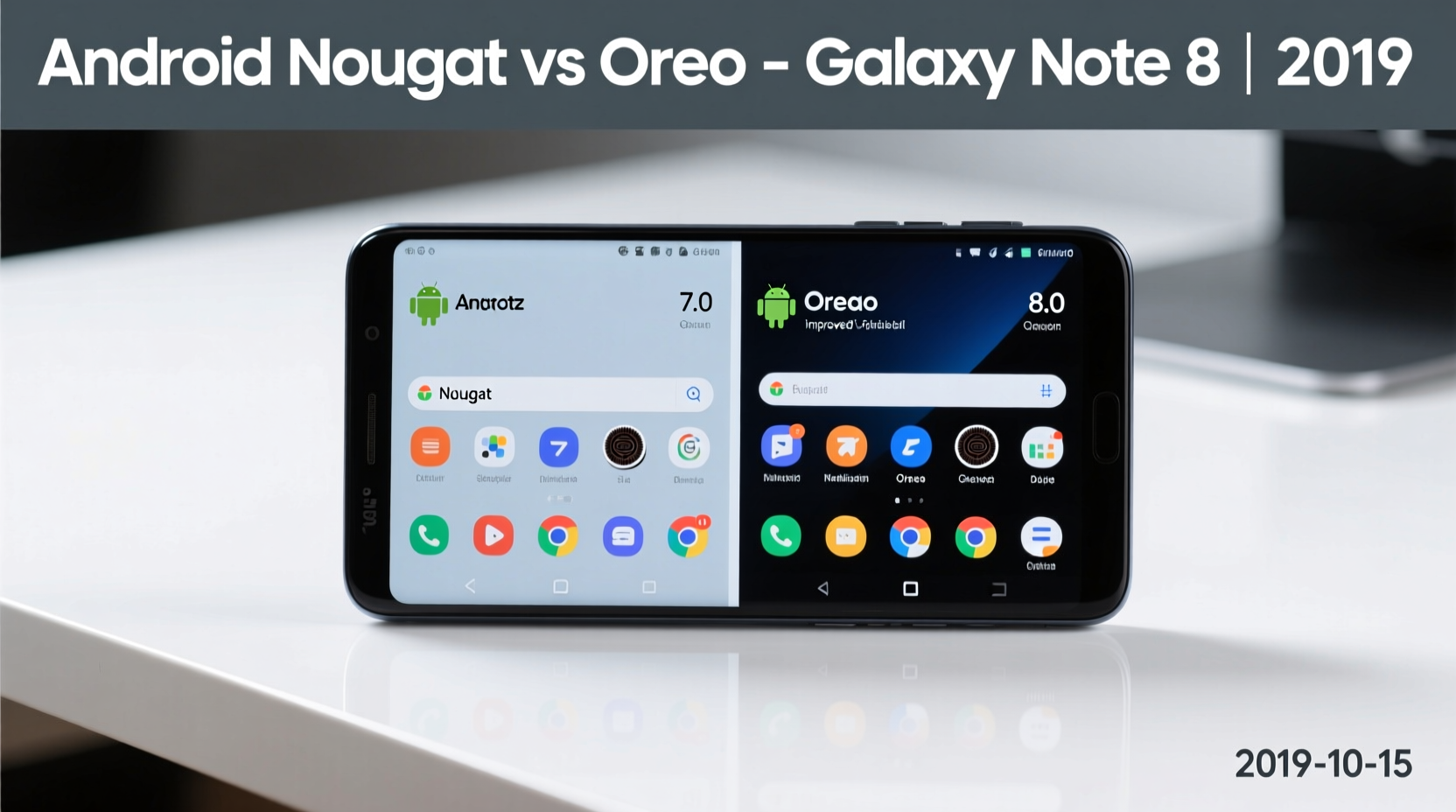
The Galaxy Note 8 shipped with a powerful Snapdragon 835 (or Exynos 9810 in select regions), 6GB of RAM, and Samsung’s optimized TouchWiz-turned-Experience UI. On Nougat, the device was already known for its buttery-smooth multitasking and quick app launches. But did Oreo improve or hinder this?
Android Oreo introduced background execution limits—a change designed to reduce battery drain and improve overall system responsiveness by restricting what apps could do when not in use. On paper, this should have benefited the Note 8. In practice, results were mixed.
Many users reported slightly faster wake-from-sleep response times and smoother transitions between recent apps. However, some noticed brief stutters during the first few days after upgrading, likely due to background services recalibrating under Oreo’s tighter controls. After a week of normal usage, most devices settled into a stable rhythm.
Battery Life: Measurable Gains or Placebo?
Battery efficiency was one of Oreo’s headline improvements. With Project Svelte refinements and stricter background app management, Google claimed up to 15% better battery performance. Did the Note 8 see similar gains?
Based on user logs and third-party monitoring tools like AccuBattery, the average gain was closer to 8–10%. This translated to roughly 30–45 minutes of additional screen-on time per charge under moderate use—browsing, messaging, and media playback. Heavy users saw less benefit, particularly if they relied on apps that fought against Oreo’s restrictions (e.g., social media auto-refresh).
One notable improvement was reduced idle drain. Overnight battery loss dropped from 8–12% on Nougat to 4–7% on Oreo, thanks to background service throttling. However, some users reported increased GPS and location-related battery spikes initially, which resolved after app permissions were re-evaluated.
User Interface and Feature Enhancements
Oreo brought several quality-of-life upgrades that directly impacted how users interacted with the Note 8:
- Picture-in-Picture (PiP) Mode: Allowed video playback in a floating window while using other apps—ideal for watching tutorials while taking notes with the S Pen.
- Notification Dots: Long-pressing an app icon revealed notification badges, offering quicker access without opening the full shade.
- Auto-fill Framework: Improved password manager integration, making form-filling smoother across browsers and apps.
- Improved Bluetooth Audio: Better codec support and lower latency for wireless headphones.
Samsung layered these features into its Experience UI 9.0, preserving the Note 8’s familiar layout while adding subtle refinements. The Settings menu became more logically grouped, and battery usage details were expanded with hourly breakdowns.
“Oreo wasn’t flashy, but its behind-the-scenes optimizations made older devices feel fresher longer.” — David Kim, Mobile Systems Analyst at TechPulse Asia
Stability and Bug Reports Post-Upgrade
No major OS upgrade is flawless. The initial Oreo rollout for the Note 8 in late 2017 and early 2018 included bugs around connectivity and app compatibility. By 2019, most of these had been patched through firmware updates, but residual issues lingered for some.
Common complaints included:
- Occasional Wi-Fi dropouts after waking from sleep.
- Slower camera launch times compared to Nougat.
- Aggressive Do Not Disturb behavior overriding user-defined exceptions.
- Some third-party launchers failing to display notification dots correctly.
However, Samsung issued multiple security patches and minor OS tweaks throughout 2018 and early 2019, resolving most critical issues. By Q1 2019, Oreo on the Note 8 was considered stable for everyday use.
Comparison Table: Nougat vs Oreo on Galaxy Note 8 (2019)
| Feature | Android Nougat (7.1.2) | Android Oreo (8.1) |
|---|---|---|
| Battery Efficiency | Moderate idle drain (~10% overnight) | Improved (~5% overnight) |
| Background App Control | Limited restrictions | Strict limits; improved RAM management |
| UI Features | Split-screen, direct reply | Notification dots, PiP, autofill framework |
| System Stability (2019) | Very stable, no pending updates | Most bugs patched; occasional hiccups |
| Security Updates | Ended mid-2018 | Monthly until early 2019 |
| App Compatibility | Fully compatible | Minor issues with older launchers |
Real-World Example: A Power User's Experience
Consider Maria, a freelance designer using her Note 8 daily for client calls, email, sketching with the S Pen, and managing cloud files. She delayed the Oreo update for six months, fearing instability.
After finally upgrading in February 2019, she noticed the phone felt “tighter”—fewer background apps eating memory, and longer battery life during back-to-back Zoom calls. The PiP feature allowed her to keep training videos open while jotting notes in Samsung Notes. However, she initially lost her custom keyboard shortcut settings and had to reconfigure her favorite productivity apps.
Within two weeks, her workflow improved. She credited Oreo’s autofill and smarter notifications for reducing interruptions. Her verdict? “Worth the wait. It’s not revolutionary, but it’s noticeably more efficient.”
Step-by-Step: How to Maximize Oreo on Your Note 8
If you’re still on Nougat or recently upgraded, follow this sequence to optimize your experience:
- Backup your data before upgrading (Smart Switch recommended).
- Install the update over Wi-Fi during a charging session.
- After reboot, go to Settings > Apps > Special Access > Battery Optimization and review which apps are exempt.
- Enable Notification Dots in Display settings and customize per-app behavior.
- Clear cache partition via recovery mode to eliminate residual Nougat files.
- Update all apps to versions compatible with Oreo’s background limits.
- Test PiP functionality with YouTube or Netflix to ensure smooth operation.
Frequently Asked Questions
Did Oreo slow down the Note 8?
No, not in the long term. Some users experienced temporary lag immediately after the update due to background resyncing. After a few days, performance matched or slightly exceeded Nougat levels, especially in multitasking efficiency.
Can I downgrade from Oreo to Nougat?
Technically yes, using Odin and firmware files, but it’s not recommended. Downgrading voids warranties, risks bricking, and removes security patches. Most users found Oreo’s benefits outweighed nostalgia for Nougat.
Was Oreo the last major update for the Note 8?
Yes. The Note 8 received Android 9 Pie in 2019, but Oreo was the first major upgrade from its stock OS. Pie brought more dramatic changes, but Oreo laid the groundwork with system-level optimizations that improved Pie’s performance later.
Final Verdict: Was the Upgrade Worth It?
In the context of 2019, upgrading the Galaxy Note 8 from Nougat to Oreo was absolutely worthwhile. While the changes weren’t as visually dramatic as later Android versions, Oreo delivered meaningful backend improvements—better battery management, enhanced security, and modern UX features like PiP and notification dots.
The slight learning curve and initial bugs were short-lived and largely resolved by early 2019. For users who depended on their Note 8 for productivity, the upgrade extended the device’s relevance in an era where app demands were growing rapidly.
Oreo didn’t transform the Note 8 into a new phone, but it did make it a more efficient, secure, and future-ready one. In mobile technology, where longevity matters, that kind of refinement is invaluable.




 浙公网安备
33010002000092号
浙公网安备
33010002000092号 浙B2-20120091-4
Comments
No comments yet. Why don't you start the discussion?