
The smartphone war between Android and iPhone has raged for over a decade, but one side clearly controls more ground. While Apple remains dominant in profitability and brand loyalty, Android powers more than 70% of smartphones worldwide. This isn’t just a minor lead—it’s a commanding presence across continents, income levels, and cultures. The real question isn’t whether Android is popular, but why it holds such vast influence—and if Apple should genuinely be concerned.
Global Market Share: The Numbers Behind Android’s Lead
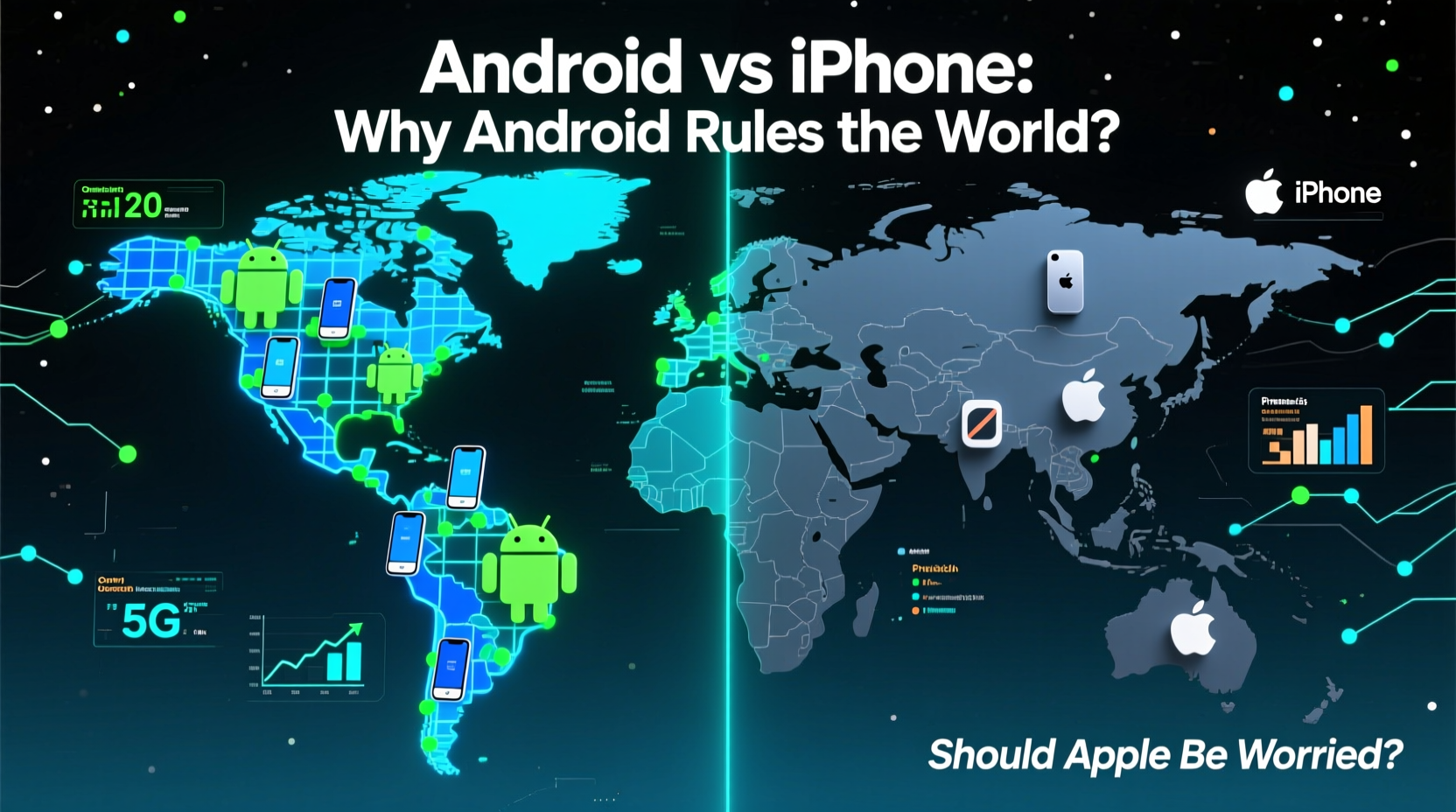
According to StatCounter data from 2023–2024, Android commands approximately 71% of the global smartphone operating system market. iOS trails at around 28%. In regions like Asia, Africa, Latin America, and parts of Eastern Europe, Android’s dominance exceeds 85%. Even in developed markets like the U.S., where iPhone ownership is high, Android maintains a solid foothold through mid-range and budget devices.
This disparity stems not from technical superiority alone, but from strategic accessibility. Android is not a single device—it’s an ecosystem built on openness, scalability, and affordability.
| Region | Android Share | iOS Share |
|---|---|---|
| Asia (excl. Japan) | 87% | 13% |
| Africa | 90% | 10% |
| Latin America | 85% | 15% |
| North America | 46% | 54% |
| Western Europe | 63% | 37% |
The pattern is clear: as average incomes decrease, Android’s share increases. This isn’t accidental—it’s by design.
Why Android Dominates: Affordability and Accessibility
Google’s Android is open-source, meaning manufacturers like Samsung, Xiaomi, Oppo, and Motorola can license and modify it freely. This has led to an explosion of hardware diversity. From $50 entry-level phones to premium foldables, Android spans every price tier. In contrast, Apple offers only a handful of models, all starting above $400 (iPhone SE) and climbing rapidly beyond $1,000.
In emerging economies—India, Indonesia, Nigeria—affordable smartphones are essential tools for education, banking, and employment. Android delivers that access. A family might own one iPhone, but multiple Android devices. For millions, Android is their first and only gateway to the internet.
Ecosystem Flexibility: Customization and Control
Android’s flexibility extends beyond price. Users can customize launchers, default apps, file systems, and even install third-party app stores. Developers benefit from fewer restrictions compared to Apple’s tightly controlled App Store. This openness attracts tech-savvy users and regional developers who need localized solutions.
In countries like Brazil and India, alternative app distribution is common due to limited connectivity or regional regulations. Android supports sideloading; iOS does not without jailbreaking—a risky, unsupported process.
Moreover, Android integrates seamlessly with low-cost accessories, budget tablets, smart TVs (via Android TV), and IoT devices. This creates a broader, more inclusive digital lifestyle—one that doesn’t require deep pockets.
“Android’s strength lies in its adaptability. It scales from rural villages to urban tech hubs without losing relevance.” — Dr. Lena Patel, Digital Inclusion Researcher, MIT
Apple’s Strengths: Profit, Brand, and Ecosystem Lock-In
While Android wins in volume, Apple dominates in value. In 2023, Apple captured nearly 50% of global smartphone revenue despite selling fewer units. Its users spend more on apps, subscriptions, and services. The seamless integration between iPhone, iPad, Mac, AirPods, and Apple Watch creates a powerful retention loop.
For many consumers in North America, Western Europe, and East Asia, owning an iPhone is a status symbol tied to reliability, privacy, and long-term software support. iPhones receive updates for five to seven years, often outlasting their Android counterparts—especially budget models.
However, this exclusivity comes at a cost. Apple’s closed ecosystem limits user freedom and innovation from third parties. Features standard on Android—like universal copy-paste across apps, default app switching, or external storage—are either restricted or absent on iOS.
Should Apple Be Worried? A Strategic Timeline
Apple isn’t under immediate threat, but long-term trends suggest growing pressure. Consider this timeline of strategic developments:
- 2010–2015: iPhone leads innovation; Android plays catch-up with fragmentation issues.
- 2016–2019: Android improves quality; Samsung and Chinese OEMs close the gap in cameras, displays, and performance.
- 2020–2022: Global chip shortages and inflation push demand toward affordable Android devices.
- 2023–2024: Emerging markets drive 80% of new smartphone sales—all dominated by sub-$300 Android phones.
- 2025 and beyond: AI, 5G expansion, and satellite connectivity become standard—even on mid-tier Android devices.
If Android continues democratizing advanced features while Apple stays focused on premium pricing, the pool of lifelong iOS users may plateau. Younger generations in fast-growing economies will grow up with Android as their default digital environment—making future migration to Apple unlikely.
Mini Case Study: The Rise of Xiaomi in India
In 2014, Xiaomi entered India with no retail presence and minimal brand awareness. By 2018, it became the top-selling smartphone brand in the country. How? Affordable Android phones with flagship-like specs, aggressive online sales, and localized MIUI software tailored to Indian users.
Xiaomi didn’t try to beat Apple at its own game. Instead, it offered 90% of the performance at 40% of the cost. Today, over 98% of smartphones sold in India run Android. Apple’s share hovers below 5% in unit sales, though it commands a larger portion of revenue.
This case illustrates a key truth: in mass markets, accessibility trumps exclusivity.
Checklist: What Apple Could Do to Respond
- Launch a true budget iPhone model (sub-$300) for emerging markets.
- Expand trade-in and financing programs globally.
- Allow more customization and default app flexibility on iOS.
- Partner with local carriers and governments to subsidize devices.
- Invest in lightweight iOS versions for lower-end hardware.
- Enhance cross-platform compatibility beyond Apple’s walled garden.
These moves wouldn’t guarantee victory in volume, but they could slow Android’s momentum and protect Apple’s long-term relevance.
Frequently Asked Questions
Why do people prefer Android over iPhone?
Many choose Android for lower prices, greater hardware variety, customization options, expandable storage, and availability in local markets. In developing countries, Android is often the only affordable option with reliable performance.
Is Android less secure than iPhone?
Not inherently. While iOS benefits from tighter control over apps and updates, modern Android devices—especially from Samsung, Google, and OnePlus—offer strong security features, regular patches, and hardware encryption. The main risk comes from outdated or unofficial devices lacking updates.
Can Apple ever dominate globally like Android?
Unlikely. Apple’s business model relies on high margins and premium branding. To match Android’s reach, Apple would need to sacrifice profitability and loosen ecosystem control—both core to its identity. Its strength lies in loyalty and services, not mass adoption.
Conclusion: Coexistence, Not Conquest
Android dominates the world map because it meets people where they are—economically, geographically, and technologically. It doesn’t demand premium budgets or brand allegiance. Apple, meanwhile, thrives by delivering polished, integrated experiences to those who can afford them.
Apple shouldn’t panic—but it should pay attention. The future of mobile isn’t just about innovation; it’s about inclusion. As billions come online for the first time via Android, the center of gravity in tech shifts. The companies that understand this won’t just survive—they’ll lead.




 浙公网安备
33010002000092号
浙公网安备
33010002000092号 浙B2-20120091-4
Comments
No comments yet. Why don't you start the discussion?