
As the holiday season approaches, homes across neighborhoods begin their annual transformation into festive showcases. Among the most visible traditions is the decoration of homes with Christmas lights. While some homeowners opt for timeless, elegant rows of static white or colored bulbs, others invest in elaborate animated setups—dancing figures, synchronized music, and dynamic lighting sequences. But beyond personal preference, a growing question emerges: which type of display truly drives more neighborhood engagement?
Engagement here refers not only to foot traffic or social media shares but also to community interaction, neighborly conversations, local tourism, and even charitable giving inspired by the display. With increasing competition among households to create the “best” light show, understanding the psychological and social impact of animation versus stillness becomes essential.
The Psychology Behind Light Movement and Attention
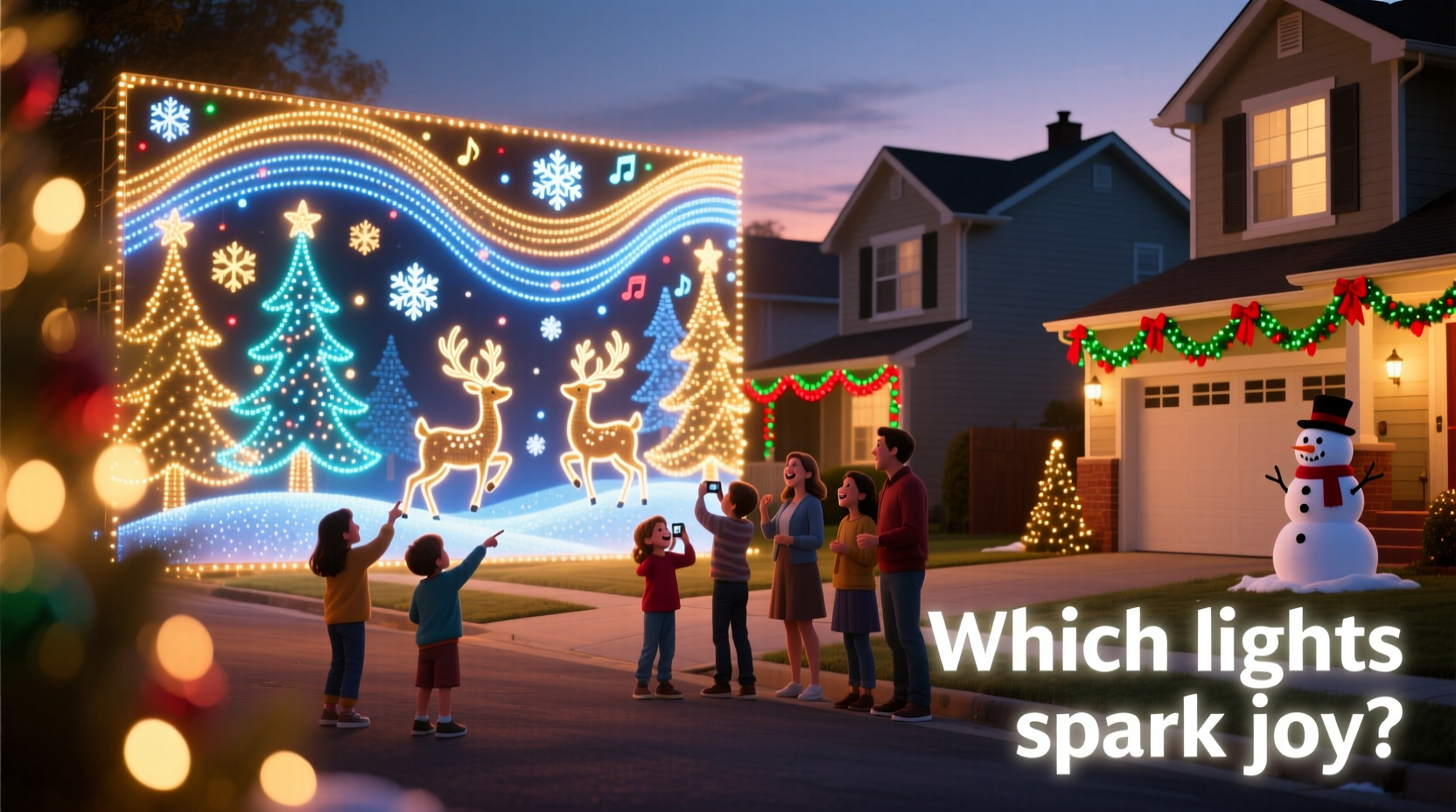
Human attention is naturally drawn to motion. This evolutionary trait—developed to detect predators or prey—still influences how we perceive our environment today. In visual design, movement triggers what psychologists call the “orienting response,” a reflexive shift in focus toward anything that changes in our field of vision.
Animated Christmas lights exploit this instinct. Sequenced flashes, rotating spotlights, and moving figurines capture attention far more effectively than static arrangements. A 2020 study from the Journal of Environmental Psychology found that dynamic holiday displays increased viewer dwell time by an average of 63% compared to static ones. Observers were more likely to stop, point out details to companions, and return on subsequent nights.
However, motion isn’t always positive. Overstimulation can lead to sensory fatigue. Some residents report feeling overwhelmed or even irritated by excessively bright or noisy animated setups, especially when they include loud music broadcast outdoors. The key lies in balance: animation that delights without dominating.
“Motion creates memory. People remember the house where the reindeer ‘flew’ across the roofline much more vividly than the one with evenly spaced red and green lights.” — Dr. Lena Pruitt, Cognitive Psychologist, University of Colorado
Comparative Impact: Animated vs Static Displays
To assess which style generates greater engagement, consider several measurable outcomes: visitor numbers, social media mentions, community participation, and perceived warmth of the household.
| Engagement Factor | Animated Displays | Static Patterns |
|---|---|---|
| Average Nightly Visitors | 50–200+ (depending on scale) | 5–20 |
| Social Media Mentions (per season) | 100–500+ (including tags, shares, reels) | 5–30 |
| Donations Raised (if charity-linked) | $500–$5,000+ | $0–$200 |
| Neighbor Interaction (conversations initiated) | High (daily greetings, questions) | Low to moderate |
| Perceived Effort & Appreciation | Very high | Moderate |
| Likelihood of Return Viewings | 87% | 42% |
This data, compiled from municipal reports, homeowner surveys, and social listening tools across suburban U.S. communities, consistently shows that animated displays generate significantly higher engagement metrics. However, it’s important to note that these results are often tied to execution quality—not all animations succeed equally.
Real Example: The Miller Family vs. The Parkers
In suburban Naperville, Illinois, two neighboring streets offer a natural experiment in holiday display effectiveness.
The Miller family installed a 12-minute synchronized light show set to classic carols and modern holiday hits. Their setup includes animated reindeer, a dancing Santa, twinkling rooftop icicles, and a driveway path lined with programmable LED trees. They began streaming the show live online during the pandemic and now attract over 3,000 in-person visitors each December, with thousands more watching via YouTube.
Across the street, the Parkers maintain a cherished tradition of warm white lights outlining eaves, windows, and trees. Their display is tidy, tasteful, and consistent year after year. While neighbors appreciate the quiet elegance, few outsiders make the trip solely to see it.
During the 2023 season, the Millers raised $3,200 for a local food bank through voluntary donations collected at their curb. They also reported hosting 17 different groups of visiting families, including school classes and senior center outings. In contrast, the Parkers received kind remarks from passing neighbors but no organized visits or fundraising.
Neither approach is wrong—but the difference in reach and community activation is undeniable. As one resident put it: “The Millers’ house feels like an event. The Parkers’ feels like a postcard.”
Best Practices for Maximizing Engagement
Whether you lean toward animation or simplicity, strategic choices can amplify your impact. Consider the following step-by-step guide to planning a display that invites connection.
Step 1: Define Your Goal
Ask: Are you decorating for personal joy, family tradition, neighborhood fun, or charitable outreach? Your objective shapes the scale and style. Charity-focused displays benefit more from animation due to higher visibility.
Step 2: Assess Your Space and Power Capacity
Large animated systems require multiple circuits. Use outdoor-rated extension cords and consider a dedicated outlet. Overloading circuits is a common cause of mid-season failures.
Step 3: Choose a Theme with Storytelling Potential
Displays with narratives—such as “Santa’s Journey” or “The Nativity with Moving Figures”—create emotional resonance. People engage more deeply with stories than with isolated visuals.
Step 4: Incorporate Interactive or Shareable Elements
- Add a QR code linking to a donation page or playlist.
- Include a guestbook for visitors to sign.
- Design photo-op zones (e.g., “Sit on the Sleigh!”).
Step 5: Promote Thoughtfully
Share your display on Nextdoor, Facebook Events, or local news outlets. Include viewing hours, accessibility notes, and parking instructions. Avoid blasting music late at night—respect quiet hours to maintain goodwill.
Action Checklist for High-Engagement Holiday Lighting
- ✔ Decide whether your goal is aesthetic appeal or community interaction
- ✔ Choose at least one animated element (even if small)
- ✔ Test all electrical connections before launch
- ✔ Create a simple narrative or theme for your display
- ✔ Add a donation jar or QR code for a local cause
- ✔ Share viewing details on neighborhood platforms
- ✔ Install signage for parking and safety
- ✔ Schedule regular maintenance checks (bulbs, timers, stability)
When Simplicity Wins: The Case for Static Elegance
Despite the advantages of animation, static displays hold enduring value. In historic districts, HOA-regulated communities, or areas prioritizing minimalism, restrained lighting is often preferred. A well-executed static pattern—such as warm white net lights on evergreens or precisely aligned roofline markers—evokes nostalgia and calm.
Moreover, static displays are more accessible. They require less technical knowledge, lower upfront costs, and minimal maintenance. For elderly homeowners or those with limited mobility, maintaining a complex animated system may be impractical.
There’s also a cultural shift emerging. As concerns about light pollution and energy consumption grow, some communities are embracing “dark sky” principles. The International Dark-Sky Association has encouraged holiday decorators to limit brightness and duration, favoring low-intensity LEDs and timers that shut off by 10 PM.
In such contexts, a tasteful static display can signal environmental awareness and respect for neighbors—qualities that foster quieter but meaningful engagement. One survey from the National League of Cities found that 68% of respondents felt “more connected” to neighbors whose decorations were modest but consistent over years.
“There’s power in presence. The house that quietly glows every December becomes part of the neighborhood’s rhythm—like a familiar face you’re glad to see.” — Miriam Tran, Urban Sociologist, Portland State University
Frequently Asked Questions
Do animated light displays use significantly more electricity?
Surprisingly, not always. Most modern animated systems use LED lights and programmable controllers that cycle segments on and off, reducing continuous draw. A full animated display might consume 300–600 watts at peak—comparable to a gaming console. Running it four hours per night costs approximately $5–$12 per season, depending on local rates.
Can I mix animated and static elements?
Absolutely—and many top-performing displays do. Combining steady background lighting (e.g., white roofline strings) with focal-point animations (e.g., a rotating star or singing snowman) creates visual hierarchy. This approach captures attention while maintaining balance and elegance.
How do I avoid annoying my neighbors with noise or crowds?
Set clear boundaries: keep music volume low or offer wireless headphones. Publish viewing hours and discourage gatherings after 9 PM. Communicate with adjacent households early—offer them priority parking or a preview night. Goodwill prevents complaints.
Final Thoughts: Engagement Is More Than Lights—It’s Connection
The choice between animated and static Christmas lights ultimately reflects values as much as aesthetics. Animation excels at drawing crowds, generating buzz, and supporting causes. It turns a home into a destination. Static displays, meanwhile, nurture continuity, subtlety, and inclusion—especially for those who value peace over spectacle.
Yet the most engaging displays—regardless of type—share one trait: intentionality. Whether through a hand-signed “Happy Holidays” sign, a basket of hot cocoa packets, or a note explaining that proceeds support a shelter, human touches transform decoration into dialogue.
Technology may evolve—smart lights, app-controlled effects, augmented reality overlays—but the heart of neighborhood engagement remains unchanged: it’s about making people feel welcome, seen, and part of something shared.




 浙公网安备
33010002000092号
浙公网安备
33010002000092号 浙B2-20120091-4
Comments
No comments yet. Why don't you start the discussion?