
The Christmas season brings with it a cherished tradition: the display of the nativity scene. Whether placed in homes, churches, or public spaces, these representations of Christ’s birth serve as both devotional symbols and storytelling tools. But as cultural tastes evolve and technology advances, a new question arises—do animated nativity scenes tell the story more effectively than traditional static figurines? The answer depends on what you value most: reverence, realism, emotional connection, or educational clarity.
For centuries, static nativity sets have been the standard. Carved from wood, molded in porcelain, or crafted in ceramic, they capture a single sacred moment—the infant Jesus lying in a manger, surrounded by Mary, Joseph, shepherds, animals, and eventually the Magi. These figures are still, silent, and deeply symbolic. In contrast, modern animated versions bring motion, sound, and light into the equation. Figures move, angels sing, stars twinkle, and narrations guide viewers through the Gospel accounts. While both forms honor the same event, they engage audiences in fundamentally different ways.
The Power of Stillness: What Static Figurines Offer
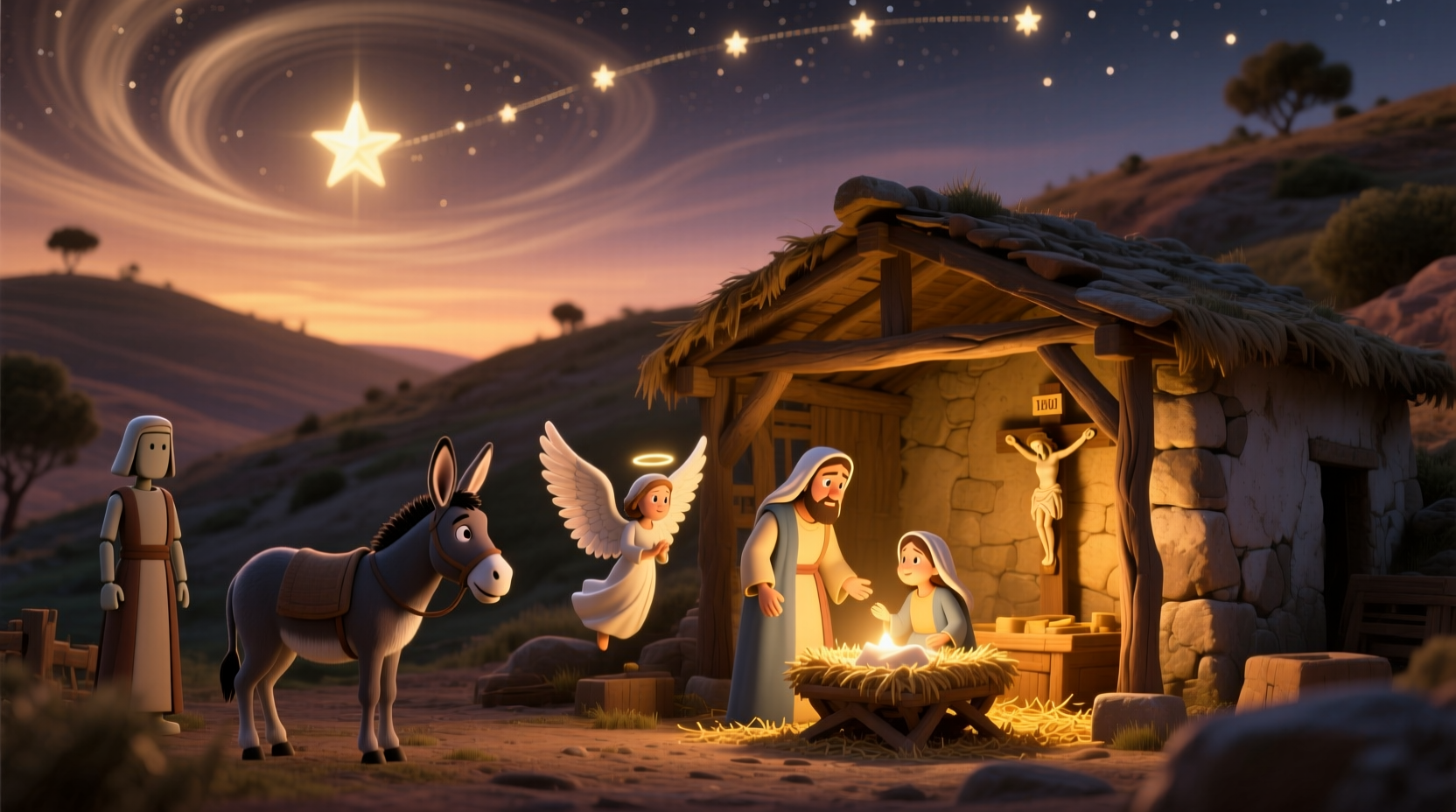
Static nativity scenes are rooted in centuries of Christian tradition. Originating with St. Francis of Assisi in 1223, the first live creche was designed to make the story of Christ’s humble birth accessible to common people who couldn’t read scripture. Over time, miniature versions entered homes and became central to holiday decor.
These unchanging displays invite contemplation. Their silence allows space for prayer, meditation, and personal reflection. There is no rush, no distraction—just the quiet presence of the Holy Family under starlight. This stillness mirrors the humility of the original event: a baby born in obscurity, unnoticed by empires but witnessed by shepherds and guided by a star.
Many theologians argue that static scenes preserve the sacred mystery of the Incarnation. As liturgical scholar Dr. Rebecca Thornton notes:
“The power of the nativity lies not in spectacle, but in simplicity. A motionless child in a manger speaks louder than any moving figure could. It draws us inward, not outward.” — Dr. Rebecca Thornton, Liturgical Historian
In churches and family homes alike, static sets often grow over time. Families add new pieces each year—a shepherd here, a donkey there—turning the nativity into a living heirloom. The act of assembling it becomes ritual, reinforcing memory and continuity across generations.
Motion and Meaning: The Rise of Animated Nativity Scenes
Animated nativity scenes emerged in the late 20th century, fueled by advancements in motorized mechanics and audio technology. Today, many feature synchronized music, voice narration from scripture, moving figures (like camels walking or angels descending), and even projected skies showing the Star of Bethlehem.
These dynamic displays excel at capturing attention—especially from children. In shopping malls, town squares, and megachurch lobbies, animated creches function as both entertainment and evangelism. They draw crowds, spark conversations, and deliver a clear narrative arc: from Gabriel’s announcement to the shepherds’ visit and the Magi’s arrival.
One notable example is the animated nativity at the Grotto Shrine in Santa Fe, New Mexico. Each evening during Advent, hundreds gather to watch a 12-minute performance set to orchestral music and biblical narration. The figures move with precision, lights shift with the time of day, and fog machines simulate night air. For many attendees, especially younger ones, this immersive experience makes the ancient story feel immediate and real.
But animation also raises concerns. Some critics argue that too much movement distracts from the spiritual core. When the focus shifts to technical effects—how smoothly the wise men walk or how bright the star glows—the theological message can get lost.
Comparing Storytelling Effectiveness
To determine which format tells a “better” story, we must define what “better” means. Is it about accuracy, emotional impact, educational value, or spiritual resonance?
Below is a comparison table outlining key differences between animated and static nativity scenes:
| Feature | Static Figurines | Animated Scenes |
|---|---|---|
| Narrative Clarity | Requires viewer knowledge; minimal context provided | Often includes narration or sequencing; tells full story |
| Emotional Engagement | Subtle, reflective, inward-focused | Immediate, sensory-rich, outward-focused |
| Educational Value | Low unless paired with explanation | High; ideal for teaching children and newcomers |
| Spiritual Atmosphere | Contemplative, reverent, timeless | Energetic, celebratory, modern |
| Durability & Maintenance | Generally low maintenance; fragile materials may break | Higher maintenance; motors, wires, and speakers require care |
| Cost | Wide range; heirloom sets can be expensive | Typically higher due to electronics and complexity |
The data suggests that animated scenes are superior for outreach and education, while static displays remain unmatched for fostering reverence and personal devotion.
A Real-World Example: Two Churches, Two Approaches
Consider two parishes in the same diocese: St. Clare’s and Holy Cross.
St. Clare’s uses a hand-carved wooden nativity set dating back to the 1950s. It’s assembled quietly during Advent and remains motionless throughout December. Parishioners are invited to sit before it during daily Mass and reflect. Many report feeling a deep sense of peace when viewing it, describing it as a “spiritual anchor” in a busy season.
Holy Cross, meanwhile, invested in an animated display five years ago. Every evening, families gather outside to watch a seven-minute show featuring moving figures, narration from Luke 2, and soft choral music. Attendance at their Christmas Eve service has increased by 40% since installation. Parents say their children now ask questions about the Bible story throughout the year.
Neither approach is inherently better. St. Clare’s nurtures depth of faith, while Holy Cross excels at accessibility and engagement. The difference lies in intent: one aims to deepen existing belief, the other to awaken curiosity in those unfamiliar with the story.
Choosing the Right Format: A Practical Checklist
When deciding between an animated or static nativity, consider your audience, setting, and goals. Use this checklist to guide your decision:
- Who will view it? Children and non-religious visitors may benefit more from animation.
- Where will it be displayed? Indoor mantles suit static sets; outdoor lawns or lobbies can accommodate larger animated versions.
- What’s your primary goal? Devotion favors stillness; education and outreach favor animation.
- Do you have storage and maintenance capacity? Animated scenes require more technical upkeep.
- Is budget a concern? High-quality static sets can be costly, but animated ones often carry ongoing repair expenses.
- Does it align with your values? If simplicity and tradition matter most, go static. If innovation and accessibility are priorities, animation may fit better.
Step-by-Step: Creating a Meaningful Nativity Experience
Regardless of format, a powerful nativity display requires thoughtful planning. Follow this timeline to create an impactful presentation:
- Week 1 (Early November): Define Purpose – Decide whether your goal is devotion, education, or community outreach.
- Week 2: Choose Format – Based on purpose, select static or animated. Research reputable vendors or plan to use an heirloom set.
- Week 3: Select Location – Ensure visibility, safety, and appropriate lighting. Consider foot traffic and weather if outdoors.
- Week 4: Gather Materials – Purchase or retrieve figures, backdrop, stable structure, wiring, and any audio equipment.
- Week 5: Set Up and Test – Assemble the scene. For animated versions, test all motors, lights, and sound systems.
- Week 6 (Advent Start): Launch Publicly – Invite visitors with a small opening event, prayer, or blessing.
- Throughout December: Maintain and Engage – Clean surfaces, check connections, and encourage interaction through signage or guided tours.
- January: Dismantle with Care – Store pieces properly. Reflect on feedback for next year’s improvements.
Frequently Asked Questions
Can I combine animated and static elements?
Yes. Some families and churches use a primarily static display with subtle lighting effects—such as a slowly blinking star or soft background music—to add gentle movement without overwhelming the scene. This hybrid approach balances reverence with engagement.
Are animated nativities considered less respectful?
Not necessarily. Respect depends on execution, not motion. An animated scene that faithfully follows scripture, avoids cartoonish exaggeration, and maintains a reverent tone can be deeply respectful. Conversely, a poorly made static set with inaccurate figures can also misrepresent the story.
Which type lasts longer?
Well-crafted static figurines—especially those made from ceramic, wood, or stone—can last generations with proper care. Animated scenes depend on electronic components, which may fail after 5–10 years. However, replaceable parts and good maintenance can extend their lifespan significantly.
Conclusion: Let the Story Shape the Form
The choice between an animated nativity scene and static figurines isn’t about superiority—it’s about intention. Each form tells the Christmas story well, but in different voices. One whispers; the other proclaims. One invites silence; the other guides understanding.
If your goal is to create a space for prayer, reflection, and continuity with tradition, a static set may be the better choice. Its stillness echoes the quiet miracle of God entering the world unnoticed by kings. But if you seek to teach, attract newcomers, or captivate young minds, animation offers a powerful tool. Movement and sound can open doors that stillness alone cannot.
Ultimately, the best nativity scene is the one that helps people encounter the meaning of Christmas—not just as history, but as hope. Whether through carved wood or moving light, the story remains the same: a child is born, and everything changes.




 浙公网安备
33010002000092号
浙公网安备
33010002000092号 浙B2-20120091-4
Comments
No comments yet. Why don't you start the discussion?