
The nativity scene is one of the most enduring symbols of the Christmas season. For centuries, families, churches, and communities have recreated the birth of Jesus Christ through figurines arranged in humble stables beneath starry skies. Yet today, that tradition has evolved. Animated nativity sets—complete with moving figures, soft music, and glowing lights—compete for attention alongside classic still displays. The question arises: which version tells the story more powerfully?
More than just a matter of preference, this choice touches on deeper values—tradition versus innovation, contemplation versus engagement, simplicity versus spectacle. Each format offers unique strengths in conveying the spiritual and emotional core of the Christmas narrative. To understand which tells a better story, we must look beyond aesthetics and examine how each approach shapes experience, memory, and meaning.
The Power of Stillness: Why Traditional Displays Endure
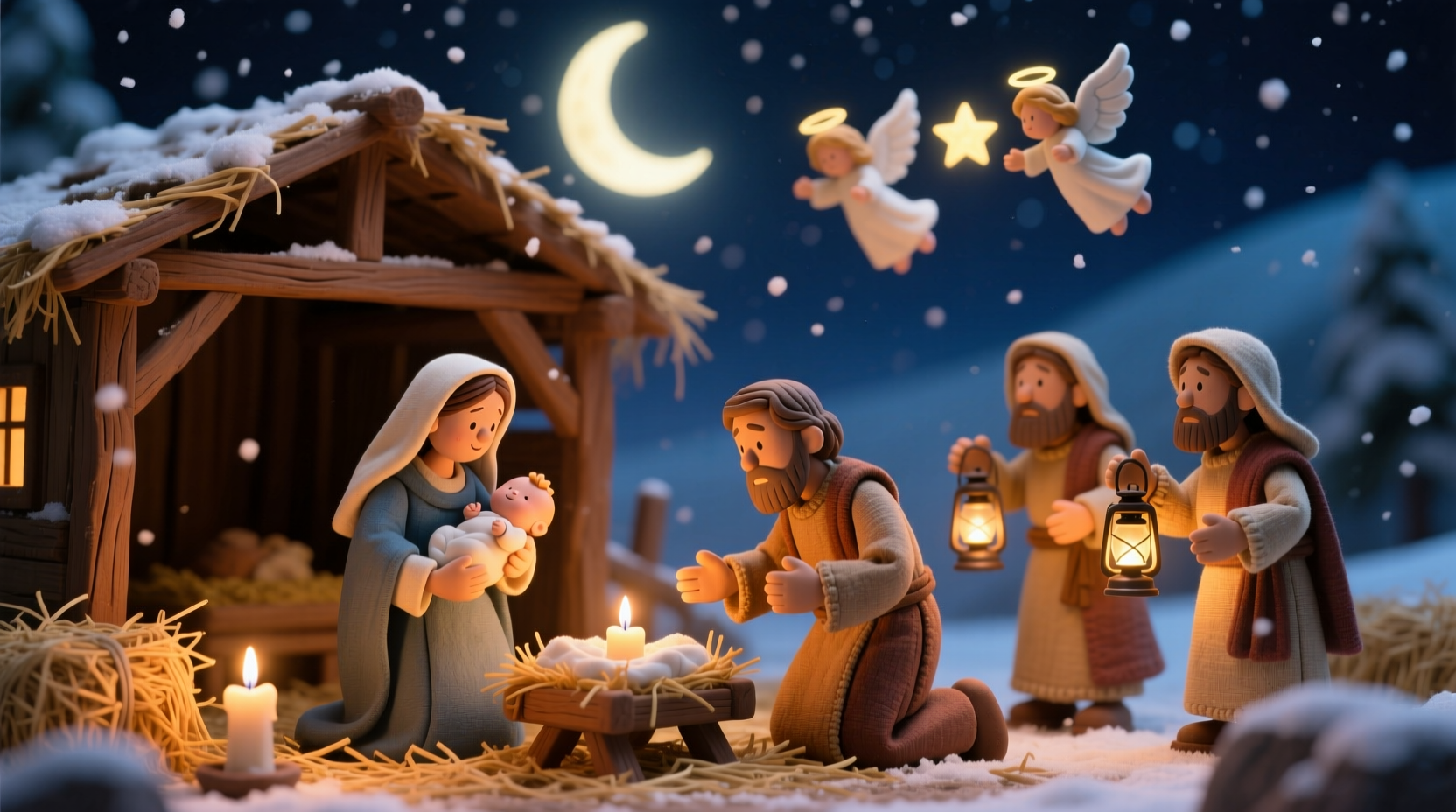
A still nativity set carries a quiet dignity. Its figures—Mary, Joseph, the infant Jesus, shepherds, animals, and eventually the Magi—are fixed in place, frozen in reverence. There’s no motion, no sound, no blinking lights. Instead, there is space: space for reflection, imagination, and personal connection.
In many homes, assembling the nativity is a ritual. The pieces are carefully unpacked from tissue paper, dusted off, and arranged with intention. Often, the baby Jesus is added on Christmas Eve—a symbolic act marking the arrival of the Savior. This slowness invites mindfulness. It mirrors the hush of that first Christmas night, as described in scripture: “But Mary treasured up all these things and pondered them in her heart” (Luke 2:19).
Still displays also encourage active participation. Because nothing moves or speaks, viewers must mentally animate the scene. They imagine the cold night air, the scent of hay, the lowing of cattle, the awe on the shepherds’ faces. This internal engagement can deepen emotional resonance far more than passive observation of a pre-animated sequence.
“Silence is not emptiness. In sacred spaces, it is fullness waiting to be heard.” — Rev. Dr. Lillian Moore, Liturgical Historian
For many, the still nativity is less about entertainment and more about veneration. It functions as a devotional object—an anchor for prayer, gratitude, and spiritual grounding during a busy season.
The Allure of Motion: How Animated Sets Captivate Attention
Animated nativity sets emerged in the mid-20th century and gained popularity with advancements in electric motors, timers, and lighting. Today’s versions often include rotating angels, gliding Magi, nodding camels, and softly glowing stars—all synchronized to gentle carols. Some even feature recorded narrations of the biblical account.
These sets excel at capturing attention, especially among children. Movement triggers curiosity. A child might pause their play to watch the wise men slowly approach the manger, or listen intently as an angel announces, “Glory to God in the highest.” In educational settings—Sunday schools, church lobbies, public displays—animation can serve as a powerful tool for storytelling.
Moreover, animated sets often enhance accessibility. For individuals with cognitive challenges or limited literacy, visual and auditory cues help convey the narrative without relying solely on text or explanation. The sequential unfolding—shepherds arriving first, then the Magi later—can reinforce the timeline of events in a way static scenes cannot.
Yet, the strength of animation is also its risk: overstimulation. When movement and music dominate, the focus may shift from worship to wonderment. The story risks becoming a performance rather than a personal encounter. As one pastor observed, “We must ask whether the technology serves the message—or distracts from it.”
Comparing Storytelling Impact: A Side-by-Side Analysis
To evaluate which format tells a better story, consider several dimensions: emotional depth, educational value, spiritual resonance, family engagement, and longevity of impression.
| Criteria | Still Nativity Display | Animated Nativity Set |
|---|---|---|
| Emotional Depth | Encourages introspection and personal connection; evokes reverence | Engages through sensory appeal; may prioritize excitement over stillness |
| Educational Value | Requires external narration or reading; good for discussion-based learning | Self-contained storytelling; ideal for independent viewing by children |
| Spiritual Resonance | High—supports prayer, meditation, and liturgical use | Moderate—can feel more decorative than devotional if overproduced |
| Family Engagement | Promotes shared rituals like setup and daily reflection | Attracts immediate interest; may reduce need for parental explanation |
| Longevity of Impression | Creates lasting memories through repetition and tradition | Memorable due to novelty, but may lose impact over time |
This comparison reveals a key insight: neither format is universally superior. Their effectiveness depends on context, audience, and intention. A still display may be more appropriate in a home chapel or sanctuary, while an animated set could shine in a community park or children’s ministry.
A Real Example: Two Churches, Two Approaches
Consider two neighboring parishes preparing for Advent. Grace Fellowship, a small congregation with aging members and few children, installs a hand-carved wooden nativity in its sanctuary. Each Sunday, a different family is invited to light a candle near the manger and share a brief reflection. Over four weeks, the scene becomes a living journal of communal faith.
Meanwhile, Hope Heights Church, known for its vibrant youth programs, erects a large animated display in its front lawn. Motion sensors trigger the figures when visitors approach. Children giggle as the donkey shakes its head; parents record videos. A QR code links to a digital guide explaining each character’s role. Attendance at the Christmas Eve service doubles compared to the previous year.
Both stories are told. Both communities are enriched. But they achieve it differently. Grace Fellowship fosters inward transformation through silence and continuity. Hope Heights uses innovation to lower barriers and widen access. Neither is wrong. Each reflects its mission.
How to Choose: A Practical Guide
Selecting between an animated and still nativity isn’t about picking the “best” option—it’s about aligning with your purpose. Follow this step-by-step process to make an intentional decision.
- Define your primary goal: Is it devotion, education, evangelism, or decoration?
- Identify your audience: Are you serving young children, elderly relatives, churchgoers, or passersby?
- Assess your environment: Will the display be indoors or outdoors? Near distractions or in a quiet space?
- Consider maintenance: Animated sets require electricity, weather protection, and technical upkeep. Still sets are simpler but may need careful storage.
- Reflect on tradition: Does your family or community have a long-standing practice? Disrupting tradition should be intentional, not casual.
- Test engagement: If possible, observe how people interact with both types. Do they linger? Ask questions? Smile? Pray?
- Decide and commit: Once chosen, treat the display as sacred—not just seasonal décor.
Tips for Maximizing Storytelling Power
- Pair visuals with scripture: Place printed Bible passages near the display to ground the imagery in text.
- Incorporate interactivity: Let children place the figures one by one over Advent, building anticipation.
- Use lighting wisely: Soft, warm light enhances reverence; flashing colors can undermine solemnity.
- Rotate elements: Add new figures gradually—shepherds on Christmas Eve, Magi on Epiphany—to extend the narrative arc.
- Invite storytelling: Encourage family members to narrate the scene in their own words, especially younger ones.
Frequently Asked Questions
Is it inappropriate to use an animated nativity?
No. While some purists prefer traditional stillness, animation is not inherently disrespectful. What matters is intent. If the goal is to honor the story and invite understanding, animation can be a valid medium—especially when used thoughtfully.
Can a still nativity engage children effectively?
Absolutely. Children respond deeply to ritual and imagination. Pair the still set with activities—drawing the scene, acting it out, or placing felt figures on a board—and it becomes interactive without needing motors or sound.
Which lasts longer—a still or animated set?
Generally, still sets last longer because they have no moving parts or electronics. Porcelain, wood, or ceramic figures stored properly can endure for generations. Animated sets are more prone to mechanical failure, especially in outdoor conditions.
Conclusion: The Story Matters More Than the Medium
In the end, the question isn’t really “Which tells a better story?” but “How can we tell the story more faithfully?” Whether still or animated, the nativity points beyond itself—to humility, hope, and divine love entering the world in the form of a child.
The best displays, regardless of type, do more than decorate. They invite. They slow us down. They remind us that something extraordinary happened in Bethlehem—that light broke into darkness, and peace was offered to all.
If your animated set causes a child to pause, look up, and ask, “Who is that baby?” then it has done its work. If your still manger draws you into silent prayer each evening, then it has fulfilled its purpose. The form serves the story. And the story, when told with sincerity, transforms lives.




 浙公网安备
33010002000092号
浙公网安备
33010002000092号 浙B2-20120091-4
Comments
No comments yet. Why don't you start the discussion?