
As holiday seasons approach, homeowners increasingly turn to window projectors to create festive atmospheres. Animated and static projectors offer distinct visual experiences, but their impact on neighbors is often overlooked. While one brings motion and excitement, the other delivers subtlety and calm. The real question isn’t just about personal preference—it’s about shared living spaces, light pollution, and neighborhood harmony. Understanding the differences between animated and static projectors, their psychological effects, and social implications can help you enjoy seasonal decor without becoming the talk of the block for the wrong reasons.
The Rise of Holiday Window Projectors
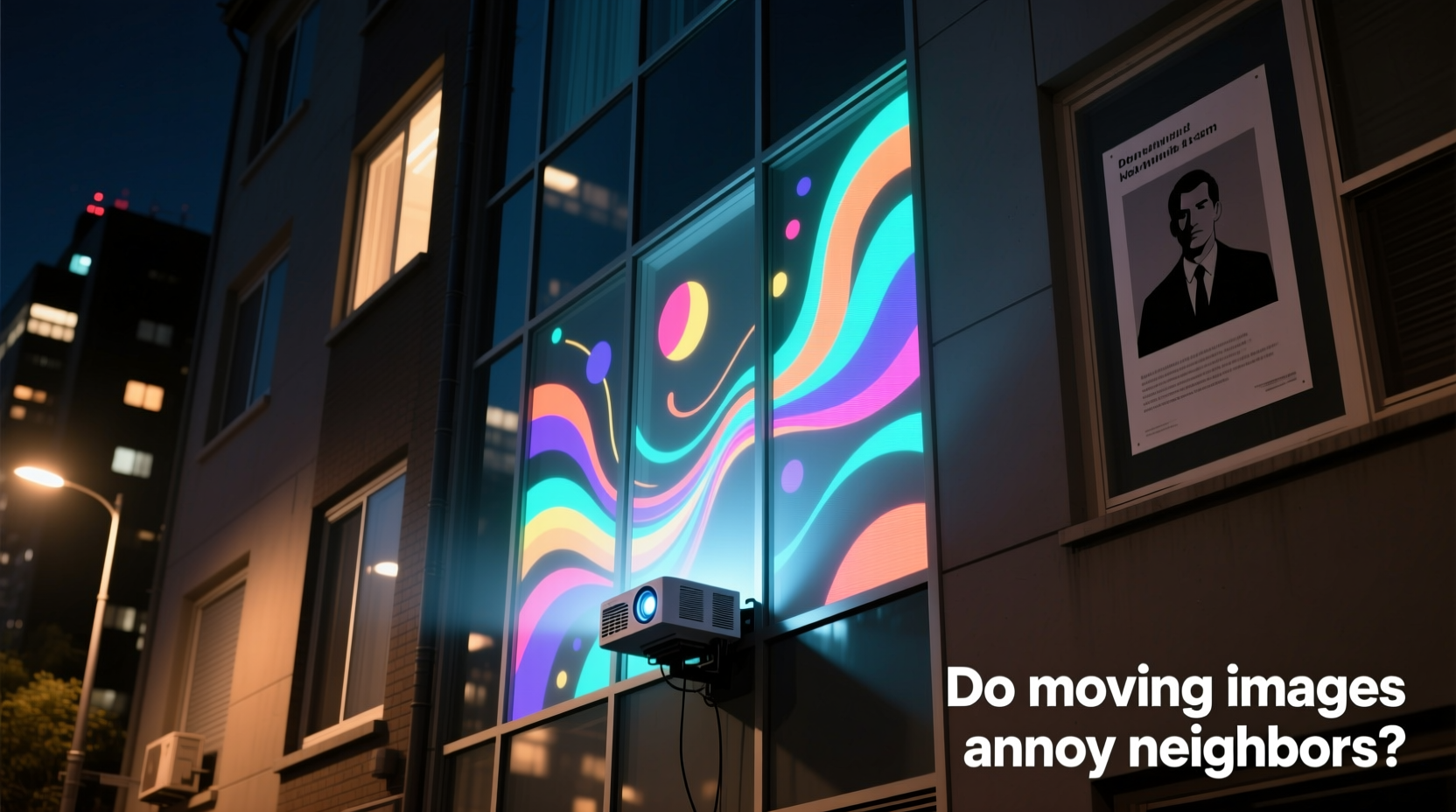
Window projectors have transformed seasonal decorating. No longer limited to string lights and plastic reindeer, families now use high-lumen digital projectors to cast elaborate scenes across homes, trees, and sidewalks. These devices are easy to install, energy-efficient compared to traditional lighting, and capable of creating immersive visuals—from falling snow to dancing elves.
Two main types dominate the market: static and animated. Static projectors display fixed images—think a glowing star, a steady nativity scene, or a single-color wash. Animated projectors cycle through sequences: Santa sliding down a roof, ghosts floating across a wall, or waves crashing in a winter seascape. The movement grabs attention, but it also increases visibility—and potential irritation—for nearby residents.
The popularity of animated models has surged due to viral social media trends. Homes with elaborate light-and-motion shows attract visitors, boost local tourism, and even raise money for charity. Yet, not all attention is welcome. Complaints about brightness, flicker, and noise (from accompanying speakers) have led some municipalities to regulate projector use, especially after 9 PM.
Animated vs Static: A Feature-by-Feature Comparison
| Feature | Static Projectors | Animated Projectors |
|---|---|---|
| Motion | No movement; fixed image | Sequences with motion and transitions |
| Brightness Level | Generally lower, consistent output | Higher peak lumens; dynamic changes |
| Energy Use | Lower consumption | Slightly higher due to processing and motorized parts |
| Neighbor Impact | Minimal; often mistaken for ambient light | Potential disturbance due to flicker and movement |
| Installation Complexity | Simple setup | May require alignment, timing, and sound sync |
| Lifespan | Longer (fewer moving components) | Shorter if used daily with heat buildup |
While both types serve decorative purposes, their behavioral footprint differs significantly. Static projectors blend into the night like streetlights or porch lamps. Animated ones behave more like mini-drive-in theaters—engaging for viewers facing them, but potentially intrusive for those not seeking the experience.
Do Moving Images Annoy Neighbors? Psychological and Social Factors
Movement captures attention—by design. Human vision is hardwired to detect motion as a survival mechanism. Even peripheral flickering from a projector sequence can disrupt sleep, concentration, or relaxation in adjacent homes. Studies on light pollution show that intermittent light sources are more disruptive than constant ones. A 2021 study by the International Dark-Sky Association found that pulsing or scanning lights increased reported sleep disturbances by 37% compared to steady illumination.
One homeowner in Columbus, Ohio, installed a popular “Haunted House” animated projector that cycled through ghostly figures every 15 seconds. Within a week, three neighbors complained of insomnia. One, a nurse working night shifts, said she couldn’t fall asleep before noon because the flashing green and purple hues seeped through her blackout curtains. After mediation through the homeowners’ association, the projector was repositioned and restricted to pre-9 PM operation.
“Flickering lights—even at low intensity—can interfere with melatonin production. For people already struggling with sleep, this kind of visual stimulation acts like a silent alarm.” — Dr. Lena Patel, Neurologist & Sleep Specialist
Children and individuals with sensory sensitivities may also find animated projections overwhelming. Autism advocates note that repetitive motion and bright contrasts can trigger anxiety or overstimulation, particularly when unexpected. A child on the autism spectrum might perceive a dancing snowman not as fun, but as chaotic and threatening.
Mini Case Study: The Maple Street Light War
In a quiet suburban neighborhood in Portland, two households faced off over holiday decor. The Johnsons installed a 4K animated projector displaying a rotating winter village with music. Kids in the neighborhood loved it. Cars slowed down. Donations poured into their chosen charity. But directly across the street, the Garcias struggled. Their bedroom window faced the projection surface. Every night, from November 28 to January 5, they saw reindeer galloping across their ceiling.
Attempts to resolve it informally failed. Curtains helped but didn’t eliminate the glow. The couple filed a nuisance complaint with the city, citing violation of the local “quiet enjoyment” ordinance. The dispute made local news. Ultimately, a compromise was reached: the Johnsons reduced brightness by 40%, disabled sound, and limited runtime to 5–9 PM on weekdays, 5–10 PM on weekends.
This case illustrates a growing tension: personal expression versus communal comfort. There’s no universal rule, but awareness and communication go a long way.
Best Practices for Responsible Projector Use
You don’t have to choose between festive spirit and good neighbor relations. With thoughtful planning, you can enjoy your display while respecting others’ peace.
Step-by-Step Guide to Neighbor-Friendly Projection
- Survey sightlines: Walk around your property and neighboring yards at night. Identify where the light spills.
- Aim carefully: Direct the beam away from windows, sidewalks, and public roads to avoid glare.
- Adjust brightness: Most projectors allow dimming. Use the lowest setting that still achieves the desired effect.
- Set a timer: Limit operation to 6–9 PM on weekdays, extending slightly on weekends.
- Mute audio: If your projector includes sound, disable it unless in a fully private outdoor area.
- Notify neighbors: Send a brief note or knock on doors to inform nearby residents of your plans.
- Invite feedback: Offer a way for people to reach out if issues arise—without confrontation.
Checklist: Before You Turn On Your Projector
- ☐ Confirmed projector is not shining into any neighbor’s bedroom or living room
- ☐ Set automatic shut-off before 9 PM (or local curfew)
- ☐ Audio is disabled or volume is minimal
- ☐ Brightness adjusted to functional minimum
- ☐ Shared plans with immediate neighbors via note or conversation
- ☐ Emergency contact method provided (e.g., phone number or email)
- ☐ Tested for flicker or strobe effect that could trigger discomfort
Frequently Asked Questions
Can my neighbor legally stop me from using a holiday projector?
It depends on local ordinances and homeowner association rules. Some cities classify excessive or late-night lighting as a form of light pollution or public nuisance. If complaints are filed and verified, authorities may issue warnings or fines. In HOA-governed communities, decor policies often include clauses about brightness, duration, and noise.
Are animated projectors more likely to cause complaints than static ones?
Yes, statistically. According to a 2023 survey by Neighborhood Watch Network, animated displays accounted for 68% of holiday-related nuisance reports, despite making up only 44% of projector sales. Motion, combined with sound and high brightness, increases perceived intrusiveness.
What’s the best time to run a window projector?
Between 5 PM and 9 PM is widely considered acceptable. Avoid running displays after 10 PM on weekdays. Weekends can extend to 10:30 or 11 PM in some areas, but always check local guidelines. Early evening hours respect both celebratory moods and nighttime routines.
Expert Insight: Balancing Joy and Consideration
“The most memorable holiday displays aren’t the loudest or brightest—they’re the ones that bring warmth without imposing stress. A well-placed static snowfall can be just as magical as a full animation suite.” — Marcus Reed, Urban Design Consultant & Lighting Ethicist
Reed emphasizes that festive culture thrives on inclusion, not spectacle at the expense of others. He recommends treating outdoor lighting like music: enjoyable when shared willingly, irritating when forced. Communities that adopt mutual respect policies—such as “Decorator’s Pledge” programs—report fewer conflicts and higher participation rates.
Conclusion: Shine Bright, But Shine Thoughtfully
Animated and static window projectors each have their place in modern holiday traditions. Animated versions deliver excitement and engagement, perfect for drawing smiles from passersby. Static projectors offer elegance and restraint, enhancing ambiance without overwhelming. The key isn’t choosing one over the other—it’s understanding context.
Your home is part of a larger environment. The glow you cast affects more than your own walls. By assessing sightlines, limiting duration, reducing brightness, and opening lines of communication, you preserve both joy and goodwill. Festive spirit doesn’t require conquest of the night sky; it flourishes in moments of shared appreciation.




 浙公网安备
33010002000092号
浙公网安备
33010002000092号 浙B2-20120091-4
Comments
No comments yet. Why don't you start the discussion?