
For anime collectors, displaying figures isn’t just about storage—it’s a form of personal expression. Whether you’ve invested in limited-edition PVC statues or built an evolving collection over years, how you present them impacts both preservation and visual impact. Two dominant options dominate the scene: enclosed display cases and open shelving. Each offers distinct advantages and trade-offs in dust protection, maintenance, lighting, spatial integration, and overall aesthetic appeal. Understanding these differences is essential to curating a display that honors your figures while fitting your lifestyle and environment.
Dust Protection: The Core Practical Difference
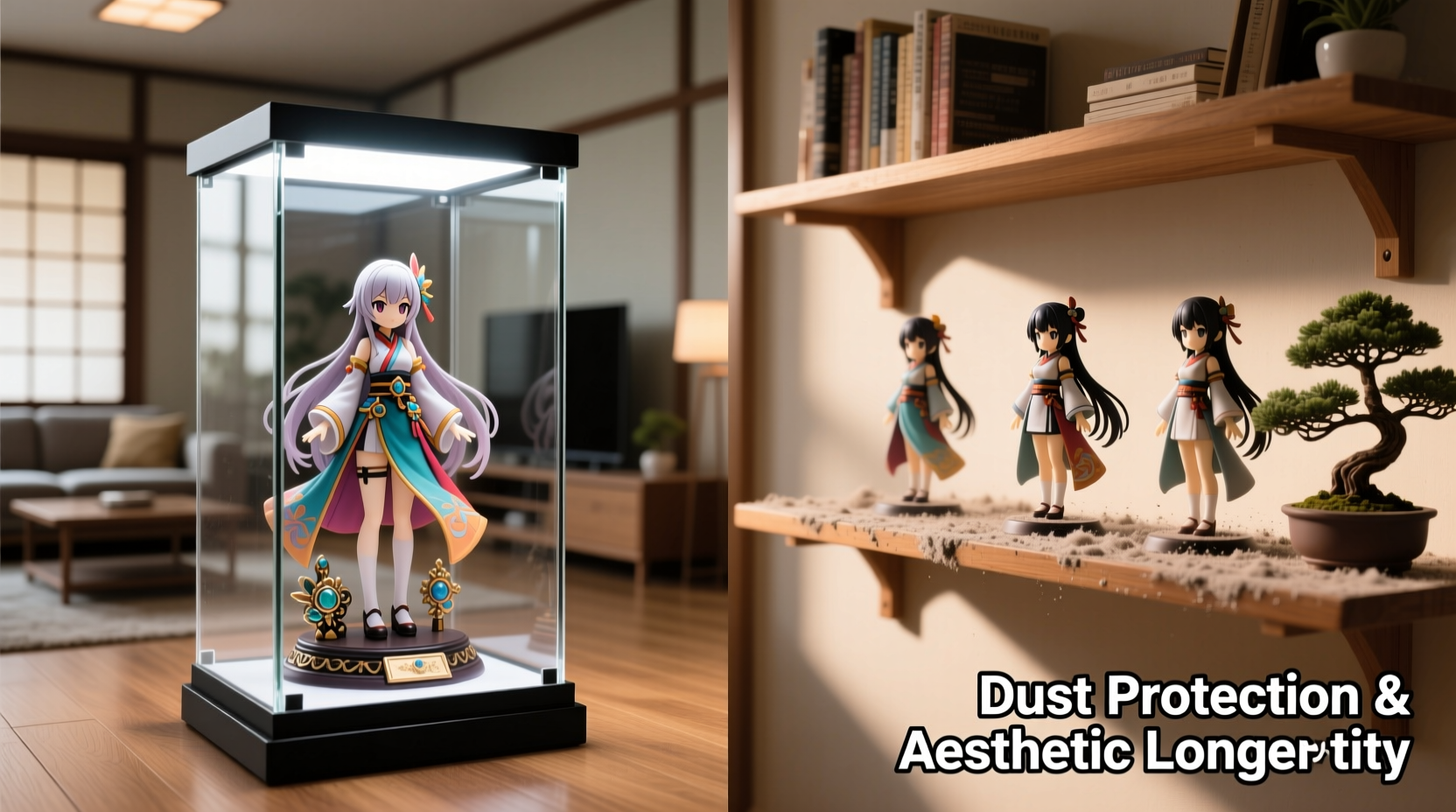
Dust may seem like a minor concern, but for anime figures—especially those with intricate paintwork, translucent parts, or delicate accessories—it can degrade appearance and value over time. Dust accumulation not only dulls colors but can also trap moisture when combined with humidity, leading to surface degradation or mold in extreme cases.
Enclosed display cases provide a physical barrier against airborne particles. Most are constructed with tempered glass or acrylic panels that seal tightly, significantly reducing exposure. High-end models even include gaskets or magnetic closures to minimize gaps. In homes with pets, high foot traffic, or located in urban areas with elevated particulate matter, this level of protection is invaluable.
In contrast, open shelves offer zero passive dust resistance. Every surface is exposed, requiring frequent cleaning to maintain visual clarity. While some collectors enjoy the tactile ritual of weekly dusting, others find it burdensome—particularly with large collections or hard-to-reach placements.
Aesthetic Impact: Openness vs. Elegance
The visual language of your display shapes the atmosphere of the room. Open shelves create a sense of accessibility and dynamism. Figures feel integrated into the living space, almost as if they’re part of daily life. This approach works well in modern, minimalist interiors where clean lines and unobstructed views are prized. You can easily swap pieces, experiment with poses, or spotlight new additions without opening doors or adjusting latches.
On the other hand, display cases elevate figures into curated exhibits. They function like miniature museums, drawing attention and signaling value. The glass reflections, internal lighting, and framed borders add a layer of sophistication. When backlit, cases can produce dramatic silhouettes and highlight fine details that might go unnoticed on open shelves.
However, glass introduces potential glare, especially under overhead lighting or near windows. Anti-reflective coatings help, but they increase cost. Additionally, fingerprints and smudges are more visible on case surfaces, demanding regular polishing to maintain clarity.
Lighting Considerations by Display Type
Proper lighting enhances color fidelity and depth. With open shelves, ambient room lighting often suffices, though directional LED strips or spotlights can intensify presence. Since there’s no glass interference, light interacts directly with the figure’s surface.
Display cases, particularly deeper ones, benefit from integrated LED systems. Top-mounted or edge-lit panels ensure even illumination without hotspots. Some advanced models feature motion-activated lights or color temperature controls, allowing you to shift from warm museum tones to vibrant daylight settings.
“Figures in sealed cases last visibly longer—not just from dust, but from reduced UV and handling exposure.” — Kenji Tanaka, Collector & Prop Preservation Specialist
Space Efficiency and Room Integration
Your available space and interior layout play a crucial role in determining the best solution. Open shelves are generally more flexible. Wall-mounted units save floor space and allow creative arrangements—zigzags, asymmetrical stacks, or themed clusters. They work well in bedrooms, home offices, or entertainment areas where interaction with the collection is part of the experience.
Display cases, especially full-height or cabinet-style units, require dedicated floor space. They are bulkier and less adaptable to irregular walls or corners. However, their structured design can anchor a room, serving as a focal point rather than background decor. Built-in models that integrate with wall units offer a compromise, blending the protection of cases with architectural harmony.
For renters or those in smaller apartments, modular open shelves offer easier relocation. Cases, due to weight (especially glass components), are harder to move and reinstall without risk of damage.
Material Quality and Long-Term Durability
The longevity of your display system depends heavily on construction materials. Open shelves made from particle board may warp over time, especially in humid climates. Solid wood or metal brackets offer better stability and visual warmth. Acrylic or laminate finishes can resist scratches but may yellow with prolonged sun exposure.
Display cases vary widely in quality. Budget models often use thin acrylic that scratches easily and lacks structural rigidity. Premium versions use tempered glass, aluminum frames, and soft-close hinges—features that justify higher price points. Look for UV-filtering glass if placing the case in a sunlit room; standard glass can fade painted details over months of exposure.
Comparison Table: Key Features at a Glance
| Feature | Display Cases | Open Shelves |
|---|---|---|
| Dust Protection | High (sealed environment) | None |
| Maintenance Frequency | Low (monthly wipe-down) | High (weekly dusting) |
| Aesthetic Flexibility | Moderate (framed look) | High (easy reconfiguration) |
| Lighting Integration | Excellent (built-in options) | Good (add-on strips/spots) |
| UV Protection | Available (with coated glass) | None unless room-controlled |
| Cost Range | $$–$$$ (higher initial investment) | $–$$ (budget-friendly options) |
Real-World Example: A Collector’s Dilemma
Maya, a longtime anime enthusiast in Osaka, faced a challenge when moving into a compact apartment. Her collection of over 50 figures included rare exclusives from Comiket and anniversary editions. She initially used open floating shelves in her old house, enjoying the ease of rearranging displays seasonally. But in her new space—near a busy street with constant window ventilation—dust became a persistent issue. Within three months, fine grime coated every figure, dulling metallic paints and clogging armor seams.
She switched to a modular display case system with sliding glass doors and internal LEDs. Though the upfront cost was steep, she noticed immediate improvements: figures stayed pristine, and the illuminated setup became a centerpiece during gatherings. She now cleans the entire unit once every six weeks, spending less time overall than her previous weekly dusting routine. For Maya, the trade-off in flexibility was worth the gains in protection and presentation.
Step-by-Step Guide: Choosing the Right Option for Your Collection
- Assess your environment: Is your room prone to dust, humidity, or direct sunlight? High-exposure areas favor enclosed cases.
- Evaluate your collection size: Small, rotating collections suit open shelves. Large, static displays benefit from organized cases.
- Consider handling frequency: Do you regularly move or photograph figures? Open access reduces friction.
- Budget for long-term costs: Include maintenance supplies, replacement parts, and potential upgrades.
- Match to room aesthetics: Modern spaces may prefer sleek cases; eclectic rooms can embrace bold shelf designs.
- Test placement: Mock up both options using cardboard or temporary mounts to visualize spatial impact.
Hybrid Solutions: Best of Both Worlds?
Some collectors opt for hybrid approaches. For example, using open shelves for frequently changed or lower-value figures while reserving display cases for premium or sentimental pieces. Another strategy involves installing shallow glass-front cabinets above open shelving—protecting key items while maintaining visual openness below.
Magnetic acrylic covers are another emerging option. These attach to metal-framed shelves and can be lifted or slid aside when needed. They reduce dust by 70–80% compared to fully open setups, according to user reports, while preserving much of the unobstructed view.
Frequently Asked Questions
Can I convert open shelves into a semi-enclosed display?
Yes. Custom acrylic side panels or rear inserts can be added to existing shelves to reduce dust entry. Pre-cut kits are available online for standard shelf sizes. While not fully sealed, they significantly cut down on particle accumulation.
Do display cases make figures harder to photograph?
Glass reflections can interfere with photography, but techniques like using polarizing filters, off-axis lighting, or shooting at an angle minimize glare. Many collectors remove the front panel temporarily for high-quality shoots. Alternatively, UV-resistant anti-reflective glass reduces this issue substantially.
Are open shelves safe around children or pets?
Open displays are more vulnerable to accidental knocks. If you have curious hands or paws nearby, consider anchoring shelves securely and placing fragile figures out of reach. Enclosed cases offer inherent safety, though lightweight acrylic models can still tip if not mounted properly.
Final Checklist Before Deciding
- ✅ Measure available space (floor and wall) for both options
- ✅ Identify your most valuable or delicate figures
- ✅ Determine your average cleaning frequency and tolerance
- ✅ Check natural and artificial light sources in the room
- ✅ Research local dust levels or pollution exposure
- ✅ Set a realistic budget including delivery and assembly
- ✅ Plan for future collection growth
Conclusion: Balance Protection with Personal Style
The decision between anime figure display cases and open shelves isn’t about which is objectively better—it’s about alignment with your priorities. If preserving condition and minimizing upkeep are paramount, enclosed cases deliver unmatched protection and elegance. If you value interaction, adaptability, and seamless integration into your living space, open shelves offer unmatched freedom.
Many collectors evolve over time, starting with shelves and transitioning to cases as their collection grows in value and emotional significance. There’s no single correct path. What matters is intentionality: choosing a system that respects your figures, fits your lifestyle, and brings you joy every time you look at them.




 浙公网安备
33010002000092号
浙公网安备
33010002000092号 浙B2-20120091-4
Comments
No comments yet. Why don't you start the discussion?