
For anime fans living in compact apartments, dorm rooms, or shared housing, personal expression often competes with spatial limitations. The desire to celebrate favorite characters and series must be balanced with practicality. Two of the most popular ways to showcase fandom—figurines and art prints—offer distinct advantages and challenges when it comes to small-space living. While both bring joy and visual appeal, their impact on available space, maintenance needs, and long-term value differ significantly. Understanding these differences allows collectors and enthusiasts to curate displays that are both meaningful and sustainable.
Space Efficiency: How Each Option Uses Room
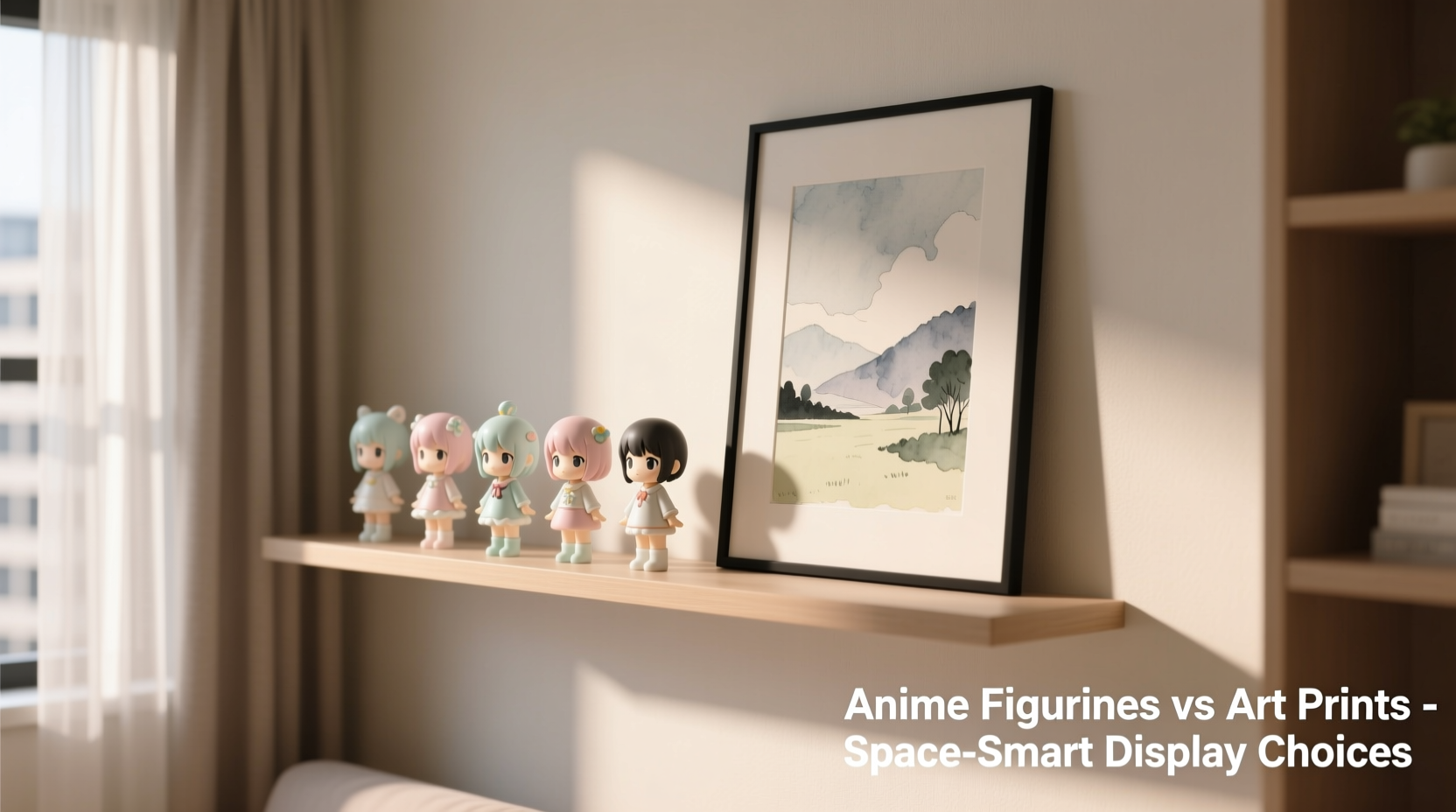
When square footage is limited, every inch counts. Figurines and art prints interact with space in fundamentally different ways.
Anime figurines, especially those in 1/8 or 1/7 scale, can occupy substantial shelf or desk real estate. A single high-end figure may require 6–10 inches of width and depth, not including clearance for lighting or viewing angles. Multiply this by a modest collection of five figures, and you’re looking at a dedicated display case or multiple shelves. Additionally, figurines demand three-dimensional space—they project outward, upward, and sometimes require surrounding air to avoid a cluttered appearance.
In contrast, art prints operate within a two-dimensional plane. Mounted on walls, they free up floor and surface areas entirely. Even large-format prints (e.g., 24x36 inches) take up no more physical volume than a framed photograph. This makes them ideal for vertical space utilization—a critical strategy in micro-living environments. Wall-mounted displays also allow for creative arrangements like gallery walls, thematic clusters, or minimalist single-feature pieces that enhance room aesthetics without crowding surfaces.
Cost and Long-Term Investment Value
Budget considerations play a major role in collecting decisions. While initial price tags matter, long-term costs—including maintenance, insurance, and depreciation—should not be overlooked.
High-quality anime figurines often start around $80–$150 for standard editions, with premium or exclusive versions exceeding $300. Limited releases from manufacturers like Good Smile Company or Aniplex can appreciate over time, particularly if sealed and well-preserved. However, once opened and displayed, most figurines do not increase in value and may degrade due to environmental exposure. Dust, UV light, and accidental damage all contribute to wear that diminishes both aesthetic and resale potential.
Art prints, meanwhile, are far more affordable upfront. A professionally printed giclée or archival poster typically ranges from $20 to $60, depending on size and framing. Digital downloads allow even lower-cost entry points—under $10—with self-printing options. While mass-produced prints rarely appreciate in value, limited-run artist collaborations or signed editions from platforms like INPRNT or official studio releases can become collectible. More importantly, prints are easier and cheaper to replace if damaged, making them a lower-risk investment for renters or frequent movers.
“Collectors often overlook the hidden cost of display infrastructure. A $200 figurine might need a $100 acrylic case and dust-proof shelf system to stay pristine.” — Marcus Lin, Display Design Consultant
Comparison Table: Key Factors at a Glance
| Factor | Anime Figurines | Art Prints |
|---|---|---|
| Space Usage | High (3D, requires depth and height) | Low (2D, wall-mounted) |
| Average Cost | $80–$300+ | $10–$60 (framed) |
| Durability | Fragile (prone to chipping, dust, UV fade) | Moderate (fade-resistant with proper framing) |
| Maintenance | Weekly dusting, climate control | Occasional glass cleaning |
| Customization | Limited (pose fixed, base included) | High (frame style, arrangement, mix media) |
| Portability | Low (fragile, bulky packaging needed) | High (flat, easy to pack) |
Real-Life Example: A Tokyo Studio Apartment Makeover
Mika Tanaka, a 28-year-old graphic designer in Tokyo, faced a challenge common among urban anime enthusiasts: her 250-square-foot studio was filled with over 20 figurines accumulated over a decade. While she cherished each piece, the clutter made the space feel cramped and difficult to clean. After moving into a new rental with strict landlord rules about surface modifications, she reevaluated her display strategy.
She decided to downsize her physical collection to five signature pieces—her favorites—and digitize the rest by photographing them under studio lighting. These images were then turned into high-resolution prints and arranged in a cohesive gallery wall above her bed. The remaining figurines were stored in labeled, ventilated cases under her bed, rotated seasonally.
The result? Her room felt larger, cleaner, and more intentional. Visitors complimented the curated wall as a “design-forward tribute” rather than a crowded collection. Mika reported feeling less stress about dust and breakage, and found it easier to redecorate for different moods by swapping out a few prints.
This case illustrates how shifting from object-heavy displays to wall-based art can transform small-space living without sacrificing passion or personality.
Maintenance and Daily Practicality
Long-term enjoyment depends not just on initial appeal but on upkeep. In small spaces, where proximity increases interaction, maintenance becomes a daily consideration.
Figurines require consistent care. Dust accumulates quickly on detailed surfaces—hair strands, fabric folds, weapon accessories—necessitating gentle brushing or compressed air every few days. Direct sunlight causes paint to fade and plastic to yellow over time, so placement away from windows is essential. Humidity can lead to mold growth on certain paints or adhesives, particularly in unventilated rooms. For those with pets or children, the risk of accidental knocks raises the need for secure shelving or protective cases, further increasing spatial demands.
Art prints, especially when properly framed with UV-protective glass and acid-free mats, require minimal maintenance. A quick wipe of the glass every few weeks suffices. Since they’re mounted out of reach, they’re less vulnerable to physical contact. Canvas prints or metal-mounted alternatives offer even greater durability, resisting dents and scratches. In humid climates, choosing moisture-resistant backing materials prevents warping.
Step-by-Step: Transitioning from Figurines to Art-Centric Displays
If you're considering a shift toward space-efficient anime decor, follow this practical sequence:
- Audit your current collection: Identify which figurines bring you the most joy. Keep only those that truly resonate.
- Photograph and archive: Take high-quality photos of the rest. Save digitally and consider creating a printed photo book or digital slideshow.
- Select key art themes: Choose iconic scenes, character portraits, or stylized illustrations that reflect your taste.
- Purchase or commission prints: Source from reputable artists or official merchandise. Prioritize archival paper and pigment inks.
- Plan your wall layout: Use painter’s tape or digital tools to visualize arrangements before hanging.
- Install securely: Use appropriate anchors for your wall type (drywall, plaster, concrete). Consider removable adhesive strips for rentals.
- Rotate seasonally: Change prints every few months to keep the space feeling fresh and dynamic.
Expert Insight: The Psychology of Display
Visual curator and interior psychologist Dr. Lena Choi notes that display choices affect emotional well-being: “Tactile objects like figurines provide sensory satisfaction—the weight, texture, and craftsmanship engage multiple senses. But in confined spaces, too many objects can trigger subconscious stress related to clutter. Wall art offers emotional connection without cognitive load.”
“For small-space dwellers, the goal should be meaningful minimalism: fewer items, greater significance.” — Dr. Lena Choi, Environmental Psychologist
This insight suggests a hybrid approach may be optimal—retaining a few treasured figurines as focal points while using art prints to expand thematic storytelling across walls.
Checklist: Choosing the Right Option for Your Space
- ✅ Measure available wall and surface space before purchasing any item.
- ✅ Assess your lifestyle: Do you travel often? Move frequently? Have pets?
- ✅ Determine your budget not just for purchase, but for display setup (shelves, cases, frames).
- ✅ Consider lighting: Can you control UV exposure and highlight key pieces effectively?
- ✅ Think long-term: Will this item still fit your life in two years?
- ✅ Prioritize ease of cleaning and maintenance.
- ✅ Test layouts virtually or with paper templates before committing.
Frequently Asked Questions
Can I mix figurines and art prints in a small space?
Yes, and it’s often the best solution. Use art prints as the primary backdrop and place 1–3 carefully chosen figurines on a narrow shelf or floating ledge. This creates depth and variety without overcrowding. Just ensure there’s enough negative space between elements to maintain visual clarity.
Are anime art prints considered “real” collectibles?
While not always seen as traditional collectibles, limited-edition prints—especially hand-numbered, signed, or screen-printed works from known artists—hold value and rarity. Official convention exclusives or studio-released lithographs are increasingly sought after. Their lower profile compared to figurines doesn’t diminish their cultural or artistic worth.
How do I protect art prints from fading?
Use UV-filtering glass or acrylic in frames, avoid direct sunlight, and consider LED lighting with low UV output. Archival inks and cotton-rag paper also resist fading for decades. For extra protection, apply a museum-grade varnish designed for fine art prints.
Final Thoughts: Making the Right Choice for You
The decision between anime figurines and art prints isn’t about which is objectively better—it’s about alignment with your environment, habits, and values. Figurines offer unparalleled craftsmanship and presence, rewarding close inspection and tactile appreciation. They suit collectors who prioritize detail, rarity, and the ritual of care. But they demand space, attention, and protection.
Art prints, by contrast, democratize fandom. They allow expansive expression without physical burden, turning walls into immersive experiences. They adapt easily to changing tastes and living situations, making them ideal for evolving identities and transient lifestyles.
In small spaces, efficiency often wins. But meaning matters more. Whether you choose a single powerful print or a cherished figurine under glass, the goal is authenticity—not accumulation.




 浙公网安备
33010002000092号
浙公网安备
33010002000092号 浙B2-20120091-4
Comments
No comments yet. Why don't you start the discussion?