
Anime has long been a space of creative freedom, where imagination meets intense emotional storytelling. Over the decades, certain series have transcended entertainment to become cultural milestones—not just for their animation or characters, but for their bold narrative choices. Among the most impactful are the plot twists so unexpected, so devastatingly executed, that they left audiences stunned and altered the way creators approach storytelling. These aren't just surprises; they're turning points that challenged genre conventions, subverted audience expectations, and elevated anime into a more sophisticated form of narrative art.
The Power of Narrative Subversion in Anime
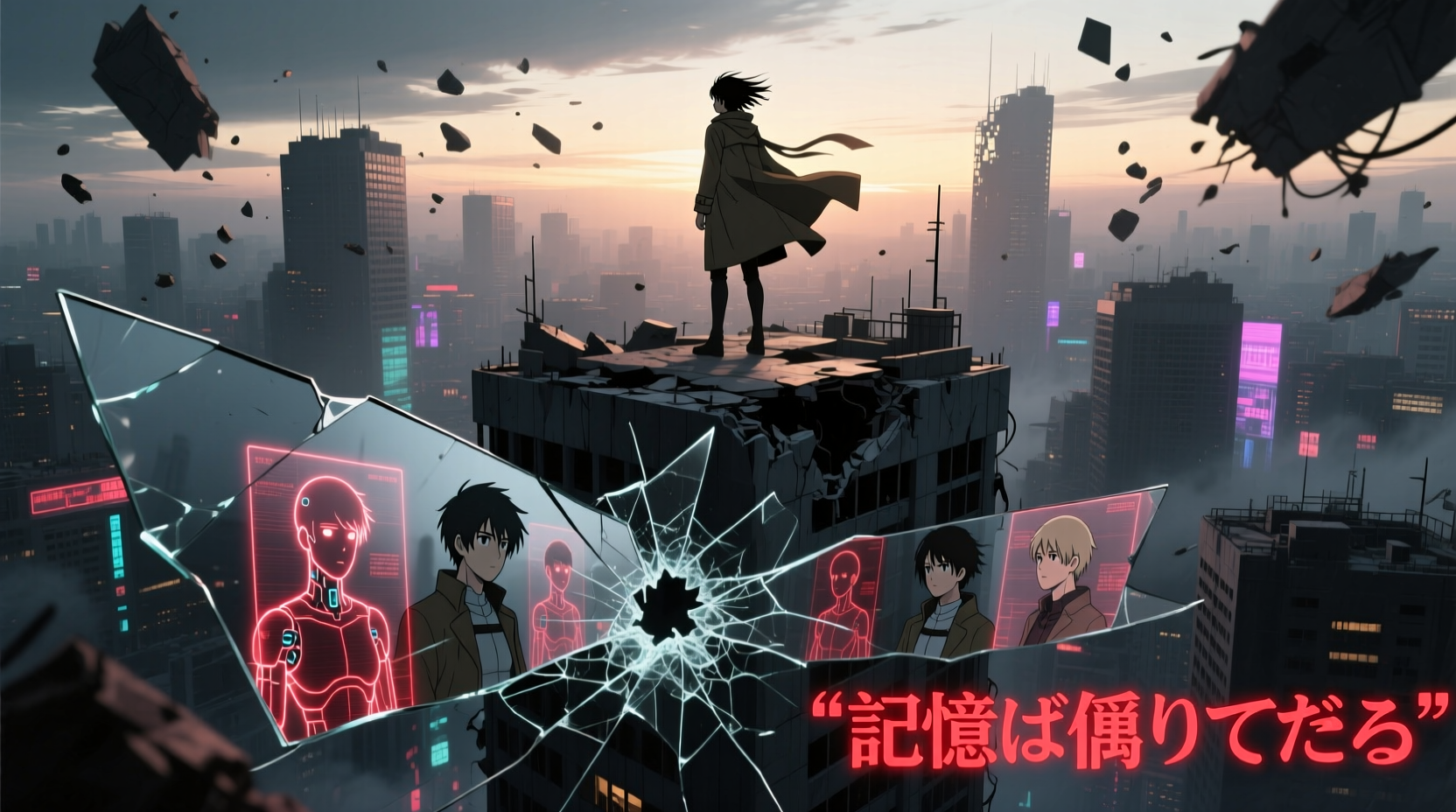
What sets anime apart from many Western animated works is its willingness to confront dark themes, explore psychological depth, and dismantle traditional hero arcs. While other media often shield protagonists from lasting consequences, anime frequently embraces tragedy, moral ambiguity, and irreversible change. This openness creates fertile ground for plot twists that don’t merely shock—they redefine the story’s entire framework.
When done well, a twist doesn’t feel like a betrayal of logic but a revelation of deeper truths hidden in plain sight. The best anime plot twists are foreshadowed with subtle clues, making them both surprising and inevitable in hindsight. They force viewers to reconsider everything they thought they knew about the characters and the world.
Neon Genesis Evangelion: When the Mecha Genre Collapsed Inward
Debuted in 1995, Neon Genesis Evangelion began as a seemingly standard mecha anime: teenagers piloting giant robots to fight mysterious beings known as Angels. But by the final episodes, it had transformed into a surreal exploration of depression, identity, and human connection. The shift wasn’t gradual—it was a full-scale narrative detonation.
The infamous last two episodes, particularly Episode 26 (“The Hand That Feeds”), abandoned conventional plot resolution entirely. Instead of a climactic battle, viewers were plunged into abstract imagery, internal monologues, and philosophical debates about individuality and existence. Creator Hideaki Anno later admitted he was suffering from severe depression during production, which deeply influenced the show’s introspective and fragmented conclusion.
This twist wasn’t a single event but a complete deconstruction of the genre itself. It exposed the psychological toll of being a child soldier, questioned the nature of reality, and rejected the idea of a clean, heroic ending. At the time, fans were polarized—some outraged, others profoundly moved. But its impact was undeniable.
“Evangelion didn’t just break the rules of mecha anime—it revealed that the genre had been avoiding uncomfortable truths all along.” — Dr. Akira Sato, Media Studies Professor at Kyoto University
In the years since, countless series—from Psycho-Pass to Darling in the Franxx—have echoed Evangelion’s psychological intensity and willingness to challenge genre norms.
Death Note: The Downfall of a \"Hero\" Who Became the Villain
Death Note masterfully plays with morality, presenting Light Yagami as a brilliant student who uses a supernatural notebook to eliminate criminals and create a utopia. Initially framed as a vigilante protagonist, Light gradually reveals himself to be a narcissistic, power-hungry antagonist. The true twist? He was never meant to win.
The pivotal moment comes when L’s successors, Near and Mello, outmaneuver him using tactics grounded in psychology and deduction rather than brute force. Light’s arrogance becomes his undoing. His final moments—cornered, screaming, and reduced to a broken shell—are a far cry from the triumphant godhood he envisioned.
This reversal redefined how antiheroes could be portrayed in anime. Unlike traditional villains who fall due to external forces, Light collapses under the weight of his own hubris. The series argues that absolute justice is impossible without corruption—a theme rarely explored so starkly in mainstream anime at the time.
| Aspect | Traditional Hero Arc | Death Note’s Subversion |
|---|---|---|
| Moral Alignment | Clearly good vs. evil | Gradual moral decay |
| Protagonist Outcome | Victory or redemption | Total downfall |
| Narrative Focus | Action and resolution | Pyschological unraveling |
| Audience Sympathy | Aligned with hero | Shifts away from protagonist |
By making viewers empathize with a character who becomes monstrous, Death Note forced audiences to confront their own complicity in rooting for a killer. It proved that a protagonist doesn’t need to be likable—and may not even deserve to survive.
Fullmetal Alchemist: Brotherhood – The Truth Behind the Homunculi
Fullmetal Alchemist: Brotherhood weaves an intricate plot filled with alchemical laws, political intrigue, and philosophical questions about life and sacrifice. One of its most shocking revelations is the origin of the homunculi—artificial humans representing the seven deadly sins.
Midway through the series, it’s revealed that each homunculus is born from a failed human transmutation performed by Father, the main antagonist. But the true bombshell comes when Wrath—initially believed to be a minor villain—is exposed as King Bradley, a high-ranking military officer with superhuman abilities. Even more disturbing? He willingly killed his own son to maintain his position and power.
This twist reframes the entire political structure of Amestris. The military isn’t just corrupt—it’s built on lies, sacrifices, and literal monsters in positions of authority. The revelation dismantles the illusion of order and exposes the cost of blind loyalty to institutions.
Bradley’s arc culminates in a rare moment of redemption. In his final battle against the Elric brothers, he chooses honor over survival, acknowledging his sins and fighting with integrity. This complexity—where a villain is both terrifying and tragically human—set a new benchmark for antagonist development in shonen anime.
Why This Twist Changed Storytelling
- It blurred the line between state authority and villainy.
- Showed that even “evil” characters can have layered motivations.
- Used worldbuilding to reinforce thematic depth (e.g., the price of power).
- Proved that long-form foreshadowing could pay off dramatically.
Attack on Titan: Eren’s Transformation from Victim to Antagonist
No modern anime twist has generated more controversy—or deeper analysis—than Eren Yeager’s turn from freedom-seeking hero to genocidal warmonger in Attack on Titan. For nearly a decade, the story followed Eren’s vow to eradicate the Titans and liberate humanity. Fans expected a final battle against the source of the Titan curse, not a crusade of annihilation against the outside world.
The truth emerged slowly: Eren had seen a future vision through the Founding Titan’s power. Believing that peace was impossible and that Paradis would eventually be destroyed by global forces, he chose to commit mass genocide—killing 80% of humanity—to secure freedom for his people. The ultimate irony? He became the very monster he once fought.
This twist upended the core theme of the series. What began as a tale of survival evolved into a meditation on cyclical violence, nationalism, and the limits of empathy. Creator Hajime Isayama refused to offer easy answers. There was no triumphant victory—only grief, loss, and the painful acknowledgment that liberation often comes at an unbearable cost.
“We wanted to ask: Can you be a hero and a war criminal at the same time? Attack on Titan says yes—and that’s what makes it unforgettable.” — Mari Tanaka, Anime Critic, Cinematic Japan
The backlash was immediate. Some fans felt betrayed. Others praised the audacity. Regardless, the twist sparked global conversations about morality in war, propaganda, and how stories shape national identity. Few anime have dared to challenge their audience so directly.
Steins;Gate: Time Travel Without Loopholes
While many sci-fi stories use time travel as a convenient reset button, Steins;Gate treats it as a tragic burden. The protagonist, Okabe Rintarou, discovers he can send messages to the past using a modified microwave. At first, he uses this power playfully—changing small events for comedic effect. But when his friend Mayuri dies repeatedly across timelines, he realizes some deaths are unavoidable without catastrophic consequences.
The central twist? No matter what Okabe does, Mayuri will die unless he shifts to a completely different world line—a feat requiring immense sacrifice. To save her, he must let another dear friend, Kurisu, be murdered in cold blood, then spend months pretending he doesn’t remember her, all to preserve the timeline where Mayuri lives.
This isn’t a twist revealed in one episode—it unfolds over dozens of hours, building emotional weight with every failure. The brilliance lies in its adherence to strict rules. There are no deus ex machina solutions. Victory comes only through suffering, patience, and letting go.
Step-by-Step: How Steins;Gate Builds Its Twist
- Establish Rules Early: The concept of world lines and divergence numbers is introduced methodically.
- Create Emotional Investment: Viewers bond with Mayuri and Kurisu, making their fates unbearable to witness.
- Repeat Failure: Multiple attempts to save both characters end in tragedy, reinforcing the stakes.
- Reveal Hidden Path: The Steins;Gate world line exists but requires near-impossible coordination.
- Make the Hero Sacrifice: Okabe must erase his memories of Kurisu to achieve success—turning victory into sorrow.
Unlike most time-travel narratives, Steins;Gate doesn’t glorify control over fate. Instead, it emphasizes the loneliness of knowing too much and the courage it takes to keep moving forward.
Checklist: How to Recognize a Truly Great Anime Plot Twist
- ✅ Built on foreshadowing, not surprise alone
- ✅ Changes the viewer’s understanding of earlier events
- ✅ Has lasting emotional or thematic impact
- ✅ Challenges genre expectations
- ✅ Makes characters more complex, not less
- ✅ Stands up to rewatching and analysis
- ✅ Sparks discussion beyond the fanbase
Frequently Asked Questions
Are plot twists always a good thing in anime?
Not necessarily. A twist should serve the story, not just shock for shock’s sake. Poorly executed twists—those lacking setup or contradicting established logic—can alienate audiences. The best ones feel earned and deepen the narrative.
Can a twist ruin an otherwise good anime?
Yes. If a twist contradicts character development or undermines the story’s themes, it can leave fans feeling cheated. Series like Paranoia Agent or Monogatari manage complex turns because they’re rooted in consistent worldbuilding and psychology.
Why do so many iconic anime twists involve betrayal?
Betrayal cuts deep because it violates trust—a core human emotion. Anime often explores isolation and identity, making betrayal a powerful tool for transformation. Whether it’s a friend, mentor, or even the protagonist betraying their ideals, these moments force radical growth or collapse.
Conclusion: Embracing the Unpredictable
The most memorable anime stories aren’t those that follow a predictable path, but those brave enough to shatter expectations. From Evangelion’s existential spiral to Attack on Titan’s moral reckoning, these plot twists did more than surprise—they invited viewers to think critically about justice, freedom, and the cost of survival.
They proved that anime could be more than escapism. It could be a mirror held up to society, a challenge to our assumptions, and a testament to the power of storytelling when it dares to go too far.




 浙公网安备
33010002000092号
浙公网安备
33010002000092号 浙B2-20120091-4
Comments
No comments yet. Why don't you start the discussion?