
Anime has long been a breeding ground for narrative innovation, emotional depth, and storytelling risks few other mediums dare to take. While Game of Thrones earned global acclaim for its shocking betrayals and sudden character deaths, anime has delivered twists so profound they redefined entire genres, shattered fan expectations, and lingered in collective memory for years. From psychological mind games to time-travel paradoxes, the most unforgettable anime moments don’t just surprise—they dismantle reality as viewers know it.
This isn’t about which twist was “darker” or more violent. It’s about impact: how a single revelation can turn a story inside out, forcing audiences to reevaluate everything they thought they understood. Below are some of the most devastating, brilliant, and genuinely unforeseen plot turns in anime history—moments that didn’t just shock fans, but left them questioning the nature of fate, identity, and free will.
The Death Note Time Paradox That Broke Brains
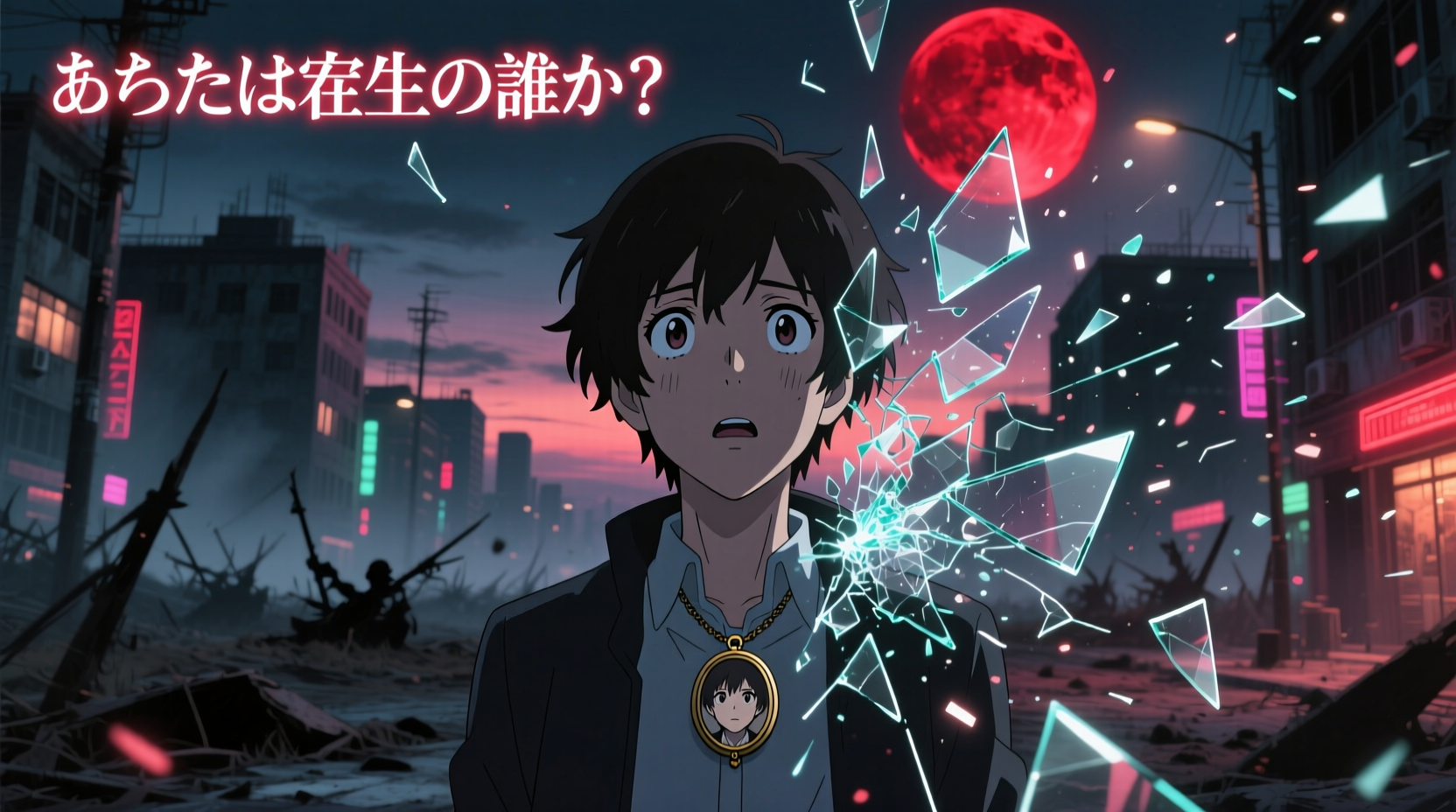
Death Note is often cited as one of the most intelligent psychological thrillers in anime, and its final act delivers a twist so intricate it borders on philosophical warfare. For much of the series, Light Yagami—the genius high school student turned self-proclaimed god of a new world—appears to be winning. He manipulates law enforcement, outsmarts detectives, and eliminates anyone who stands in his way using the supernatural notebook that kills anyone whose name is written in it.
But in Episode 37, titled “Transfer,” a quiet exchange between Light and the Shinigami Ryuk sets off a chain reaction of realizations. When Light attempts to reclaim the Death Note after feigning innocence, he fails—because he had previously transferred ownership of the notebook to another person. This means he no longer remembers writing in it, nor does he possess any of the memories tied to being Kira.
The brilliance lies in the execution: viewers, like Light, believed he was still in control. But the show had subtly laid the groundwork weeks earlier. The twist isn’t just that Light loses—it’s that he forgets who he is, only to regain his memories at the worst possible moment: when surrounded by enemies, with no escape.
“ Death Note doesn’t rely on cheap shocks. Its power comes from inevitability—the sense that every twist was hidden in plain sight.” — Akira Tanaka, Anime Narrative Analyst
Steins;Gate’s Emotional Time Travel Reversal
If Death Note plays with perception, Steins;Gate weaponizes emotion through science fiction. The story follows Rintarou Okabe, a self-proclaimed mad scientist who accidentally discovers how to send messages to the past using a modified microwave. At first, these “D-mails” seem harmless—fixing small regrets, saving friendships. But each change fractures the timeline, pushing the world closer to dystopia.
The true gut punch comes in Episode 23, “The Beginning of the End.” After countless failed attempts to save his friend Kurisu Makise from assassination, Okabe finally reaches the so-called “Steins;Gate” world line—a stable future where everyone survives. Or so he thinks.
In the final episode, Okabe receives a video message from the deceased Kurisu. In it, she reveals that even in the ideal timeline, she still dies—but not until months later, under mysterious circumstances. Worse, she says she has no memory of ever meeting Okabe. The man who sacrificed everything to save her… is erased from her life.
This twist transcends shock value. It forces the audience to confront the cost of victory: love forgotten, effort unacknowledged, and pain endured for a future where only one person remembers the truth.
Why This Twist Surpasses Game of Thrones’ Red Wedding
The Red Wedding stunned viewers with its brutality, but its function was largely political—eliminating a key player. Steins;Gate’s climax is personal. It doesn’t kill a character; it kills hope, memory, and connection. Where Game of Thrones asks, “How far will power go?”, Steins;Gate asks, “What is victory if no one remembers it?”
| Aspect | Red Wedding (Game of Thrones) | Kurisu’s Message (Steins;Gate) |
|---|---|---|
| Emotional Impact | Shock, horror, betrayal | Grief, loneliness, existential dread |
| Narrative Function | Power shift | Thematic culmination |
| Character Consequence | Death | Existential erasure |
| Foreshadowing | Minimal (surprise-focused) | Dense (science rules established early) |
| Long-term Effect | Changes war dynamics | Redefines protagonist’s purpose |
Attack on Titan’s Villain Turn: Eren Yeager’s Genocide Plan
No twist in modern anime has been as polarizing—or as narratively audacious—as Eren Yeager’s transformation from hero to genocidal warmonger in Attack on Titan. For nine seasons, fans followed Eren’s journey: a boy who vowed to destroy the Titans after watching his mother devoured. His rage was righteous. His goal—freedom—seemed noble.
Then came Chapter 119 of the manga (adapted in Season 4), where Eren reveals his true plan: use the Founding Titan’s power to initiate the “Rumbling,” crushing the rest of the world beneath endless waves of Colossal Titans. Not for peace. Not for justice. But to ensure Eldians like himself can live freely—even if it means slaughtering billions.
The twist works because it’s layered. Clues were there all along—Eren’s nightmares, his cryptic conversations with Armin, the time-skip reveal that he orchestrated his own capture. Yet fans clung to hope. The show deliberately framed him as the protagonist, making his fall feel like a personal betrayal.
“I wanted freedom… for us. Even if the whole world hates me.” — Eren Yeager, Attack on Titan
Unlike Joffrey’s cruelty or Ramsay Bolton’s sadism, Eren isn’t a cartoon villain. He’s tragic, convinced his atrocities are necessary. This moral ambiguity makes the twist more disturbing than any throne-room massacre.
Evangelion’s Instrumentality: When the World Ends in Therapy
Neon Genesis Evangelion doesn’t just subvert mecha tropes—it dismantles the human psyche. By the final episodes, the alien battles take a backseat to surreal imagery, internal monologues, and abstract philosophy. Then, in Episode 26, the Human Instrumentality Project commences: all human souls merge into a single consciousness, dissolving individual bodies and identities.
But the real twist isn’t the apocalypse—it’s the choice. In the film The End of Evangelion, protagonist Shinji Ikari is offered a world without pain, where everyone is connected and no one is lonely. He accepts—then rejects it. He realizes that suffering is part of being human. True connection requires risk, rejection, and individuality.
This conclusion shocked fans expecting a traditional battle finale. Instead, they got a psychological manifesto wrapped in apocalyptic animation. Where Game of Thrones ended with political succession, Evangelion asked whether humanity deserves to continue existing at all—and let the protagonist decide.
Paranoia Agent’s Reality Collapse: A Shared Delusion
Satoshi Kon’s Paranoia Agent is a masterclass in psychological storytelling. The series follows a string of attacks by a mysterious rollerblading assailant known as “Shonen Bat.” At first, he seems like a vigilante or urban legend. But as the story unfolds, it becomes clear: Shonen Bat isn’t real. He’s a manifestation of societal stress, a shared delusion born from trauma and escapism.
The twist arrives gradually. Victims report seeing him, yet surveillance footage shows nothing. Authorities chase shadows. Then, in the final arc, multiple characters begin to become Shonen Bat, adopting his persona to escape their problems. The line between victim and attacker vanishes.
This isn’t a twist in a single scene—it’s a slow erosion of reality. By the end, the audience questions whether any of the events were “real” or merely symbolic projections. No dragon burnings or throne seizures compare to the quiet horror of realizing an entire city is mentally unraveling.
Mini Case Study: The Girl Who Became the Attacker
One subplot follows a woman named Harumi Chono, a salarywoman overwhelmed by work and isolation. After being attacked by Shonen Bat, she begins sleepwalking and dressing in his outfit. She doesn’t remember the episodes, but security cameras catch her skating through alleys at night. Her therapist concludes: “She needed someone to blame. So she became him.”
This case illustrates the series’ core theme: trauma doesn’t always leave physical scars. Sometimes, it invents monsters to carry the weight we can’t bear.
Checklist: How to Spot Anime Plot Twists Before They Hit
- Track minor characters: Secondary figures often hold keys to major revelations (e.g., Mikasa’s heritage in Attack on Titan).
- Note repeated symbols: Recurring imagery (clocks, eyes, birds) often signals deeper meaning.
- Question narration: If a character narrates, ask: Are they reliable? Are they hiding something?
- Watch for silence: Awkward pauses, avoided topics, or characters refusing to answer direct questions often precede big reveals.
- Revisit early episodes: Many twists are seeded in the first three episodes, disguised as world-building.
Frequently Asked Questions
Are anime plot twists better than Western TV twists?
“Better” is subjective, but anime often takes greater narrative risks due to shorter seasons and creator-driven production. While Western shows like Game of Thrones focus on political surprise, anime frequently explores psychological, metaphysical, or existential twists that challenge perception itself.
Why do anime twists feel more impactful?
Many anime are designed as complete stories from the start, allowing for tightly woven foreshadowing. Unlike long-running Western series that extend beyond their original arcs, anime often builds toward a singular, devastating climax—making twists feel inevitable rather than contrived.
Can you enjoy anime without spoiling the twists?
Absolutely. Avoid fan forums during initial viewing. Use curated watch lists that don’t include analysis. And embrace confusion—sometimes, not understanding a scene immediately is part of the intended experience.
Step-by-Step Guide to Processing a Major Anime Twist
- Pause and breathe: Don’t rush to the next episode. Let the moment sink in.
- Replay the scene: Watch it again immediately to catch visual cues you missed.
- Review previous episodes: Look for clues in dialogue, background details, or music changes.
- Journal your reaction: Write down your emotions and theories—this helps process complex narratives.
- Discuss selectively: Talk with trusted fans only after forming your own interpretation.
- Wait before rewatching: Give it at least a week. Fresh perspective enhances understanding.
Conclusion: Why These Twists Resonate Beyond Shock
The most powerful plot twists aren’t about surprise—they’re about transformation. The ones in Death Note, Steins;Gate, and Attack on Titan don’t just change the story; they change the viewer. They force introspection, challenge assumptions, and linger long after the screen goes dark.
While Game of Thrones mastered the art of the sudden betrayal, anime has perfected the slow-burn revelation—twists that grow from the story’s DNA, not just shock for shock’s sake. These moments endure because they’re not just about what happened, but what they say about us: our fears, our desires, and the stories we tell ourselves to survive.




 浙公网安备
33010002000092号
浙公网安备
33010002000092号 浙B2-20120091-4
Comments
No comments yet. Why don't you start the discussion?