
For fans of Japanese animation, displaying beloved characters and scenes is more than decoration—it's a form of personal expression. Whether you're curating a bedroom wall, setting up a gaming den, or creating a collector’s space, the choice between anime posters and canvas prints plays a critical role in how your artwork ages over time. While both options deliver visual impact, their long-term performance—especially in preserving color vibrancy—can differ significantly. Understanding these differences helps collectors make informed decisions that align with both aesthetic goals and durability expectations.
Material Composition: The Foundation of Color Longevity
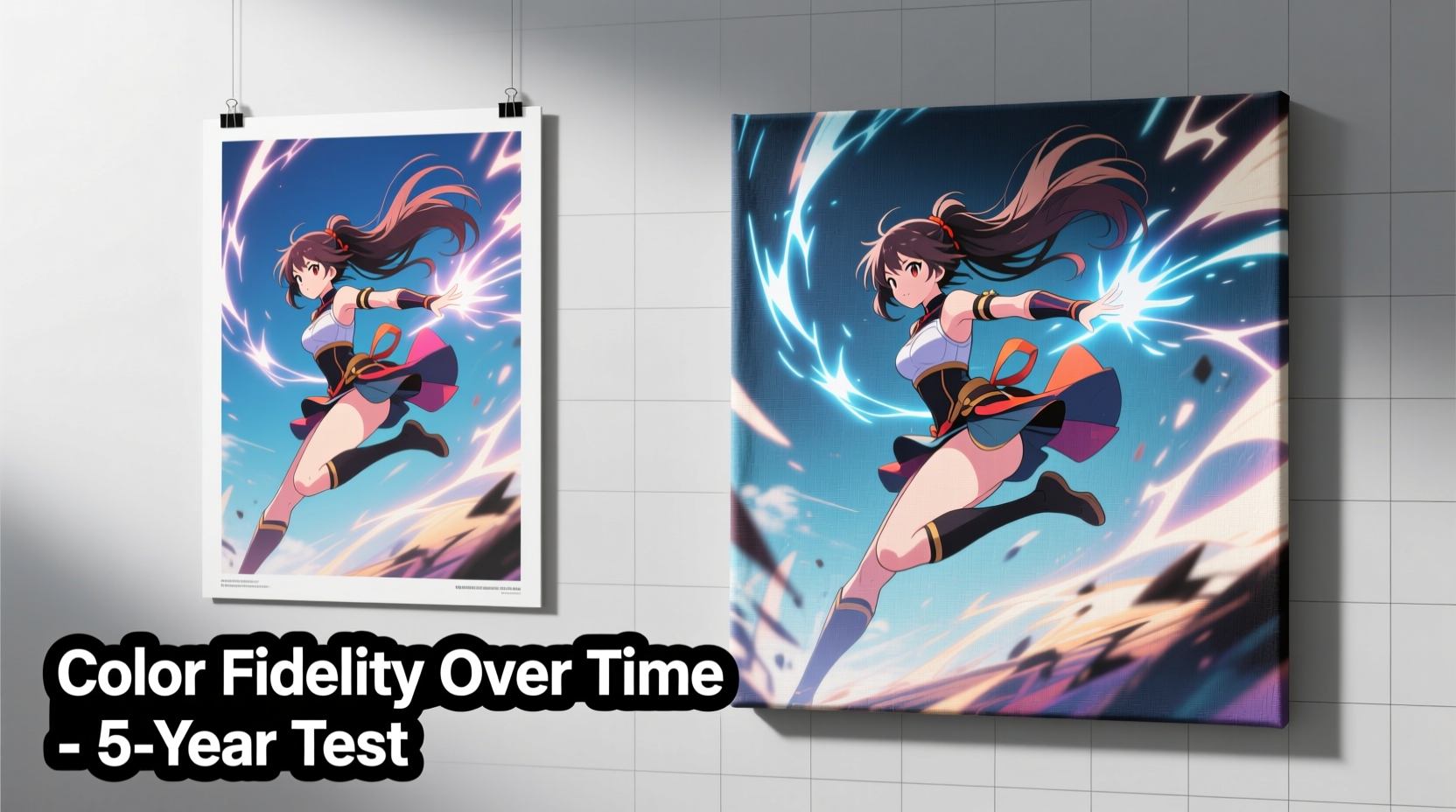
The lifespan of any printed artwork hinges primarily on its base material and the printing method used. Anime posters are typically mass-produced on paper stock using offset or digital printing processes. Most standard posters use coated or uncoated paper, often ranging from 150 to 200 gsm (grams per square meter). These materials are cost-effective but inherently less durable when exposed to environmental stressors like light, humidity, and temperature fluctuations.
In contrast, canvas prints are made from tightly woven fabric—usually cotton or poly-cotton blends—stretched over a wooden frame. The image is applied via inkjet printing using pigment-based or archival dye inks. This combination creates a textured, gallery-style finish that not only feels premium but also offers greater resistance to fading under controlled conditions.
Because canvas has a porous surface, it absorbs ink more deeply than paper, reducing the risk of surface-level degradation. Paper posters, however, rely on a thin coating to hold ink on the surface, making them more vulnerable to abrasion and chemical breakdown over time.
Exposure to Light: The Primary Enemy of Color Integrity
Ultraviolet (UV) radiation is the most aggressive factor in color degradation. Both posters and canvas prints will fade when exposed to direct sunlight, but the rate at which this occurs varies based on material and protective measures.
Paper posters, especially those without lamination or UV-protective glass in framing, begin showing signs of fading within months in sunlit rooms. Blues and reds—common in anime art—are particularly sensitive to UV exposure and may shift in tone or lose saturation quickly. Even indirect daylight contributes to cumulative damage over time.
Canvas prints, while still susceptible to UV damage, tend to fare better due to the depth of ink penetration and the natural diffusing properties of fabric. Additionally, many manufacturers apply a protective varnish layer that acts as a UV filter. When combined with proper framing behind museum-grade acrylic or glass, canvas prints can retain up to 70–80% of their original color after a decade, compared to standard posters, which may degrade by 50% or more in half that time.
“Color longevity isn’t just about the print medium—it’s about the synergy between ink, substrate, and environment.” — Dr. Lena Torres, Conservation Scientist at the Pacific Museum of Art
Environmental Factors: Humidity, Temperature, and Air Quality
Beyond light, ambient conditions play a decisive role in how well an anime display retains its visual fidelity. High humidity promotes mold growth and paper warping, especially in unframed posters. In tropical climates or poorly ventilated rooms, moisture can cause ink to bleed or lift from the surface, leading to irreversible damage.
Canvas, being a textile, handles moderate humidity better than paper, provided it is properly sealed. However, prolonged exposure to damp environments can still lead to sagging, mildew, or fiber deterioration. Temperature swings exacerbate these issues by causing materials to expand and contract, which stresses both ink adhesion and structural integrity.
Airborne pollutants such as cigarette smoke, cooking oils, and ozone from electronics can also discolor lighter areas of prints. Paper is more absorbent and thus more prone to yellowing, particularly newsprint-style posters. Canvas, with its tighter weave and protective coatings, resists surface contamination more effectively.
Preservation Checklist for Long-Term Display
- ✅ Frame all paper posters behind UV-filtering glass or acrylic
- ✅ Apply a non-yellowing varnish to canvas prints before hanging
- ✅ Avoid placing displays near windows, radiators, or kitchen vents
- ✅ Maintain indoor humidity between 40–50% using a dehumidifier if necessary
- ✅ Dust regularly with a soft, dry microfiber cloth—never wet wipes
- ✅ Rotate displays every 1–2 years to reduce cumulative light exposure
Comparative Analysis: Posters vs Canvas Prints
| Feature | Anime Posters (Paper) | Canvas Prints |
|---|---|---|
| Base Material | Paper (coated/uncoated) | Cotton or poly-cotton blend |
| Ink Type | Dye or standard pigment | Archival pigment or solvent-based |
| Fade Resistance (Unframed) | Low (6–18 months in light) | Moderate (3–5 years) |
| Fade Resistance (Framed w/ UV Glass) | High (5–7 years) | Very High (10–15+ years) |
| Humidity Tolerance | Poor – prone to curling/mold | Moderate – if sealed |
| Surface Durability | Low – scratches easily | High – resistant to scuffs |
| Cost (Standard Size: 24x36\") | $5–$15 | $30–$80 |
| Ease of Replacement | Easy – widely available | Harder – custom-made |
This comparison reveals a clear trade-off: posters offer affordability and accessibility but require more rigorous protection to match the longevity of canvas prints. Canvas, while initially more expensive, provides superior resilience and visual depth, making it a better investment for permanent or high-visibility displays.
Real-World Example: A Collector’s Experience
Tyler Chen, a long-time anime enthusiast from Portland, Oregon, began decorating his apartment with official Naruto and My Hero Academia posters in 2018. He hung several unframed pieces in his living room, which receives morning sunlight through large east-facing windows. By 2020, he noticed visible fading along the edges, particularly in the bright orange hues of Naruto’s jacket. One poster had even developed a slight yellow tint due to kitchen smoke exposure.
After consulting a local framer, Tyler switched to canvas prints for his favorite scenes. He chose pieces printed with archival inks and added a matte UV-resistant coating. These were mounted away from direct light and cleaned quarterly with a dry duster. Five years later, the colors remain vibrant, with no noticeable shift in contrast or saturation. “I underestimated how much environment matters,” Tyler said. “The canvas looks like it did the day I bought it. The posters? They’re basically memorabilia now.”
Step-by-Step Guide to Maximizing Print Lifespan
To ensure your anime artwork maintains its brilliance, follow this timeline-based care strategy:
- Week 1: Assess Your Display Environment
Use a hygrometer to measure humidity and avoid areas with readings above 55%. Check for direct sunlight during peak hours (10 a.m.–4 p.m.). - Day of Purchase: Verify Print Specifications
Contact the seller or check product details for ink type (archival pigment preferred) and material quality. Avoid unknown brands with no fade-resistance claims. - Within 48 Hours: Frame or Seal
If using a poster, invest in a frame with UV-protective acrylic. For canvas, apply a conservation-grade varnish like EAA (Ethyl Acrylate Acrylic) to enhance scratch and UV resistance. - Monthly: Dust Gently
Use a clean, dry microfiber cloth or soft brush. Never spray cleaners directly onto the surface. - Every 6 Months: Inspect for Damage
Look for fading, warping, or insect activity. Consider rotating artwork to give each piece a “rest” from light exposure. - Yearly: Re-evaluate Placement
Seasonal sunlight angles change. What was once a shaded corner in winter might become a sun trap in summer. Adjust accordingly.
Frequently Asked Questions
Do canvas prints fade faster than posters?
No—under comparable conditions, canvas prints generally resist fading longer due to deeper ink absorption and optional protective coatings. However, unframed canvas in direct sunlight will degrade faster than a poster behind UV glass. The key is not the medium alone, but how it’s protected.
Can I hang an anime poster without framing it?
You can, but it’s not recommended for long-term display. Unframed posters are exposed to dust, oils, UV light, and physical contact, all of which accelerate color loss. If framing isn’t possible, consider adhesive vinyl wall decals or laminated posters designed for durability.
Are there waterproof options for anime wall art?
Yes. Some canvas prints are treated with hydrophobic sealants that resist moisture. Additionally, specialty polyester-based “poster fabrics” mimic paper aesthetics but withstand humidity better. These are ideal for bathrooms or kitchens where steam is common.
Final Thoughts: Choosing for Longevity and Passion
The decision between anime posters and canvas prints ultimately reflects your priorities: immediate affordability versus lasting value. Posters serve well for temporary decor, seasonal themes, or budget-conscious setups. But if you're showcasing a cherished series—whether it’s Studio Ghibli’s ethereal landscapes or Demon Slayer’s dynamic battles—a canvas print offers a more enduring tribute.
Color quality isn’t just about initial vibrancy; it’s about consistency over time. With proper care, a canvas print can remain a vivid centerpiece for over a decade. A poster, even a high-quality one, requires more intervention to achieve similar results. By understanding material science and environmental influence, fans can preserve not just images, but memories tied to their favorite stories.




 浙公网安备
33010002000092号
浙公网安备
33010002000092号 浙B2-20120091-4
Comments
No comments yet. Why don't you start the discussion?