
In the world of anime, protagonists often take center stage—but sometimes, it’s the supporting cast that leaves a lasting impression. From enigmatic mentors to morally complex antagonists, side characters frequently bring depth, intrigue, and emotional resonance to a series. Some are so richly developed or intriguingly mysterious that fans can’t help but wonder: what if they had a story of their own?
This article explores several anime side characters whose presence is so impactful, their narratives demand expansion. These aren’t just fan favorites; they’re fully realized individuals with backstories, motivations, and untapped potential. Whether through political maneuvering, personal trauma, or quiet heroism, these characters offer fertile ground for new stories that could stand alongside—or even surpass—the original series.
The Underrated Power of Side Characters
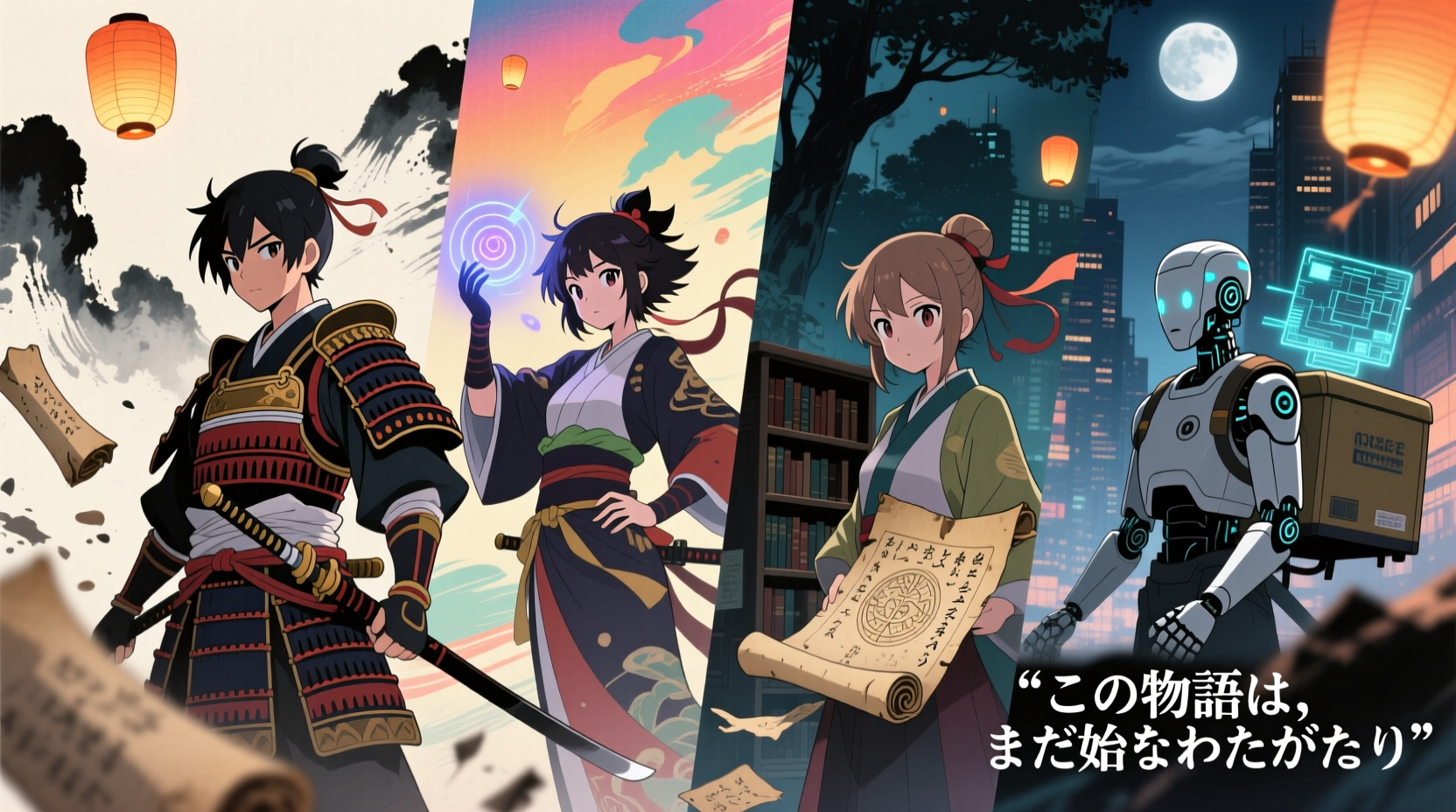
Main characters serve as anchors, guiding viewers through the core narrative. But side characters often provide contrast, challenge ideologies, and reflect different facets of the world’s moral and social fabric. When written with care, they become more than plot devices—they evolve into symbols, foils, or even philosophical counterpoints.
Consider how a mentor like Hawks from *My Hero Academia* embodies the tension between public image and private struggle. Or how Violet Evergarden, originally a secondary figure in her namesake light novel, was so compelling she earned her own standalone series. These examples prove that popularity isn’t always tied to screen time—it’s about impact.
Some side characters operate in gray areas, making choices that defy easy judgment. Others possess skills or histories only briefly hinted at, leaving audiences hungry for more. It’s this combination of depth and mystery that makes them ideal candidates for spinoffs.
Top 5 Anime Side Characters Who Deserve Their Own Series
The following characters have left indelible marks despite limited focus. Each offers unique themes, unexplored backstories, and narrative frameworks that could sustain an entire series.
1. Shigeo “Mob” Kageyama (Yes, Really)
Wait—Mob is the protagonist of *Mob Psycho 100*, you might say. True. But consider his role in the broader context of the series’ universe. While Mob is central, much of the show’s thematic weight comes from side characters like Reigen Arataka. Reigen, the self-proclaimed psychic (who has no powers), manages a spiritual consultancy, mentors Mob, and navigates ethical dilemmas with charm and cowardice in equal measure.
A spinoff centered on Reigen would explore con artistry, redemption, and the performance of authority. How did he start scamming? What drives his occasional bursts of genuine courage? The man who lies for a living might just be one of anime’s most honest portrayals of human insecurity.
2. Roy Mustang – The Man Behind the Flame
In *Fullmetal Alchemist: Brotherhood*, Colonel Roy Mustang begins as a high-ranking military officer with presidential ambitions. He’s charismatic, tactical, and burdened by guilt over past actions during the Ishvalan War. While Ed Elric seeks the Philosopher’s Stone to restore his body, Mustang’s journey is political, personal, and quietly revolutionary.
A spinoff focusing on Mustang during or after the main series could delve into post-war reconstruction, bureaucratic resistance, and the cost of leadership. Imagine a grounded, almost noir-style drama where alchemy takes a backseat to espionage, moral compromise, and nation-building. His relationship with Hawkeye, Havoc, and other subordinates offers emotional continuity rarely seen in action anime.
“Power without responsibility is tyranny. But responsibility without power is meaningless.” — Roy Mustang, Fullmetal Alchemist: Brotherhood
3. Esdeath – Beyond the Villain Archetype
From *Akame ga Kill!*, General Esdeath is often remembered for her brutality and ice-based powers. But beneath the surface lies a tragic figure shaped by isolation, warped ideals of love, and a belief that strength justifies rule. Unlike many villains who seek destruction, Esdeath genuinely believes she’s creating order—even if through fear.
A prequel series tracing her rise in the empire, early encounters with Akame, or internal conflicts within the imperial hierarchy could offer a nuanced look at authoritarian psychology. Her romance with Kurome (in some adaptations) or rivalry with Najenda adds further layers. This wouldn’t glorify tyranny but dissect it—making her one of anime’s most psychologically rich antagonists.
4. Yoruichi Shihōin – Noble Rogue with a Legacy
In *Bleach*, Yoruichi is introduced as a former captain of the Stealth Forces and mentor to Soi Fon. She’s agile, witty, and deeply connected to Soul Society’s hidden mechanisms. Despite her importance in training Ichigo and exposing corruption, her backstory remains fragmented.
A spinoff could explore her decision to abandon her noble title, her friendship with Urahara Kisuke before his exile, and her role in shaping underground resistance networks. Set decades before the main timeline, such a series could blend political intrigue, martial arts mastery, and feminist themes—all anchored by a woman who chose freedom over privilege.
5. Fushi – Already a Protagonist, But Originally a Concept
Fushi from *To Your Eternity* began as a mystical orb observed by the “Beholder,” a celestial entity. That observer—silent, detached, yet invested—is never fully explained. What is their purpose? Do they oversee other immortals? Are they bound by rules or capable of intervention?
A spinoff from the Beholder’s perspective could shift the genre entirely—into cosmic horror or metaphysical drama. Exploring their origin, loneliness, and ethical boundaries when observing sentient beings would echo themes from *Watchmen* or *The Leftovers*. Even without dialogue, their silent presence suggests a narrative far larger than one immortal’s journey on Earth.
Potential Spinoff Frameworks: What Could These Shows Look Like?
Creating a successful spinoff requires more than reusing a popular face. It demands a distinct tone, setting, and narrative engine. Below is a comparative breakdown of possible formats for each character.
| Character | Potential Genre | Core Conflict | Risk Factor |
|---|---|---|---|
| Reigen Arataka | Drama/Comedy with thriller elements | Balancing fraud with real responsibility | Low – already beloved; comedic tone lowers stakes |
| Roy Mustang | Political thriller/War drama | Gaining power without becoming the enemy | Medium – needs strong writing to avoid stagnation |
| Esdeath | Tragedy/Antihero origin story | Justifying cruelty in the name of peace | High – risk of romanticizing oppression |
| Yoruichi Shihōin | Action/Spy intrigue | Navigating nobility vs. justice | Low-Medium – strong lore foundation |
| The Beholder | Cosmic mystery/Philosophical sci-fi | Observer ethics and divine loneliness | Very High – abstract, potentially alienating |
Each format shifts dramatically from its parent series, proving that spinoffs don’t need to replicate success—they can redefine it.
How to Build a Successful Spinoff: A Step-by-Step Guide
Not every popular side character makes a viable lead. Here’s a practical framework for evaluating and developing a spinoff-worthy concept.
- Identify Narrative Gaps: Look for unanswered questions—Where did they come from? What happened during off-screen years?
- Define a Unique Theme: The new series should explore something the original didn’t. For example, while *Naruto* focuses on perseverance, a Kakashi spinoff could explore grief and duty.
- Establish New Stakes: Personal growth alone isn’t enough. Introduce societal, moral, or existential challenges.
- Create Supporting Cast: Avoid recycling old allies. Introduce new relationships that challenge the character differently.
- Set a Distinct Tone: If the original is shonen action, consider making the spinoff a psychological drama or procedural.
- Test Longevity: Can this story run for multiple seasons? Does it have room to evolve beyond flashbacks?
Mini Case Study: How Violet Evergarden Broke the Mold
Violet Evergarden began as a minor character in a light novel series focused on war and communication. Initially a child soldier struggling to understand emotion, her brief appearance resonated so deeply that Kyoto Animation developed a full series around her work as an \"Auto Memory Doll\"—a typist who helps others express feelings.
The spinoff succeeded because it shifted genres—from military fantasy to introspective drama—and centered on emotional literacy rather than combat. Critics praised its animation and narrative maturity, and it won the Nebula Award for Best Game Writing (for its interactive adaptation).
Lesson learned: Even obscure side characters can headline award-winning series if their inner conflict aligns with universal themes like love, loss, and language.
Checklist: Is Your Favorite Side Character Spinoff-Ready?
- ✅ Has a clearly defined personality beyond “loyal friend” or “comic relief”
- ✅ Possesses a backstory only partially revealed in the original series
- ✅ Operates in a part of the world not fully explored (e.g., politics, underworld, history)
- ✅ Faces internal conflicts that don’t depend on the protagonist’s journey
- ✅ Offers a different genre or tone possibility
- ✅ Has existing fan interest or memorable moments
If at least four apply, the character likely has the depth to carry their own story.
Expert Insight: What Creators Say About Expanding Worlds
Naoko Yamada, director known for emotionally driven anime, once noted:
“The most powerful stories often live in the margins. A glance, a silence, a character who walks off-screen—these are spaces where imagination grows.” — Naoko Yamada, Director
This philosophy explains why studios like MAPPA and Bones increasingly explore anthology shorts or OVAs focused on secondary casts. They recognize that worldbuilding isn’t just about maps and magic systems—it’s about giving voice to those who stood quietly in the background.
Frequently Asked Questions
Can a villain really carry a spinoff series?
Absolutely—if they’re multidimensional. Characters like Griffith (*Berserk*) or Dabi (*My Hero Academia*) have tragic origins and ideological depth that justify deeper exploration. The key is avoiding glorification while maintaining empathy.
Why not just make a movie instead of a full series?
Movies work for closure or climaxes, but series allow gradual development. A character like Roy Mustang has decades of political maneuvering ahead—too rich for a two-hour format. Serialized storytelling enables long-term arcs, shifting alliances, and evolving ethics.
Do spinoffs hurt the original series’ legacy?
Only if they feel cash-grabby or inconsistent. Successful spinoffs, like *Spiral* from *The Ring* franchise or *Better Call Saul* from *Breaking Bad*, enhance the original by adding context and emotional weight. Quality matters more than quantity.
Conclusion: Let the Side Characters Shine
Anime thrives on epic battles and chosen heroes, but its soul often lies in the shadows—the mentor who sacrifices reputation, the rival who understands the cost of victory, the quiet observer who sees everything. These side characters aren’t just accessories to the main plot; they’re alternate paths the story could have taken.
By giving them their own series, creators honor the complexity of their worlds. They invite audiences to question assumptions, empathize with enemies, and explore corners of society previously ignored. More importantly, they prove that greatness isn’t defined by spotlight size—but by the depth of impact.




 浙公网安备
33010002000092号
浙公网安备
33010002000092号 浙B2-20120091-4
Comments
No comments yet. Why don't you start the discussion?