
For anime fans, choosing the right streaming service isn't just about price or interface—it's about access. The depth, diversity, and timeliness of a platform’s content library can define your viewing experience. Two major players dominate the English-speaking anime streaming landscape: Crunchyroll and HIDIVE. While Crunchyroll is often seen as the industry leader, HIDIVE has carved out a compelling niche with exclusive titles and curated selections. This in-depth comparison examines their content libraries across key dimensions—simulcasts, exclusives, classic anime, licensing strategies, and regional availability—to help you decide which service aligns best with your viewing preferences.
Simulcast Offerings: Staying Current with New Seasons
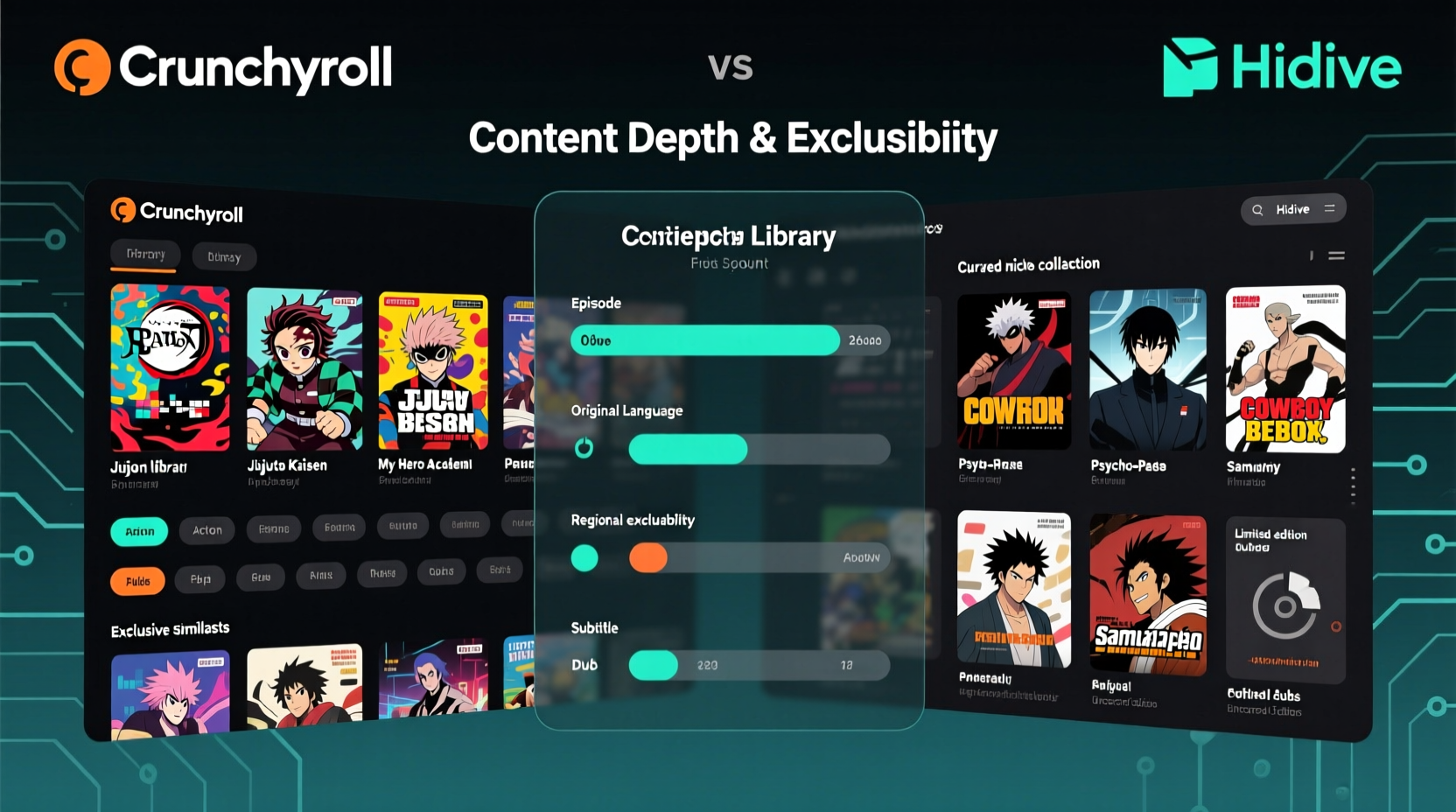
One of the most critical factors for anime enthusiasts is access to new episodes shortly after they air in Japan. Both Crunchyroll and HIDIVE offer simulcasts, but their scale and selection differ significantly.
Crunchyroll leads the market in simulcast volume. During peak seasons like Spring and Fall, it regularly streams over 70 new series simultaneously. Its partnerships with major Japanese studios—including Toei Animation, Aniplex, and Bandai Namco Filmworks—allow it to secure high-profile titles such as Demon Slayer, Jujutsu Kaisen, and My Hero Academia. Episodes are typically available within minutes of their Japanese broadcast, often with subtitles in multiple languages.
HIDIVE, by contrast, offers a more selective simulcast lineup. In a typical season, it carries between 10 and 15 new shows. However, its curation focuses on quality and uniqueness rather than quantity. Recent standout simulcasts include Saekano: How to Raise a Boring Girlfriend, Frieren: Beyond Journey’s End (in select regions), and Classroom of the Elite. Notably, HIDIVE often secures rights to series overlooked by larger platforms, appealing to viewers seeking alternatives to mainstream hits.
Exclusive Content: Where Each Platform Stands Out
Exclusivity plays a crucial role in differentiating anime services. Crunchyroll and HIDIVE each hold rights to distinct catalogs that cannot be found elsewhere legally in English-speaking regions.
Crunchyroll’s exclusives are largely anchored in breadth. It holds exclusive streaming rights to long-running franchises like Naruto, Bleach, and One Piece—titles that form the backbone of modern shonen anime. Additionally, through its acquisition by Sony and integration with Funimation (now merged under the Crunchyroll brand), it controls a vast library of dubbed content, including complete dubs for series like Attack on Titan and Black Clover.
HIDIVE’s exclusives lean toward the distinctive and often adult-oriented. It has built a reputation for licensing anime that other platforms pass on due to mature themes or niche appeal. Key examples include:
- JoJo’s Bizarre Adventure (Parts 1–6) – Before Netflix acquired later seasons, HIDIVE was the sole legal source for subtitled and dubbed versions in North America.
- Paranoia Agent – Satoshi Kon’s psychological thriller remains exclusive to HIDIVE in many regions.
- Time Bokan 24 – A family-friendly mecha series rarely picked up outside Japan.
- The Vampire Dies in No Time – A comedy-horror hybrid with strong fan following.
“HIDIVE fills gaps left by larger services. They’re not chasing mass appeal—they’re serving dedicated fans who want something different.” — Ryan Ashley, Anime Industry Analyst at StreamWatch Media
Content Library Comparison: Breadth vs. Curation
To understand how these platforms compare overall, consider the scope and organization of their full catalogs.
| Category | Crunchyroll | HIDIVE |
|---|---|---|
| Total Titles | Over 1,300 | Approx. 350 |
| New Simulcasts (Seasonal) | 70+ per season | 10–15 per season |
| Classic Anime (Pre-2000s) | Extensive, including Cowboy Bebop, Ghost in the Shell | Limited; focused on select retro titles |
| English Dubs | Massive library, thousands of dubbed episodes | Growing, but smaller; ~50% of catalog dubbed |
| Mature/Seinen-Oriented Series | Moderate; filtered for broad audience | Strong focus; includes horror, psychological, ecchi |
| Exclusive Franchises | One Piece, Naruto, Demon Slayer | JoJo’s Bizarre Adventure, Paranoia Agent, Vampire Dies in No Time |
| Original Productions | Yes (High Guardian Spice, Onyx Equinox) | Yes (Fusion Fate, co-productions) |
Crunchyroll functions as a one-stop destination. Whether you're into battle shonen, magical girls, romance, or slice-of-life, the platform likely has what you're looking for. Its search filters, recommendation engine, and genre tagging make navigation efficient even with a massive library.
HIDIVE operates more like a boutique service. Its interface is simpler, and its catalog is intentionally tighter. This makes discovery easier for users who prefer fewer choices and value editorial curation. The platform excels in genres like psychological thrillers, dark fantasy, and satirical comedies—areas where mainstream platforms may hesitate due to content ratings.
Licensing Strategy and Regional Availability
The way each service acquires content reveals much about its target audience and long-term vision.
Crunchyroll leverages its global infrastructure and financial backing from Sony to secure broad international rights. It frequently licenses titles for North America, Europe, Latin America, and parts of Asia. This wide reach means some users outside the U.S. enjoy better access than others, though geo-restrictions still apply. Crunchyroll also invests heavily in dubbing, producing English, Spanish, Portuguese, and Arabic dubs to support its worldwide subscriber base.
HIDIVE, owned by Sentai Filmworks (a subsidiary of AMC Networks), takes a more conservative approach. It prioritizes North American rights and often licenses titles with limited territorial scope. As a result, many HIDIVE exclusives are unavailable outside the U.S. and Canada. However, this allows the company to negotiate lower-cost deals and focus on niche audiences without the pressure of global scalability.
An important note: Crunchyroll’s merger with Funimation consolidated an enormous portion of anime licensing under one roof. This has led to concerns about monopolization, but it also means more consistent availability of legacy dubs and remastered HD versions of older series.
Mini Case Study: Choosing Based on Viewing Habits
Consider Sarah, a 28-year-old anime fan living in Toronto. She watches anime primarily on weekends and enjoys a mix of action, drama, and experimental storytelling. Her favorite series include Death Note, Ergo Proxy, and Chainsaw Man. She doesn’t follow every new season but dislikes missing major releases.
Initially, Sarah subscribed only to Crunchyroll. She appreciated having Chainsaw Man and Blue Lock available immediately. However, she noticed that Paranoia Agent, a Satoshi Kon series she wanted to rewatch, was missing. After researching, she discovered it was exclusive to HIDIVE.
She tested HIDIVE’s free trial and found several other titles of interest: Classroom of the Elite, Didn’t I Say to Make My Abilities Average in the Next Life?!, and The Genius Prince’s Guide to Raising a Nation Out of Debt. Though the interface felt less polished, the content aligned with her taste for intelligent, character-driven narratives.
Sarah now maintains both subscriptions—but uses them differently. She relies on Crunchyroll for weekly simulcasts and classics, while using HIDIVE as a supplemental service for deeper cuts and exclusive psychological anime. Her monthly cost is higher, but her viewing satisfaction has increased significantly.
Actionable Checklist: How to Choose the Right Service
Use this checklist to determine which platform—or combination—best suits your needs:
- Identify your favorite genres: Do you prefer mainstream shonen, or are you drawn to psychological, surreal, or mature-themed anime?
- List must-watch exclusives: Check whether One Piece, JoJo’s Bizarre Adventure, or Paranoia Agent matter to you.
- Evaluate simulcast needs: Are you someone who follows 10+ shows per season, or do you pick 2–3 highlights?
- Assess dub preference: If you watch primarily in English, Crunchyroll’s extensive dub library may be decisive.
- Check regional access: Confirm which services are officially available in your country.
- Test free trials: Both platforms offer 14-day trials. Use them to sample content and judge interface quality.
- Consider bundling: Crunchyroll offers bundles with HiDive in some regions—check for combo deals.
Frequently Asked Questions
Can I watch HIDIVE content on Crunchyroll, or vice versa?
No. Despite occasional bundling offers, the content libraries are entirely separate. Exclusives on one platform are not available on the other unless rights change hands.
Does Crunchyroll still have all Funimation content?
Yes. Following the full integration of Funimation into Crunchyroll in 2024, nearly all former Funimation titles—including legacy dubs and remastered collections—are now hosted under the Crunchyroll platform.
Is HIDIVE worth it if I already have Crunchyroll?
It depends. If you enjoy offbeat, mature, or critically acclaimed anime that aren’t part of the mainstream conversation, HIDIVE adds unique value. For casual viewers focused on popular hits, Crunchyroll alone may suffice.
Conclusion: Making an Informed Choice
There is no single “best” anime streaming service—only the best fit for your tastes. Crunchyroll remains the dominant force, offering unparalleled breadth, timely simulcasts, and a robust dub library. It’s ideal for fans who want everything in one place and follow the latest trends. HIDIVE, though smaller, delivers a thoughtfully curated experience with bold licensing choices that cater to connoisseurs of unconventional storytelling.
Your decision should reflect what kind of anime viewer you are. Are you a completist who wants every episode of every major series? Crunchyroll is your foundation. Do you crave depth over breadth, and appreciate the obscure gems that larger platforms ignore? HIDIVE deserves a spot in your rotation.




 浙公网安备
33010002000092号
浙公网安备
33010002000092号 浙B2-20120091-4
Comments
No comments yet. Why don't you start the discussion?