
When you catch a whiff of licorice in a spice blend, baked good, or herbal tea, there’s a strong chance anise seed is behind it. Though often confused with star anise or fennel, true anise seed (Pimpinella anisum) stands apart as one of the world’s oldest cultivated spices—prized for its potent aroma, sweet warmth, and culinary versatility. Whether you’re seasoning rye bread, crafting homemade liqueurs, or exploring global cuisines, understanding anise seed elevates your cooking from ordinary to exceptional. This comprehensive guide demystifies the spice, offering practical insights for home cooks and seasoned chefs alike.
Definition & Overview
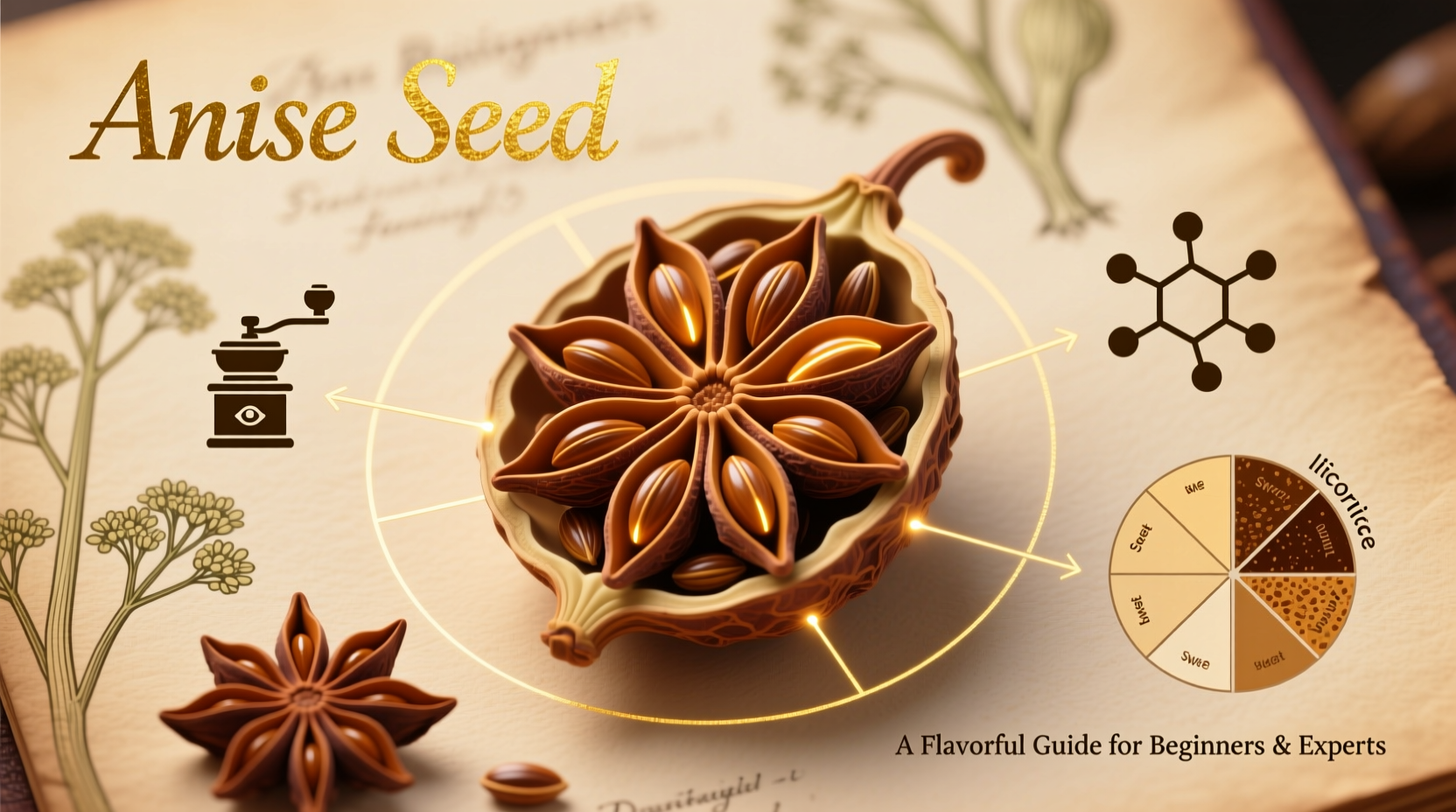
Anise seed comes from Pimpinella anisum, an annual herb in the Apiaceae family—related to carrots, parsley, and dill. Native to the eastern Mediterranean and Southwest Asia, it has been cultivated for over 4,000 years, appearing in ancient Egyptian, Greek, and Roman kitchens and apothecaries. The small, grayish-brown seeds are harvested when ripe and used whole or ground across savory and sweet dishes worldwide.
The defining feature of anise seed is its pronounced licorice-like flavor, driven primarily by anethole, the same aromatic compound found in star anise, fennel, and tarragon. Despite these similarities, anise seed has a sharper, sweeter, and more concentrated profile than its botanical cousins. It plays dual roles in both culinary and medicinal traditions—from spicing sausages and flatbreads to soothing digestion and supporting respiratory health in herbal preparations.
In modern kitchens, anise seed bridges cultures: it appears in Italian biscotti, German pfeffernüsse, Mexican atole, Middle Eastern baharat, and Indian digestive teas. Its ability to enhance both aroma and flavor—without overpowering—makes it a subtle yet transformative ingredient when used with precision.
Key Characteristics
| Characteristic | Description |
|---|---|
| Flavor Profile | Sweet, warm, distinctly licorice-like with a sharp, clean finish. |
| Aroma | Intensely fragrant; releases volatile oils when crushed or heated. |
| Appearance | Oval-shaped, about 3–5 mm long, pale gray-green to brown. |
| Heat Level | None. Not a hot spice; purely aromatic and flavorful. |
| Culinary Function | Flavor enhancer, digestive aid, preservative (due to antimicrobial properties). |
| Shelf Life | Whole seeds: 3–4 years in airtight container; ground: 6–12 months. |
| Common Forms | Whole seeds, ground powder, essential oil, extract, tincture. |
Practical Usage: How to Use Anise Seed in Cooking
Anise seed’s potency demands careful handling. Because its essential oils are volatile, timing and method matter. Whole seeds release flavor gradually during cooking, while ground anise delivers immediate impact but fades quickly. Understanding these dynamics ensures balanced results.
Baking Applications
Anise seed shines in baked goods where its sweetness complements sugar and butter. In Italian biscotti di anice, seeds are folded into dough before double-baking, creating crisp cookies with a lingering fragrance. Scandinavian mördeg pastries and German anisbrötchen use anise in cardamom-like ratios—about ½ to 1 teaspoon per cup of flour—to add depth without overwhelming.
Pro Tip: Toast whole anise seeds lightly in a dry skillet (1–2 minutes) before grinding to intensify their aroma. Cool completely before use to prevent clumping in dry ingredients.
Savory Dishes and Spice Blends
In savory contexts, anise seed acts as a background note rather than a lead player. It's a component in North African quatre épices and Middle Eastern baharat, where it balances black pepper, cinnamon, and cloves. In Lebanese kibbeh or Turkish meatloaf (kıyma köfte), a pinch of anise enhances richness and cuts through fat.
For braised dishes, add ½ teaspoon of whole seeds to stewing liquids for lamb or beef. Remove before serving, much like a bay leaf. The slow simmer extracts anise’s oils gently, infusing the dish with subtle complexity.
Tip Box: Measuring Anise Seed
Start small: ¼ to ½ teaspoon of whole seeds per pound of meat or 2 cups of dough. Taste as you go—its intensity builds over time. Overuse leads to soapiness or bitterness due to anethole saturation.
Beverages and Infusions
Anise seed is foundational in several alcoholic spirits. Greek ouzo, Turkish rakı, French pastis, and Armenian arak all rely on anise (or star anise) for their signature cloudiness and flavor when diluted with water—a phenomenon known as the “ouzo effect,” caused by anethole emulsification.
To make a non-alcoholic version, steep 1 teaspoon of crushed anise seeds in 1 cup of hot water for 8–10 minutes. Strain and sweeten with honey for a soothing after-dinner tea. Combine with fennel and chamomile for enhanced digestive benefits.
Preservation and Fermentation
Due to mild antimicrobial properties, anise seed occasionally appears in pickling brines and fermented vegetable recipes—not for preservation alone, but to complement other spices like mustard seed and coriander. In some Eastern European cucumber ferments, a few seeds add intrigue without dominating.
Variants & Types
Anise seed is available in multiple forms, each suited to different applications. Choosing the right type affects both convenience and flavor delivery.
- Whole Seeds: Best for long-term storage, infusion, and baking. Retain oils longer and offer texture in breads and crackers.
- Ground Anise: Convenient for rubs, spice mixes, and batters. Loses potency faster; buy in small batches and store airtight.
- Anise Extract: Alcohol-based liquid concentrate. Use sparingly—1/4 teaspoon ≈ 1 teaspoon seeds. Ideal for frostings and custards.
- Anise Oil: Highly concentrated. Used in candy-making or perfumery. Never consume undiluted; can be toxic in excess.
- Anise-Flavored Liqueurs: Ouzo, sambuca, arak. Serve as both beverage and ingredient—add to syrups, poached fruits, or sauces.
When substituting between forms, consider solubility and strength:
| Form | Substitution Ratio | Best For |
|---|---|---|
| Whole Seeds | 1 tsp = base measure | Infusions, breads, stews |
| Ground Anise | ¾ tsp = 1 tsp whole | Rubs, spice blends, cakes |
| Anise Extract | ¼ tsp = 1 tsp whole | Frostings, beverages, delicate bakes |
| Anise Oil | 1 drop = ½ tsp seeds (use extreme caution) | Commercial confections, flavoring syrups |
Comparison with Similar Ingredients
Anise seed is frequently mistaken for star anise or fennel. While they share anethole, their botanical origins, textures, and flavor profiles differ significantly.
| Feature | Anise Seed | Star Anise | Fennel Seed |
|---|---|---|---|
| Botanical Source | Pimpinella anisum | Illicium verum | Foeniculum vulgare |
| Form | Small oval seed | Eight-pointed woody star | Longer, greener seed with mild ridges |
| Flavor Intensity | Sharp, sweet, potent | Darker, woodier, slightly bitter | Milder, fresher, slightly herbal |
| Culinary Use | Baking, liqueurs, spice blends | Pho broth, Chinese five-spice, braises | Sausages, fish, salads, digestion teas |
| Substitutable? | Yes, 1:1 with caution | Limited—star anise stronger in savory apps | No—fennel too mild as direct substitute |
“Anise seed is the original licorice spice—ancient, pure, and unapologetically bold. Modern cooks reach for star anise out of convenience, but true anise offers a brighter, cleaner note that lifts desserts and doughs in ways no imitation can match.” — Chef Lila Moreau, Culinary Historian & Spice Consultant
Practical Tips & FAQs
Can I substitute fennel seed for anise seed?
Only in a pinch. Fennel seed is milder and lacks the sharp sweetness of anise. Use 1.5 times the amount if substituting, but expect a different outcome—especially in baked goods. They are not interchangeable in traditional recipes like ouzo or anise cookies.
Is anise seed safe to consume daily?
In culinary amounts, yes. However, concentrated forms (oil, extract) should be used sparingly. Excessive intake may cause allergic reactions or interact with certain medications, particularly estrogen therapies and anticoagulants. Pregnant women should consult a healthcare provider before consuming medicinally.
How should I store anise seed?
Keep whole seeds in an airtight glass jar, away from heat and sunlight. Stored properly, they retain flavor for up to four years. Ground anise should be used within six months. Avoid plastic containers—essential oils can degrade plastic and leach flavors.
Why does my anise bread taste soapy?
This usually indicates overuse. Anethole has a narrow sensory threshold—too much triggers a soapy perception in sensitive individuals. Reduce quantity by half and toast seeds lightly to balance the profile. Pairing with citrus zest (orange or lemon) can also mitigate harshness.
What dishes showcase anise seed best?
Top recommendations include:
- Italian anise biscotti
- Turkish simit (sesame rings with anise in dough)
- Mexican atole de anís (warm anise-corn drink)
- French pain d'épices (spice bread with anise and honey)
- Armenian anise tea with cinnamon
Does anise seed help digestion?
Traditionally, yes. Anise has carminative properties—meaning it helps expel gas and soothe bloating. Herbalists often combine it with peppermint or ginger. Steep 1 tsp crushed seeds in hot water for 10 minutes post-meal for relief.
Checklist: Buying Quality Anise Seed
✔ Look for plump, intact seeds—avoid dusty or broken remnants.
✔ Smell the jar: should be intensely aromatic, not musty.
✔ Buy from stores with high turnover—spices degrade over time.
✔ Opt for whole seeds unless recipe specifies ground.
✔ Check harvest date if available; freshness matters.
Summary & Key Takeaways
Anise seed is more than just a licorice-flavored curiosity—it’s a historically significant, globally used spice with precise culinary functions. From enhancing baked goods to balancing complex spice blends and supporting wellness traditions, its role is both functional and cultural.
Key points to remember:
- Anise seed comes from Pimpinella anisum and has a sharp, sweet, licorice-like flavor due to anethole.
- Use whole seeds for infusions and baking; ground form loses potency quickly.
- It differs from star anise and fennel seed in origin, intensity, and application—do not assume interchangeability.
- Store in airtight containers away from light to preserve essential oils.
- Start with small amounts—¼ to ½ tsp per recipe—and adjust to taste.
- It pairs well with citrus, honey, cinnamon, cloves, and dairy in sweets; with lamb, pork, and legumes in savory dishes.
- Respect its medicinal potential: effective in moderation, risky in excess.
Call to Action
Next time you bake bread or craft a spice blend, reach for anise seed with confidence. Try making a batch of homemade anise biscotti or infuse simple syrup with crushed seeds for cocktails and desserts. Observe how this ancient spice transforms familiar flavors with elegance and depth. Share your creation with someone who appreciates the art of thoughtful seasoning—because great cooking lies not just in technique, but in the wisdom of the spice rack.




 浙公网安备
33010002000092号
浙公网安备
33010002000092号 浙B2-20120091-4
Comments
No comments yet. Why don't you start the discussion?