
For travelers, commuters, and urban professionals, a backpack is more than just a way to carry belongings—it’s a daily companion. But as cities grow busier and pickpocketing remains a concern in crowded areas, many are turning to anti-theft backpacks for added protection. These models come packed with features like lockable zippers, RFID-blocking pockets, and slash-resistant materials. But how do they truly compare to regular backpacks? And are those high-tech upgrades worth the often higher price tag?
The answer isn’t always straightforward. While anti-theft backpacks offer tangible security benefits, they also come with trade-offs in weight, design, and accessibility. Understanding when—and for whom—these features deliver real value can help you make a smarter purchasing decision.
What Defines an Anti-Theft Backpack?
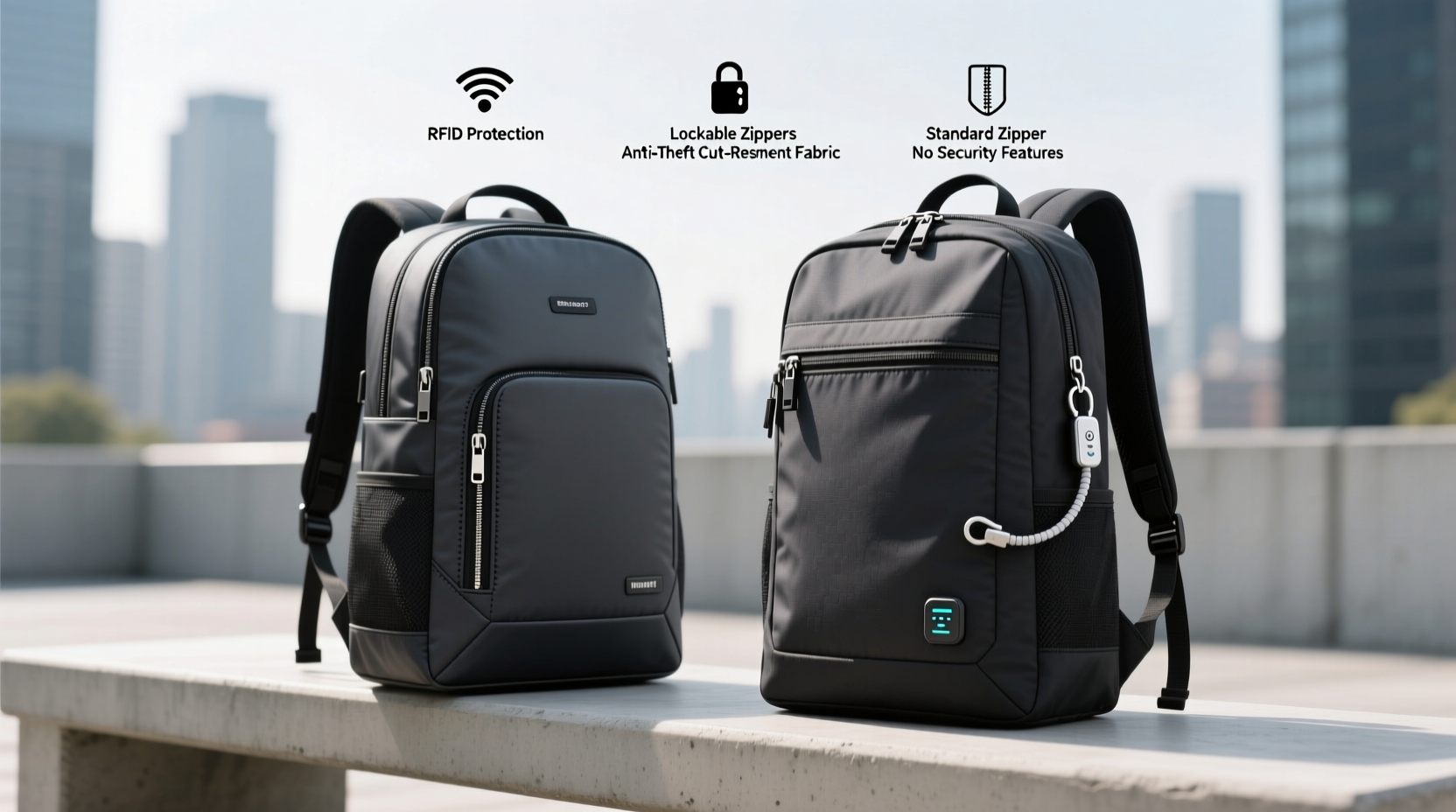
Unlike standard backpacks, anti-theft models are engineered with security as a core principle. They incorporate multiple layers of protection designed to deter or delay opportunistic thieves. Key features commonly found include:
- Lockable zippers: Zippers that can be secured with a small padlock or integrated locking mechanism.
- Slash-resistant materials: Reinforced fabrics (like Dyneema or steel mesh linings) that resist cutting attempts.
- RFID-blocking pockets: Shielded compartments that prevent digital skimming of credit cards and passports.
- Cut-proof straps: Straps embedded with metal wires or high-tensile fibers to prevent quick slashing.
- Hidden compartments: Discreet pockets placed against the back panel to store valuables out of sight.
- Alarm systems: Some premium models include motion-sensing alarms that trigger if someone tries to open the bag.
These features aren’t just marketing gimmicks—they respond to real risks. According to a 2023 report by the Global Travel Security Institute, over 60% of theft incidents involving tourists occurred in transit hubs or crowded city centers, where bags are easily accessible.
Performance Comparison: Anti-Theft vs Regular Backpacks
To assess whether the extra features are justified, it helps to compare both types across key criteria. The table below highlights typical differences based on real-world use cases and user feedback.
| Feature | Anti-Theft Backpack | Regular Backpack |
|---|---|---|
| Security Level | High – multiple deterrents built-in | Low – basic zipper access only |
| Durability | Often higher due to reinforced materials | Varies widely by brand and price |
| Weight | Slightly heavier due to added materials | Generally lighter |
| Price Range | $80–$250+ | $20–$150 |
| Access Speed | Slower – locks and hidden zips add friction | Fast and intuitive |
| Aesthetic Options | Limited – functional design focus | Extensive – fashion-forward styles available |
| Best For | Travelers, urban commuters, tech carriers | Students, casual users, short commutes |
The data shows a clear pattern: anti-theft backpacks prioritize function over form, while regular backpacks emphasize convenience and style. But functionality becomes critical when your laptop, wallet, or passport is at risk.
Real-World Scenario: A Commuter’s Close Call
Consider Sarah, a freelance designer who commutes daily through downtown Chicago. She used a regular canvas backpack for years—lightweight, stylish, and spacious. One morning during rush hour, she felt a tug at her side but assumed it was just crowding. Only later did she realize her phone was missing from an outer pocket.
After researching theft trends in her area, Sarah switched to an anti-theft model with lockable zippers and a hidden rear pocket. Three months later, she noticed someone fumbling near her bag on the train. This time, the thief gave up after failing to unzip the secured compartment. The backpack didn’t stop the attempt—but it stopped the success.
This illustrates a crucial point: anti-theft backpacks don’t make you invincible. They increase the effort required to steal from you, which often deters casual thieves looking for easy targets.
“Most theft is opportunistic. If you make it harder to access your gear, statistically, you’re less likely to become a victim.” — David Lin, Urban Security Consultant
When the Extra Features Are Worth It
Not every user needs an anti-theft backpack. The value depends heavily on lifestyle and environment. Here’s a checklist to help determine if upgrading makes sense for you:
- ✅ Do you frequently travel internationally or to high-theft areas?
- ✅ Do you carry expensive electronics (laptop, tablet, camera)?
- ✅ Do you commute via public transit in crowded cities?
- ✅ Have you or someone you know been pickpocketed before?
- ✅ Do you value peace of mind over minimal design?
If you answered “yes” to two or more, an anti-theft backpack is likely a worthwhile investment.
For frequent flyers, digital nomads, or anyone transporting sensitive documents or devices, the added protection pays off. Even the psychological benefit—reduced anxiety about your belongings—can justify the cost.
Potential Downsides and Trade-Offs
No product is perfect. Anti-theft backpacks come with limitations that some users find frustrating:
- Bulk and weight: Reinforced panels and locking mechanisms add ounces, which matters on long hikes or flights.
- Slower access: Unlocking zippers or opening hidden pockets takes time—annoying when grabbing a boarding pass or coffee.
- Over-engineering: Some models pack so many features they become complicated to use.
- Higher cost: Premium anti-theft models can cost triple that of a reliable regular backpack.
Additionally, not all “anti-theft” claims are equal. Some brands use the label loosely without independent testing. Always look for third-party certifications or verified customer reviews before trusting marketing terms.
Frequently Asked Questions
Can a regular backpack be made more secure?
Yes. Simple modifications like adding zipper pull locks, using slash-resistant strap covers, or placing valuables in inner pockets can improve security. However, these are partial fixes and don’t match the integrated protection of purpose-built anti-theft models.
Do anti-theft backpacks stop all theft?
No. They reduce risk but can’t eliminate it. A determined thief with tools may still succeed. Their main advantage is increasing the time and visibility required to access contents—making you a less appealing target.
Are RFID-blocking pockets necessary?
For most people, the risk of digital skimming is low. However, if you carry contactless credit cards or passports with RFID chips while traveling in high-risk zones (e.g., European metro stations), the feature adds meaningful protection.
Final Verdict: Is the Upgrade Justified?
The decision ultimately comes down to context. If you live in a low-crime area, walk short distances, and carry mostly non-valuable items, a well-made regular backpack will serve you just fine. But if you navigate crowded subways, travel frequently, or tote expensive gear, the enhanced security of an anti-theft backpack offers real, measurable benefits.
Think of it like insurance: you hope you never need it, but when you do, you’ll be glad it’s there. The extra cost isn’t just for materials—it’s for reduced vulnerability, increased confidence, and the quiet assurance that your essentials are harder to steal.
That said, choose wisely. Focus on reputable brands with proven designs, avoid gimmicks, and prioritize features that align with your actual needs. A $200 backpack with ten unused gadgets is no better than a $30 tote if it doesn’t fit your life.




 浙公网安备
33010002000092号
浙公网安备
33010002000092号 浙B2-20120091-4
Comments
No comments yet. Why don't you start the discussion?