
The Antimalware Service Executable, commonly known as MsMpEng.exe, is a core component of Windows Defender, Microsoft’s built-in antivirus solution. While it runs quietly in the background to protect your system from malware, many users report that it occasionally spikes CPU usage—sometimes reaching 70%, 90%, or even 100%. This can cause noticeable lag, slow boot times, and unresponsive applications. Understanding why this happens and how to address it is essential for maintaining system performance without compromising security.
What Is the Antimalware Service Executable?
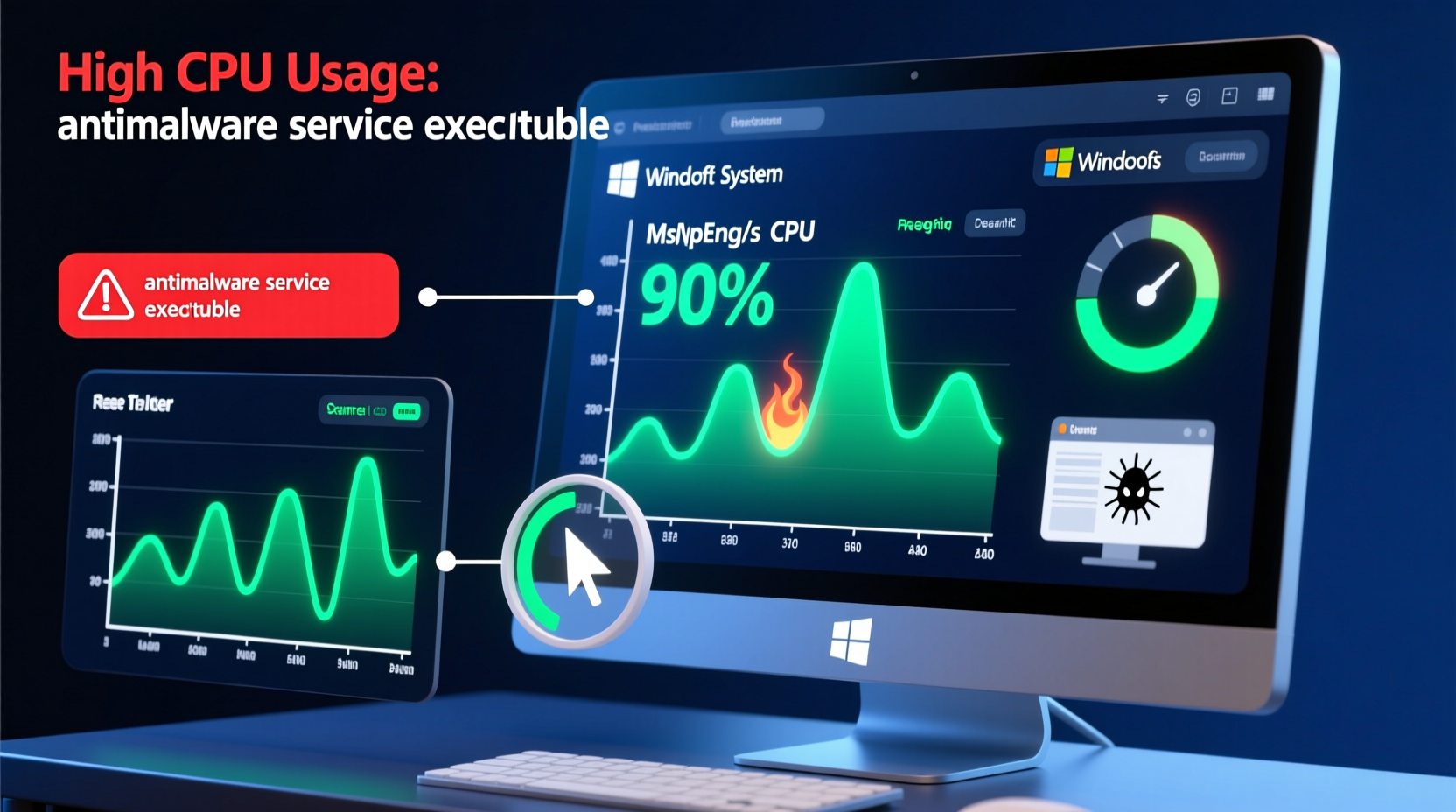
MsMpEng.exe is the process responsible for real-time protection, scheduled scans, and threat detection in Windows Security (formerly Windows Defender). It activates during full system scans, file downloads, software installations, and when new files are accessed. Because it constantly monitors system activity, it naturally consumes some system resources. However, excessive CPU use beyond typical background levels indicates an underlying issue that can—and should—be resolved.
“Windows Defender is designed to be lightweight, but misconfigurations or system conflicts can turn it into a resource hog.” — David Lin, Senior Systems Engineer at TechShield Solutions
Common Causes of High CPU Usage
Several factors can trigger abnormal CPU consumption by the Antimalware Service Executable. Identifying the root cause is the first step toward effective resolution.
- Scheduled Full Scans: Automatic deep scans, especially during peak usage hours, can max out CPU resources.
- Real-Time Protection Overload: Constant monitoring becomes intensive when handling large files or multiple simultaneous downloads.
- Conflicts with Third-Party Antivirus: Running another antivirus alongside Windows Defender can cause redundant scanning and process clashes.
- Corrupted Definition Files: Outdated or damaged virus definitions may force the engine to reprocess data repeatedly.
- System File Corruption: Damaged Windows system files can interfere with normal Defender operation.
- Persistent Malware: In rare cases, malware may disguise itself as or manipulate Defender processes to remain active.
C:\\Program Files\\Windows Defender, it could be malicious.
Step-by-Step Fixes to Reduce CPU Load
Below is a systematic approach to diagnosing and resolving high CPU usage caused by the Antimalware Service Executable. Follow these steps in order for optimal results.
- Restart Your Computer
Start with the simplest solution. A reboot clears temporary glitches and resets background processes. - Check for Active Scans
Open Windows Security (Win + I→ Update & Security → Windows Security), then click “Virus & threat protection.” If a scan is running, let it complete or pause it temporarily. - Exclude High-Use Folders
Add frequently accessed directories (e.g., project folders, game saves) to Windows Defender exclusions:
- Go to Virus & threat protection → Manage settings → Exclusions
- Add folder paths to prevent constant scanning. - Reschedule Scans to Off-Peak Hours
Navigate to Windows Security → Virus & threat protection → Manage settings → Scan options.
Change the scan schedule to run late at night or during idle periods. - Run a System File Checker (SFC) Scan
Open Command Prompt as Administrator and run:
sfc /scannow
This repairs corrupted system files that may be affecting Defender stability. - Update Virus Definitions Manually
In Windows Security, go to “Protection updates” and click “Check for updates.” Fresh definitions reduce processing inefficiencies. - Disable Real-Time Protection Temporarily (For Testing)
Turn off real-time protection briefly to see if CPU usage drops. If it does, the issue is Defender-related. Re-enable immediately after testing. - Clear the Windows Defender Cache
Stop the Antimalware Service via Services.msc, then delete contents of:
C:\\ProgramData\\Microsoft\\Windows Defender\\Scans\\History\\Service
Restart the service afterward.
Do’s and Don’ts When Managing Defender Performance
| Action | Do | Don’t |
|---|---|---|
| Excluding Folders | Exclude large media or development directories you trust. | Don’t exclude entire drives or system folders like C:\\Windows. |
| Third-Party Antivirus | Uninstall old AV tools completely before installing new ones. | Don’t run two real-time scanners simultaneously. |
| Scan Scheduling | Set scans during low-usage hours (e.g., 2 AM). | Don’t disable scheduled scans entirely—security risk increases. |
| Process Monitoring | Use Task Manager or Resource Monitor to track CPU trends. | Don’t end MsMpEng.exe via Task Manager—it restarts and may cause instability. |
Mini Case Study: Resolving Persistent CPU Spikes in a Small Office
A small design firm using Windows 10 workstations reported recurring slowdowns every Tuesday morning. Employees couldn't open large PSD files due to system lag. Investigation revealed that all machines ran full Windows Defender scans at 9:00 AM—coinciding with the start of the workday. The combination of active user sessions and deep scans overwhelmed CPU resources.
The IT consultant rescheduled scans to 2:00 AM and added Adobe project folders to Defender exclusions. Within 48 hours, CPU usage during work hours dropped from 85% average to under 25%. Productivity improved significantly, and no security incidents were reported in the following three months.
When to Consider Alternative Antivirus Software
If you consistently experience performance issues despite applying all fixes, switching to a third-party antivirus might be justified. Some lightweight alternatives include Bitdefender Free, Kaspersky Security Cloud Free, and Avast One—each offering strong protection with lower system impact.
Before uninstalling Windows Defender, ensure your replacement includes real-time scanning, automatic updates, and ransomware protection. Note: Windows automatically disables Defender when another antivirus is detected.
Frequently Asked Questions
Is it safe to disable the Antimalware Service Executable?
No, disabling MsMpEng.exe entirely leaves your system unprotected. Instead, optimize its behavior through exclusions and scheduling. Temporary pauses are acceptable during intensive tasks, but real-time protection should remain active whenever possible.
Can malware cause high CPU usage in MsMpEng.exe?
Yes. Some malware strains trigger continuous scanning by creating fake threats or rapidly generating infected files, forcing Defender into overdrive. If CPU usage remains high even after clean boots and scans, perform a boot-time scan using a rescue disk like Kaspersky Virus Removal Tool.
Why does Windows Defender scan even when I have another antivirus?
Windows may still run Defender in passive mode if the third-party tool fails to fully integrate or lacks certain protections. Ensure your antivirus is up to date and properly installed. You should see a message in Windows Security stating “Virus & threat protection managed by another antivirus.”
Final Checklist: Optimize Defender Without Sacrificing Security
- ✅ Schedule full scans during off-hours
- ✅ Exclude trusted, high-access folders from real-time scanning
- ✅ Keep virus definitions updated automatically
- ✅ Run SFC and DISM scans monthly to maintain system health
- ✅ Monitor CPU usage weekly using Task Manager or Performance Monitor
- ✅ Avoid running multiple antivirus programs simultaneously
- ✅ Verify legitimacy of MsMpEng.exe if behavior seems suspicious
Conclusion
High CPU usage by the Antimalware Service Executable is a common but solvable issue. By understanding its role, identifying triggers, and applying targeted optimizations, you can maintain robust security while preserving system performance. The goal isn’t to eliminate Windows Defender—but to make it work smarter, not harder. Implement these fixes today and reclaim your computing speed without opening the door to threats.




 浙公网安备
33010002000092号
浙公网安备
33010002000092号 浙B2-20120091-4
Comments
No comments yet. Why don't you start the discussion?