
In the battle for consumer attention, few rivalries are as iconic as Apple versus Samsung. Both tech giants invest billions in advertising every year, but their approaches couldn’t be more different. Apple’s minimalist storytelling contrasts sharply with Samsung’s feature-heavy, emotionally charged campaigns. But here’s the real question: Are Apple’s ads actually more effective, or do they simply dominate because of a larger marketing budget?
The answer isn’t as simple as comparing ad spend. Effectiveness hinges on brand perception, emotional resonance, clarity of message, and long-term loyalty—not just reach or frequency. Let’s dissect both companies’ strategies to uncover what truly drives results.
Ad Spend: The Budget Reality
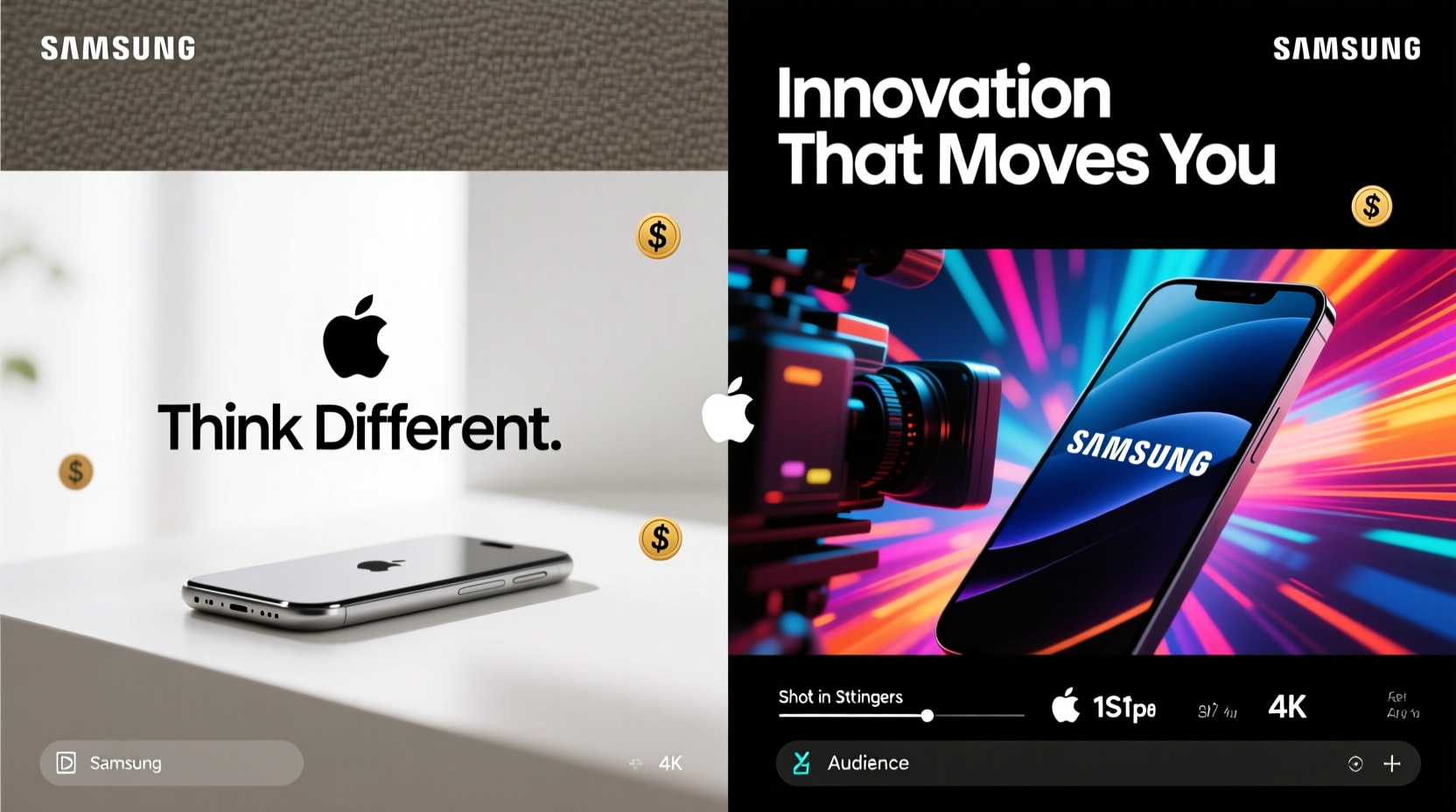
It’s no secret that Apple spends heavily on marketing. In 2023 alone, Apple allocated over $1.7 billion to global advertising—up from $1.4 billion the previous year. Samsung, while also a major spender, invested approximately $1.3 billion during the same period. On paper, Apple outspends Samsung by about 30%.
But spending more doesn’t automatically mean better results. What matters is how those dollars are used. Apple tends to focus its budget on high-impact, globally consistent campaigns, often centered around product launches. Samsung, by contrast, spreads its investment across regional markets, carrier partnerships, and digital performance ads.
| Company | 2023 Ad Spend (Est.) | Primary Channels | Key Campaign Focus |
|---|---|---|---|
| Apple | $1.7 billion | TV, YouTube, Outdoor, Retail | Emotion, Simplicity, Lifestyle |
| Samsung | $1.3 billion | Digital, Social, TV, Sponsorships | Features, Innovation, Competition |
While Apple’s budget gives it broader visibility, Samsung often achieves higher engagement rates in digital spaces due to targeted, interactive campaigns. So yes, Apple spends more—but not necessarily more wisely across all platforms.
Creative Strategy: Emotion vs. Specification
Apple’s advertising philosophy is rooted in minimalism and emotional storytelling. Their most memorable ads—like “Shot on iPhone” or “Get a Mac”—focus on human experiences, not technical specs. The message is clear: Apple products help you live better, create more, and connect deeper.
Samsung, meanwhile, emphasizes technological superiority. Ads frequently highlight camera megapixels, screen refresh rates, or foldable durability. They often directly compare devices to iPhones, using slogans like “Ingenius” or “The Future Unfolds.” This approach appeals to tech-savvy consumers who value hard data.
“Apple sells dreams. Samsung sells features. One speaks to the heart, the other to the mind.” — Lisa Tran, Consumer Tech Analyst at Gartner
This divergence reflects fundamental differences in brand identity. Apple positions itself as aspirational and intuitive; Samsung aims to be seen as innovative and accessible. Neither is inherently superior—but their effectiveness depends on audience and context.
Measuring Effectiveness: Beyond Sales Numbers
Effectiveness isn’t just about immediate sales spikes after a campaign. It’s about long-term brand equity, customer retention, and share of voice in cultural conversations.
- Brand Loyalty: Apple consistently reports iPhone retention rates above 90%, compared to Samsung’s Android ecosystem at around 75%. This suggests Apple’s messaging fosters deeper emotional attachment.
- Social Engagement: Samsung’s TikTok and Instagram campaigns often generate higher comment and share volumes, particularly among younger demographics.
- Purchase Intent: According to a 2023 Kantar survey, 68% of consumers said Apple ads made them “more likely to consider buying,” versus 54% for Samsung.
However, Samsung excels in markets where price sensitivity and customization matter—like Southeast Asia and Eastern Europe. There, detailed comparisons and aggressive promotions drive conversion more effectively than abstract storytelling.
Mini Case Study: The “Bounce” Campaign vs. “Underdogs”
In 2023, Samsung launched “Bounce,” a cinematic ad showcasing the Galaxy S23’s low-light video capabilities through a single continuous shot of a glowing basketball game at night. The ad went viral, earning over 50 million views and widespread praise for its technical execution.
That same year, Apple released “Underdogs,” featuring young creators using iPad and iPhone to produce music, art, and film in unconventional settings. No product shots. No voiceover. Just raw creativity.
Results?
- Samsung’s ad achieved higher initial engagement and won multiple advertising awards.
- Apple’s ad led to a measurable increase in searches for “iPad for artists” and was credited with boosting creative app downloads by 22%.
Both were successful—but in different ways. Samsung impressed with spectacle; Apple inspired with authenticity.
What Makes an Ad Truly Effective?
Real-world impact comes down to three core factors: clarity, consistency, and connection.
- Clarity: Does the ad communicate one clear benefit? Apple wins here—its messages are instantly understandable, even without sound.
- Consistency: Is the tone aligned across years of branding? Apple’s decade-long commitment to simplicity reinforces trust.
- Connection: Does it resonate emotionally? Apple’s focus on personal expression creates lasting memories.
Samsung often struggles with message overload—cramming too many features into a 30-second spot. While informative, this can dilute emotional impact. Apple, by focusing on a single idea per campaign, ensures memorability.
📋 **Checklist: Evaluating Your Own Brand’s Ad Effectiveness**- ✅ Does the ad convey one clear takeaway?
- ✅ Is the tone consistent with your overall brand voice?
- ✅ Does it evoke emotion or inspire action?
- ✅ Have you tested it across silent and sound-on environments?
- ✅ Can viewers recall the brand after watching, even if they forget details?
FAQ
Do Apple ads cost more to produce than Samsung’s?
Not necessarily. While Apple’s production quality is high, they often use simpler setups—real people, natural lighting, minimal effects. Samsung sometimes spends more on elaborate shoots, like zero-gravity stunts or celebrity endorsements. Production cost doesn’t always correlate with budget size.
Why does Apple avoid mentioning specs in ads?
Apple believes consumers buy based on how a product makes them feel, not on numbers. They save technical details for keynote events and spec sheets. Their ads are designed to build desire first, inform later.
Has Samsung ever outperformed Apple in ad effectiveness?
Yes—particularly in emerging markets and during promotional periods. For example, Samsung’s “Trade-In Challenge” campaign in India increased store visits by 40% and significantly boosted mid-tier phone sales, demonstrating strong local relevance.
Conclusion: It’s Not About Budget—It’s About Strategy
Apple’s ads aren’t more effective because they spend more—they’re more effective because they say less. Their disciplined focus on emotion, simplicity, and human-centered storytelling creates a powerful, enduring brand aura. Samsung, despite bold creativity and competitive pricing, often fails to match that cohesion.
That said, Samsung’s aggressive, feature-focused model works exceptionally well in specific contexts—especially when educating price-conscious buyers or launching cutting-edge hardware. In those cases, more information is an asset, not a flaw.
The lesson isn’t that one brand is better than the other. It’s that ad effectiveness stems from alignment: between message and audience, creativity and objective, emotion and function.




 浙公网安备
33010002000092号
浙公网安备
33010002000092号 浙B2-20120091-4
Comments
No comments yet. Why don't you start the discussion?