
In the fiercely competitive world of consumer electronics, Apple and Samsung stand as titans. Both companies generate billions in revenue annually and command immense brand loyalty. Yet, beneath their shared success lies a fundamental divergence in marketing philosophy and execution. While both aim to sell high-end smartphones, tablets, and wearables, their strategies diverge sharply in tone, positioning, messaging, and customer engagement. Understanding these differences reveals not just how they attract customers, but how they shape perceptions of innovation, quality, and identity.
Brand Positioning: Emotion vs. Specification
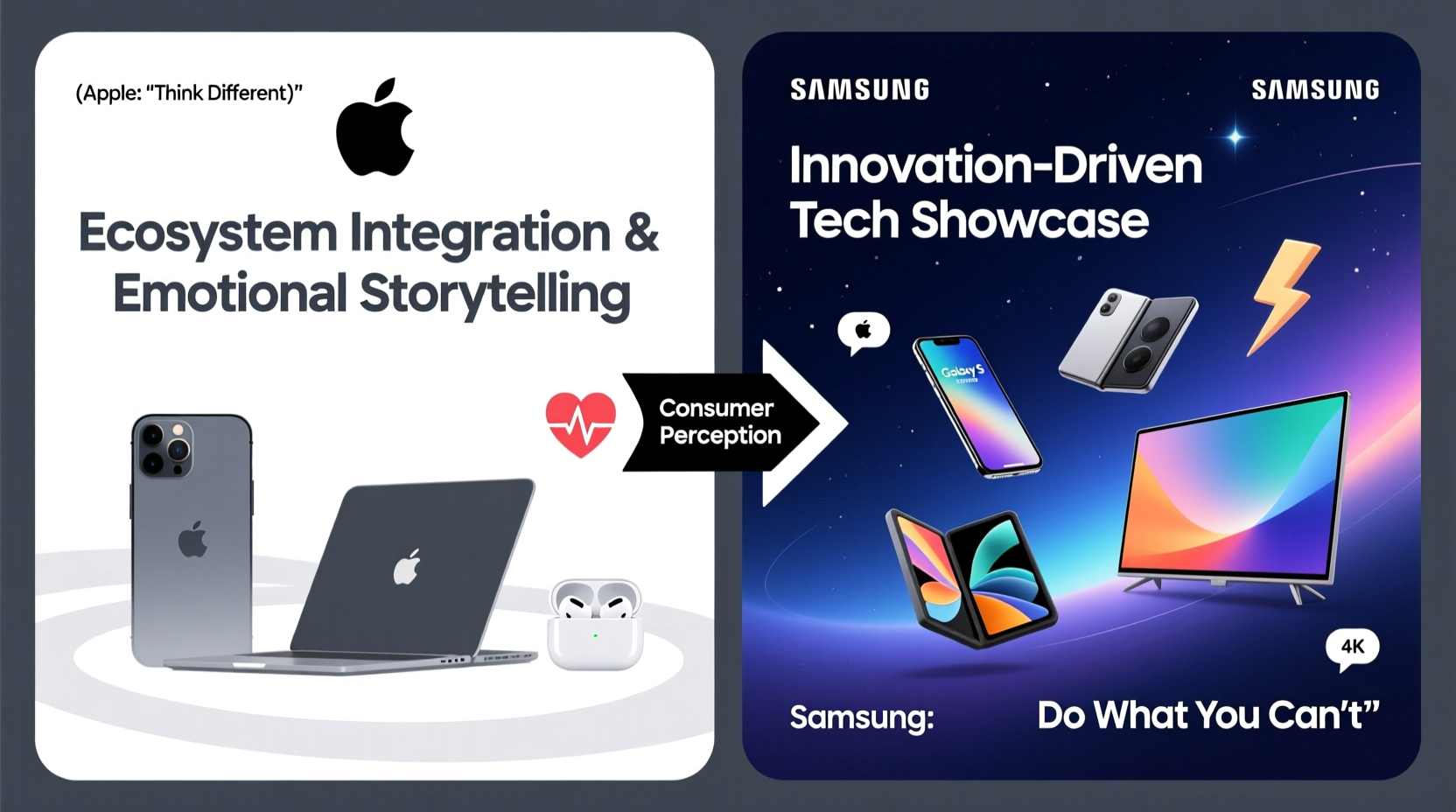
Apple’s marketing is rooted in emotional storytelling. From its iconic “Think Different” campaign to minimalist product launch events, Apple positions itself as a lifestyle brand rather than a tech company. It sells an experience—creativity, simplicity, elegance. The focus isn’t on megapixels or RAM; it’s on how the product fits into your life. A MacBook isn’t just a laptop; it’s a tool for artists, writers, and visionaries.
Samsung, by contrast, leans heavily into technical superiority. Its advertisements often highlight hardware advancements: brighter displays, faster processors, improved camera sensors. Samsung markets to consumers who want to know exactly what they’re getting under the hood. This data-driven approach appeals to tech-savvy buyers who compare specs before purchasing.
“Apple doesn’t sell products. They sell belonging to a tribe of innovators.” — Laura Kim, Brand Strategist at TechInsight Group
Product Launch Strategy: Secrecy vs. Saturation
Apple treats product launches like cultural events. Through tightly controlled leaks and cryptic invitations, it builds anticipation months in advance. The actual event—usually hosted by senior executives in a sleek auditorium—is live-streamed globally and covered by media outlets as breaking news. There’s no paid advertising beforehand; the reveal itself is the campaign.
Samsung takes the opposite route. It announces upcoming devices weeks or even months ahead of release, using teaser trailers, influencer partnerships, and pre-order incentives. The Galaxy Unpacked events are flashy, but they’re part of a broader, multi-channel rollout that includes digital ads, retail promotions, and carrier collaborations.
This difference reflects deeper philosophies: Apple believes in scarcity and exclusivity; Samsung embraces visibility and accessibility.
Launch Approach Comparison
| Aspect | Apple | Samsung |
|---|---|---|
| Announcement Timing | Last-minute (1–2 weeks prior) | Early (4–8 weeks prior) |
| Pre-Launch Hype | Organic buzz via rumors | Paid campaigns & teasers |
| Event Style | Minimalist, narrative-focused | High-energy, feature-heavy |
| Post-Launch Ads | Focused on use cases | Spec comparisons vs. competitors |
Advertising Tone: Minimalism vs. Aggression
Apple’s commercials are cinematic and understated. A single person dancing with AirPods. A photographer capturing cityscapes with an iPhone. No voiceovers. No price tags. Just music, motion, and mood. These ads don’t explain features—they evoke feelings.
Samsung frequently adopts a competitive edge. In past campaigns, it directly mocked Apple’s design choices—like the lack of a headphone jack or limited customization. One notable ad showed Galaxy users effortlessly multitasking while iPhone users struggled. This comparative messaging reinforces Samsung’s image as the more flexible, innovative alternative.
However, recent years have seen Samsung soften this tone, shifting toward aspirational storytelling similar to Apple’s—especially in flagship device campaigns. Still, the underlying message remains: Samsung offers more options, more power, and more personalization.
Mini Case Study: The Note 7 Crisis and Recovery Marketing
In 2016, Samsung faced one of the worst product failures in tech history: the Galaxy Note 7 battery fires. Sales halted, units were recalled, and trust evaporated overnight. Instead of retreating, Samsung launched a transparent recovery campaign. It released a detailed white paper explaining the root causes, introduced eight new safety tests, and rebuilt its messaging around reliability.
The comeback was methodical. Samsung didn’t just reintroduce the Note line—it rebranded it as a symbol of resilience. Subsequent ads emphasized durability testing, battery safety, and engineering rigor. By 2018, the Galaxy Note series had regained market confidence and became a benchmark for enterprise-grade mobile devices.
This crisis response highlights a core strength in Samsung’s marketing: adaptability grounded in technical credibility.
Customer Loyalty and Ecosystem Building
Apple excels at ecosystem lock-in. Once you own an iPhone, the seamless integration with AirPods, Apple Watch, iCloud, and Mac creates friction against switching brands. Marketing emphasizes continuity: “Your photos appear instantly,” “Answer calls from your wrist,” “Type across all devices.”
Samsung promotes cross-device functionality too, but with a different emphasis. Its ecosystem—spanning phones, tablets, watches, fridges, and TVs—focuses on interoperability within Android and third-party platforms. Samsung’s marketing often showcases productivity: split-screen multitasking, DeX desktop mode, SmartThings automation.
Where Apple says, “It just works,” Samsung says, “You can do more.”
Checklist: Key Marketing Takeaways from Apple and Samsung
- Define your brand personality: Are you aspirational (Apple) or functional (Samsung)?
- Control the narrative: Use secrecy to build hype or early access to drive pre-orders.
- Know your audience: Emotion drives some buyers; specs drive others.
- Leverage ecosystem synergy: Show how devices work better together.
- Respond transparently to crises: Turn setbacks into trust-building opportunities.
- Balance comparison wisely: Mocking competitors can backfire—use sparingly.
Global Reach and Market Adaptation
Samsung operates in more countries and price segments than Apple. It markets budget A-series phones in India and premium Z Fold models in Europe. This requires highly localized campaigns—different messages for different cultures, languages, and consumer behaviors.
Apple maintains a remarkably consistent global message. Whether in Tokyo, Paris, or São Paulo, its ads look and feel the same: clean, quiet, emotionally resonant. This uniformity strengthens brand recognition but limits regional customization.
Samsung’s flexibility allows it to dominate volume markets where price sensitivity is high. Apple dominates in premium segments where brand prestige matters most.
Expert Insight on Cultural Messaging
“In emerging markets, Samsung wins by offering choice. In mature markets, Apple wins by offering clarity.” — Rajiv Mehta, Global Marketing Director at BrandEdge Asia
FAQ
Why does Apple avoid comparing its products to competitors?
Apple believes comparisons cheapen the brand. Instead of saying “better than Samsung,” it focuses on user experience and design philosophy. This elevates the conversation beyond specs and fosters a sense of exclusivity.
Does Samsung’s aggressive advertising hurt its brand image?
At times, yes. Past campaigns mocking Apple drew criticism for being unprofessional. However, these tactics also resonated with consumers frustrated by Apple’s limitations. Samsung has since refined its tone, balancing competitiveness with sophistication.
Which company spends more on marketing?
Samsung consistently outspends Apple in absolute marketing dollars—often allocating $3–4 billion annually. Apple spends less (around $1–2 billion) but leverages massive media coverage of its events as free promotion. In effect, Apple gets more reach per dollar spent.
Conclusion: Choosing Your Competitive Edge
The rivalry between Apple and Samsung isn’t just about technology—it’s a clash of marketing ideologies. Apple crafts desire through mystery, minimalism, and emotional resonance. Samsung drives decisions through information, variety, and performance claims. Neither approach is inherently superior; each aligns with distinct consumer psychologies.
For marketers, the lesson is clear: strategy must reflect brand essence. If your strength is innovation and design, emulate Apple’s restraint. If your advantage lies in versatility and value, adopt Samsung’s clarity and scope. Authenticity—not imitation—is the key to lasting impact.




 浙公网安备
33010002000092号
浙公网安备
33010002000092号 浙B2-20120091-4
Comments
No comments yet. Why don't you start the discussion?