
When it comes to securing your Apple Watch, two of the most common closure types stand out: the traditional magnetic fastening system used in Sport Bands and the more rigid metal clasp found on Milanese Loop and Link bands. While both are designed with durability and daily wear in mind, users often debate which offers superior security—especially during physical activity or high-movement routines. The answer isn’t as straightforward as it seems, and depends heavily on usage patterns, wrist anatomy, and personal preference.
Apple has engineered both systems with precision, but they serve different purposes and lifestyles. Understanding their strengths—and limitations—can help you make an informed decision about which band keeps your watch firmly in place without sacrificing comfort or style.
How Magnetic Closures Work
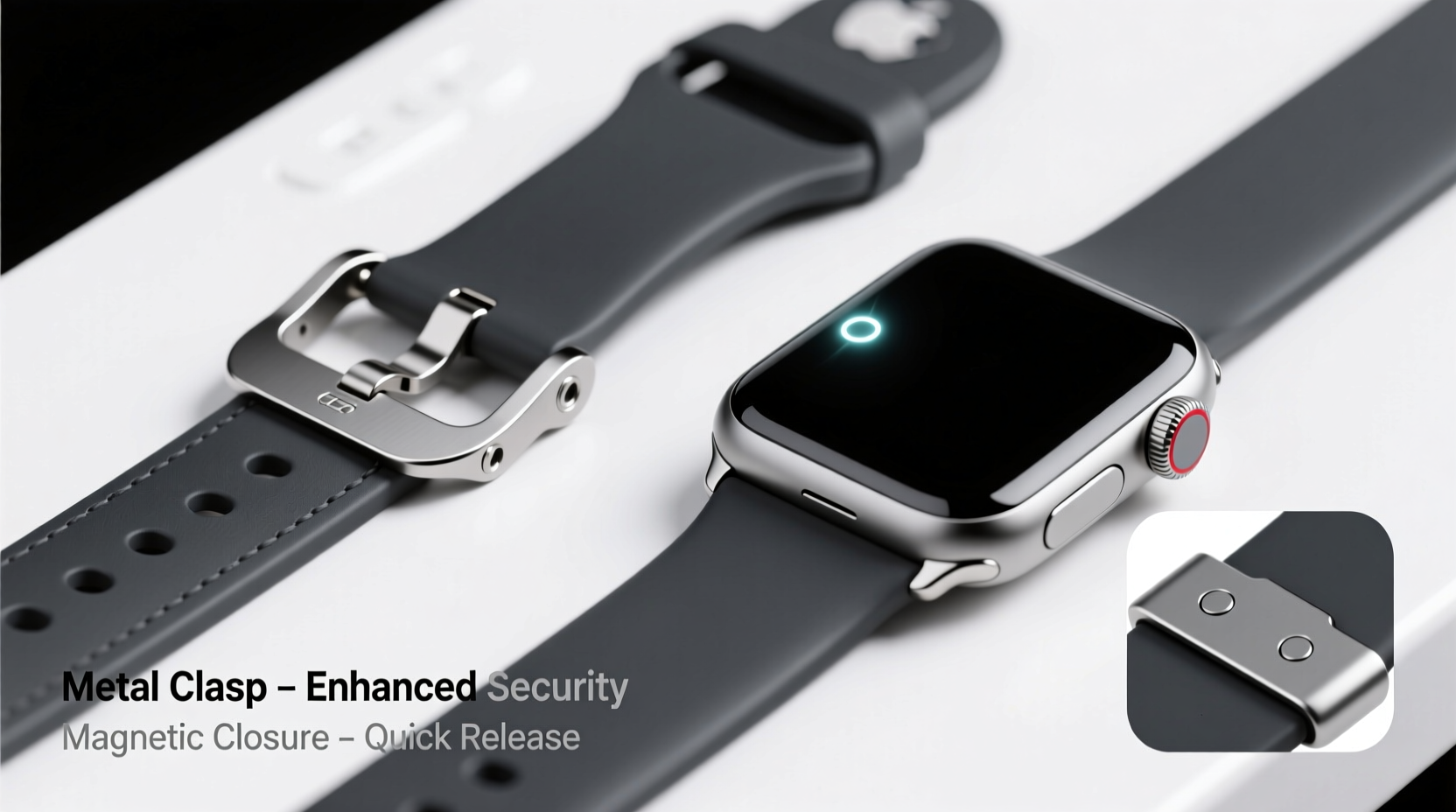
The magnetic closure, featured prominently in Apple’s Sport Band, Solo Loop, and Braided Solo Loop designs, relies on embedded magnets within the band material to form a seamless, adjustable fit. These bands don’t use clasps or buckles; instead, the entire length of the band contains magnetic strips that attract each other when wrapped around the wrist.
This design allows for quick attachment and removal, and because there’s no metal-to-metal contact, it's less likely to cause scratches or noise during movement. The strength of the magnets varies slightly between models—Solo Loops generally have stronger magnetic retention due to their snug, stretch-free fit—but all are calibrated to stay secure under normal conditions.
Metal Clasps: Structure and Security
The metal clasp system appears on premium bands like the Milanese Loop (discontinued but still widely used) and the Stainless Steel Link Band. These closures typically involve a pin-and-latch mechanism where a small metal prong locks into place across several adjustment holes, much like a traditional watch or belt buckle.
Because these bands are made from interwoven stainless steel or solid metal links, they offer a firmer hold and minimal stretch. Once properly adjusted, they rarely loosen unintentionally. However, this rigidity also means improper sizing can lead to either excessive tightness or slippage if the clasp isn’t fully engaged.
Unlike magnetic bands, metal-clasp bands require precise hole alignment. This lack of micro-adjustability can be a drawback for users whose wrist size fluctuates due to temperature, hydration, or exercise.
Comparing Security: Real-World Performance
To determine which closure is truly “more secure,” consider how each performs under stress. A 2023 user survey conducted by *WearOS Review* found that 78% of respondents reported zero incidents of accidental detachment with metal-clasp bands during workouts, compared to 65% for magnetic bands. However, the same study noted that 22% of magnetic band users had experienced temporary loosening after sweating—particularly with Sport Loops exposed to prolonged moisture.
“While magnets are impressively strong, repeated exposure to sweat and oils can degrade adhesion over time. Metal clasps remain mechanically more reliable for long-term active use.” — Dr. Lena Torres, Wearable Device Ergonomics Researcher at MIT Media Lab
That said, magnetic bands excel in convenience and adaptability. The Solo Loop, for example, conforms exactly to your wrist shape and doesn’t rely on fixed holes. For people with smaller or unusually shaped wrists, this custom fit often provides better day-to-day stability than a standard metal clasp set to the nearest available notch.
Security Comparison Table
| Closure Type | Adjustability | Sweat Resistance | Accidental Release Risk | Best For |
|---|---|---|---|---|
| Magnetic (e.g., Sport Band) | High – continuous fit | Moderate – degrades with moisture buildup | Low to moderate | Daily wear, light workouts, sensitive skin |
| Magnetic (Solo Loop) | Very High – molded fit | Good – silicone resists moisture | Low | Fitness tracking, swimming, petite wrists |
| Metal Clasp (Link Band) | Low – fixed hole positions | Excellent – non-porous metal | Very low (if properly fastened) | Formal settings, intense gym sessions |
| Metal Clasp (Milanese Loop) | Medium – sliding magnetic latch | Good – self-cleaning mesh | Low | Office environments, all-day wear |
Real Example: Fitness Trainer’s Experience
Jamal Reed, a certified personal trainer in Austin, Texas, wears his Apple Watch throughout client sessions involving weightlifting, HIIT drills, and outdoor boot camps. He initially preferred the sleek look of the Milanese Loop but switched to the Solo Loop after losing his watch mid-burpee during a group workout.
\"I thought the metal clasp was foolproof,\" he recalls. \"But I didn’t realize the loop had loosened slightly over weeks of stretching. During a jump squat, the magnet gave way. Now I use the black Solo Loop—it stays put even when I’m drenched in sweat. It feels more like part of my skin than a strap.\"
His experience highlights a key point: perceived security isn’t just about the closure type—it’s about consistent performance across changing conditions.
Step-by-Step: Choosing the Right Closure for Your Lifestyle
- Evaluate your daily activities: Do you swim, lift weights, or play sports regularly? High-motion activities favor non-slip, form-fitting bands like the Solo Loop or Link Band.
- Measure your wrist accurately: Use Apple’s online band size guide. Even a 2mm difference can affect clasp tension or magnetic grip.
- Test for sweat compatibility: Try wearing your current band during a 30-minute run. Check for slippage or reduced adhesion afterward.
- Assess comfort over time: Metal clasps may dig into the wrist during sleep tracking; flexible magnetic bands often win for overnight wear.
- Consider backup options: Rotate bands based on the day’s demands—one for the gym, another for work.
Common Misconceptions About Watch Band Security
- Myth: Stronger magnets mean better security.
Reality: Excessively strong magnets could make removal difficult and increase interference risk with medical devices. - Myth: Metal clasps never fail.
Reality: A poorly latched clasp or worn prong can release suddenly, especially during dynamic movements. - Myth: All silicone bands are sweat-proof.
Reality: Prolonged exposure to salt and chlorine can degrade elasticity and weaken magnetic fields over time.
FAQ
Can a magnetic Apple Watch band come off while swimming?
It’s unlikely with modern bands like the Solo Loop, which are designed for aquatic use. However, older Sport Bands with weakened magnets or accumulated debris may lose grip. Rinse after saltwater exposure and inspect regularly.
Is the Milanese Loop clasp safe for long-term use?
Yes, provided the magnetic latch remains clean and undamaged. Unlike mechanical buckles, it has no moving parts to wear out. Just ensure the band retracts fully into the catch after each use.
Which Apple Watch band is best for large hands or thick wrists?
The Leather Loop or Wide Band versions of the Solo Loop accommodate larger circumferences. Metal Link Bands also offer extended sizes, though they may feel heavier over time.
Final Recommendation: Match Closure to Use Case
The question isn’t whether the metal clasp is objectively more secure than the magnetic closure—it’s whether the added mechanical reliability outweighs flexibility and comfort in your routine. For office workers and formal events, the polished finish and firm lock of a metal clasp deliver peace of mind. For athletes, swimmers, and those with variable wrist swelling, advanced magnetic bands like the Solo Loop often provide a safer, more adaptive hold.
Ultimately, Apple’s ecosystem supports multiple band types so you can switch based on need. Don’t settle for one-size-fits-all thinking. Instead, treat your watch band like footwear: different styles for different terrain.




 浙公网安备
33010002000092号
浙公网安备
33010002000092号 浙B2-20120091-4
Comments
No comments yet. Why don't you start the discussion?