
For serious hikers, a reliable wrist-worn companion is more than a convenience—it’s a lifeline. Whether navigating remote trails, monitoring elevation changes, or enduring extreme weather, your smartwatch must be as tough as the terrain. Two leading contenders dominate this space: the Apple Watch Ultra and the Garmin Fenix series. Both promise rugged construction and advanced outdoor features, but they serve different philosophies of wilderness engagement. This in-depth analysis compares their durability, navigation capabilities, battery performance, and real-world utility to help hikers make an informed decision.
Durability and Build Quality: Surviving the Elements
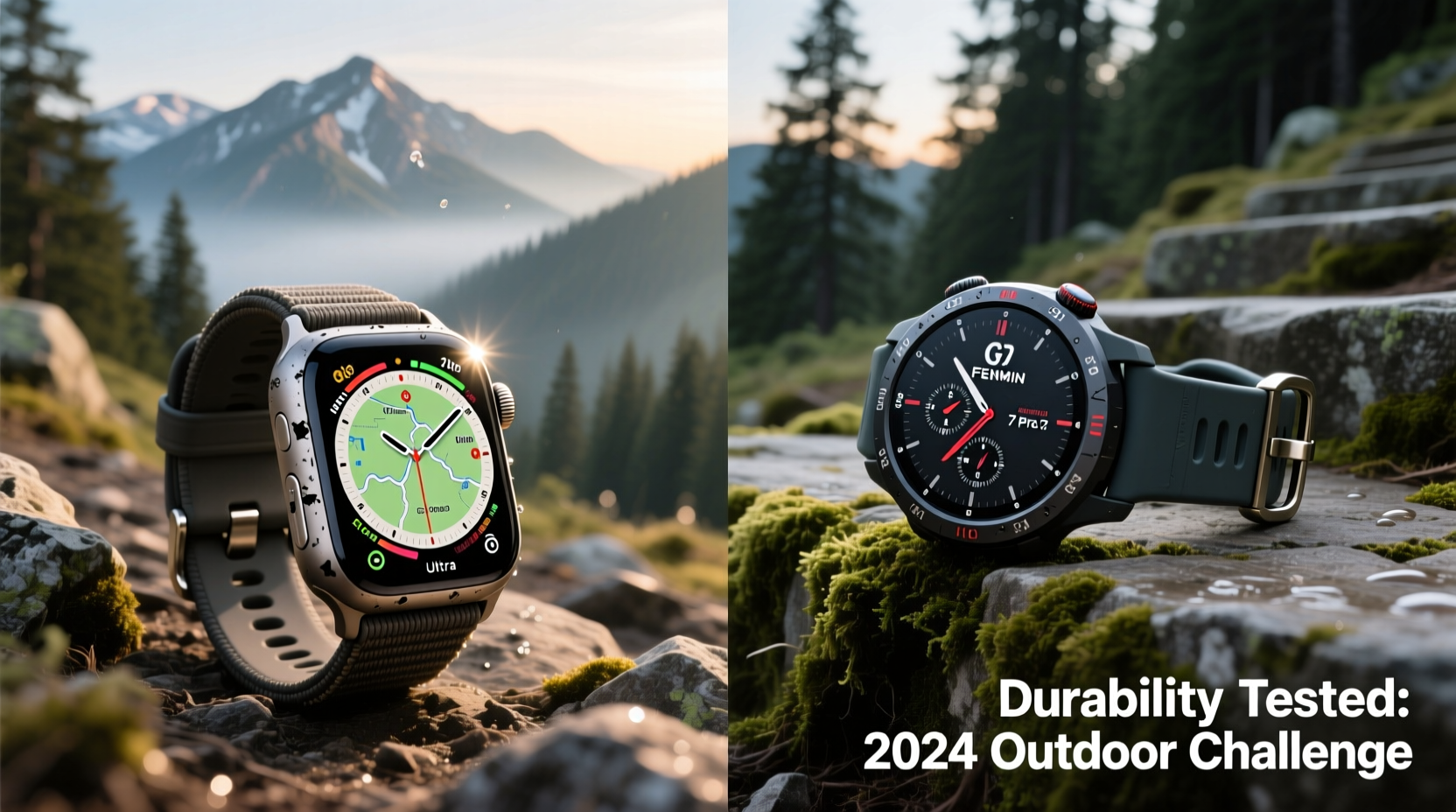
Durability isn’t just about surviving a fall—it’s about withstanding prolonged exposure to water, dust, shock, and temperature extremes. Both the Apple Watch Ultra and Garmin Fenix are engineered for adventure, but their materials and certifications reveal key differences.
The Apple Watch Ultra features a titanium case, sapphire crystal front, and a WR50 water resistance rating (suitable for shallow-water activities). It meets MIL-STD-810H standards for thermal, shock, and vibration resistance. Its flat sides and exposed Digital Crown can collect dirt during extended bushwhacking, though its overall design resists scratches and impacts better than previous Apple models.
Garmin Fenix watches—particularly the Fenix 7X and newer Epix models—use fiber-reinforced polymer chassis with titanium or stainless steel bezels. They also feature sapphire glass and exceed IP68 dust/water resistance ratings. Many Fenix models carry a military-grade durability certification similar to Apple’s, but with longer field validation across diverse climates. Their button-based interface avoids screen wear from gloves or debris, a subtle but critical advantage on multi-day treks.
Battery Life: The Deciding Factor Off the Grid
No feature matters more on backcountry trips than battery longevity. Once you’re miles from a power source, every hour counts.
The Apple Watch Ultra offers up to 36 hours in normal mode and extends to 60 hours in Power Saving Mode with GPS active. While impressive for an Apple device, this still requires careful planning on multi-day hikes. Fast charging helps, but access to power is rarely guaranteed in the wild.
In contrast, Garmin Fenix watches deliver 24 to 48 days in smartwatch mode and 40–70 hours in full GPS mode, depending on model and settings. With Expedition Mode, some Fenix units can stretch to over 100 days by logging position periodically without continuous tracking. For thru-hikers or those venturing into truly remote zones, this endurance is unmatched.
“Battery anxiety should never dictate your route. If you're going deep off-grid, Garmin’s efficiency gives you peace of mind Apple can't match.” — David Lang, Wilderness Guide and Outdoor Tech Analyst
Navigation and Trail Intelligence
Precise navigation separates a capable hiking tool from a glorified step counter. Both devices support GPS, GLONASS, Galileo, and other satellite systems for accurate positioning. However, how they present and use that data diverges significantly.
The Apple Watch Ultra integrates tightly with iPhone mapping apps like Apple Maps and third-party tools such as Gaia GPS. It displays turn-by-turn directions when paired with a phone, but offline functionality is limited unless preloaded via compatible apps. Topographic maps are available through subscription services, but the interface relies heavily on touch input—which fails with gloves or wet fingers.
Garmin Fenix excels here. It supports full-color TOPO maps stored directly on-device, including contour lines, trail markers, and points of interest. The five-button layout allows blind operation while wearing gloves. Features like TracBack (reverse-route guidance), route re-routing, and storm alerts function independently of any phone. Additionally, Garmin’s ClimbPro automatically displays upcoming elevation profiles during ascents—a boon for energy management.
| Feature | Apple Watch Ultra | Garmin Fenix |
|---|---|---|
| Battery (GPS Mode) | Up to 60 hours | 40–70+ hours |
| Offline Maps | Limited (app-dependent) | Full-color TOPO maps built-in |
| User Interface | Touchscreen + crown | Physical buttons |
| Durability Rating | MIL-STD-810H | MIL-STD-810H + field-tested |
| Water Resistance | WR50 (10m for 30 min) | 10 ATM (100m) |
| Specialized Hiking Tools | Altimeter, compass, depth sensor | ClimbPro, Slope, Sun/Moon Data, Jumpmaster |
Real-World Use: A Case Study from the Sierra High Route
Consider Sarah M., an experienced backpacker attempting the 200-mile Sierra High Route—a rugged, unmarked path traversing alpine passes above 12,000 feet. She carried both an Apple Watch Ultra and a Garmin Fenix 7X for testing purposes.
On day three, her phone died due to cold temperatures. The Apple Watch lost most navigational functions without it. While she could view basic GPS coordinates, she couldn’t reroute around a snowfield blocking her planned pass. In contrast, the Fenix displayed downloadable USGS maps, allowed manual waypoint adjustments, and calculated ascent gradients using ClimbPro. Using only the Fenix, she safely detoured over an alternate ridge.
By day six, the Apple Watch entered low-power mode and disabled heart rate monitoring. The Fenix continued full tracking at 70% battery. “I trusted the Garmin,” she said. “It didn’t care if my phone was alive. It knew where I was, where I’d been, and what lay ahead.”
Health and Safety Features: Beyond the Trail
Safety is paramount when hiking alone or in isolated areas. Both watches include emergency SOS, fall detection, and incident sharing—but implementation varies.
The Apple Watch Ultra uses cellular connectivity (when enabled) to contact emergency services directly, even without an iPhone nearby. It sends location data and alerts designated contacts automatically after a detected fall. This integration with Apple’s ecosystem provides fast response times in areas with LTE coverage.
Garmin offers the same via its Garmin Satellite Communicator add-on (sold separately), which pairs with inReach devices. Without it, SOS depends on a paired smartphone. However, Garmin’s incident detection runs longer and adapts to activity type—less prone to false triggers during scrambling or rough terrain.
Both track blood oxygen, heart rate, and sleep quality. The Fenix adds Body Battery energy monitoring and hydration tracking—features designed to prevent overexertion before symptoms arise. For long expeditions, predictive fatigue metrics offer tangible benefits.
Step-by-Step: Choosing the Right Watch for Your Hiking Style
Follow this decision framework to determine which device aligns with your hiking habits:
- Assess trip duration: If you typically hike for one or two days with regular cell access, the Apple Watch Ultra may suffice. For week-long treks or off-grid routes, prioritize Garmin’s battery life.
- Evaluate navigation needs: Do you rely on marked trails and occasional check-ins? Apple works. Are you route-finding across unmapped terrain? Choose Garmin.
- Test interface usability: Try operating both watches with gloves. Most users find physical buttons more reliable than touchscreens in adverse conditions.
- Review ecosystem dependence: Apple Watch shines when paired with an iPhone. If you prefer independence from smartphones, Garmin wins.
- Consider future use: Will you also climb, ski, or dive? Both support multisport modes, but Garmin offers deeper customization for niche activities.
Checklist: Must-Have Features for Serious Hikers
- At least 40 hours of GPS battery life
- Offline topographic maps with contour lines
- Barometric altimeter and 3-axis compass
- Emergency SOS with location sharing
- Dust, water, and shock resistance (MIL-STD or equivalent)
- Physical controls operable with gloves
- Route planning and backtracking capability
- Real-time weather and sunrise/sunset data
FAQ
Can the Apple Watch Ultra replace a Garmin for backpacking?
Only for short trips with reliable phone pairing. For extended, remote hikes requiring self-sufficiency, Garmin remains superior due to battery life, offline intelligence, and rugged interface design.
Is the Apple Watch Ultra durable enough for serious hiking?
Yes—it’s the toughest Apple has made. But durability isn’t just about toughness; it’s about sustained functionality. The Ultra struggles with prolonged GPS use and glove-incompatible touch controls, limiting its effectiveness on serious expeditions.
Does Garmin integrate well with iPhones?
Absolutely. The Garmin Connect app runs smoothly on iOS, syncing health data, messages, and notifications. You don’t need an Android phone to get full value from a Fenix watch.
Final Verdict: Purpose Defines Performance
The Apple Watch Ultra represents a major leap for Apple into rugged outdoor tech. It’s stylish, responsive, and deeply integrated with the iOS ecosystem. Urban adventurers and weekend hikers will appreciate its sleek design, bright display, and seamless fitness tracking.
But for serious hikers—those tackling high-altitude ridgelines, solo traverses, or weeks-long journeys—the Garmin Fenix remains the gold standard. Its combination of battery resilience, offline navigation, physical controls, and proven reliability under duress makes it indispensable. When survival hinges on knowing your exact location and remaining energy reserves, the Fenix doesn’t just perform—it endures.
Choose the Apple Watch Ultra if you want a premium smartwatch that handles moderate trails. Choose the Garmin Fenix if your watch must survive when everything else fails.




 浙公网安备
33010002000092号
浙公网安备
33010002000092号 浙B2-20120091-4
Comments
No comments yet. Why don't you start the discussion?