
In recent months, a striking visual transformation has taken over social media feeds, tech unboxings, and even public transit: the rise of 3D clown headphone cases. Once dominated by sleek black, matte gray, or minimalist white accessories, headphone fashion now features exaggerated expressions, cartoonish grins, and bold, surreal textures. This sudden aesthetic shift raises a pressing question — is this just another internet-driven fad, or has the era of solid-color cases truly come to an end?
The answer isn't binary. What we're witnessing is not simply a trend cycle but a cultural redefinition of personal tech as self-expression. The clown case phenomenon reflects deeper shifts in youth culture, digital identity, and consumer psychology. To understand whether these designs are here to stay or destined for obsolescence, we need to examine their origins, appeal, practicality, and long-term viability.
The Rise of the 3D Clown Aesthetic
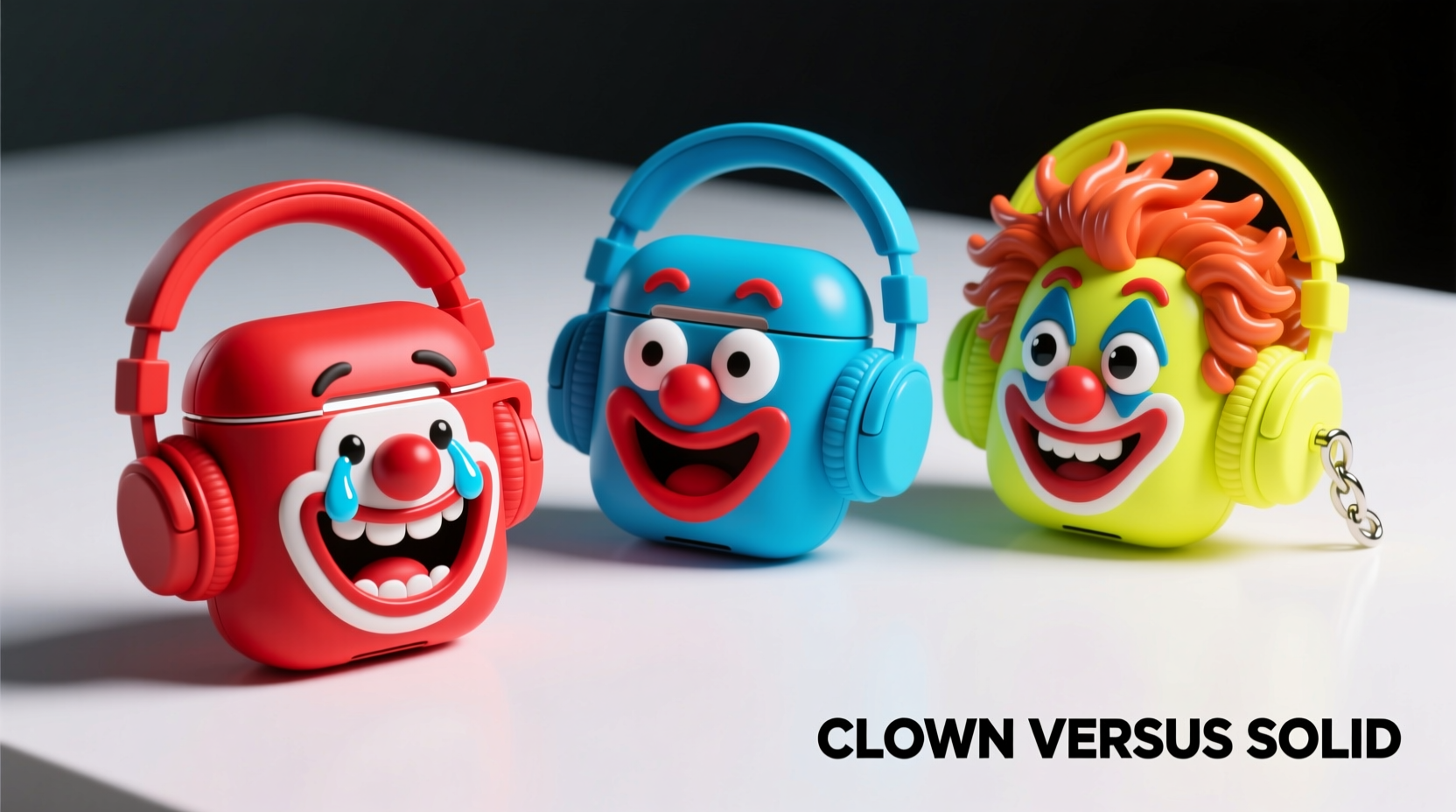
The first sightings of 3D clown headphone cases emerged on TikTok and Instagram around late 2022. Initially shared as ironic accessories among meme-centric communities, they quickly gained traction beyond novelty accounts. By mid-2023, major e-commerce platforms like AliExpress, Amazon, and Etsy began listing hundreds of variations — from pastel clowns with teardrop eyes to grotesque, horror-inspired versions with glowing LED teeth.
What started as absurdist humor evolved into a symbol of anti-minimalism. In a world saturated with uniform product design — think AirPods, Galaxy Buds, and Sony WH-1000XM5s — the clown case offered rebellion. It rejected neutrality, embraced chaos, and turned functional objects into conversation pieces.
“Design no longer serves just utility. It’s becoming emotional armor for Gen Z.” — Dr. Lena Torres, Cultural Anthropologist at NYU
Why Solid Colors Are Losing Ground
Solid-colored cases once ruled the market because they aligned with dominant design philosophies: simplicity, elegance, timelessness. But those values are being challenged. Younger consumers increasingly prioritize individuality over conformity, authenticity over polish, and irony over prestige.
A 2023 survey by YouthBeat found that 68% of respondents aged 16–25 prefer “visually loud” accessories if they reflect their personality — even if they’re seen as “tacky” by older generations. Meanwhile, only 29% said they cared about matching their tech to their outfit or maintaining a “professional” look.
This shift explains why brands like Urbanista and Skullcandy have begun releasing limited-edition playful cases, while Apple remains steadfast in its minimalist approach. The market is splitting: one side values discretion, the other craves disruption.
Fad or Future? Evaluating Longevity
To determine whether 3D clown cases are sustainable beyond viral fame, consider three factors: durability, resale value, and brand integration.
Durability is mixed. Many clown cases are made from soft TPU or silicone with glued-on 3D elements. While flexible, these protrusions (noses, hats, tears) are prone to snapping off after repeated use. In contrast, solid-color hard-shell cases often last years under similar conditions.
Resale value tells another story. Secondhand listings show that standard black cases rarely command premiums. However, rare or artist-designed clown variants — especially those with glow-in-the-dark features or custom paint jobs — have sold for up to 3x retail on collector forums.
Finally, brand adoption remains limited. No major audio manufacturer has officially endorsed or released clown-style cases. This suggests the trend is still grassroots, relying on third-party vendors rather than institutional support.
| Critera | 3D Clown Cases | Solid Color Cases |
|---|---|---|
| Visual Impact | High — instantly noticeable | Low to moderate |
| Durability | Moderate — fragile attachments | High — consistent materials |
| Customization Potential | Very high — endless designs | Low — limited to color swaps |
| Brand Support | None — third-party only | Full — OEM availability |
| Lifespan (Average) | 6–12 months | 2+ years |
Real-World Example: The Case of Maya Chen
Maya Chen, a 21-year-old college student and digital artist, bought her first clown case in early 2023 after seeing one on a friend’s TikTok video. “It looked ridiculous,” she said, “but so was pretending I didn’t care how my stuff looked.”
She now owns seven different cases, rotating them weekly based on mood. One features a crying clown with glitter tears; another has a disco-themed face with spinning eyes. “People stop me all the time,” she noted. “Some laugh, some ask where to buy one. It’s become part of my identity.”
But when her favorite case broke during finals week — the nose snapped off after being dropped — she reverted temporarily to a plain black shell. “I missed the attention,” she admitted. “But honestly, the solid one lasted longer and survived my backpack chaos.”
Her experience illustrates the tension between expression and endurance — a microcosm of the broader debate.
Step-by-Step Guide: Choosing Your Next Headphone Case
- Assess your usage: Do you carry headphones daily in a bag, or keep them on a desk? High-movement users benefit from durable, low-profile cases.
- Define your intent: Is the case purely functional, or do you want it to express something about you?
- Check material quality: Look for reinforced seams and UV-resistant coatings, especially for 3D models.
- Consider reversibility: Opt for magnetic or snap-on designs that allow switching between flashy and subtle looks.
- Test fit: Ensure compatibility with charging ports and controls — many clown cases interfere with lid closure.
Expert Insight: Design Meets Identity
“When tech becomes invisible, people decorate it to reclaim visibility. The clown case isn’t random — it’s resistance to being reduced to data points.” — Marcus Reed, Tech Culture Critic, Wired Magazine
Reed argues that in an age of algorithmic homogenization, exaggerated accessories serve as acts of digital defiance. The clown, historically a figure who speaks truth through absurdity, becomes a metaphor for speaking back to sterile design norms.
Frequently Asked Questions
Are 3D clown cases compatible with all headphone models?
No. Most are designed specifically for popular models like AirPods Pro or Galaxy Buds. Always verify model compatibility before purchasing, as dimensions vary significantly between brands and generations.
Do solid color cases still offer protection?
Yes, and often better. Solid cases typically provide more uniform coverage, shock absorption, and structural integrity. They remain the top choice for users prioritizing safety over style.
Can I customize my own clown case?
Yes. DIY kits using epoxy putty, acrylic paints, and silicone molds are available online. Some creators sell blank shells specifically for customization, allowing full creative control.
Final Verdict: Fad With Lasting Influence
3D clown headphone cases are unlikely to dominate the market permanently. Their fragility, niche appeal, and lack of official backing suggest they will peak and recede like other viral aesthetics — think fidget spinners or holographic phone skins.
However, their cultural impact is already evident. They’ve forced a reevaluation of what tech accessories can be: not just protective shells, but extensions of identity. Even if clown motifs fade, the demand for expressive, personalized tech wearables is here to stay.
Solid colors aren’t “out” — they’ve simply been dethroned from monopoly status. The future belongs to choice: the option to go muted or maximalist, subtle or surreal, depending on the day, the mood, the message.




 浙公网安备
33010002000092号
浙公网安备
33010002000092号 浙B2-20120091-4
Comments
No comments yet. Why don't you start the discussion?