
Decorating a yard tree with animated light projections has become a popular alternative to traditional string lights—offering dynamic visuals like falling snow, swirling galaxies, or dancing flames with minimal physical clutter. But when that tree stands in full sun for six or more hours daily, the effectiveness of those projections comes into question. Sunlight washes out ambient lighting, and the contrast needed for vivid projection is dramatically reduced. So, is the effort of setup justified under such conditions? The answer depends on timing, technology, placement, and expectations.
Understanding How Light Projections Work
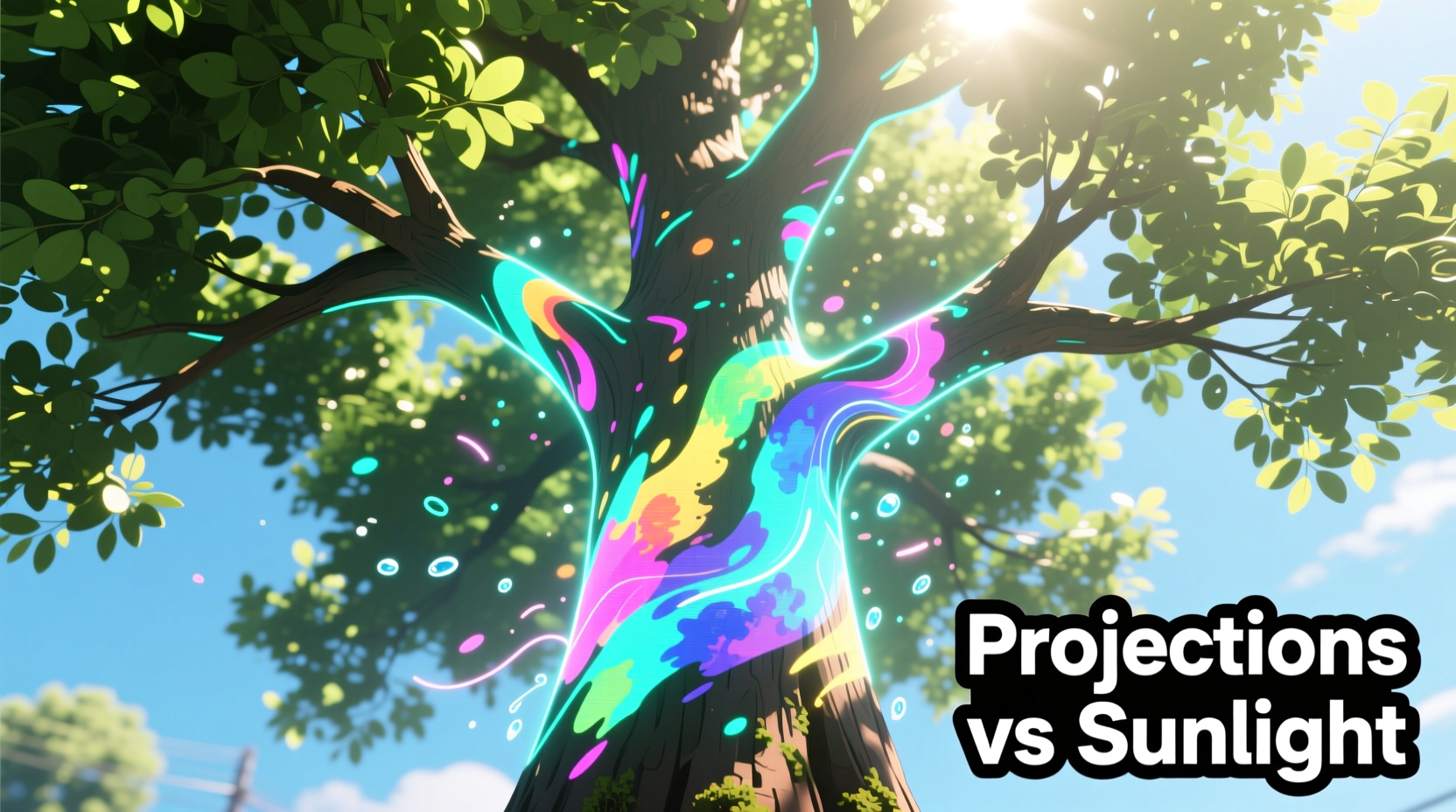
Animated light projectors function by emitting focused beams of colored LED light onto surfaces—typically walls, fences, or trees—creating moving patterns through internal rotating lenses or digital image modulation. Unlike static string lights, these devices generate immersive effects without requiring extensive wiring or ladder work. However, their performance hinges on ambient light levels. The human eye perceives projected images based on contrast: the darker the background, the clearer the image.
In daylight, especially direct midday or afternoon sun, the amount of visible light hitting the tree’s surface can exceed 10,000 lux—far beyond what consumer-grade projectors (usually 500–2,000 lumens) can compete with. Even at dusk, residual brightness from reflected sunlight may dull colors and blur motion details. This means that while a projector might appear stunning at 9 PM in a shaded backyard, the same unit could be nearly invisible at 6:30 PM on a west-facing lawn.
“Projection visibility isn’t just about brightness—it’s about contrast ratio. If your target surface reflects too much ambient light, even high-lumen projectors struggle.” — Dr. Lena Torres, Lighting Design Specialist, Institute of Architectural Illumination
Key Challenges of Using Projections on Sunlit Trees
A tree exposed to prolonged sunlight introduces several technical hurdles:
- Surface Reflectivity: Leaves and bark absorb and scatter light unevenly. A sun-baked canopy becomes a poor screen due to inconsistent texture and color variation.
- Daylight Persistence: Early evening sunlight, particularly in summer months, delays optimal viewing times until after 8:30 PM or later, reducing usable display hours.
- Heat Build-Up: Projectors placed outdoors must withstand temperature fluctuations. Mounting near a heat-retaining trunk or stone base can shorten device lifespan.
- Wind Interference: Tree movement causes projected images to waver or distort, breaking immersion—especially problematic with detailed animations like stars or water ripples.
These factors compound one another. For example, a slight breeze causes leaves to flutter, scattering already weak projection beams across shifting surfaces. The result is often a faint, flickering glow rather than a crisp animation.
When It Might Still Be Worth the Effort
Despite the challenges, there are scenarios where animated projections on sun-exposed trees deliver value:
Seasonal Events with Extended Darkness
During winter holidays, daylight hours shrink significantly. In northern latitudes, darkness falls by 5 PM, allowing projections to activate earlier. If your tree receives full sun in summer but casts long shadows in winter due to lower sun angles, it may actually spend evenings in shade—making it an ideal canvas.
Controlled Viewing Windows
If you only intend to run projections for special occasions—Halloween, Christmas Eve, or a birthday party—the limited runtime reduces setup fatigue. You’re not maintaining a daily display; instead, you’re creating a momentary experience. In such cases, even 45 minutes of vivid animation can justify the prep work.
High-Lumen or Laser-Based Units
Newer laser projectors (e.g., 3,000+ lumen models) offer superior brightness and focus. While pricier, they maintain image integrity better under moderate ambient light. Brands like Lumineo and SkyLite now market “daylight-visible” variants designed for commercial signage, which can double as premium garden displays.
| Projector Type | Lumen Range | Best For | Limitations in Sunlight |
|---|---|---|---|
| Standard LED | 500–1,200 | Shaded areas, nighttime use | Fades quickly in twilight |
| Bright LED | 1,500–2,500 | Dusk-to-midnight displays | Washed out before 7 PM in summer |
| Laser/HD | 3,000+ | Partial sun, event-focused use | Expensive, higher power draw |
| Mini Battery-Powered | 200–400 | Accent lighting, subtle effects | Not viable in direct sun exposure |
Step-by-Step: Evaluating Your Tree's Projection Potential
Before investing time or money, follow this evaluation process:
- Observe Daily Sun Patterns: Track how many hours of direct sunlight the tree receives between May and August. Use a sun calculator app or simply note shadow changes hourly.
- Measure Distance: Determine how far the projector will sit from the tree. Most units perform best within 10–20 feet. Greater distances require higher lumens.
- Test at Twilight: Borrow or rent a mid-range projector (1,500+ lumens). Set it up during early evening in peak summer to simulate worst-case visibility.
- Assess Surface Coverage: Does the tree have dense foliage? Sparse branches scatter light. Evergreens often work better than deciduous trees in winter.
- Plan Power Access: Ensure an outdoor GFCI outlet is nearby or budget for a weatherproof extension solution.
- Decide on Runtime: Will this be a nightly feature or occasional spectacle? Frequent use demands easier setup—consider permanent mounting options.
Alternatives and Workarounds
If projections fall short, consider hybrid or adaptive approaches:
- Use the Tree as a Frame, Not a Screen: Wrap low-profile string LEDs around major branches to outline the shape, then place the projector behind it to cast silhouettes or skyward beams.
- Shift Focus to Ground-Level Surfaces: Project onto a nearby wall, patio, or pergola roof instead. These flat, shaded surfaces retain contrast longer and allow sharper imagery.
- Combine with Fog or Mist: Low-lying fog machines enhance aerial projection visibility by diffusing light mid-air—a technique used in professional light shows. Works best in calm, humid conditions.
- Automate for Optimal Hours: Use a smart plug with a light sensor or timer to ensure the projector only runs when ambient light drops below a threshold (e.g., after civil twilight).
Mini Case Study: The Oakwood Family’s Holiday Experiment
The Oakwoods installed a 2,000-lumen animated projector on their front-yard maple tree, which gets full sun until 7:15 PM in July. Initially excited, they found the display barely visible before 8:30 PM in June. Disappointed, they nearly returned the unit. But come December, they retested it. With sunset at 4:45 PM and surrounding buildings casting shade by 5 PM, the tree became a vibrant canvas for snowfall and twinkling star effects. Neighbors stopped to watch, and the family decided the seasonal payoff justified the storage and biannual setup.
Their lesson? Context matters more than specs. What fails in summer may thrive in winter. They now treat the projector as a holiday-only asset, storing it in a climate-controlled garage when not in use.
Checklist: Is Your Sunlit Tree Ready for Projections?
Answer \"yes\" to at least four of these to consider moving forward:
- ✅ Does your tree enter shade by 7 PM or earlier during desired display months?
- ✅ Can you position the projector within 15 feet of the trunk or canopy?
- ✅ Do you have access to outdoor power or a safe extension cord route?
- ✅ Are you using the display seasonally (e.g., holidays), not year-round?
- ✅ Are you willing to test visibility at actual usage times before finalizing setup?
- ✅ Do you own or can borrow a projector with at least 1,500 lumens?
FAQ
Can I improve projection visibility with a reflective spray or coating?
No practical consumer products exist for safely increasing leaf reflectivity. Experimental coatings risk damaging foliage and are not recommended. Focus instead on timing, positioning, and hardware quality.
Do solar-powered projectors work well for trees in sunlight?
Solar units typically store energy for basic lighting, not high-demand animations. They lack the consistent output needed for vivid projections and often shut off prematurely. Wired or battery-powered high-lumen models are more reliable.
How long does setup usually take?
Initial setup—including positioning, focusing, securing cables, and testing—takes 30 to 60 minutes. With practice and labeled components, repeat installations drop to 10–15 minutes. Permanent mounts reduce this further.
Conclusion: Balancing Effort and Impact
For a tree bathed in daily sunlight, animated light projections demand careful consideration. The setup time alone—ranging from meticulous alignment to weatherproofing cords—can feel excessive if the visual payoff is marginal. Yet, in the right context—seasonal events, favorable winter lighting, or strategic repositioning—the same tree can transform into a captivating centerpiece.
The key is aligning expectations with environmental reality. Don’t expect cinematic brilliance at twilight in July. But do anticipate magic on a cold December night when darkness arrives early and the neighborhood is quiet. If your goal is occasional wonder rather than daily decoration, the effort may indeed be worth it.




 浙公网安备
33010002000092号
浙公网安备
33010002000092号 浙B2-20120091-4
Comments
No comments yet. Why don't you start the discussion?