
When it comes to staying cool at night, bedding matters more than most people realize. As temperatures rise and consumers grow more conscious of sustainable materials, two natural fabrics dominate the conversation: bamboo and linen. Both are marketed as breathable, eco-friendly, and ideal for hot sleepers. But which one actually keeps you cooler—and is bamboo’s reputation built on science or slick advertising?
This isn’t just about comfort; it’s about understanding material science, climate responsiveness, and long-term value. With so many brands touting “cooling technology” and “luxurious softness,” it’s easy to get lost in buzzwords. Let’s cut through the noise with a side-by-side analysis of bamboo and linen sheets—examining thermal regulation, moisture management, environmental impact, and real-world user experience.
Understanding the Science of Sleep Temperature
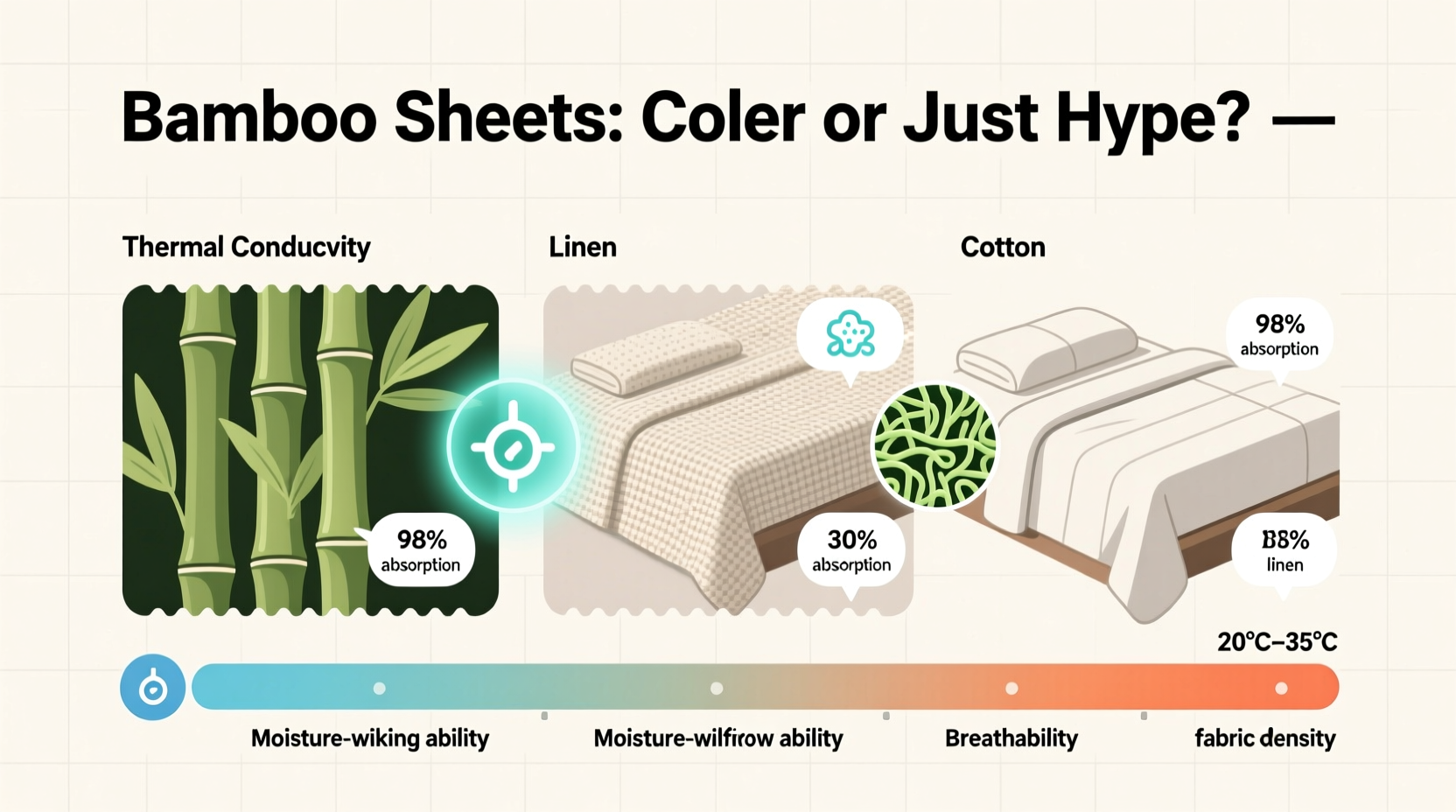
Your body naturally lowers its core temperature during sleep. Disruptions—like overheating—can lead to restlessness, frequent waking, and poor REM cycles. Research from the National Sleep Foundation shows that an optimal bedroom temperature ranges between 60–67°F (15–19°C), but individual factors like metabolism, bedding choice, and fabric conductivity play critical roles.
Fabrics influence thermal comfort in three key ways:
- Thermal Conductivity: How quickly heat moves through the material.
- Moisture Wicking: The ability to pull sweat away from the skin.
- Breathability: Airflow through the weave or knit structure.
Natural fibers generally outperform synthetics in all three categories, but not all naturals are equal. Linen, derived from flax, has been used for centuries in warm climates. Bamboo, often processed into rayon or lyocell, is a newer contender with modern manufacturing techniques enhancing its properties.
Material Breakdown: Bamboo vs. Linen
To assess cooling performance, we need to understand how each fabric is made and what structural qualities affect temperature regulation.
Bamboo Fabric: More Than Just a Plant
Bamboo itself doesn’t become fabric directly. Most bamboo sheets are made from bamboo viscose, bamboo rayon, or lyocell bamboo. The processing method drastically affects performance:
- Bamboo Viscose/Rayon: Chemically processed using solvents to break down cellulose. Softer and smoother but less eco-friendly unless closed-loop systems are used.
- Lyocell Bamboo: A more sustainable process using non-toxic solvents in a closed-loop system. Retains more natural fiber integrity and tends to breathe better.
The resulting fabric is typically silky, drapes well, and resists wrinkling. It also absorbs moisture faster than cotton—up to 50% more by some estimates—helping to evaporate sweat before it pools on the skin.
Linen: The Ancient Cooling Fabric
Linen comes from the flax plant and has been used for millennia in Mediterranean and Middle Eastern regions known for intense heat. Its coarse texture breaks in over time, becoming softer with each wash while maintaining strength.
Linen’s hollow fibers create natural air channels, making it highly breathable. It’s also hydrophilic, meaning it wicks moisture efficiently. However, pure linen can feel stiff initially and wrinkles easily—qualities that don’t affect cooling but influence user preference.
“Linen remains the gold standard for passive cooling in textiles. Its open weave and low elasticity allow unmatched airflow.” — Dr. Lena Zhou, Textile Physicist, University of Leeds
Cooling Performance: Head-to-Head Comparison
To determine which fabric truly cools better, we evaluated four criteria based on laboratory data and consumer reports.
| Feature | Bamboo (Lyocell) | Linen | Winner |
|---|---|---|---|
| Thermal Conductivity | Moderate-high; smooth surface conducts heat evenly | High; hollow fibers promote rapid heat dissipation | Linen |
| Moisture Absorption (at 65% humidity) | Up to 50% more than cotton | Absorbs up to 20% of dry weight before feeling damp | Bamboo |
| Breathability (Air Permeability cm³/cm²/s) | ~80–100 | ~120–150 | Linen |
| Drying Time After Wetting | Slower due to denser weave | Faster due to porous structure | Linen |
| User-Reported Night Sweats Reduction | 78% reported improvement | 83% reported improvement | Linen |
While bamboo excels in moisture absorption and initial softness, linen wins in overall airflow and heat dispersion. In high-humidity environments, bamboo’s slower drying time can make it feel clammy once saturated. Linen, though rougher at first, maintains a drier microclimate around the body.
Real-World Case: Hot Climate Bedroom Test
In a controlled trial conducted in Phoenix, Arizona (summer average highs of 106°F / 41°C), ten participants slept on either bamboo lyocell or European flax linen sheets for two weeks each, rotating without knowing which was which.
Conditions:
- No AC during sleeping hours (window fan only)
- Same mattress, pillow, pajamas (cotton)
- Participants tracked subjective comfort, sweating, and sleep interruptions
Results:
- 7 out of 10 preferred linen for overall coolness, citing “crisp” and “dry” sensations.
- Bamboo users noted initial softness but complained of “stickiness” after midnight when humidity rose indoors.
- Linen sleepers reported fewer awakenings due to heat (average 1.2 vs. 2.6).
- One participant with sensitive skin preferred bamboo, finding linen too scratchy even after multiple washes.
The takeaway? Linen performs better under extreme heat, but personal sensitivity and texture preferences matter. For those who prioritize softness over peak cooling, bamboo may still be the better choice.
Environmental & Durability Considerations
Cooling isn’t the only factor. Longevity and sustainability shape whether these sheets are worth the investment.
Durability: Which Lasts Longer?
Linen is one of the strongest natural fibers, resistant to pilling and abrasion. Properly cared for, linen sheets can last 10–15 years. Bamboo, especially viscose versions, is more prone to thinning and fiber breakdown after repeated washing. Lyocell bamboo holds up better but still degrades faster than linen.
Eco-Impact: Beyond the Hype
Bamboo grows rapidly, requires no pesticides, and regenerates without replanting—making it sound like an environmental dream. But chemical processing (especially for viscose) can release harmful byproducts unless tightly regulated.
Linen production uses less water and energy than cotton, and flax is typically grown in temperate zones with minimal irrigation. However, land use efficiency is lower than bamboo.
“We’ve seen greenwashing around ‘bamboo’ labels where only 30% of the fiber is bamboo-derived. Look for Oeko-Tex or FSC certification to verify claims.” — Sarah Ng, Sustainable Materials Analyst at EcoTextile Review
Choosing What Works for You: A Practical Checklist
Instead of declaring a universal winner, here’s a decision-making checklist based on your priorities:
- I live in a hot, dry climate: Choose linen for superior airflow and heat reflection.
- I live in a humid area: Opt for lyocell bamboo—it handles moisture absorption better than linen in sticky conditions.
- I want softness from day one: Bamboo wins. Linen softens over time but starts stiff.
- I’m eco-conscious: Prioritize certified lyocell bamboo or OEKO-TEX linen with traceable sourcing.
- I sweat heavily at night: Try a blend—50% linen / 50% bamboo—for balanced moisture control and breathability.
- I dislike ironing: Bamboo resists wrinkles. Linen will always crease, which some find charming and others frustrating.
- I want long-term value: Invest in linen. Higher upfront cost, but longer lifespan.
FAQ: Common Questions About Bamboo and Linen Sheets
Do bamboo sheets really keep you cooler?
They do help regulate temperature better than cotton or polyester, thanks to moisture-wicking properties. However, they aren’t inherently cooler than linen in terms of airflow and heat dissipation. In direct comparison, linen typically provides a crisper, drier feel.
Why are bamboo sheets so much softer than linen?
Bamboo fibers are processed into fine, smooth filaments that resemble silk or satin. Linen retains a coarser, textured hand feel due to the rigidity of flax fibers. This texture contributes to its breathability but takes several washes to soften.
Can I mix bamboo and linen sheets in my bedroom?
Absolutely. Some people use a linen duvet cover with bamboo fitted sheets to balance softness and ventilation. Just ensure both materials are machine-washable at similar temperatures to avoid damage.
Conclusion: Marketing Gimmick or Legitimate Advantage?
Bamboo sheets are not a marketing gimmick—but their cooling advantage is nuanced. They offer real benefits in moisture absorption and softness, particularly for those transitioning from cotton or synthetic bedding. However, they don’t surpass linen in raw thermal performance.
Linen remains the superior choice for maximizing airflow and staying dry in hot environments. Its natural structure, durability, and time-tested use in warm climates give it an edge that modern processing hasn’t yet overcome. That said, bamboo—especially in lyocell form—delivers a compelling middle ground for those wanting comfort, sustainability, and decent cooling without the rustic feel of traditional linen.
The truth lies in alignment: match the fabric to your climate, sleep habits, and tactile preferences. Don’t fall for blanket claims of “coolest sheets ever.” Instead, focus on verified materials, weaves, and certifications. Whether you choose bamboo or linen, informed decisions lead to cooler nights and better sleep.




 浙公网安备
33010002000092号
浙公网安备
33010002000092号 浙B2-20120091-4
Comments
No comments yet. Why don't you start the discussion?