
Plastic pollution is one of the most pressing environmental challenges of our time. With billions of plastic toothbrushes discarded annually—most ending up in landfills or oceans—the search for sustainable alternatives has intensified. Bamboo toothbrushes have emerged as a popular eco-friendly option, often marketed as biodegradable, compostable, and planet-safe. But are they truly better for the environment across their full lifecycle? This article examines the environmental footprint of bamboo toothbrushes from sourcing to disposal, including composting realities, manufacturing impacts, and how they compare to conventional plastic brushes.
Lifecycle Analysis: From Seed to Soil
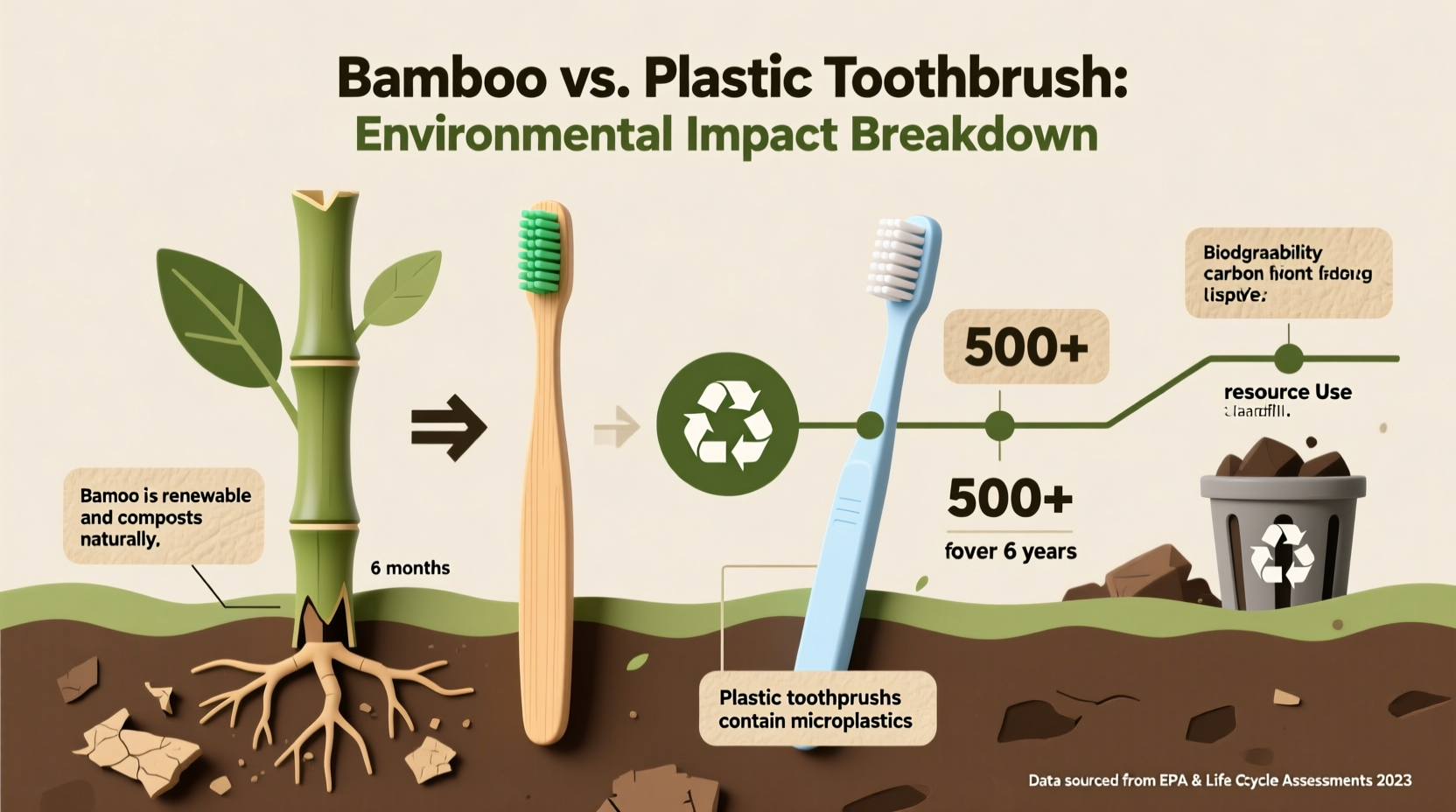
To assess whether bamboo toothbrushes are environmentally superior, it’s essential to examine their entire lifecycle: raw material sourcing, production, transportation, usage, and end-of-life disposal.
Raw Material Sourcing
Bamboo is a fast-growing grass that can regenerate without replanting. Certain species grow up to 91 cm (36 inches) per day under ideal conditions, making it one of the most renewable plant materials on Earth. Unlike hardwood trees used in other products, bamboo doesn’t require pesticides or heavy irrigation once established. It also absorbs more carbon dioxide and releases more oxygen than equivalent stands of trees.
However, not all bamboo is sourced responsibly. Large-scale harvesting for consumer goods can lead to deforestation if natural forests are cleared to make way for monoculture bamboo plantations. The best bamboo toothbrushes use FSC-certified or sustainably managed bamboo from regions like Southeast Asia, where cultivation supports local economies without degrading ecosystems.
Manufacturing Process
The transformation of bamboo into toothbrush handles involves cutting, shaping, sanding, and sometimes treating with natural oils or waxes. These processes are generally low-energy compared to plastic injection molding, which requires high heat and petrochemical inputs.
Yet, manufacturing isn't impact-free. Energy use, water consumption, and emissions depend on factory practices. Some producers use coal-powered facilities, undermining the environmental benefit. Others invest in solar energy and closed-loop water systems. Transparency from brands about production methods is crucial.
One significant limitation: the bristles. Most bamboo toothbrushes still use nylon-6 or BPA-free nylon bristles, which are derived from petroleum and not biodegradable. While some brands offer plant-based bristles (e.g., castor bean oil), these remain rare and may not degrade easily in home composts.
Transportation and Carbon Footprint
Bamboo toothbrushes are primarily manufactured in China, Vietnam, and India. When sold in North America or Europe, they travel thousands of miles by ship, truck, or plane. While shipping emits CO₂, maritime transport is relatively efficient per unit. A single container ship can carry millions of toothbrushes with lower emissions per item than air-freighted goods.
Still, transportation adds to the overall carbon footprint. Local alternatives—such as wooden toothbrushes made from regionally grown birch in Europe—are emerging but less common. For consumers aiming to minimize emissions, proximity of production matters.
End-of-Life Disposal: Composting Myths vs. Reality
One of the biggest claims about bamboo toothbrushes is that they are “compostable.” While the handle is technically biodegradable, real-world composting success depends on several factors.
Can You Compost a Bamboo Toothbrush at Home?
In theory, yes—but only after removing the bristles. Nylon bristles do not break down in backyard compost piles and can contaminate soil. Even \"bio-based\" bristles may require industrial composting conditions to degrade.
The bamboo handle itself will decompose, but slowly. In a typical home compost bin with moderate moisture and temperature, decomposition can take 4–6 months or longer. In dry or cold climates, it may persist for over a year.
“Just because something is labeled ‘biodegradable’ doesn’t mean it will disappear quickly in your garden compost. Conditions matter.” — Dr. Lena Patel, Environmental Scientist, University of Bristol
Industrial Composting Facilities
Industrial composters maintain high temperatures (55–65°C), controlled aeration, and precise carbon-to-nitrogen ratios, accelerating decomposition. Under these conditions, a clean bamboo handle can break down in 60–90 days.
However, access to such facilities is limited. In the U.S., only about 20% of municipalities offer curbside composting, and many exclude personal care items due to hygiene concerns. As a result, most bamboo toothbrushes end up either in landfills or improperly composted.
Comparison: Bamboo vs. Plastic Toothbrushes
To determine which option is better for the environment, consider key metrics across the lifecycle.
| Factor | Bamboo Toothbrush | Plastic Toothbrush |
|---|---|---|
| Material Source | Renewable (bamboo) | Non-renewable (petroleum) |
| Production Energy | Moderate (low heat, manual labor) | High (plastic molding, fossil fuels) |
| Biodegradability | Handle: Yes (with prep); Bristles: No | No (persists 400+ years) |
| Recyclability | Limited (bristles must be removed) | Theoretically recyclable, but rarely recycled |
| Carbon Footprint (estimated kg CO₂e) | 0.3–0.5 | 0.8–1.2 |
| Marine Pollution Risk | Low (if properly disposed) | Very High (common beach litter) |
The data shows bamboo toothbrushes generally have a lower environmental impact, particularly in terms of resource renewability and end-of-life behavior. However, their advantage diminishes if bristles aren’t removed or if they’re sent to landfill where anaerobic conditions slow decomposition and produce methane—a potent greenhouse gas.
Best Practices for Sustainable Use
Switching to a bamboo toothbrush is a positive step, but maximizing its environmental benefit requires mindful handling throughout its life and after.
Step-by-Step Guide to Responsible Disposal
- Use the toothbrush fully. Don’t replace it early; dentists recommend changing every 3–4 months.
- Remove the bristles before disposal. Use pliers or tweezers to pull them out. Collect in a small container for proper recycling if possible.
- Check bristle type. If they’re nylon, dispose of them in general waste unless your area accepts mixed plastics.
- Compost the handle. Place in a hot compost pile or send to an industrial composter if available.
- Alternatively, bury the handle. In a garden or soil-rich area, untreated bamboo will eventually decay.
Choosing the Most Sustainable Option
Not all bamboo toothbrushes are created equal. Consider the following checklist when purchasing:
- ✅ Bristles made from plant-based materials (e.g., castor bean oil)
- ✅ Handles treated with food-grade, non-toxic finishes
- ✅ Transparent supply chain and ethical labor practices
- ✅ Minimal, plastic-free packaging (preferably cardboard or paper)
- ✅ Third-party certifications (FSC, ISO 14001, etc.)
Real-World Example: A Community Zero-Waste Initiative
In Asheville, North Carolina, a local dental clinic partnered with an eco-retailer to launch a “Brush Green” campaign. Patients received discounted bamboo toothbrushes and instructions on how to disassemble and compost them. Over 18 months, the program diverted an estimated 7,200 plastic toothbrushes from landfills.
Participants were given metal tins to store used brushes until collection day. Volunteers used wire cutters to remove bristles, which were sent to a specialty recycler, while handles were processed at a municipal compost facility. The initiative demonstrated that bamboo toothbrushes can be truly sustainable—with community infrastructure and education.
“It’s not just about swapping materials,” said clinic director Dr. Alan Torres. “It’s about closing the loop. Without proper disposal, even the greenest product becomes waste.”
Frequently Asked Questions
Can I throw my bamboo toothbrush in the regular trash?
You can, but it’s not ideal. In a landfill, the bamboo handle will decompose slowly and may release methane. If composting isn’t possible, consider burying it in your yard or saving it for a future compost drop-off.
Are bamboo toothbrushes safe for sensitive gums?
Yes. Most bamboo toothbrushes come with soft or medium bristles comparable to plastic ones. The handle material doesn’t affect brushing comfort, though some users appreciate the lighter weight and natural feel.
Do bamboo toothbrushes harbor bacteria more than plastic ones?
No evidence suggests they do. Bamboo has natural antimicrobial properties, but like any toothbrush, it should be rinsed thoroughly and stored upright to dry. Replace every 3–4 months regardless of material.
Conclusion: A Step Forward, But Not a Silver Bullet
Bamboo toothbrushes are generally better for the environment than their plastic counterparts, especially when evaluated across lifecycle stages. Their renewable source, lower carbon footprint, and potential for composting make them a responsible choice for eco-conscious consumers.
However, their environmental benefit hinges on proper disposal and transparency in manufacturing. A bamboo toothbrush with plastic bristles and excessive packaging shipped across the globe offers only marginal improvement over conventional options.
Sustainability isn’t about single-product swaps—it’s about systemic change. Choosing a bamboo toothbrush is meaningful only when paired with habits like extending product life, minimizing waste, and supporting circular systems.




 浙公网安备
33010002000092号
浙公网安备
33010002000092号 浙B2-20120091-4
Comments
No comments yet. Why don't you start the discussion?