
Every morning, billions of people reach for a toothbrush to start their day. For decades, that brush has been made of plastic—lightweight, durable, and cheap to produce. But as awareness of environmental issues grows, many are turning to alternatives like bamboo toothbrushes, marketed as eco-friendly, sustainable, and biodegradable. But is this shift genuinely beneficial for the planet? Or is it simply a case of greenwashing wrapped in natural aesthetics?
To answer this question, we need to look beyond surface-level claims. The environmental impact of any product isn’t determined by its material alone, but by its entire lifecycle: sourcing, manufacturing, transportation, use, and disposal. When we examine bamboo versus plastic toothbrushes through this lens, the picture becomes more nuanced—and more informative.
The Plastic Toothbrush Problem
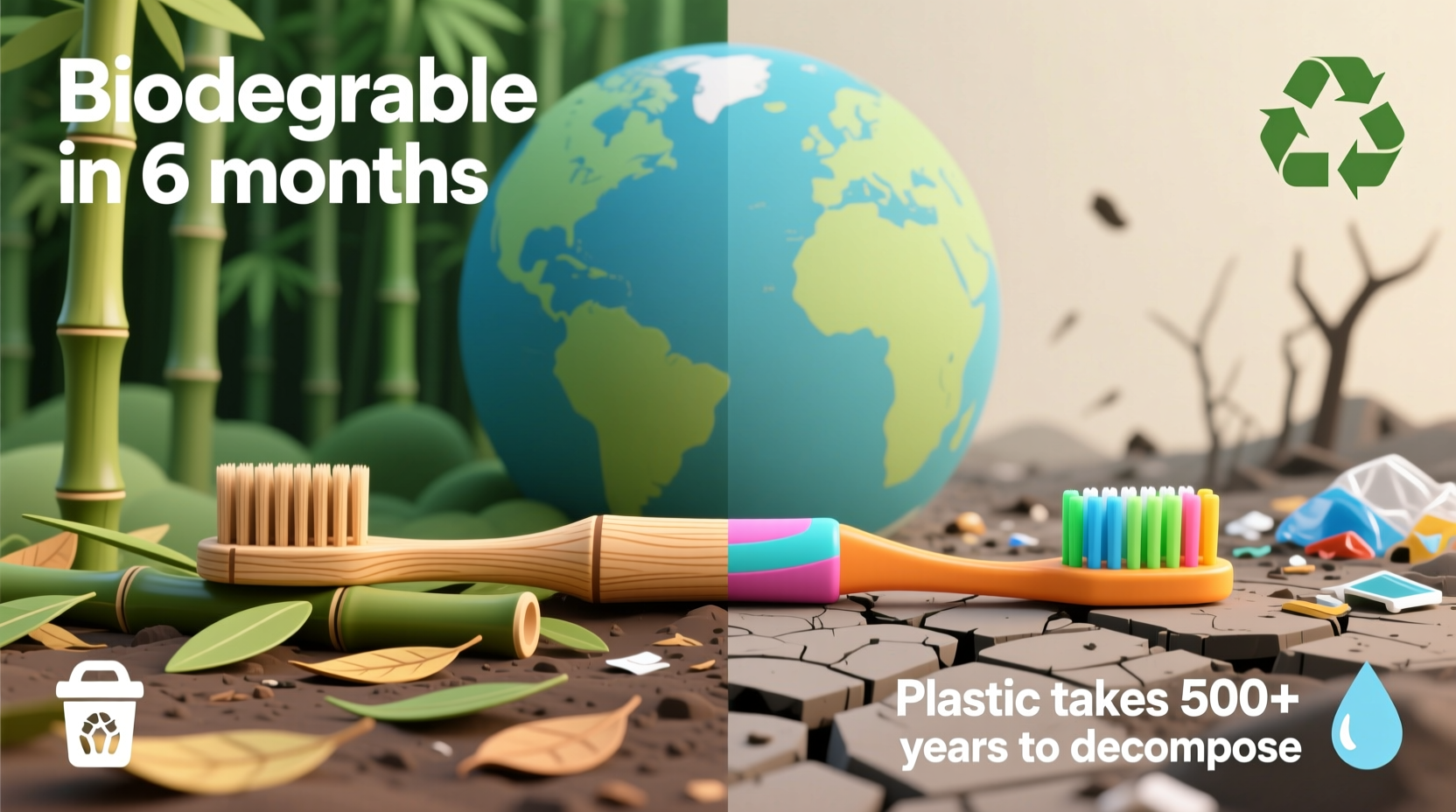
Plastic toothbrushes have been a staple in households since the 1930s. Most are made from polypropylene (handle) and nylon (bristles), both derived from petroleum. While convenient, they come with significant environmental costs.
- Over 4 billion plastic toothbrushes are discarded annually in the U.S. alone.
- Each brush takes an estimated 400 to 500 years to decompose in landfills.
- A large portion ends up in oceans, contributing to microplastic pollution.
- Manufacturing releases greenhouse gases and consumes non-renewable fossil fuels.
Even when consumers attempt to recycle them, most municipal recycling programs don't accept small mixed-material items like toothbrushes. As a result, nearly all plastic brushes become permanent waste.
“Single-use plastics like toothbrushes are among the most persistent pollutants in marine ecosystems.” — Dr. Lena Torres, Marine Conservation Scientist
Bamboo Toothbrushes: A Sustainable Alternative?
Bamboo toothbrushes emerged as a response to plastic waste. Their handles are made from moso bamboo (*Phyllostachys edulis*), a fast-growing grass that requires no pesticides, minimal water, and regenerates naturally after harvesting. These qualities make bamboo one of the most renewable plant materials on Earth.
However, calling a bamboo toothbrush “biodegradable” requires qualification. While the handle is indeed compostable under the right conditions, the bristles usually aren’t. Most bamboo brushes still use nylon-6 or nylon-4 bristles, which are not biodegradable. Some brands now offer bio-based bristles derived from castor oil (e.g., \"Nylon-6,10\"), but even these degrade slowly and incompletely.
In addition, the manufacturing process often involves adhesives, dyes, and packaging—factors that can undermine the overall sustainability of the product.
Lifecycle Comparison: Bamboo vs. Plastic
To fairly assess environmental impact, we must compare both products across key stages of their life cycles. The table below summarizes this comparison.
| Factor | Plastic Toothbrush | Bamboo Toothbrush |
|---|---|---|
| Raw Material Source | Petroleum (non-renewable) | Bamboo (renewable, fast-growing) |
| Carbon Footprint (Production) | High (energy-intensive refining) | Moderate (lower energy, but processing & transport vary) |
| Biodegradability | Negligible (500+ years to decompose) | Handle: Yes (in industrial compost); Bristles: Usually no |
| Recyclability | Low (mixed materials, small size) | Very low (unless bristles removed and handled separately) |
| Transportation Impact | Often manufactured locally in Western countries | Frequently shipped from Asia, increasing carbon footprint |
| End-of-Life Options | Landfill or incineration | Handle can be composted; bristles should go to landfill unless recyclable |
While bamboo clearly wins in terms of renewability and biodegradability of the handle, its advantage diminishes when transportation emissions, bristle composition, and consumer behavior are factored in.
Hidden Trade-Offs and Consumer Responsibility
The sustainability of bamboo toothbrushes hinges significantly on how consumers use and dispose of them. A bamboo brush tossed into a regular trash bin will likely end up in a landfill, where anaerobic conditions prevent proper decomposition. In such cases, its environmental benefit over plastic is minimal.
Moreover, some bamboo brushes are coated with lacquers or sealed with non-compostable finishes to improve durability. Others are packaged in plastic clamshells or mixed-material boxes, negating much of their eco-value.
True sustainability requires mindful consumption:
- Choosing products with certified organic bamboo and compostable packaging.
- Selecting brushes with plant-based or recyclable bristles.
- Removing bristles before composting the handle (using pliers).
- Supporting brands that offset shipping emissions or manufacture regionally.
Real Example: A Year of Switching
Sophie, a sustainability officer in Portland, switched to bamboo toothbrushes two years ago. She initially felt good about her choice—until she realized she was throwing entire brushes into her city compost bin. After learning that nylon bristles don’t break down, she began removing them with needle-nose pliers before composting the handle.
She also started researching brands and found one that uses castor bean-based bristles and ships from within North America. “It’s not just about buying bamboo,” she said. “It’s about understanding what you’re actually using and how to close the loop responsibly.”
Her effort reduced her personal oral care waste significantly—but only because she took extra steps most consumers don’t.
Step-by-Step Guide to Using Bamboo Toothbrushes Sustainably
To maximize the environmental benefit of your bamboo toothbrush, follow this practical timeline:
- Before Purchase: Research brands. Look for FSC-certified bamboo, plant-based bristles, and plastic-free packaging.
- Upon Arrival: Remove the brush from any non-compostable wrapping. Recycle paper/cardboard components.
- Daily Use: Treat it like any toothbrush—rinse well and store in a dry area to prevent mold.
- After 3 Months: Replace the brush. Don’t wait longer, as worn bristles reduce cleaning effectiveness.
- At Disposal: Use pliers to pull out the nylon bristles. Dispose of them in general waste (unless your area accepts #6 or #4 nylon recycling).
- Compost the Handle: Place the clean bamboo handle in a home compost pile or municipal compost system. It will decompose in 4–6 months under ideal conditions.
- Track Your Impact: Calculate how many plastic brushes you’ve avoided. One person switching for a year prevents ~4 plastic brushes from entering waste streams.
Expert Insights on Material Realities
Dr. Alan Reeves, a lifecycle assessment specialist at the University of British Columbia, emphasizes that material origin doesn’t tell the whole story.
“The carbon footprint of a bamboo toothbrush made in China and shipped to Europe can exceed that of a recycled-plastic brush produced locally. Sustainability isn’t just about the material—it’s about the system.” — Dr. Alan Reeves, Environmental Systems Analyst
This insight challenges the assumption that “natural = better.” It underscores the importance of local production, efficient logistics, and circular design principles.
Some innovators are responding with hybrid solutions. For example, companies like Brush with Bamboo now offer fully compostable brushes with boar hair or bio-nylon bristles. Others are experimenting with monomaterial designs—entirely plant-based brushes that break down completely.
Checklist: Choosing a Truly Eco-Friendly Toothbrush
Use this checklist to ensure your switch makes a real difference:
- ✅ Handle made from sustainably harvested bamboo (look for FSC certification)
- ✅ Bristles are either bio-based (e.g., castor oil nylon) or removable/recyclable
- ✅ No synthetic coatings or varnishes on the handle
- ✅ Packaging is 100% plastic-free (e.g., cardboard, paper wrap)
- ✅ Manufacturer discloses supply chain and carbon footprint
- ✅ Produced regionally to minimize transportation emissions
- ✅ Brand supports reforestation or ocean cleanup initiatives (optional but positive)
FAQ: Common Questions About Bamboo Toothbrushes
Can I compost my bamboo toothbrush at home?
You can compost the handle, but only after removing the bristles. Home compost systems may take 6–12 months to fully break down the bamboo, depending on conditions. Do not compost if the handle has synthetic sealants.
Are bamboo toothbrushes hygienic?
Yes, when properly cared for. Bamboo has natural antimicrobial properties, but like any toothbrush, it should be rinsed thoroughly and stored upright to dry. Replace every three months or when bristles fray.
Do bamboo toothbrushes cost more?
Typically, yes. A quality bamboo toothbrush costs $2–$5, compared to $1–$2 for a plastic one. However, the long-term environmental savings outweigh the minor price difference for most eco-conscious consumers.
Conclusion: A Step Forward, But Not a Silver Bullet
Bamboo toothbrushes are, on balance, better for the environment than conventional plastic ones—but with important caveats. Their renewable source, lower carbon footprint during growth, and compostable handle offer clear advantages. Yet those benefits are undermined if bristles remain non-biodegradable, packaging contains plastic, or consumers fail to dispose of them correctly.
They represent progress, not perfection. The true measure of sustainability lies not just in the product, but in the habits surrounding it. By choosing thoughtfully, using responsibly, and disposing with intention, individuals can amplify the positive impact of their switch.
Ultimately, reducing waste starts with awareness. Every toothbrush change is a small act of environmental stewardship—one that, multiplied across millions, can lead to meaningful change.




 浙公网安备
33010002000092号
浙公网安备
33010002000092号 浙B2-20120091-4
Comments
No comments yet. Why don't you start the discussion?