
The question \"Are Bubbies pickles fermented?\" is more than a curiosity—it's a gateway into understanding one of the oldest methods of food preservation still cherished in modern kitchens. In an era where gut health and natural ingredients dominate culinary conversations, fermented foods have surged in popularity. Bubbies, a brand known for its crisp, tangy kosher dill pickles, often stands at the center of this discussion. The short answer: yes, Bubbies pickles are genuinely fermented using a traditional saltwater brine process. But what does that mean in practice? How does their method differ from the vinegar-based pickles found on most supermarket shelves? And why should home cooks and health-conscious eaters care?
Fermentation isn't just a buzzword; it's a biological transformation. When cucumbers are submerged in a saltwater brine and left to ferment naturally, beneficial lactic acid bacteria convert sugars into lactic acid. This process not only preserves the vegetable but also enhances flavor, texture, and nutritional value. Unlike quick-process or \"refrigerator\" pickles, which rely on vinegar and heat for shelf stability, fermented pickles develop complexity over time—tangy, earthy, and layered. Bubbies has built its reputation on reviving this old-world technique, offering a product that mirrors the barrel-cured pickles once sold at New York City delis.
Definition & Overview: What Are Fermented Pickles?
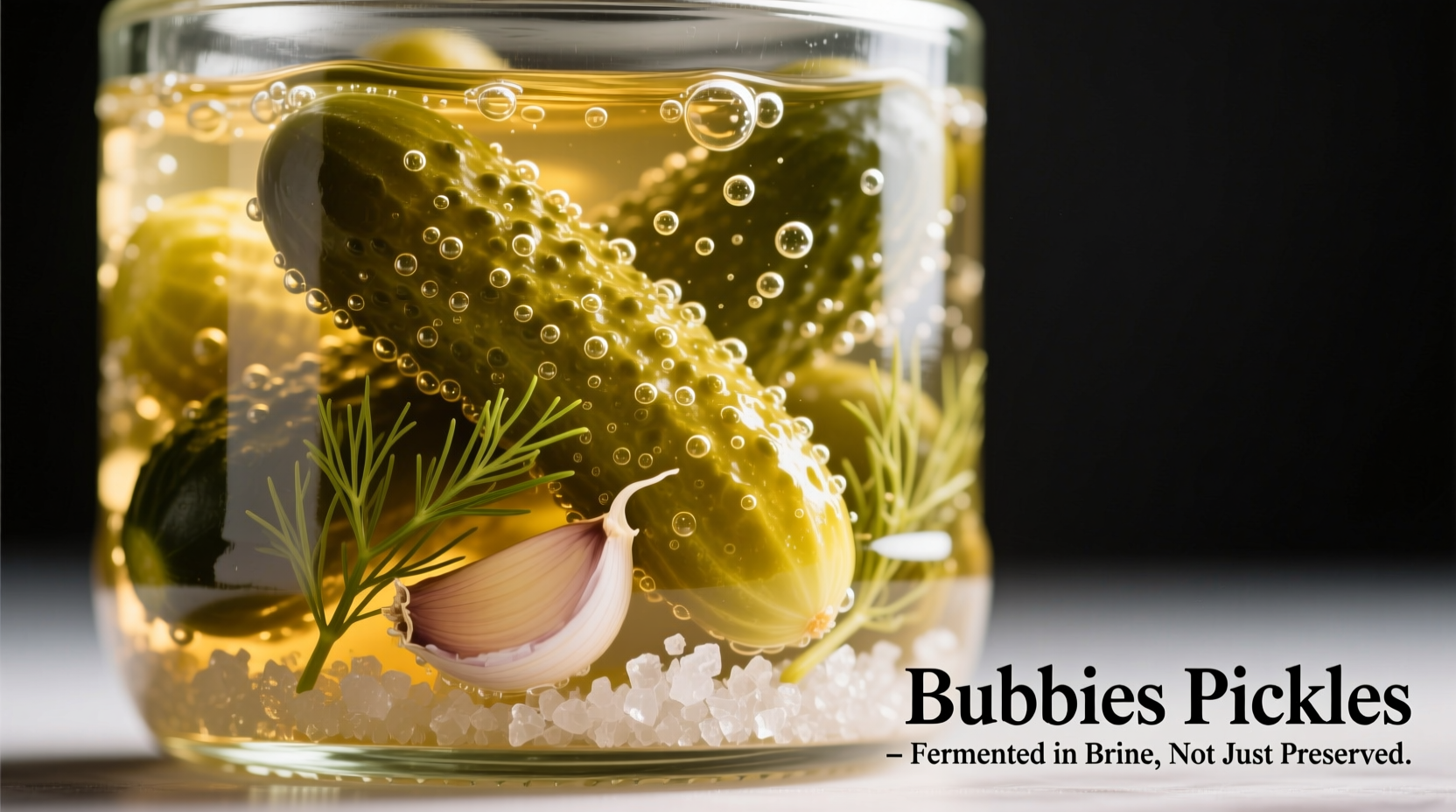
Fermented pickles, sometimes called \"lacto-fermented\" pickles, are cucumbers preserved through natural microbial activity rather than through pasteurization or vinegar immersion. The term \"lacto-fermentation\" refers to the role of *Lactobacillus* bacteria, naturally present on cucumber skins and in the environment, which thrive in salty, oxygen-free conditions. These bacteria consume the natural sugars in cucumbers and produce lactic acid as a byproduct. This acid lowers the pH, creating an inhospitable environment for harmful microbes while giving fermented pickles their signature sour bite.
This method dates back thousands of years and was historically used to preserve vegetables through winter months. It requires no refrigeration during fermentation and minimal equipment—typically just a jar, salt, water, fresh cucumbers, and time. Spices like garlic, dill, mustard seed, and peppercorns are commonly added for flavor, but they play no preservative role. The result is a living food rich in probiotics, enzymes, and complex flavors.
Bubbies, founded in 1977, emerged during a decline in traditional pickle-making. As industrial food production favored speed and uniformity, many brands switched to vinegar brines and artificial preservatives. Bubbies bucked the trend by adhering to a centuries-old Eastern European method, producing pickles in small batches using only cucumbers, filtered water, sea salt, fresh dill, garlic, and spices. Their products are never heat-treated, ensuring the probiotic cultures remain alive until consumption.
Key Characteristics of Bubbies Fermented Pickles
- Natural Fermentation: Cucumbers are cured in saltwater brine for several weeks, allowing lactic acid bacteria to develop organically.
- No Vinegar Added: Unlike most commercial pickles, Bubbies uses no acetic acid (vinegar), relying solely on lactic acid from fermentation.
- Live Probiotics: Since the pickles are unpasteurized, they contain beneficial bacteria such as *Lactobacillus plantarum* and *Leuconostoc mesenteroides*.
- Crisp Texture: Properly fermented cucumbers retain firmness due to tannins from grape leaves or oak leaves (used in some batches) and controlled fermentation temperature.
- Flavor Profile: Deeply tangy with herbal notes from dill and garlic, slightly earthy, and mildly salty—never sharp or harsh like vinegar pickles.
- Refrigerated Only: Because they’re unpasteurized, Bubbies pickles must be kept cold to maintain quality and safety.
- Shelf Life: Approximately 6–12 months when continuously refrigerated; flavor intensifies over time.
Pro Tip: Always check the label. True fermented pickles will list only cucumbers, water, salt, spices, and possibly a natural culture starter. If vinegar appears in the ingredients, it’s not traditionally fermented.
How Bubbies’ Brine Process Works: A Step-by-Step Breakdown
The fermentation process behind Bubbies pickles follows a precise, time-tested sequence designed to ensure safety, consistency, and superior taste. While exact proprietary details are not public, the general method aligns with classic lacto-fermentation principles:
- Cucumber Selection: Fresh, firm, preferably small-to-medium Kirby cucumbers are selected. These varieties have thick skins and low moisture content, making them ideal for fermentation without becoming mushy.
- Preparation: Cucumbers are washed thoroughly but not peeled or sterilized, preserving native microbial flora essential for natural fermentation.
- Brine Creation: A solution of filtered water and non-iodized sea salt (typically 3–5% salinity) is prepared. Iodine and anti-caking agents in table salt can inhibit bacterial growth and cloud the brine.
- Packing Jars or Vats: Cucumbers are packed tightly into large vats with fresh dill, garlic cloves, and whole spices (mustard seed, coriander, bay leaf). Some producers add tannin-rich grape leaves to help maintain crispness.
- Submersion: The cucumbers are fully submerged under the brine to create an anaerobic environment. Air exposure leads to mold and spoilage.
- Fermentation: Vats are sealed and stored at controlled temperatures (around 70–75°F / 21–24°C) for 2–6 weeks. During this time, *Leuconostoc* species initiate fermentation, followed by *Lactobacillus*, which dominate later stages.
- Monitoring: pH is tested regularly. A safe fermented pickle reaches a pH below 4.6, preventing pathogen growth.
- Cooling & Distribution: Once desired acidity and flavor are achieved, vats are cooled to halt fermentation. The pickles are then jarred and immediately refrigerated—they are never pasteurized.
This slow, microbiological dance results in a pickle that evolves in flavor. Early-stage ferments are milder and brighter; longer ferments yield deeper sourness and umami richness. Each batch may vary slightly—a hallmark of artisanal fermentation versus sterile, factory-standardized products.
Practical Usage: How to Use Bubbies Fermented Pickles in Cooking
Beyond being a snack straight from the jar, Bubbies fermented pickles offer functional and flavor-enhancing roles in both home and professional kitchens. Their complex acidity and probiotic content make them more than a condiment—they're a culinary tool.
As a Flavor Enhancer
The brine itself—often overlooked—is a potent ingredient. Rich in lactic acid, garlic, dill, and subtle spice, Bubbies pickle juice can replace vinegar in dressings, marinades, and sauces. Use it to:
- Make a creamy dill dressing: whisk brine with Greek yogurt, lemon zest, minced shallot, and fresh herbs.
- Marinate chicken or pork: the acidity tenderizes while infusing savory depth.
- Add brightness to potato or pasta salads: swap half the mayo for brine to cut richness.
In Sandwiches and Charcuterie
A slice of Bubbies kosher dill cuts through fatty meats like pastrami or salami, balancing richness with acidity. On a Reuben sandwich, it outperforms vinegar pickles by adding rounder, more integrated tang. For cheese boards, pair with aged cheddar, smoked gouda, or soft goat cheese—the contrast of creamy fat and sour crunch elevates both elements.
For Gut Health Integration
Dietitians and integrative nutritionists increasingly recommend including fermented foods daily for microbiome support. One spear of Bubbies pickle provides billions of colony-forming units (CFUs) of live bacteria. Incorporate them into meals as a digestive “primer” before heavy dishes, or serve alongside grain bowls, tacos, or fried foods to aid digestion.
Recipe Example: Fermented Dill Pickle Relish
Create a probiotic-rich relish perfect for hot dogs, burgers, or scrambled eggs:
- Finely dice 1 cup of Bubbies kosher dill pickles.
- Mince 1 tbsp fresh dill, 1 tsp garlic (optional).
- Stir in 1 tbsp brine and a pinch of black pepper.
- Chill for 30 minutes before serving.
No cooking required—this relish retains live cultures and delivers bold flavor.
Home Cook Hack: Save the brine! Store it in a glass jar and use within 3 months. It freezes well for long-term use in soups or stews.
Variants & Types: Exploring the Bubbies Lineup
Bubbies offers several fermented pickle varieties, each tailored to different palates and uses. All share the core fermentation process but vary in seasoning and format.
| Product | Key Ingredients | Flavor Notes | Best Uses |
|---|---|---|---|
| Kosher Dill Whole | Cucumber, water, salt, garlic, dill, spices | Classic sour-garlicky profile, robust dill aroma | Sandwiches, snacking, charcuterie |
| Kosher Dill Chips | Sliced cucumbers, water, salt, garlic, dill, spices | Lighter texture, quicker bite, even seasoning distribution | Salads, Bloody Mary garnish, taco topping |
| Sweet Gherkins | Cucumber, water, salt, sugar, dill, spices | Mildly sweet with a tangy finish, less acidic | Cheese plates, holiday trays, hors d'oeuvres |
| Bread & Butter Chips | Sliced cucumbers, water, salt, sugar, onion, turmeric, spices | Sweet-sour balance, golden hue, aromatic spices | Burgers, grilled cheese, picnic sides |
Note: While the Sweet Gherkins and Bread & Butter Chips contain sugar, they are still fermented—not vinegar-pickled. The sugar serves as an additional food source for bacteria and balances acidity, but fermentation remains the primary preservation method.
Comparison with Similar Ingredients
Not all pickles are created equal. Understanding the differences between fermented, vinegar-brined, and fresh refrigerator pickles is crucial for informed cooking and eating.
| Feature | Bubbies Fermented Pickles | Vinegar-Brined Pickles (e.g., Vlasic, Claussen) | Refrigerator (Fresh-Pack) Pickles |
|---|---|---|---|
| Preservation Method | Lacto-fermentation with salt brine | Vinegar + heat processing or cold packing | Vinegar + refrigeration, no fermentation |
| Live Cultures | Yes (probiotic-rich) | No (pasteurized or acidic kill) | No |
| Acidity Source | Lactic acid (natural) | Acetic acid (added vinegar) | Acetic acid (added vinegar) |
| Texture | Firm, crisp, slightly yielding | Firm but can be rubbery | Crisp initially, softens faster |
| Flavor Development | Evolves over time; becomes tangier | Static; same taste from opening to end | Static; may degrade in flavor |
| Storage | Refrigeration required at all times | Shelf-stable until opened, then refrigerate | Always refrigerated |
| Nutritional Benefit | High in probiotics, enzymes, low sugar | Low calorie, but no live cultures | Low calorie, no fermentation benefits |
\"True fermented pickles are alive. They breathe, change, and interact with your body’s microbiome. That’s not something you can replicate with vinegar and citric acid.\" — Dr. Elena Torres, Food Microbiologist, Cornell University
Practical Tips & FAQs
Q: Can I ferment my own pickles at home like Bubbies?
A: Absolutely. Start with organic Kirby cucumbers, non-chlorinated water, pickling salt, fresh dill, garlic, and grape leaves (for crispness). Use clean jars, submerge cucumbers under brine, and keep at room temperature away from sunlight. Expect 2–4 weeks depending on temperature. Taste weekly until desired sourness is reached, then refrigerate.
Q: Why does my Bubbies jar fizz when I open it?
A: Fizzing is normal and indicates active fermentation. Even refrigerated, trace microbial activity continues. Carbon dioxide builds up, causing a gentle hiss. This is a sign of freshness and vitality—not spoilage.
Q: Are Bubbies pickles safe if they’ve been left out briefly?
A: Short exposure (under 2 hours) is generally safe due to high acidity. However, prolonged warmth accelerates fermentation and may lead to off-flavors or gas buildup. Always return to refrigeration promptly.
Q: How do I know if fermented pickles have gone bad?
A: Signs of spoilage include:
- Foul, rotten, or ammonia-like odor (fermented should smell tangy and herbal)
- Slime, mushiness, or visible mold (white film on surface may be kahm yeast—safe to remove, but discard if pervasive)
- Bulging lid or excessive pressure (indicates unwanted gas-producing bacteria)
Q: Can I use Bubbies brine to start other ferments?
A: Yes—adding 1–2 tablespoons of Bubbies brine to new ferments (like sauerkraut or kimchi) can act as a starter culture, speeding up the process and ensuring reliable results. This is called \"back-slopping.\"
Q: Do Bubbies pickles need to be refrigerated after opening?
A: They must be refrigerated at all times—even before opening. Without pasteurization, ambient storage risks spoilage and loss of quality.
Storage Checklist:
✓ Keep refrigerated at 34–40°F (1–4°C)
✓ Seal lid tightly after each use
✓ Use clean utensils to avoid contamination
✓ Consume within 6 months for peak flavor (though safe longer)
Summary & Key Takeaways
Bubbies pickles are indeed fermented—authentically, traditionally, and without shortcuts. They represent a revival of lacto-fermentation in an industrialized food landscape dominated by vinegar and preservatives. By relying on salt, water, time, and natural bacteria, Bubbies produces a living food that supports gut health, delivers nuanced flavor, and connects modern consumers to ancestral food wisdom.
The distinction between fermented and vinegar pickles is not merely technical—it affects taste, texture, nutrition, and culinary function. Fermented pickles offer dynamic acidity, probiotic benefits, and evolving flavor profiles that vinegar-based counterparts cannot replicate. Whether enjoyed as a crunchy snack, chopped into relish, or sipped as brine for digestion, Bubbies exemplifies how tradition and science converge in a single jar.
For home cooks, embracing fermented foods like Bubbies is a step toward mindful eating and kitchen confidence. Understanding the process empowers better choices—from reading labels to experimenting with DIY ferments. The next time you reach for a pickle, consider not just the crunch, but the invisible world of bacteria working beneath the brine.
Call to Action: Try swapping vinegar pickles for Bubbies fermented variety in your next sandwich or salad. Notice the difference in mouthfeel and aftertaste. Your palate—and gut—will thank you.




 浙公网安备
33010002000092号
浙公网安备
33010002000092号 浙B2-20120091-4
Comments
No comments yet. Why don't you start the discussion?