
In an era of overflowing closets and decision fatigue, the concept of a capsule wardrobe has gained traction as a symbol of intentional living. Popularized by minimalists and fashion influencers alike, the idea is simple: curate a small collection of versatile, high-quality clothing items that can be mixed and matched seamlessly. But for working professionals—especially those navigating corporate environments, client meetings, and hybrid schedules—the question remains: are capsule wardrobes truly practical, or are they just a stylish fantasy?
The answer isn’t binary. While a capsule wardrobe won’t suit every professional’s lifestyle out of the box, with thoughtful planning and realistic expectations, it can be a powerful tool for reducing stress, saving time, and projecting a more cohesive personal brand at work.
Defining the Capsule Wardrobe: Beyond Minimalist Hype
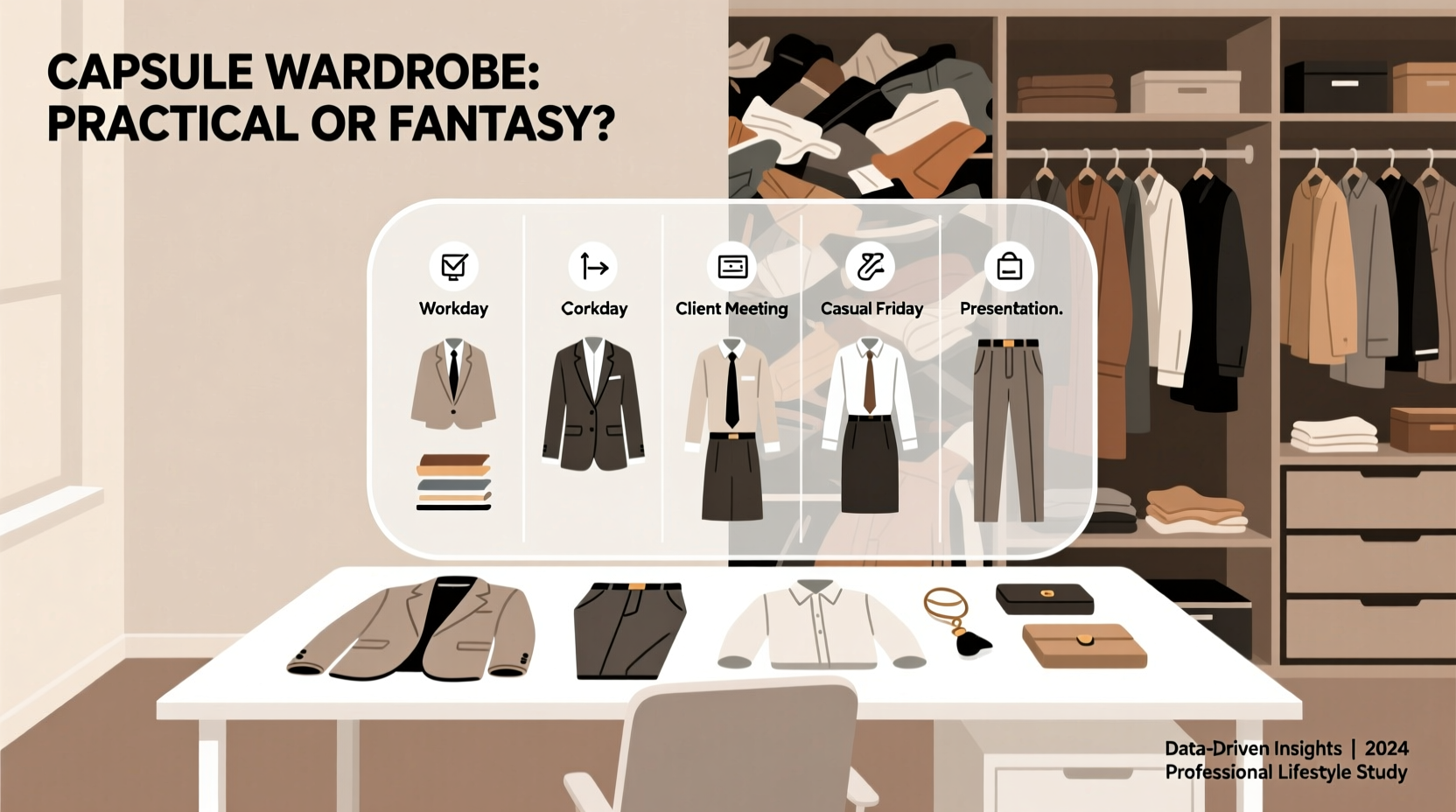
A capsule wardrobe typically consists of 30–40 pieces, including tops, bottoms, outerwear, dresses, and shoes, designed to last for a season—usually three months. The goal is not deprivation but efficiency: owning fewer items that you love wearing, feel confident in, and can combine effortlessly.
Unlike fast fashion cycles that encourage constant consumption, capsule wardrobes emphasize quality over quantity, timeless silhouettes, and neutral color palettes with strategic pops of color or pattern. The philosophy aligns closely with slow fashion, sustainability, and mindful consumption—all values increasingly relevant in modern workplaces.
But while the concept sounds elegant on paper, its real-world application for professionals demands scrutiny. A junior analyst attending daily Zoom calls faces different sartorial needs than a senior executive traveling for board meetings. Uniformity matters less than adaptability.
Practical Benefits for Working Professionals
Despite skepticism, many professionals report tangible benefits from adopting a capsule approach—even if only partially.
- Reduced decision fatigue: Choosing what to wear each morning consumes mental energy. A curated wardrobe eliminates guesswork, freeing up cognitive bandwidth for more important tasks.
- Consistent professional image: A cohesive wardrobe reinforces personal branding. Clients and colleagues begin to associate you with reliability and attention to detail.
- Time and cost savings: Fewer purchases mean less shopping time and lower long-term spending. Investing in durable fabrics pays off over years, not seasons.
- Simplified laundry and maintenance: With fewer garments, washing, ironing, and organizing become more manageable.
- Easier travel packing: Business travelers benefit significantly—knowing all pieces coordinate means lighter luggage and greater outfit flexibility on the road.
“Dressing with intention isn’t about having less—it’s about removing the noise so your presence speaks louder.” — Sarah Chen, Image Consultant for Corporate Executives
Challenges and Misconceptions
Capsule wardrobes are often misunderstood as rigid rules rather than flexible frameworks. This misperception leads to common pitfalls:
Misconception 1: Capsules Mean Wearing the Same Outfit Daily
Reality: A well-designed capsule allows for dozens of unique combinations. For example, five tops and three bottoms yield 15 distinct outfits—before adding layers, accessories, or footwear variations.
Misconception 2: They Only Work in Casual Offices
Reality: Even formal environments can accommodate capsules. The key is tailoring the selection to dress codes. A lawyer might include two tailored suits, multiple blouses, silk ties, and structured coats—all coordinating within a navy-and-cream palette.
Misconception 3: Seasonal Changeovers Are Required
Reality: Not necessarily. Many professionals opt for “all-season” capsules using lightweight wools, breathable linens, and adaptable layers instead of strict quarterly swaps.
The biggest challenge lies in balancing versatility with specificity. A marketing director presenting at conferences needs bolder statement pieces than an accountant processing data. One-size-fits-all templates fail here.
Building a Realistic Work Capsule: A Step-by-Step Guide
Creating a functional capsule wardrobe for professional life requires strategy. Follow this timeline to build one effectively over four weeks:
- Week 1: Audit Your Current Wardrobe
Pull out all work-appropriate clothing. Try each piece on. Keep only what fits well, feels comfortable, and aligns with your current role. Note frequency of use and emotional response (“I love wearing this”). Discard or donate the rest. - Week 2: Define Your Dress Code & Lifestyle Needs
Map your weekly schedule: How many days are in-office vs. remote? Do you attend client meetings, presentations, or business dinners? Identify required categories (e.g., blazers, sheath dresses, polished flats). - Week 3: Select Core Pieces
Choose 5–7 foundational items: a tailored blazer, dark trousers, pencil skirt, button-down shirt, knit sweater, sheath dress, and leather loafers. Stick to neutral colors with subtle texture variation (herringbone, ribbing, etc.). - Week 4: Add Complementary Items
Introduce 3–5 accent pieces: a patterned blouse, colored cardigan, silk scarf, or bold shoe. These provide visual interest without disrupting cohesion. Ensure every new item pairs with at least three others. - Ongoing: Maintain & Rotate
Reassess every 3–6 months. Replace worn items. Adjust based on role changes or seasonal shifts. Track which outfits you wear most—let data guide future choices.
Real-World Example: From Overwhelmed to Organized
Consider Maya, a project manager at a mid-sized tech firm. She worked remotely two days a week and attended onsite team meetings and stakeholder reviews the other three. Her closet was full—over 60 tops alone—but she routinely stood before it feeling “underdressed and unsure.”
After reading about capsule wardrobes, she decided to experiment. She pared down to 38 pieces: 8 tops, 4 bottoms, 2 dresses, 3 sweaters, 1 blazer, 3 pairs of shoes, and 3 accessories (scarves, belts). All were in shades of gray, white, burgundy, and black.
Within two weeks, her morning routine shortened from 25 minutes to under 10. Colleagues began complimenting her “put-together” look. Most importantly, she stopped dreading wardrobe decisions and started feeling more confident during video calls.
Her secret? She didn’t force extreme minimalism. Instead, she focused on eliminating redundancy—keeping only one black turtleneck instead of four nearly identical ones—and prioritized comfort without sacrificing polish.
| Before Capsule | After Capsule |
|---|---|
| 60+ work tops | 8 versatile blouses and sweaters |
| Daily outfit stress | Pre-planned weekly rotations |
| Frequent online shopping | No non-essential purchases in 5 months |
| Mixed feedback on style | Consistent compliments on professionalism |
| Laundry overload | Efficient rotation and care |
Do’s and Don’ts of Professional Capsule Wardrobes
| Do | Don't |
|---|---|
| Invest in wrinkle-resistant fabrics like wool blends or performance knits | Choose trendy cuts that go out of style quickly |
| Use accessories to refresh looks (statement earrings, pocket squares) | Rely solely on clothing—neglecting grooming or fit |
| Ensure every item coordinates with at least three others | Include pieces “just in case” you might wear them once |
| Wear shoes that support all-day comfort and match multiple outfits | Keep uncomfortable heels “for special occasions” |
| Get tailoring to perfect fit—off-the-rack rarely fits perfectly | Assume size labels define wearability; focus on how clothes feel |
Frequently Asked Questions
Can a capsule wardrobe work in a conservative corporate environment?
Absolutely. Conservative settings often reward consistency and subtlety. A capsule built around classic tailoring, muted tones, and premium fabrics aligns perfectly with traditional dress codes. The limited variety actually enhances professionalism by avoiding flashy trends.
What if my job requires frequent formal events or travel?
You can expand your capsule temporarily. Keep a separate “event kit” with a suit, cocktail dress, or dinner jacket that integrates into your core wardrobe. Alternatively, adopt a modular system: base your capsule on interchangeable separates that transition from office to evening with minor adjustments (swap blouse, add jewelry).
How do I handle seasonal weather changes?
In climates with extreme shifts, consider a hybrid model. Maintain a year-round core (shirts, pants, dresses), then rotate outer layers—coats, sweaters, scarves—seasonally. Focus on transitional pieces like trench coats or cashmere cardigans that bridge temperature gaps.
Conclusion: Practical Tool, Not Fashion Dogma
The capsule wardrobe is neither a universal solution nor a passing trend. For working professionals, it functions best not as a rigid rulebook but as a customizable framework for simplifying one aspect of a complex life. When executed with honesty about personal needs, workplace culture, and lifestyle rhythms, it reduces clutter, sharpens identity, and restores agency over daily choices.
It’s not about wearing fewer clothes for the sake of minimalism. It’s about designing a wardrobe that serves you—efficiently, confidently, sustainably. Whether you adopt a full capsule or integrate key principles like coordination, quality investment, and intentional curation, the outcome is the same: less time managing clothes, more time leading your career.




 浙公网安备
33010002000092号
浙公网安备
33010002000092号 浙B2-20120091-4
Comments
No comments yet. Why don't you start the discussion?